My name is Tony and my wife’s name is Walaa. We live in Bethlehem, in the land where the Child Jesus was born. We have been married for sixteen years. God has blessed us with three children: John (14 years old), Maria (11 years old) and Andros (6 years old).
We met the Focolare Movement about ten years ago, when the Bethlehem Focolare community lived beside us. At the time, we could never have imagined that this physical closeness would become a lifelong journey. Since we began taking part in the Movement’s meetings and Mariapolis gatherings—the annual community events dedicated to building dialogue and fraternity—many things have changed within us. The Gospel has become our daily companion, and the spirituality of unity has transformed our marriage, the way we raise our children and the way we look at the world.
Life in the Holy Land is not easy. We live in a place where more walls are built than bridges, and where fear is sown more often than peace. We are part of this reality, and every day we bear its weight.
The Ballout family
I work at the Municipality of Bethlehem, while Walaa is a teacher at a school in Al-Eizariya (Bethany). To get to work, she has to go through a military checkpoint. Very often, after waiting a long time for permission to cross, road closures mean she risks being stranded for hours, sometimes until late at night. We have lived through many painful experiences. When the dignity of a parent is wounded, the children feel it too, and there is an overwhelming sense of helplessness in being unable to fully protect your family. The wall has become part of our everyday landscape.
Added to this is the severe economic crisis affecting Bethlehem: unemployment is high, salaries are often delayed or only partially paid, while our responsibilities and obligations remain unchanged.
Yet in the midst of all this, we have not lost hope.
In the Gospel we have found an answer to every question our children ask and in the Focolare family we have found a genuine space of love, unity, communion and Gospel life. We have experienced the presence of Jesus Forsaken among us and we have discovered that the Gospel is not just a book to be read, but a life to be lived every day; that unity is a choice that begins with a gesture of love towards another person, even in the most difficult circumstances. This is the legacy we want to leave to our children.
As we deepened our understanding of Focolare spirituality, we were invited to take part in LFE 2026 (Loppiano Family Experience), the summer formation school for leaders of New Families, a branch of the Focolare Movement made up of families committed to living the spirituality of unity and spreading within family life the values that promote universal fraternity.
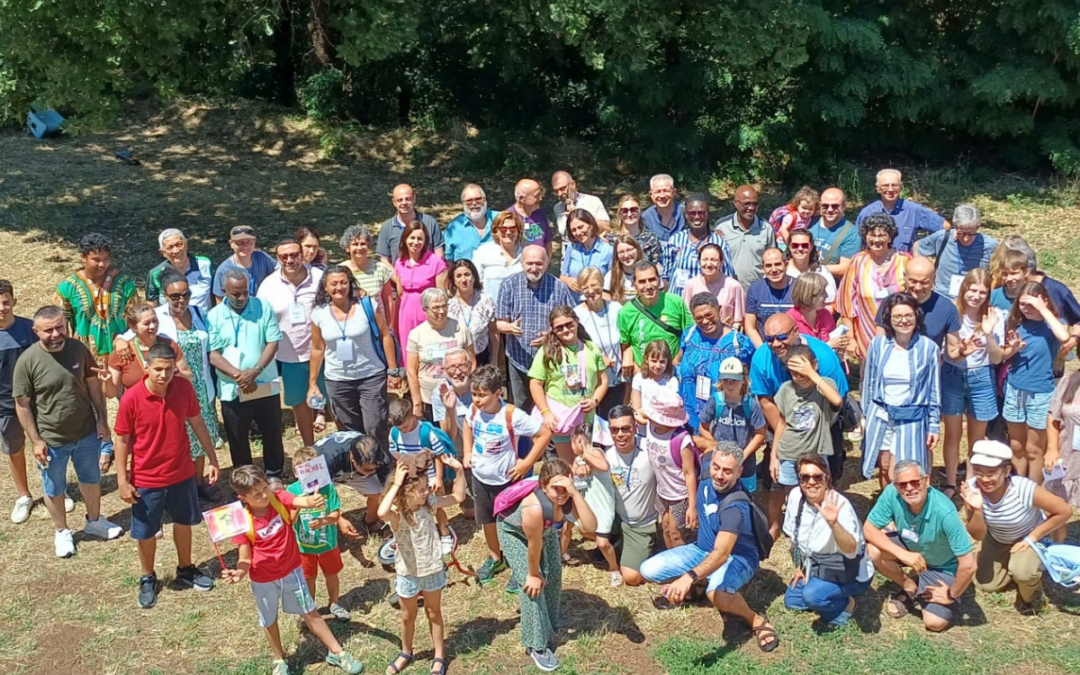
Highlights from the ‘Loppiano Family Experience 2026’
We saw this as an important step in our journey both as a family and as members of the Focolare Movement in the Holy Land. Last year we were unable to attend because our travel documents were not ready, but we thank God that we were able to participate this year.
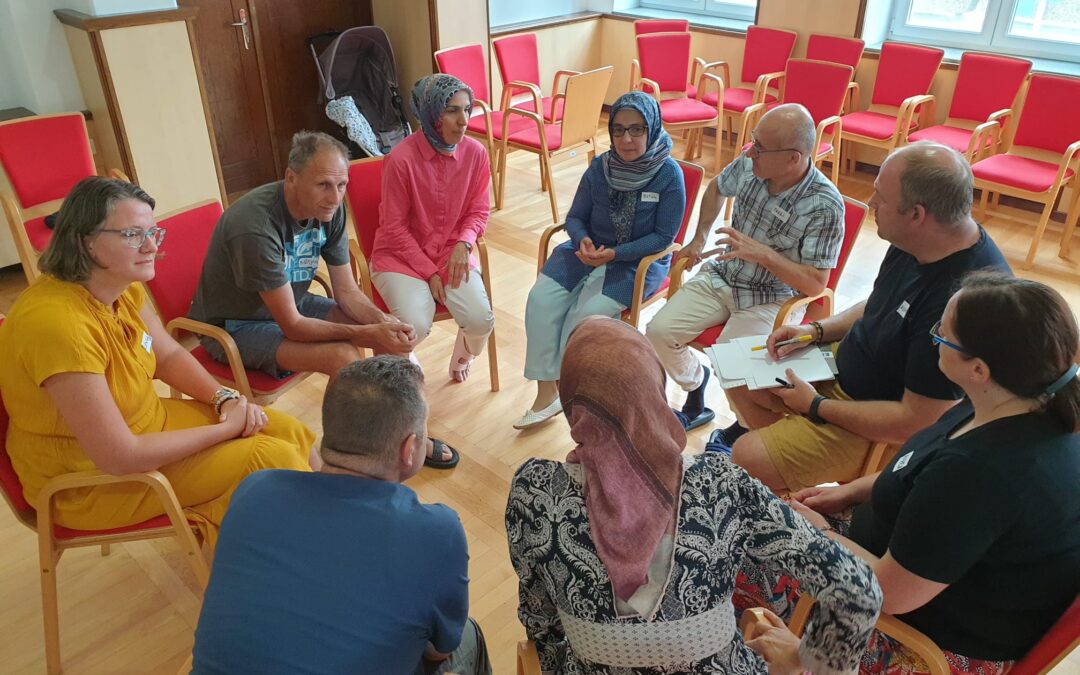
From the very first days, we felt that we were part of one large family. We met families from different countries, cultures, and languages. Diversity is a gift and love has a language that everyone understands.
Our children experienced things that may seem ordinary to many people, but for them they were extraordinary: walking among trees and mountains without fear, without seeing weapons; playing freely; making friends with children from different countries; and living out love together. For them, all of this was a new discovery of what childhood truly means.
As for us, the meetings and shared experiences with other families became a true school of life. We listened to testimonies filled with challenges but also with hope, and we experienced firsthand that differences in culture, customs, and traditions do not prevent unity—they make it even more beautiful, fulfilling Jesus’ prayer: “That they may all be one.”
The themes explored during the School touched our lives deeply. We came to understand that family difficulties are not the end of the journey but an opportunity to grow in love when they are lived together with Jesus Forsaken. We have experienced this in our own reality in the Holy Land: even suffering can become a space where hope blossoms when it is lived with God.
We will return to Bethlehem more united than before, more convinced that diversity is a richness and that unity is a mission.
This experience has brought us back to the heart of our vocation: to be a family that lives the Gospel and bears witness to love precisely where it seems impossible. Our mission is to bring the light of unity to the land where Jesus was born.
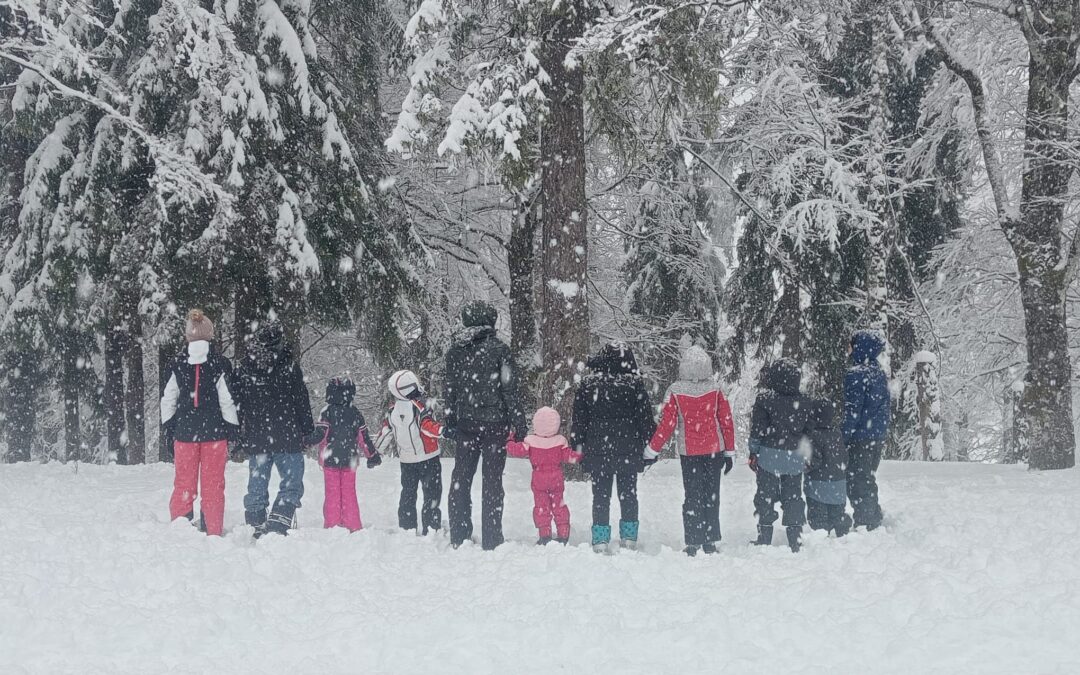
From the rubble of war to the wonder of snow: this was the journey of a group of children from Gaza, welcomed to the Veneto region of Italy, thanks to the Padua Embrace Children and Civil Protection association. For many of them, marked by deep wounds in both body and soul, the day spent in Val Saisera, in Northeast Italy, was a rare moment of lightheartedness.
The day, organized by the Associazione Famiglie Nuove del Friuli Venezia Giulia (New Families Association of Friuli Venezia Giulia), was attended by about forty people, mostly women and children. It was a simple event, yet full of meaning: playing in the snow, laughter, tobogganing and a spirit of togetherness that allowed the memories of the war to fade into the background at least for a few hours. On that Sunday in January, the long-awaited snow came almost as a sign of welcome, as if to respond to the children’s desire to be able to see it for the first time.
Many of these children arrived in Italy in 2025 thanks to a humanitarian corridor activated to provide urgent medical care. They included young amputees, children injured by explosions, or suffering from illnesses impossible to treat in a land devastated by conflict. Their families have painful stories: mourning, forced separations and arduous absences. Yet, alongside the suffering emerges an extraordinary capacity for resilience. Nothing captured the spirit of the day quite like the nine-year-old girl who, despite having lost both legs, was all smiles and laughter on the toboggan, eventually finding the strength to join the other girls in a dance.
Imam Kamel Layachi, imam of the Muslim communities of Veneto, who encouraged collaboration between Muslim and Catholic communities was a focal point for the various groups involved. Parishes, associations and volunteers joined forces to offer not only assistance, but also opportunities for integration. The children are already attending school and the mothers are taking Italian courses, in view of a stay that could become longer and open up to employment opportunities.
At the same time, the health needs are urgent, in particular for prosthetic limbs not covered by the National Health Service. For this reason, fund raising initiatives have been launched, with the aim of restoring autonomy and dignity to those who have lost a limb.
The day on the snow ended in Tarvisio (Italy). Welcomed by a group of New Families from the region, by the volunteers of the Friulclown association, by Don Giuseppe Marano, the parish priest of Valbruna and by the tea and biscuits offered by the Alpini – the group moved indoors for lunch (prepared by the Muslim community of the city of Udine) in the parish hall. A shared lunch and a moment of common prayer brought things to a clos. It was a simple but powerful gesture, which united different cultures and faiths under the sign of fraternity. The words of Palestinian families tell better than anything else the meaning of the experience: gratitude, emotion, relief. One mother wrote, “You have allowed happiness to touch our hearts again”.
The Italian volunteers also received much in return: in the eyes of those children they saw pain and joy, fragility and strength and the awareness that, even with small gestures, it is possible to rebuild fragments of humanity. In a world marked by conflict, that day on the snow represented a small, but authentic, space of peace.
From a story by Friuli (Italy) New Families Photo: FN Friuli
For more than thirteen years, we have been involved in real dialogue with a group of Turkish Muslim families living in our city, Ljubljana (Slovenia). It all started quite by chance. I worked as a dentist and one of the first Turkish families to arrive in Slovenia became my patients. From that first meeting, a deep bond grew, which over time extended to other families in the same community. After the failed coup in Turkey in 2016, many people were accused of belonging to a hostile movement and were forced to flee, finding refuge in our country. Since then, the number of families with which we started interacting grew rapidly, reaching around 50 people in just a few months. We soon realized that it was not a simple cultural exchange but that this bond developed into a relationship of real mutual help: we helped them to learn our language, to handle administrative paperwork, to enrol their children in school and with all the support required for the needs of daily life. In short, a friendship that has gradually become a deep dialogue, including about values and spirituality.
Over time, we had the opportunity to introduce them to the Focolare Movement and its ideal of a united world. This led to discovering of many common points between the Focolare charism and their spirituality.
One of the most significant aspects of this journey was taking part in each other’s religious celebrations. We attended iftar dinners during Ramadan, while Muslim families showed interest in the Christian celebrations. For four consecutive years, we celebrated Christmas together. The Muslim families were initially surprised by the spiritual depth of this occasion as, influenced by Western media, they had seen it mainly as a consumer event.
Video in original language – Turn on subtitles and pick the language you want
From this desire to further deepen this dialogue, the Pop the Bubbles project was born in collaboration with the Association for Intercultural Dialogue and Social Academy, where I work. The aim was to overcome prejudices and barriers between communities, encouraging meeting between Turkish and Slovenian families. The project involved a group of families for a whole year, during which we worked together to identify common values between the two cultures. At the end of this journey, six fundamental values emerged: family, active citizenship, intercultural dialogue, democracy, freedom and inclusion. To conclude the project, we organized two residential camps, one of three days and one of five, in which 73 people participated. In addition to cultural exchange meetings, the project also led to concrete solidarity initiatives, such as helping Ukrainian refugees. This has shown that working together towards a common goal can strengthen the bonds between different communities. In addition, in recent years, I started working in an NGO (Social Academy) that cares for young people and some Turkish families asked me to help look after their teenage children as well, passing on to them those common values we had discovered together. This step was very significant, because it demonstrated the trust that had been built between our communities.
At the same time, an innovative project was born: the creation of an application to promote dialogue between people with opposite opinions – hardtopics.eu. The app works by connecting two people who have responded in a divergent way to a questionnaire on polarizing issues. The system pairs them and invites them to a discussion in a prepared environment, with the aim of overcoming social polarization and promoting a culture of dialogue. This app will soon be used in high schools and universities in Ljubljana. The enthusiasm shown by young people during the testing phase confirmed the value of this initiative.
I believe it is essential to create networks of interreligious dialogue at European level. The journey we have undertaken shows that with patience and dedication it is possible to build authentic relationships based on trust, respect and the shared values.
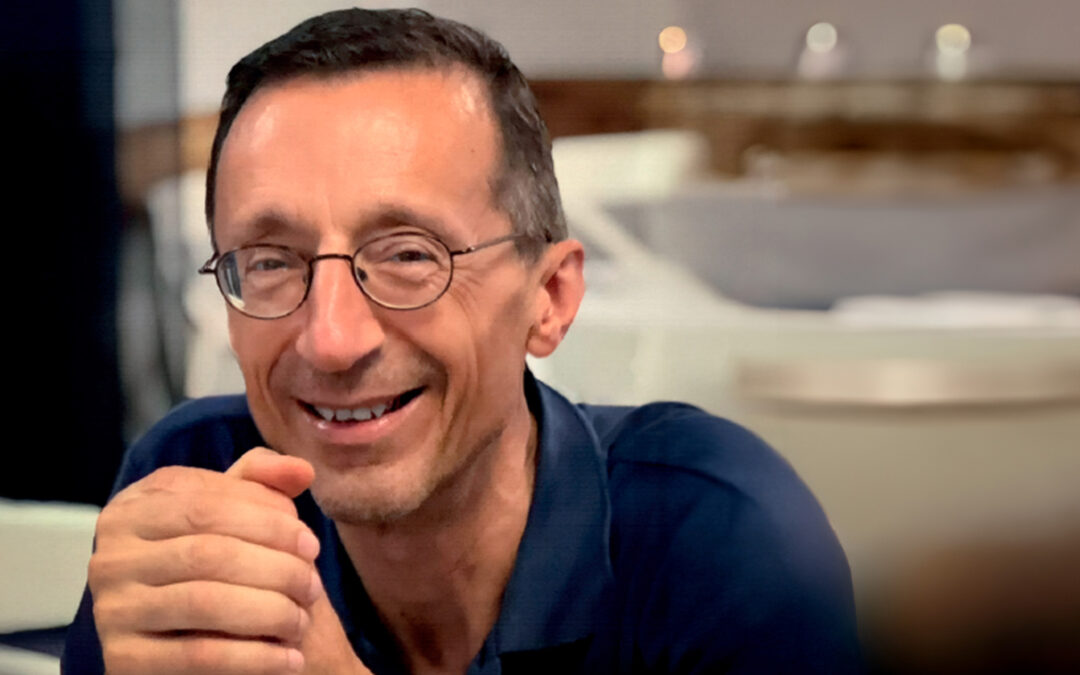
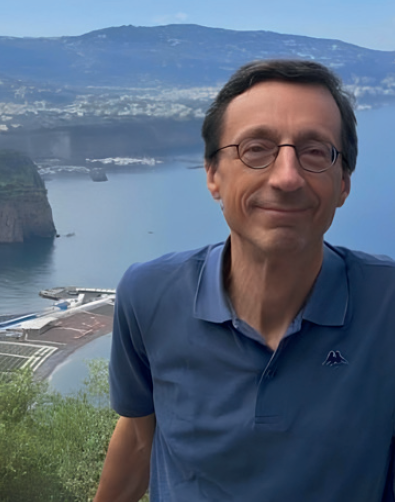
Gratitude and thanksgiving to God. These words encapsulate the multitude of messages that came from all over the world for Paolo Rovea. On 3rd July 2025, in a mountain accident, Paolo ended his earthly life. Married to Barbara, they have five children: Stefano, Federico, Francesco, Miriam and Marco.
He met the Ideal of the unity of the Focolare Movement in 1975. He said, “It radically changed my life”. That same year he took part in the Genfest in Rome, following which he wanted to live 100% with the gen, the young people of the Focolare and he dedicated himself wholeheartedly to this for 14 years, making the Gospel his way of life.
With Barbara, also a Gen, they began to plan to form a family. Engaged couples and young families increasingly began to see them as points of reference. One of them wrote: “With great sorrow for this loss, we are deeply grateful for the love, esteem and trust we received from Paolo. We are grateful for the many years of extraordinary ‘madness’ we all lived together. Together with Barbara, he had an impact on the history of New Families (the branch of Focolare that supports families) and on the history of many couples, including ours”.
Paolo distinguished himself more and more in his profession, with competence and sensitivity. He graduated in medicine from the University of Turin (Italy), specialising in oncology and oncological radiotherapy. At the same university he was a lecturer in a multi-year master’s degree. He worked as a hospital doctor eventually becoming head of the Oncology and Oncological Radiotherapy department in Turin, until his retirement in 2021. He also obtained a Master’s degree and attended advanced courses in Bioethics.
In 1989, he felt God calling him to the path of the focolare and he confided in Danilo Zanzucchi, one of the first married focolarini: “I am in a very important moment in my life: my work as a doctor should soon become permanent; 5 months ago I got married. (… ) I thank God for all the gifts he has given me: first of all for the Ideal of unity (…), for my family (…) for the gen life (…); for Barbara, my wife, with whom I am living beautiful months (…) I assure you that I set out with a renewed desire for holiness on this unique path that is the focolare”.
A life rooted in a constant growth of his relationship with God.
Many remember how Paolo rarely said no to a request or need; he stood beside anyone in need with concrete love. His talents and professionalism were always at the service of those around him: if there was a need to sing or play, he sang and played, if there was a text to write, he wrote it, if a medical consultation was needed, he was ready, if advice was required, he offered it with detachment, encouraging the fearful and urging on the hesitant. His ability to draw close to the life of everyone who crossed his path meant that over time many perceived him as a true brother, one of the family, a true friend.
“I thank God for all the gifts he has given me: first of all for the Ideal of unity (…), for my family (…) for the gen life (…); for Barbara, my wife, with whom I am living beautiful months (…) I assure you that I set out with a renewed desire for holiness on this unique path that is the focolare”.
Paolo and Barbara’s commitment to Focolare grew especially within New Families. One of the themes they were passionate about was education in affectivity and sexuality. It was thanks to them that in 2011, in synergy with the various educational agencies of the Focolare Movement, a pathway was born in this area, Up2Me, based on the anthropological vision typical of Focolare.
Maria and Gianni Salerno, from New Families said: “Although we knew Paolo and Barbara since we were young, we worked closely with them on a daily basis for the last 10 years at the International Secretariat of New Families. The passion, generosity, creativity and tireless commitment with which Paolo carried everything ahead, always attentive to relationships with each person, remain for us an immense testimony and have always been an incentive to go forward together, to always strive to be better at the service of families throughout the world. Often, when discussing with him how to face the challenges of families today, so as to be closer to everyone, he suggested innovative ideas, useful for keeping up with the times and with the needs of people. He and Barbara travelled a lot and left a trail of light everywhere in the world”.
Maria and Gianni continued, “Barbara and he suggested and coordinated many of the new initiatives of New Families. The Up2me programme, Family Format, a programme of dialogue and growth with other families at the Focolare’s international little town of Loppiano and not least of all, the Loppiano Family Experience, a three-week school for animators of New Families who come from all over the world, also in Loppiano. Despite the very painful separation, we know that we can count on his irreplaceable support, which now, from Heaven, will be even stronger…”