
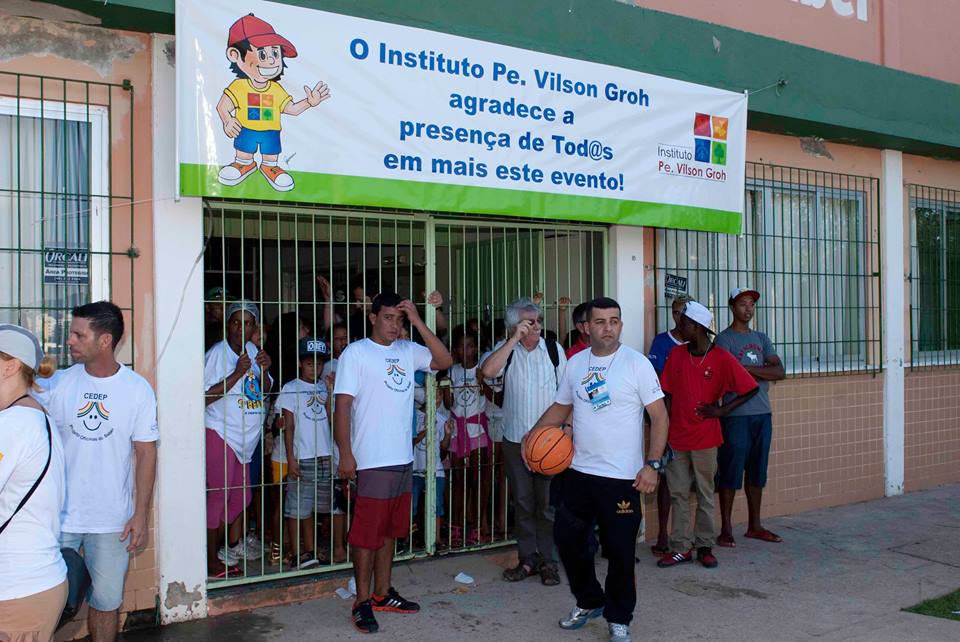
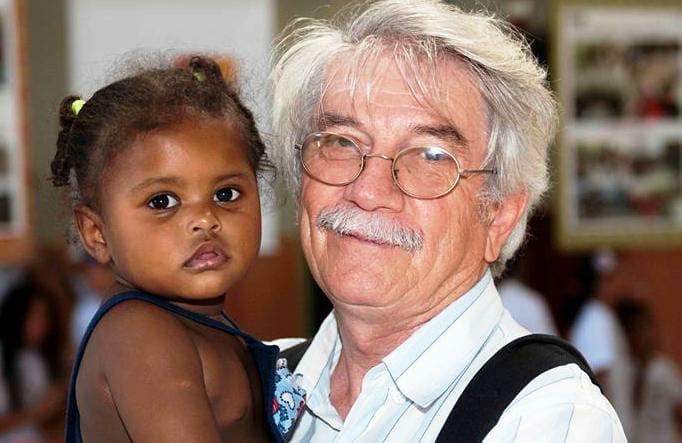
 With a network of organisations and a generous and concrete presence, “Fr Vilson” promotes the life and dignity of the most excluded. We asked him the significance of the Eucharist, as the source of unity, for his work in the peripheries. We offer a few excerpts of what he said. “The other day I was with a person who was living on the street, a journalist and a poet. During the course of our conversation he asked me: “What are you doing here on the streets with us?” I answered him that it had seemed a great contradiction to me that I celebrated the Mass in the cathedral every Sunday, and when I stepped out of the church building I would meet seventy to eighty people who didn’t have a roof over their heads, and they hadn’t eaten. How could I go home?
 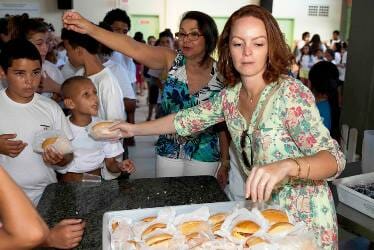 My house stands on the hills of Florianópolis where the number of very poor houses is growing. My house is simple and doesn’t have a key. People come throughout the day to have a cup of coffee or eat something. We’re always adding another plate at table. That door that is always opened means to say that I am open to the neighbourhood community. There is always a place for anyone who knocks at the door. And this is a way to remember that the Eucharist “never closes,” never. He is “at our disposal” twenty four hours a day. In practical terms it means that our refrigerator has to be the refrigerator of the people; our bread, their bread; our clothes, the clothing of the poor. I have been blessed to have the tabernacle in a small chapel in my house. Going home at the end of each day means going to rest where Jesus is waiting for me in the Eucharist, and to rest my head on Him, rather than running to the t.v. or internet that can lead us to many other places.
  There is a sentence engraved on the paten I use for Mass. It’s the Gospel sentence from my Ordination: “I was hungry and you fed me, thirsty and you gave me to drink,” all the way to the end of the text: “Whatever you did to the least of my brothers, you did it to me.” So, every time I place the Eucharistic Bread on the paten, I see those words and they help me not to waste the day. One day a lady from the neighbourhood asked me: “Father Vilson, do you know why Jesus wanted to remain in the Eucharist? So the people wouldn’t feel the solitude and be orphans.” The Eucharist is the great human cry. “There cannot be any gap between the Table of the Eucharist on one side and the table of social justice on the other. It is with our gestures, our arms, our ways of organising that we extend the reality of Jesus in the Eucharist, and we give the world a signal of sharing and support. Guided by this conviction, with the passing of years and along with many other people, we set up a network of 340 people who receive a monthly salary; 7 organisations and one institute. 5000 boys and girls, teenagers and young people gravitate to our network of relationships each day. In order to help build bridges we decided to open an unused church right in the heart of the city, and this gave rise to a large local community with intellectuals, middle class people and business owners who are involved in our activities in a variety of ways. We celebrate Mass there every Saturday and Sunday, and, in this way we believe we create a point of encounter between periphery and center.
Recognise the love received
Recognise the love received
0 Comments