
Among the street children
In the Mexico City Focolare, Pope Francis’ invitation to “go forth” can be seen in the face and heard in the voice of Reina Cruz. Originally from El Salvador, she serves a community that shares the Word of Life in difficult situations, just a few kilometers outside the Mexican capital. In the group there are both dealers and users, and those who have decided to befriend them. The focolarine carry the pope’s voice to the periphery, as he has often invited us to, to suburbs that are difficult, poor, made up of millions who, thanks to their work, are able to hear the words of the Gospel for the first time. Reina admits it is not easy. “Going into an environment where 13- and 14-year-old kids practically live without any family, we feel that we can at least bring our presence. Their activity has even spread to more remote areas, such as visiting Xavierian missionaries in the Santa Cruz forest, a visit made even more intense because it was Holy Week and Easter. In these often-forgotten corners of the world, the young women present the Focolare spirituality. By now it has spread to 182 countries in the world, with centers in 87, including Mexico, where there are close to 110,000 members. Setting their sights on befriending their brothers and sisters, which is typical of the movement founded by Chiara Lubich, these Mexican groups have entered into various social environments. They have been encouraged by Pope Francis’ visit to Loppiano on May 10 to continue on the path started by Lubich, a Servant of God. “A dozen of us,” says Reina, “went to visit Santiago de Anaya, Actopan, in the state of Hidalgo, the heart of Mexico.” Without expecting anything in return, not even interest in their spirituality, they have begun working with the Missionaries of the Divine Word. Their one objective is to offer points for the community to reflect on daily: the word of God and its effects on our lives as committed laypeople. The phenomenon of drug dealing and abuse among teens sounded the alarm for members of the Focolare, driving them to listen to difficult experiences and share the Gospel message with kids who live on the street alone. “On May 6, for example, there were two girls aged 14 and 17 who came up to tell us tearfully about how drug use was growing among their friends.” The older one had been thrown out of her mother’s house, Reina remembers, and she was desperate after ties with her mother had been cut. What to do? How to help? For those who follow Chiara Lubich, healing issues and wounds in the family is part of the task of accompanying others. The challenges continually grow in line with a society whose values are ever more fragile, with weak family ties that at times can even be completely absent. As a result, their presence ends up being the only reference point for people who, as they grow, need a ledge to cling to and not risk drowning in drugs or despair. This is why listening is so important, they explain at the Focolare in Mexico City, as is prayer and spiritual meetings to renew lives in God. The goal remains unity, and this is an opportunity to rise from poverty and walk toward dignity. The dialogue with the local priests helps them to act together, avoid divisions, and look at development projects such as an economy of communion. It is a journey taken together with the Virgin Mary, a mother who never abandons her own children, “not even those who are most alone.”
New rector of PLU
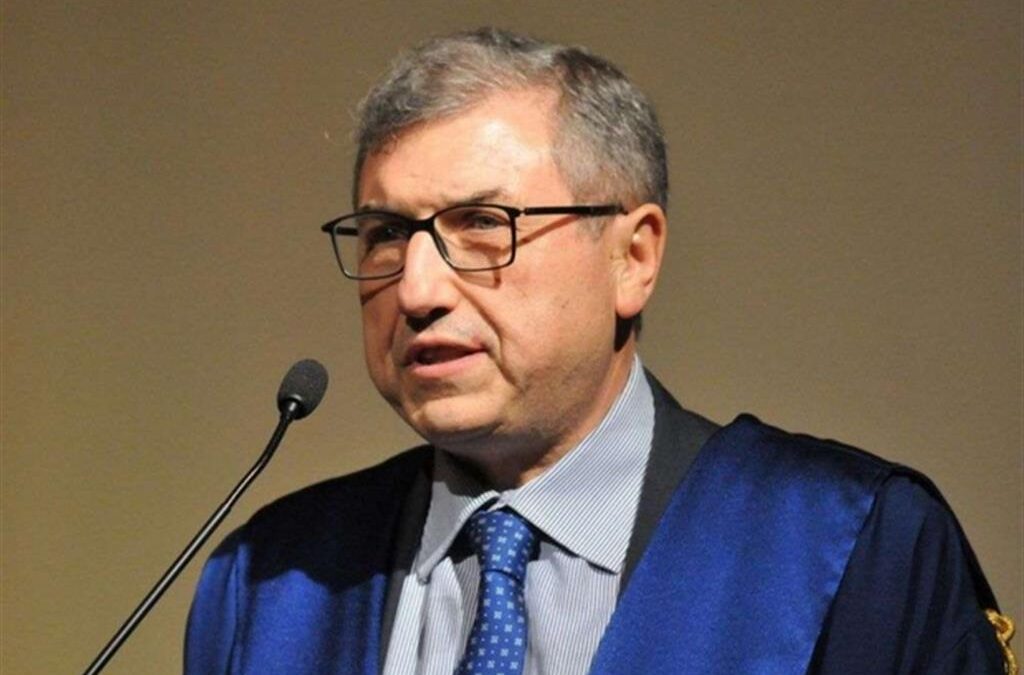
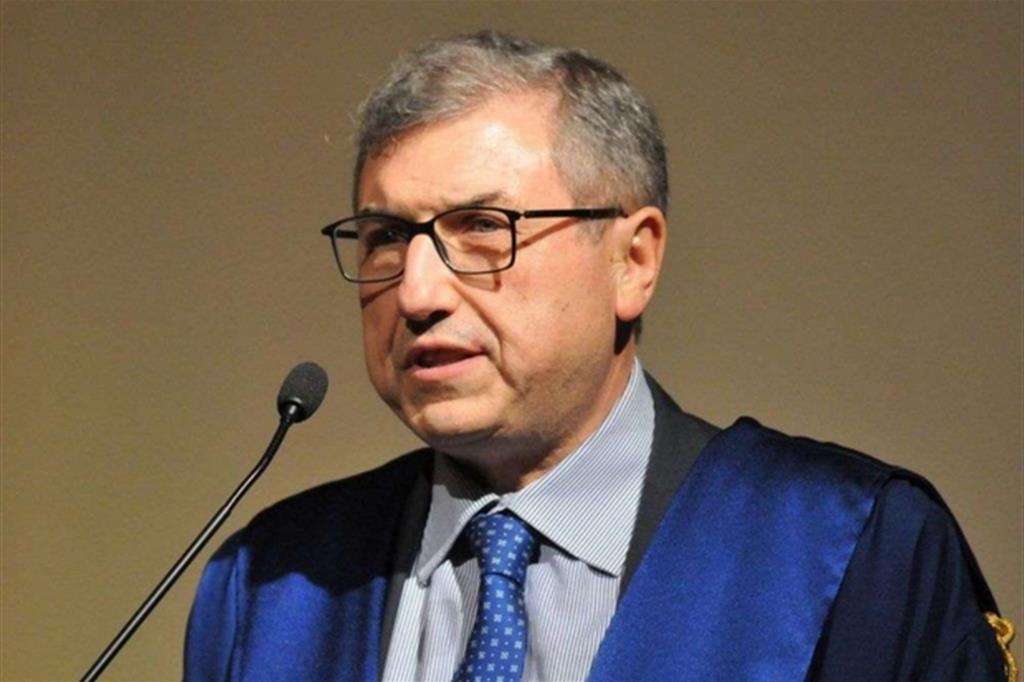 There is great satisfaction also in the Sophia University Institute of Loppiano. The new Rector of the Pontifical Lateran University (PLU), recently appointed by Pope Francis, is also a “visiting professor” at the University Institute. Vincenzo Buonomo, jurist and canon lawyer, from 1 July will be the first ever layperson to guide the pontifical university, and succeeds Bishop Enrico dal Covolo. Born in 1961, married and father to two children, Buonomo has a longstanding bond with the University, first as a student, with a doctorate in Utroque Iure and also a specialisation in International Law with a Preparatory Diploma for the Diplomatic Career, after which he became a full professor from 1984 to 2001. He was the Dean of the Civil Law Faculty from 2006 to 2012, and is currently the coordinator of the Doctorate studies of the same Faculty. In 2007 Buonomo covered the role of office manager of the Holy See’s permanent observer at the UN Food and Agricultural agencies (FAO, IFAD, PAM), with which he started working in 1983. From 2000 to 2005 he was moreover, consultor of the Commission for Dialogue with Muslims at the Pontifical Council for interreligious dialogue. Since 2014, he has been the councilor of the State of the Vatican City.
Extraordinary guests
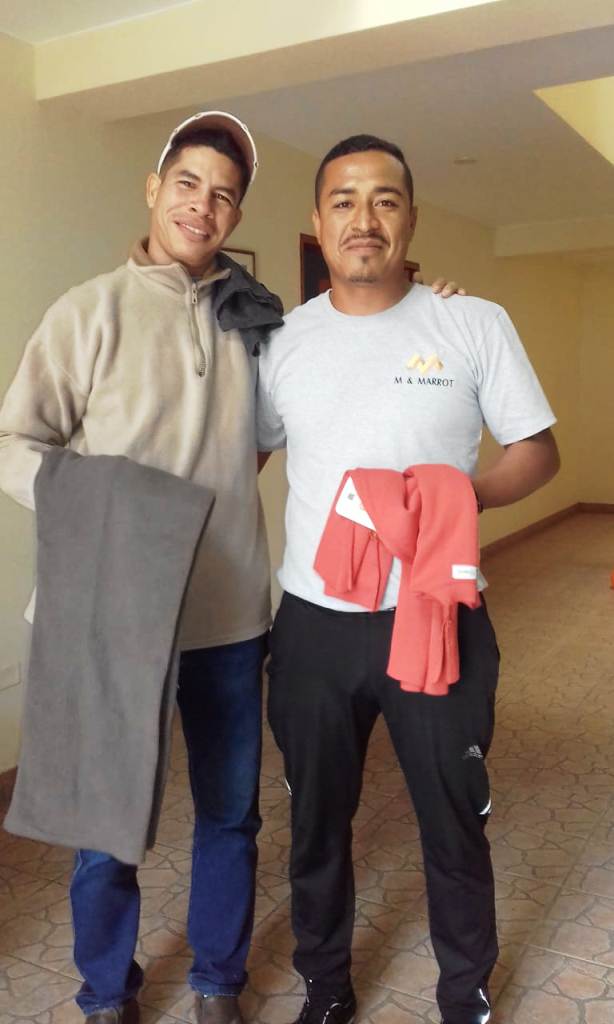 “The influx of immigrants at the border is growing by the hour. The economic crisis that is bringing the country to its knees brings pain both to those who stay and those who decide to flee.” The words of Silvano Roggero, a Venezuelan and son of Italian immigrants, show the drama that an entire people is living through. For the last three years he’s been living in the Focolare center in Lima, Peru. “Despite enormous difficulties caused by the sudden and unexpected entry of hundreds of thousands of people, the neighboring countries, with the usual generosity of these lands, are attempting to take them in. I have personally witnessed one of the many dramas that today’s ‘humanity at the periphery’ is living through. “Just yesterday the director of a school in the peninsula of Paraguaná, in the north of Venezuela, wrote to me. Something different is happening in the office there: a number of parents have come to withdraw their children. They have been forced to leave.” It’s an exodus of biblical proportions, caused by an extremely serious economic and social crisis, one that is overturning the makeup of an entire country. Inflation has skyrocketed, and food, medicine and raw materials are running out. “In December 2017, Ofelia and Armando from the Focolare community in Valencia (the third-largest city of Venezuela), moved to Lima. At first they managed an early childhood center. “Then Ofelia had a dream: find somewhere to offer a preliminary welcome to the swarms of people arriving after travelling seven days over land. We’re talking about close to 300,000 Venezuelans arriving in Peru over the last year and a half! “Ofelia and others,” continues Silvano, “organized a welcome dinner in the Focolare for a small group of Venezuelans. Some already had heard of the movement, but there were some who did not know anything about our group. Our guests came from different parts of the city, some as far as an hour or two away. They find it difficult to get around in this metropolis of almost 10 million inhabitants.” It seemed like a drop in the ocean, but what motivated them was to welcome these people as if they were Jesus in person who turned up at the door. “As you can imagine, faced with their difficult situations, we did not have preconceived solutions. We had no idea where to begin even, although what we could do was offer them a hot meal and listen. Chiara Favotti
Belfast: Going beyond invisible walls
A welcome at the border
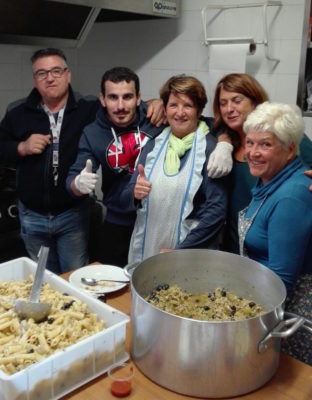
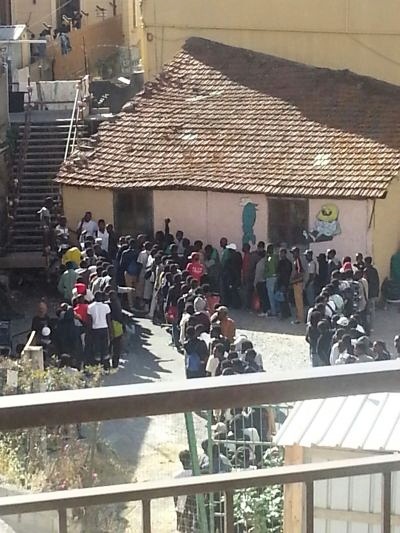 Ventimiglia is a “gate,” not a “border” – at least as long as France does not suspend the agreements in place that allow people to come and go. So it has become a funnel for migrants who consider Italy a stepping stone to reach destinations beyond the border. “In the past year, more than 20,000 people have come through Ventimiglia,” says Paola, a member of the local Focolare community. “It’s like adding another Ventimiglia, since our population is around 24,000 inhabitants.” A teacher at the diocesan seminary, she recalls how “between February and March 2015, the seminarians started to distribute food to the homeless at the station. As days went by, however, the homeless started to multiply.” They were seeing migrants who, after landing on the Italian coast, aimed to cross the border with France and reach other European countries. “That’s when the ‘emergency’ began, and it has not let up since. At the beginning we joined other locals to volunteer and distribute sandwiches on the street.” Collaborating with Caritas, “we contacted the Focolare community on the other side of the border, and they took turns with us, supporting us with money collected from fundraising during Monaco’s Grand Prix. “In June 2015,” she continues, “a Red Cross camp sprung up near the station. Access was limited, but a number of us could enter under HACCP and collaborate in a number of ways.” Alongside this “official” camp was another more “informal” one, right on the border with France. “Many immigrants had no documents, and seeing that the camp organized by the Red Cross required identification, many preferred staying there and trying to cross the border as fast as they could.” Then, at the beginning of October, the camp was dismantled and cleared out in a “pretty rough way.” “When the Red Cross camp was closed in May 2016, we suddenly found ourselves with more than a thousand people in town. It was an unsustainable situation, worsened by a local law that prohibits distributing food and essential goods to immigrants, which carries penalties and tickets. “Then Caritas intervened to mediate. That’s how we started welcoming people at the Church of Sant’Antonio. By day it was a church; by night, a dormitory. Families with children and the most vulnerable were hosted in the church – the pews were moved and we brought covers, and then in the morning we would clean it all up.” In July 2016 a new Red Cross camp was opened outside the city for men. Women and children continued to be hosted in church. “In 2017 a seemingly infinite influx of minors began, and most of them stayed along the Roya River. The local prefect asked the Red Cross to open up a section of the camp for them. “In the meantime, there were continual sweeps, with hundreds of immigrants boarded on to buses for Taranto in Southern Italy. Yet just days later they were back again. “The fact is,” she explains, “that these people want to reconnect with relatives in other countries, and this is why they are ready to do anything. It’s from here that they can try to cross the border. There are some who have tried ten times before succeeding.” The border is guarded day and night. “Unfortunately, all we are doing is fostering dependency. But they don’t need clothes or a pair of shoes. They need to exercise their freedom of self-determination, which every person should have.” Perhaps the solution could be to create a transit camp, Paola suggests, “a place where an immigrant, during the journey, can stop, find nourishment, wash, change clothes – where they can receive medical attention and legal assistance they need.” Paola calls their service “nothing at all,” but it is these details that help these travelers feel like people again. “We cook African or Arab recipes based on couscous and rice, which we learned how to mix with spices and create dishes according to their traditions. “One day we noticed that a Syrian woman bathed herself each time she came to Caritas, yet she kept putting on the same outfit. She was wearing a tunic with pants. She kept reaching into the piles of clothes, but each time she went away empty handed. “Then we understood and asked some friends from Morocco if they had some clothes in her style. Finally, she was able to change and went away happy.” Source: United World Project