
“The more you read the book, the more you become aware that everyone is called to ‘closeness’. The perception of being able to achieve it and the liberating conviction that this kind of lifestyle brings joy and builds, brick by brick, is the path towards a more unified world.”
Cardinal Pierbattista Pizzaballa, Latin Patriarch of Jerusalem, uses these words in the preface to the book by Margaret Karram, President of the Focolare Movement, entitled ‘Closeness, a path to peace. Pages of life’.
A truly autobiographical text in which the author retraces her family history and writes about herself, her origins, her childhood in Haifa (Israel), the people she met and her decision to give her life to God. But at the same time, it is a real itinerary, a guide or, as Pizzaballa further describes it, “a multidimensional journey: going within, going outside and going Above” that allows the reader to accept the author’s invitation to get involved in a meaningful way in the encounter with others.
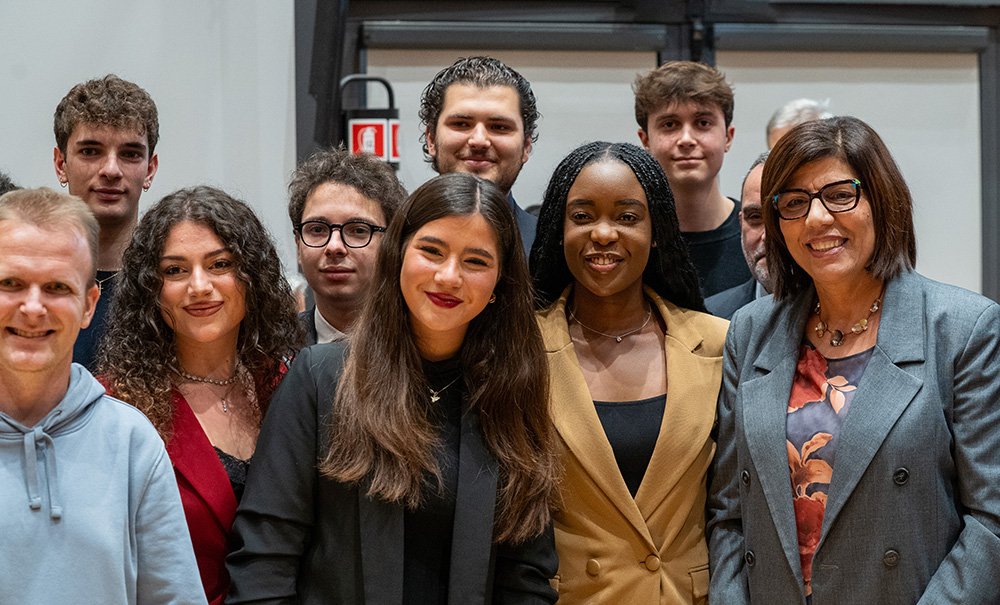
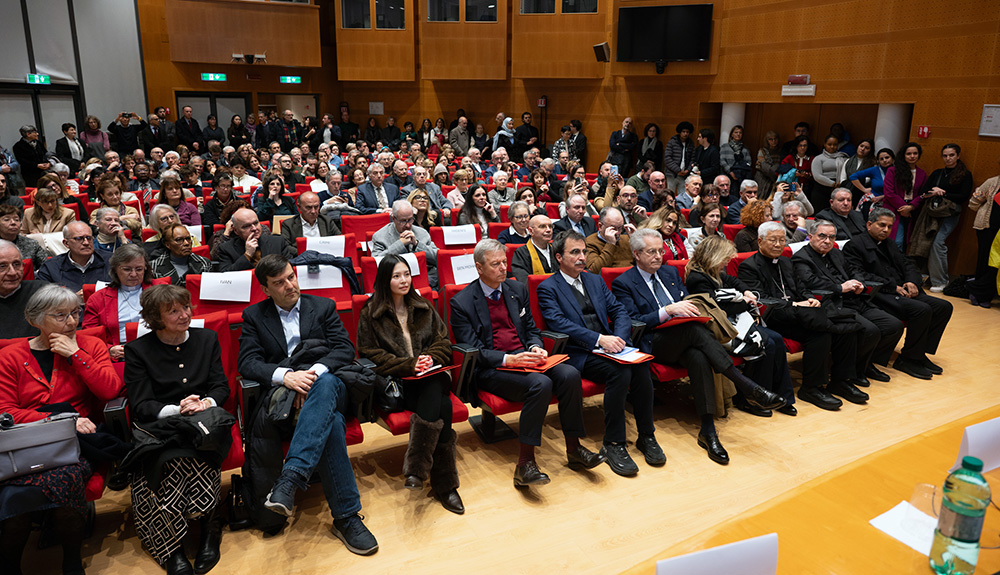
The text was presented at the Jubilee Hall of LUMSA University (Rome, Italy) on the 30th of January 2026 during an event that turned into a unique opportunity for exchange and dialogue. It focused on the theme of “closeness” and aimed to foster a tangible experience of it.
The proceedings were opened by Prof. Francesco Bonini, Rector of LUMSA, who welcomed the participants. The event was moderated by Alessandro Gisotti, Vice Director of the Editorial Department of the Dicastery for Communication of the Holy See. Alongside the author, speakers included Imam Nader Akkad, Advisor on Religious Affairs at the Great Mosque of Rome, Irene Kajon, member of the Jewish community and Professor Emeritus of Moral Philosophy at the Sapienza University of Rome, and Alberto Lo Presti, Associate Professor of History of Political Doctrines at LUMSA.
In the light of Karram’s book, the debate addressed various topics. Among the first points raised was a careful look at the value of identity, as a process and as a movement. “This is a recurring theme, especially in the first few pages,” explains Prof. Kajon, “where a reality is shown that reveals the intertwining and coexistence of many different cultures, languages and religions. In the logic of closeness, it is good that identity, an identity that is intertwined with different elements, always maintains a sense of restlessness … because this is precisely what guarantees openness to others …. What unifies identity is precisely closeness, that is, being human. It is the human family that allows us to unify the identities that are found in each person.”
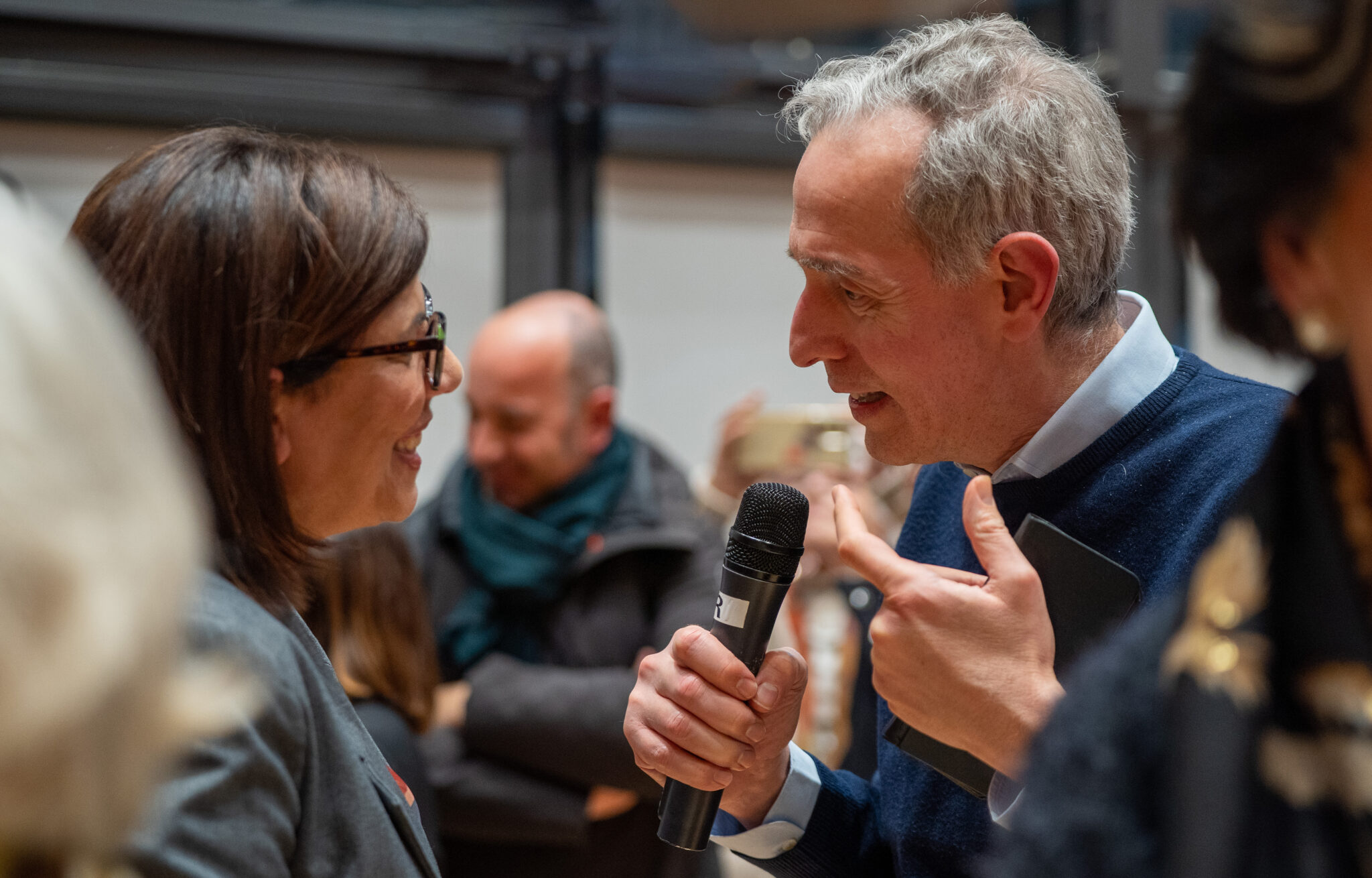
Imam Nader Akkad, thinking of his Aleppo (Syria), spoke of closeness as a concept that is not at all abstract, but rather something very real that finds its only possible fulfilment in closeness to others and in fraternity. “Closeness becomes the possibility of achieving a ‘shared meaning’, and it is the concept of ‘family’ that forms the basis of society,” says Imam Akkad, “a bridge that is suspended is useless. Two banks are needed. Sometimes the banks become rigid …. Closeness shortens distances, making us understand how close we are. When I draw closer, I recognise my brother or sister, I recognise their suffering and their joys. Closeness helps us to travel through different identities … and not to feel like minorities, but like citizens, so as to build peace together.”
Referring to the concept of ‘inventive love’ as an agent of social, political and cultural transformation proposed by Chiara Lubich, foundress of the Focolare Movement, and in the light of the current crises, Prof. Lo Presti says, “When we see conflicts and divisions in the international system, it is not Chiara Lubich’s vision of a united world that is in crisis …, but rather all those beliefs, philosophies and overly modern visions that believed that humanity would achieve the most beautiful goals of its civil adventure through rationality, or by relying on scientific and technological progress, or simply by expanding markets in an indistinct globalisation, and so on …. The united world that should be the fruit of closeness, is not a victorious march, it is an obstacle course. We need people who are able to look beyond the obstacle and not give in to it. We need people who are able to have hope in their hearts, who see crises as opportunities for the future. In fact, all this means being inventive and creative.”
Therefore, an attempt to raise our gaze. An attempt that, through encounters with various people and key figures, led Margaret Karram to write this text. Karram said, “This moment of authentic dialogue makes me understand that there are many of us who carry in our hearts the hopes and concerns of our time. This book did not come from me alone. It is a multifaceted story. The time we live in is unique, it passes quickly, we are constantly connected. However, this also creates new distances, which are often invisible but very deep. For this reason, addressing the topic of closeness was not a pre-planned decision, either for me or for the Focolare Movement. The more I listened to people, to communities, young people and families, the more I saw a universal need emerging: the need to feel close to one another, not close through a screen, but close in the practicality of life.”
The event, which began as a book presentation, became a moment of sharing that opened up a vision of one’s neighbour as the first step towards the path of peace. It turned into an opportunity to come together, to listen to one another in a synodal way, to discover that in building daily relationships, small sparks of hope, can make a difference.
Maria Grazia Berretta
To relive the event (video only in Italian) https://youtu.be/eGvxpf29BlU
Photo © J. Garcia, J. Masera – CSC Audiovisivi

0 Comments