
 Nelson, a 29 year old physical education teacher: “My beautiful country, destroyed by the war and its consequences.” His contribution against all forms of violence.
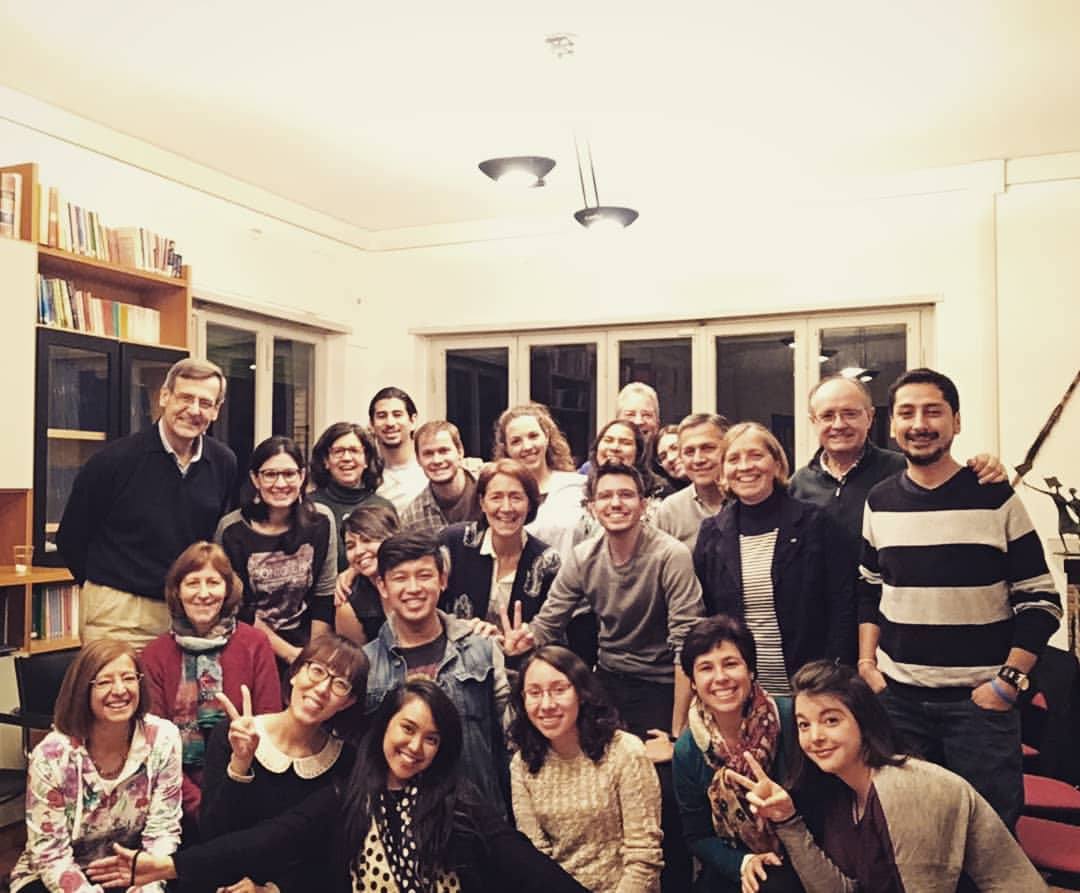 “I’m working in Italy working with some other young people my age for the upcoming 2018 Genfest in Manila.” Preparations are in full swing for the first Genfest ever held outside Europe. Nelson joined the international group of teenagers who were already at work, ever since he arrived in Italy in 2017 – first in Loppiano and then at the international Gen2 centre near Rome where we are interviewing him. “I come from El Salvador, the least expansive but most populated country in Central America. It’s a beautiful place, but has recently been hit by a civil war that lasted for 12 years and ended in 1992, leaving the country completely destroyed.” Nelson explains; “After the end of the war, many families found themselves looking for a place to settle and many parents emigrated, leaving their children with relatives or anyone who would take them in. But in the midst of the overall bewilderment, this resulted in an entire generation of boys and teenagers who were left without guidance or direction, or even anyone to show some genuine interest in them. To that was added the complication of getting the money earned outside the country to its destination in El Salvador. Many of these boys were left deprived of everything and began to leave school and roam the streets, seeking in delinquency the attention that they hadn’t found anwhere else. In short, recruiting adolescents, some of them quite young, they formed into many criminall groups who became more and more rooted and dangerous, each with its own name and symbolism, rituals and gestures.” “To uproot what seemed at first a simple problem to solve, the government launched a plan, which was also very violent, inprisoning anyone with a tatoo. The result was an unprecedented escalation of ferocious violence from the gangs that began to kill for no reason, to threaten more and more young people, forcing them into their groups. Before moving to Italy, I worked in San Miguel at a Salesian school which was dedicated to more than a thousand students who come from outside the city every week. Many of them have serious family problems, or parents enlisted in criminal groups, or even worse, they themselves are on the verge of joining. I taught physical education. One day, during swimming class, a boy wanted to jump into the pool without removing his shirt, even though that was against the rules. He was nervous and afraid. So I took him aside so that I could talk to him alone. I asked him the reason why. He told me that he had had himself tattooed with the symbol of a group, and didn’t want anyone to know. I gave him permissioin to get into the water with the shirt on, but afterwards, in class, I returned to the topic and we began to talk about ways of finding alternatives to criminality. Then, for the rest of the year, we tried to explain to him all of us together, that there’s always a way out, another way to live, far from violence. A few months later I saw him proudly wearing a work uniform, he had managed to leave the group which, thanks be to God had left him in peace. Now he’s providing for his family. ‘Thanks Prof. Thanks to all of you who helped me to realize that I could be a different person from what I started out to be. Thank you mostly for helping me to change the direction of my life.’” Chiara Favotti
Believe in love
Believe in love
0 Comments