Focolare Movement

Days of Remembrance

Jan 26, 2018

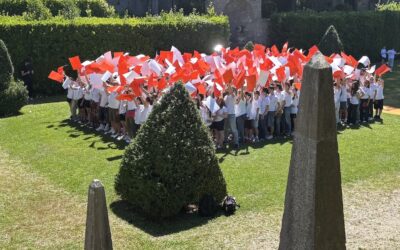
The international memorial day on 27 January, designated by the United Nations General Assembly, is held in order to commemorate the victims of the Shoah. On 27 January 1945, the Allied Forces liberated Auschwitz, the Nazi concentration and death camp, and its surviving prisoners. Beyond the prison gate and the sign bearing the slogan “Arbeit […]

The international memorial day on 27 January, designated by the United Nations General Assembly, is held in order to commemorate the victims of the Shoah. On 27 January 1945, the Allied Forces liberated Auschwitz, the Nazi concentration and death camp, and its surviving prisoners. Beyond the prison gate and the sign bearing the slogan “Arbeit macht frei” (Work sets you free), the world witnessed the horror of what had taken place there and came to the know the scale of the mass extermination which had caused the death of six million people. 73 years after the end of the Shoah, in various parts of Europe and the world, every year commemorative meetings, ceremonies, initiatives and moments of narration of events by the survivors are promoted, especially in schools, in order to “never forget ” one of the most terrible examples of racial hatred and so that such atrocities will never be repeated anywhere on the planet.

0 Comments

Submit a Comment

Your email address will not be published. Required fields are marked *


Subscribe to Newsletter

Thought of the day

Related post

Audience with Pope Leo XIV

Audience with Pope Leo XIV

On Saturday 21 March 2026, participants in the Assembly of the Focolare Movement were received in private audience by Pope Leo XIV. The Pope reaffirmed the essence and fruitfulness of the charism of unity, a gift from God for the Church and for the world, and encouraged everyone to live this post-foundational phase with confidence, transparency and responsibility.

Living the Gospel: “Stay with us, for it is nearly evening” (Lk 24:29)

Living the Gospel: “Stay with us, for it is nearly evening” (Lk 24:29)

How can we recognize the presence of Jesus when faced with darkness, injustices and inequalities? When hardship and suffering seem to obscure all hope? The road to Emmaus becomes a symbol of each person’s journey of faith, of our deep desire to rediscover Christ in everyday choices; an encounter that leads to joy and shared testimony. It is the moving invitation that we can all extend to him so that, once he is found, he remains with us and among us.

Easter: The Foundation of the Great Hope

Easter: The Foundation of the Great Hope

This reflection on the Easter reasons and origins of Christian hope, hope that still “dares” to speak to people today, is offered by Declan J. O’Byrne, theologian and rector of the Sophia University Institute.