One day, I went to the train station to pick someone up.The station is in a small town that doesn’t have a waiting room open at night, or anywhere to wait. When we got into the car, we saw a young woman alone with a bag who seemed disoriented, as if she were looking for something. She was alone and it was midnight. The train had already left. I got out of the car and went over to her to ask what she was looking for. She told me that she wasn’t sure if this was Junín or not. Junín is the next stop; she had got off at the wrong station. She was young. Her aunt was waiting for her in Junín, but she couldn’t come and pick her up because she didn’t have transport. The next morning, I had an appointment with the doctor in that very town and a solution came to mind. I asked her, “Would you like to spend the night at my house?” I’ll take you to your aunt’s tomorrow.” She agreed to this. So we went home, had dinner together and I made up a bed for her in the kitchen because I only have one bedroom. The next day we set off for Junín. During the journey, she told me that she hadn’t seen her aunt for four years, that it was the first time she had travelled alone and that she had taken a few days off work because her aunt was ill and she wanted to be there to help her. After leaving her with her aunt, I thought of the parable of the Good Samaritan. It felt like I had experienced it with her.
(Analia Maezo – Argentina)
Struggling but with a big heart
My husband and I are doctors and, having experienced poverty ourselves, we opened a clinic for the poorest people in our neighbourhood. One day, we only had 25 pesos left and there was still a week to go before we were paid. I tried not to worry, but I couldn’t see how we could make it to the end of the month with that amount. I had anxiously taken out 5 pesos for the bus to visit some friends, when a lady who was being treated by my husband knocked on the door. She was desperate; she and her children hadn’t eaten for three days. I immediately gave her what I had left, 20 pesos and then I set off. Later, the joy of seeing so many friends again made me forget all my worries. My husband was there too, having come straight from the hospital. While I was telling him about that woman, a friend approached with an envelope. It contained 500 pesos, a belated birthday present, collected by the friends involved in our solidarity initiative. We felt greatly relieved and felt that we are part of a big family – poor, but with a big heart.
(Reilita – Philippines)
Compiled by Maria Grazia Berretta
taken from The Gospel of the day, Città Nuova, year XII – no.5 –September-October 2026)
Can we command someone to love others? If we understand love as a feeling, it is clearly impossible! However, if we understand it as a gift from God, things change.
In his letter to the Romans, from which this word of life is taken, Paul describes the relationship between the Law and love very precisely by stating that love is the fulfilment of the Law. He had already revealed the source of this love: ‘God demonstrates his own love for us in this: while we were still sinners, Christ died for us’ (Rom 5:8). The First Letter of John also refers to love: ‘This is love: not that we loved God, but that he loved us and sent his Son as an atoning sacrifice for our sins’ (1Jn 4:10).
Love does no harm to a neighbour; therefore love is the fulfilment of the Law.
None of us can give what we do not have. Augustine understood this very clearly and when addressing God directly, he said: ‘Give what you command, and command what you will. [1] We have received the priceless gift of God’s love and are called not to keep it only for ourselves but to pass it on to others. From being recipients of God’s love, we can become its agents: from being loved, we are called to become lovers, thus sharing in the very life of the Father, the Son and the Holy Spirit: the Lover, the Beloved and Love.
Paul assures us that we owe nothing to other people except this mutual love, for whoever loves others has fulfilled the Law.[2]
Love does no harm to a neighbour; therefore love is the fulfilment of the Law.
‘True love of neighbour,’ says Chiara Lubich, ‘does no harm. It therefore enables us to live out all of God’s commandments, without exception, since their primary aim is to help us avoid all forms of evil – towards ourselves and towards our brothers and sisters – into which we might fall.[3]
Understood in this way, the commandments of the Law become, a gift of God’s love rather than an obligation: they do not constrain our love but set it free.
Love does no harm to a neighbour; therefore love is the fulfilment of the Law.
To reach this degree of love for our neighbour, the first step is to avoid harming them. However, we can take this a stage further and become creative in love: Pope Francis reminded us, “It is not enough not to harm one’s neighbour; we must choose to do good, seizing opportunities to bear witness that we are disciples of Jesus.”[4]
How, then, are we to live out this word of life? Let us put love back at the centre of our lives. Let us love others in a concrete way, just as Jesus would love them: He is the fullness of love, wholly given to God and to humanity. From Him we can learn the highest measure of love.
Love does no harm to a neighbour; therefore love is the fulfilment of the Law.
Doris, a young woman from Scotland, tells us: ‘During our regular visits to a homeless shelter, I enter a world very different from my own. I know that what I feel doesn’t matter so much; what matters is loving. One day, a man whose face was marked with deep sadness confided in me that he felt ready to end it all, that he even wanted to die. I simply sat and listened to him and then we shared a sandwich and a coffee. I realised that listening and being present was already a way of showing love. When it was time to leave, he gave me a big hug and smiled, saying that what we were doing was very important, not just for him, but for everyone there. I felt the incredible power of love. Perhaps I didn’t ‘save’ him, but his gratitude filled me with joy, and that, in itself, is very powerful.’
Prepared by Claudio Cianfaglioni & the Word of Life team.
Ahead of the 11th World Day of Prayer for the Care of Creation celebrated on 1st September, Pope Leo XIV has written a message entitled “They shall beat their swords into ploughshares and their spears into pruning hooks” (Is 2,4).
It is a text to be read again and again and meditated on, starting from the title that takes up one of the most famous images of the Bible. Isaiah imagines that an object made for war is transformed into an agricultural tool. What was once used to destroy becomes a tool for producing and sustaining life. It is a beautiful image of peace and one that is closely connected to the present day. Today, fragile relationships and armed conflicts continue to destroy the environment and threaten the lives of millions of people.
Pope Leo highlights the deep link between peace, care for Creation and human dignity, inviting us to direct resources towards life and sustainability. The Pope writes. “But today, we too often witness the very opposite, as violence and war. War also leaves behind social and ecological destruction that endures for generations. Moreover, the interaction between armed conflicts and environmental degradation often creates a vicious cycle, which destroys ecosystems, contaminates essential resources, such as air and water, and undermines food security. This fuels poverty, inequality, and new social tensions that can contribute to the emergence of further conflicts.”
Creation is “nature”, everything that surrounds us! And human beings are not merely observers, but part of it. Isaiah’s hope therefore becomes for us today a call to “transform what is evil into life“. This conversion that cannot be separated from returning not only to our hearts, but to the One who heals them: the Lord. For where the individual is renewed, new possibilities open up.
The Pope says, “What has been used for destruction can be redirected towards life, towards the care of the poor, the nourishment of the hungry and the safeguarding of creation.. This is the path of an authentic ecological conversion, where the effects of our encounter with Jesus Christ become evident in our relationships with the world around us. Peace, then, begins in the heart and flows outwards to our relationships, communities and the broader world.”
Every year, 1st September also marks the beginning of the Season of Creation, the ecumenical journey of prayer and commitment to the care of our Common House which concludes on 4th October, the feast of Saint Francis of Assisi. During this time, the Church, together with other Christian communities, is invited to renew its commitment to Creation, letting itself be guided by prayer, conversion and concrete gestures of care. This year’s theme, “Living Water,” explores Ezekiel 47:9 and 12 as a powerful biblical vision of hope and ecological healing. The image of living water flowing from God’s sanctuary symbolizes divine healing that regenerates.
The commitment of the Focolare communities around the world
The Season of Creation is also expressed through concrete actions. Among the many initiatives in different parts of the world, we highlight two from Latin America: Brazil and Uruguay.
In Brazil, the Decarbonize project is transforming schools into places where young people can learn about, understand and respond concretely to the environmental challenges of our time.
Students and teachers are involved in a programme of education on climate change, sustainability and environmental justice, developing not only knowledge, but also the ability to participate and take responsibility in their own communities.
The initiative grew out of the international “Decarbonize” program of the Global Education Centre, carried out in collaboration with the University of Alberta, Canada. The programme focuses on youth leadership, climate justice, the fight against environmental racism and political participation, in line with the 2030 Agenda, the Sustainable Development Goals, the Earth Charterand human rights.
The young people do not simply listen or study: they carry out research, share what they have discovered and participate in public life.
The experience became even more meaningful when students had the opportunity to participate in institutional events such as COP conferences, the Brazilian National Congress and state legislative assemblies.
Decarbonize therefore shows that educating for sustainability also means giving young people a voice, the tools and confidence, to become active citizens and protagonists in caring for our common home.
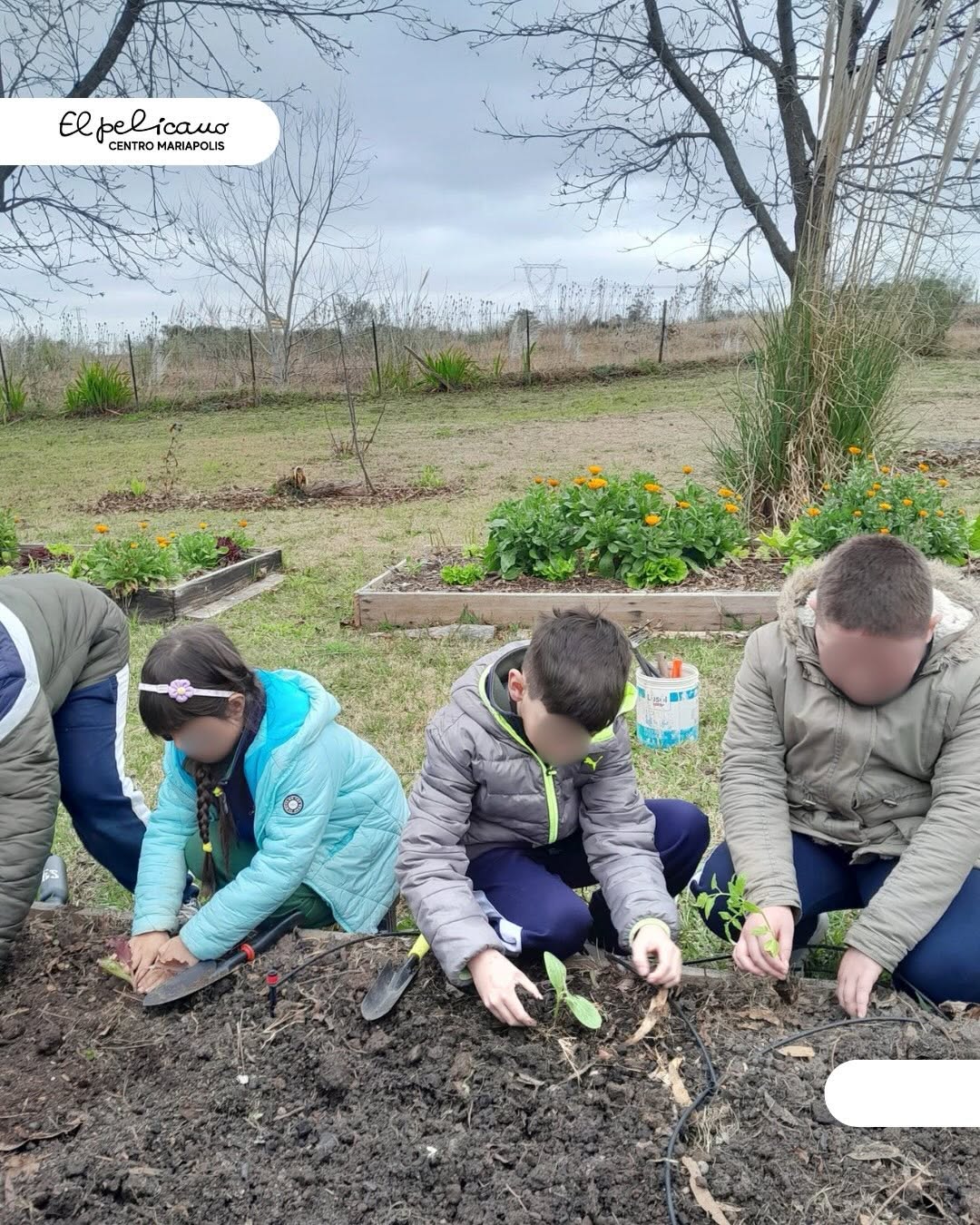
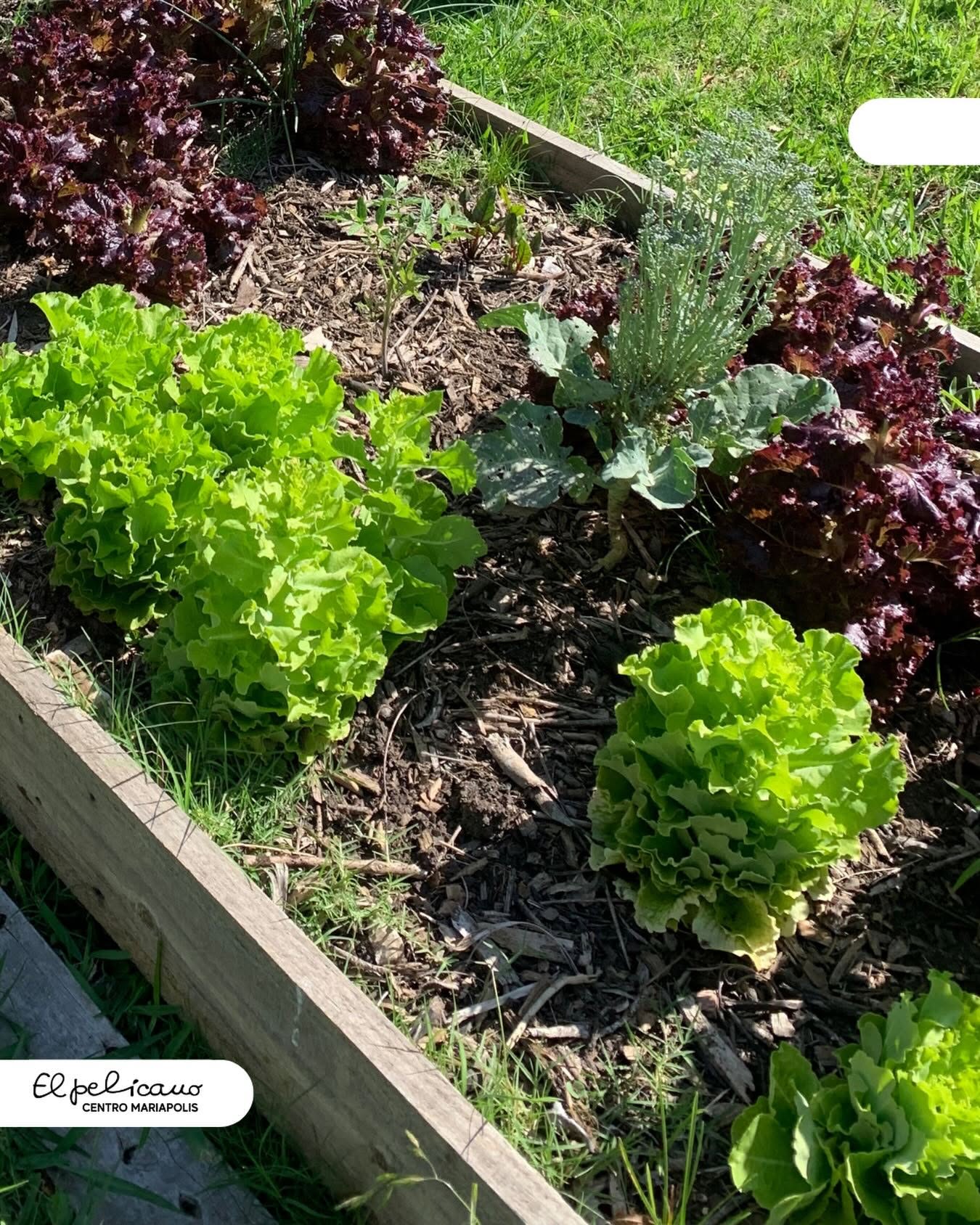
In Uruguay, a few kilometers from Montevideo, the experience of the El Pelícano Mariapolis Centre offers a practical and engaging way to educate people about integral ecology. The centre, born out of the experience of the Focolare Movement, is surrounded by nature and offers children a space where the natural world becomes a place of learning and discovery. Through outdoor educational activities, children can come into contact with the environment, observing it, getting to know it and learning to respect it.
In 2022, thisexperience took a further step forward thanks to the project “El Pelícano: Centro de Recursos Ecologico para la Educación en la Infancia” (The Pelican: Ecological Resource Center for Early Childhood Education), supported through the New HumanitySeed FundingProgram.
The aim is to transform El Pelícano into a resource centre for the environmental education of children. Workshops, nature excursions, an organic vegetable garden and recycling activities become opportunities to learn through doing. A child who cultivates a vegetable garden, observes a plant, walks in the woods or learns to give new life to a waste material is not only acquiring a notion: they are building a relationship with nature.
And the experience doesn’t stop with the children. Through them, the project also aims to involve families, so that what is experienced and learned can continue in daily life.
The “El Pelicano” therefore offers us a valuable experience: ecology can be taught from early childhood through beauty, practical experience and participation, helping new generations to feel part of our Common Home and responsible for its care.
Video in English. Turn on subtitles and select your preferred language
For this story, I have to introduce you to my friend Anthony.
He was living in New Jersey at the time.
He had chronic kidney failure. And so, three times a week he had to go on for dialysis, which, of course, made it kind of hard to go about his regular daily life.
At one point in time, I was thinking, “Hey, you know, maybe I could be a kidney donor to him.” But these were kind of like mere thoughts and nothing—you know, I didn’t follow up. I didn’t talk to anybody about it.
A couple months go by, and at one point in time I find myself doing an Easter retreat. On the first day of the retreat, in order also to prepare myself a little bit, I went in for a visit to the chapel. Out of the blue, this question came back to my mind: “Hey, J.P., are you still willing to donate a kidney?”
I was kind of surprised because I hadn’t thought about it for months. But at that very moment there, I prayed about it, I thought about it, and I thought, “Yes, I want to follow up with it. And I want to see if that could eventually be a possibility.”
Then, on the next day of the retreat, one of the young people sharing was Gidget, Anthony’s daughter. First, she shared that during her teenage years, her mom went through a lot of suffering. She had lupus. She had kidney failure. And now, many years later, her dad kind of went through the same situation with the kidney failure. She said, “Even though we suffered so much as a family, I wouldn’t exchange this experience.”
Because recognizing Jesus on the cross in that suffering, she felt that she had come closer to God. And also, it had brought the family a lot closer together as well.
She walks off the stage, she comes back, she grabs the mic again, and she says, “By the way, just in case anybody is interested in knowing, my dad is O-positive.”
That came to me as a shock because I’m also O-positive. So I felt that the only reason she was sharing that was for me to hear that.
Then I understood also that God had allowed me, the day before, to make that decision in all peace and freedom, just between He and I at that moment in the chapel. So there was a gift.
Then we went ahead. We talked about it with some others in the Focolare community. We did some tests for the blood and the tissue. Everything was matching.
A few months later, we actually had the kidney transplant.
Of course, you hear also the consequences are—you know, you can live your life with one kidney. But it was, of course, not on my mind at all. I felt it was not just me wanting to do that, but I also felt kind of like that trigger from God, like, “Hey, if you want, this could be a possibility.” So it was kind of like a subtle invitation on His part to make me make that step out of love for Him. So that was also in the background here.
Of course, Anthony and I stayed in the hospital for a few days. I really felt a tremendous joy in my heart, you know. And I felt there was not just—not a joy because of, “I did something.” But I felt that joy came from God. That was very powerful and very tangible. It was a gift, you know, a special moment.
Jean Pierre Slee (Whashington – USA) Photo: JP Slee’s personal archive
This video is part of the On Point series produced by Focolare Media. This web series explores the key aspects of the Focolare Movement’s spirituality through reflections and real-life experiences. Visit Focolare Media or the YouTube channel to access other resources of this kind, available with subtitles and dubbing in various languages.
In the first chapter of his Gospel, Luke presents us with the only passage in the New Testament in which the main characters are two women, Mary and Elizabeth.
Elizabeth lived in a village near Jerusalem, about 150 km from Nazareth. Immediately after receiving the angel’s announcement that she would become the mother of Jesus (Lk 1:26–38), Mary sets out on a long journey to visit Elizabeth. We do not know the details of the route; we only know that she hurried towards the hill country. But why did she go there?
Mary went to share her joy with someone who, like her, had received a grace from God and had conceived a child. She wanted to be close to Elizabeth and help her during the final months before the birth of her baby. This is the story of two women and two experiences of pregnancy when conception seemed impossible. Who better than Mary could understand Elizabeth and share this time with her? The song of the Magnificat springs from their encounter.
My soul magnifies the Lord.
In his commentary on the Magnificat, Martin Luther wrote, ‘Her words are an expression of great love and profound joy; this explains why her life and soul are raised up in the Spirit. Mary does not say: “I magnify God”, but “my soul” does so. It is as if she is saying my whole life and my senses are, as it were, upheld by God’s love […]’ [1]
The verb ‘to magnify’ or to make great, reveals a feeling of joy that emerges from the discovery that God is even greater than one might have expected. This joy is echoed by profound humility and a deep sense of gratitude and appreciation.
Ermes Ronchi points out, ‘The Magnificat is Mary’s gospel, it is her good news that reaches all generations’. [2] This young woman from Nazareth repeats ten times that it is “He who has done…”’. This seems like a new Decalogue, a new set of ten commandments that overturn the logic of the world.
It comes naturally to ask whether we have retained a sense of wonder and amazement in our daily lives and in our prayer regarding all that God has done and continues to do. Without openness and wonder as we encounter what is new and full of surprise, faith may become a weary prayer that gradually fades away and turns into nothing more than a social habit [3].
My soul magnifies the Lord.
Mary’s canticle is not merely a prayer of personal praise but a prophetic statement, characterised by a constant reference to passages from Scripture, which indicate God’s deepest desires for the future of humanity [4] To praise him means to stand alongside the least in society and to believe that the world can and must change.
The words of this hymn invite us to understand God’s saving intervention in our personal and communal history because they refer not only to our individual lives but to the entire universe. They extend from the present moment to the new heavens and the new earth that the social revolution of the Gospel inaugurates.
My soul magnifies the Lord.
The Magnificat invites us to transform our lives into a living form of praise by recognising the “great things” that are happening every day. It invites us to join with Mary in proclaiming that God is faithful, that his mercy extends from generation to generation and that his kingdom of justice and love is already being fulfilled among us.
Chiara Lubich had grasped this revolutionary dimension of Mary’s canticle when she wrote to a group of young people: “Read the Magnificat and you will find there the first and most powerful page of Christian social teaching. Who and when will make these words into reality?” [5].
The question remains open and challenges us. God’s intervention should not remain confined to the intimacy of the heart but must be manifested in our relationships, in life together and in the fabric of society for generations to come.
Edited by Patricia Mazzola & the Word of Life Team
[1] Martin Luther, commentary on the Magnificat 1520
Something happened to me that reminded me why years ago we chose to be “new people” for a United World.
I was in a hospital. I caught sight of a young man who was crying alone, away from his group. He was studying to become an operating theatre and was in his final year, just three months from graduation.
I approached him. He told me that his father had lost his job. He used to go to college on his brother’s old bicycle, which had finally broken down. So he had to take four buses a day and no longer had the money for the fares.“I’m going to give up. I can’t go on any longer ,” he told me.
I wanted to give him money to top up his bus pass and get home. He didn’t want to accept. He agreed on one condition: that I give him my number so he could pay me back. He kept to his promise. Three days later he gave me that money back, but at the same time he confirmed the worst: he would interrupt his studies until circumstances allowed him to resume them.
That night, I couldn’t sleep. His face was constantly in my thoughts. I thought about how many young people like him were just one step away from giving up, ready to abandon everything.
Two days later, I was offered some unexpected extra work. The exact amount I needed. And a clear thought occurred to me, the kind that you don’t question: “What if God has sent this opportunity to me exactly for him?”
I didn’t hesitate. I gave him what he needed for three months of bus tickets and to finish his studies. That day, I heard nothing from him.
He called me 48 hours later. He could not speak. He was crying. Crying in the way you cry when hope is given back to you.
Then two years passed without any further news from him. Until one day I received a message from an unknown number. It was a photograph: his graduation as an operating-room nurse.
It was accompanied by a sentence: “I partly owe this diploma to a stranger who helped me without even knowing who I was”.
I was deeply moved. I cried with joy. I cried because I understood one thing:
A United World is not built with speeches. It is built with a bus ticket, with a repaired bicycle, with a hand held out outstretched without asking for a surname.
In fact, that young man never knew mine.
What matters is that, for 90 days, he was able to continue his studies. And that today there is one more operating-room nurse in the hospitals, saving human lives, because someone believed in him when he could no longer believe in himself.
Sometimes we think that changing the world requires doing something extraordinary,
when in fact the world changes because someone is able to take four buses.
I am sharing this not for my own sake, but because we need to remind ourselves that what we do may not be visible to us—and may perhaps only blossom two years later in the form of a qualification, a life, or hope.
Let us continue to be those “strangers” who lend a helping hand.