… Unity. What is unity? Is it possible to achieve unity?
Unity is what God wants from us.
Unity is the fulfilment of Jesus’ prayer: ‘That they may all be one. As you, Father, are in me and I am in you, may they also be in us’ (Jn 17:21).
But unity cannot be achieved only through our own efforts. It can be accomplished only through a special grace which the Father grants if he finds us prepared, in accordance with a precise and necessary pre-requisite.
That is mutual love lived out as Jesus commanded.
We must love one another as he wants, which is not – as we know – simply a spiritual friendship, agreement or just understanding one another.
It means that we should love one another as he loved us, that is, to the point of the abandonment: to the point of complete material and spiritual detachment from things and persons, so that we can make ourselves one reciprocally and perfectly.
By doing so, we will have done our part and we will be in a position to receive the grace of unity, which will not be lacking, which should not be lacking.
How thankful we should be at the thought of being called to this; what an incentive to do all we can in order to obtain this gift which is lacking wherever this is not lived.
We must remember that there is an added grace in our communitarian spirituality; that heaven can be opened to us in every moment; and if we do what it asks of us, filled with this grace, we can do much, very much for the kingdom of God.
Undoubtedly, it is this grace that explains the great expansion of our Movement and many wonderful achievements linked to it.
This is why, in the beginning, conscious of this extraordinary privilege, we expressed ourselves in this way:
‘Keep one idea fixed in your head. Was alway It s one single idea that made great Saints. And our idea is this: Unity’.
‘Let everything else crumble – Unity, never! … Always have this Fire burning among you. And don’t be afraid if it means dying. You’ve already experienced that Unity demands the death of everyone, to give life to the One! … Do this as your sacred duty, even though it will bring you immense joy! Jesus promised the fullness of joy to those who live Unity! …’
During the next month, let us make every effort to obtain this gift always.
And let us not seek it solely for our own happiness, but in order to be prepared for our typical form of evangelisation. You know it: ‘That they may be one … so that the world may believe’ (Jn 17:21).
The world has a great need of faith, it needs to believe! And we are all called to evangelise. One day, St Francis said to one of the brothers: ‘Let’s go out to preach.’ Then, tucking their hands inside the sleeves of their cloaks and with their eyes cast down they walked through the city preaching through their very being, mortification and total poverty.
Let us also go out to the world and launch our way of preaching. If someone observes two or more of us united (in the focolares, in the nuclei, in the units, in our meetings, or because we happen to be together) may they be struck by a ray of our faith and believe.
May they believe in love because they have seen it. Let’s get down to work. This is what the Lord wants from us. He wants it through our charism which has been engraved in our Statutes: unity is the premise that comes before every other will of God. Then we can also speak in order to spread the Gospel… but afterwards.
Chiara Lubich (Convesazioni, Città Nuova, Roma 2019, pp 522/4
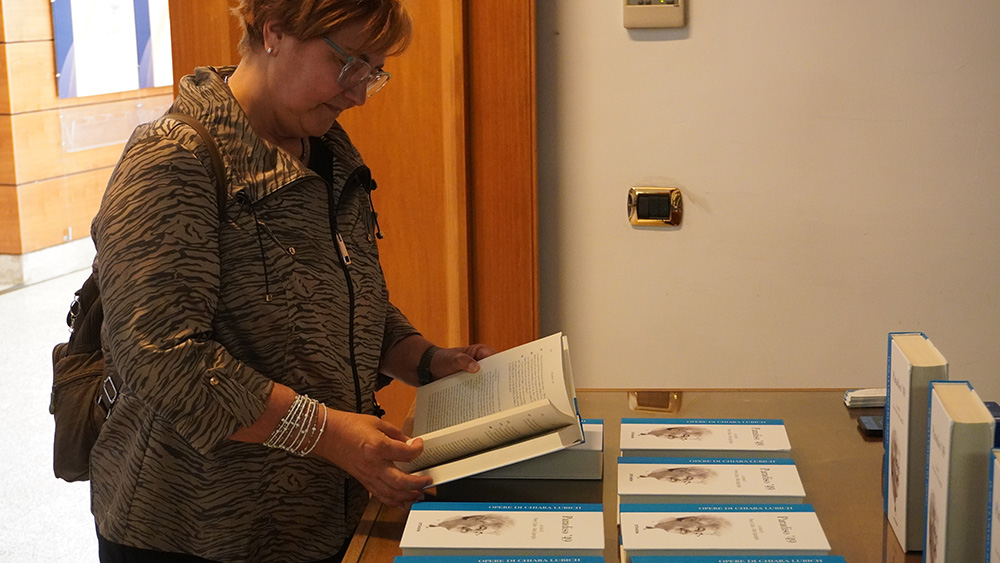
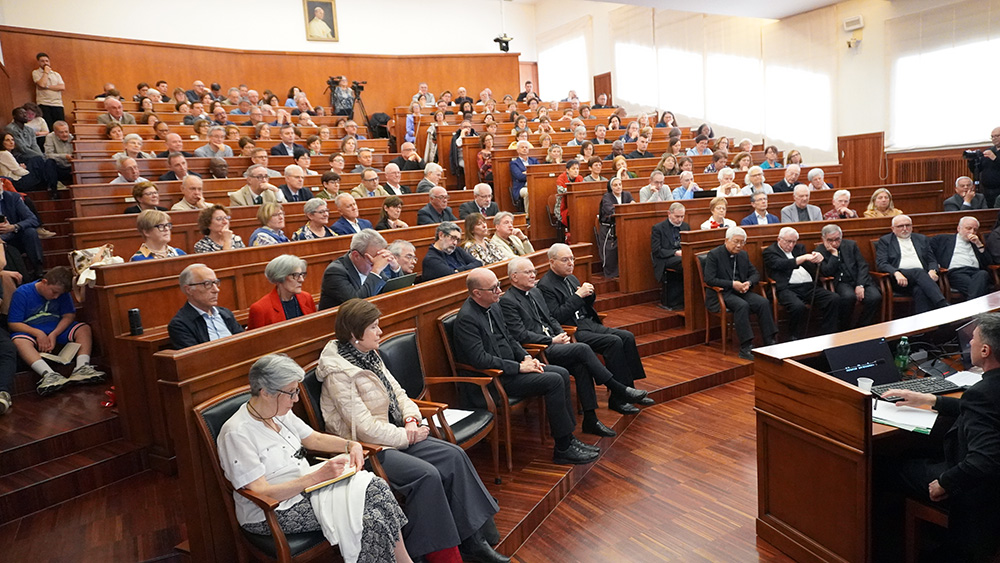
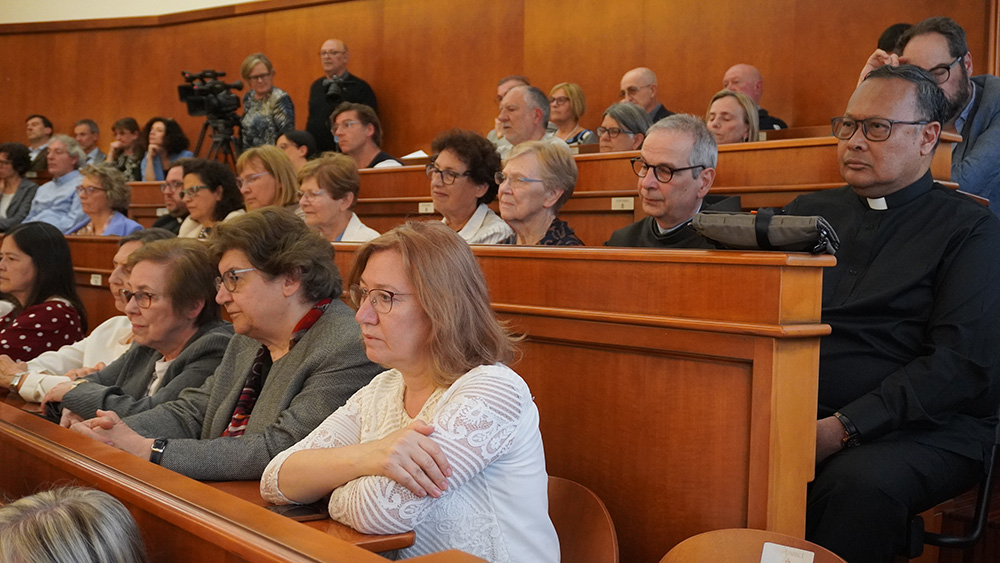
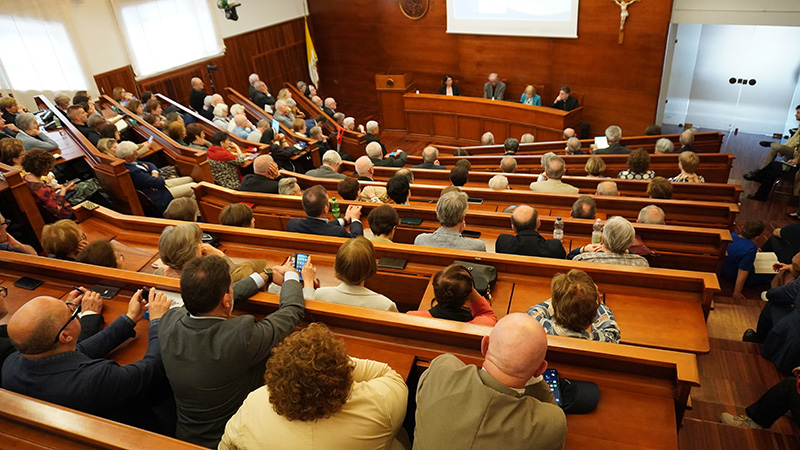
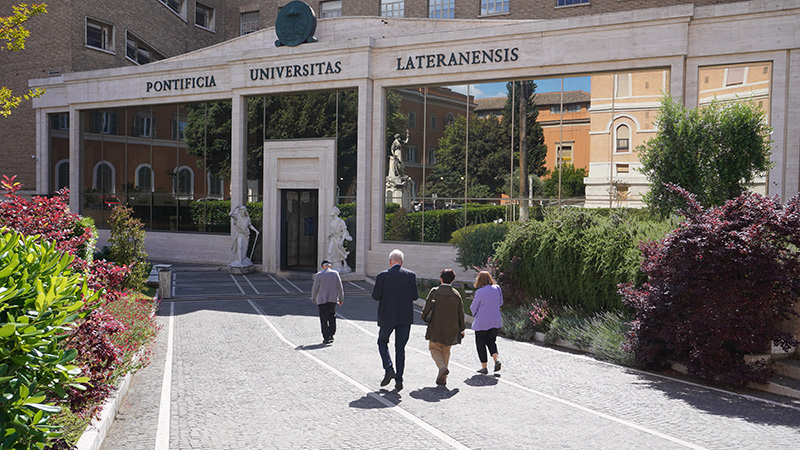
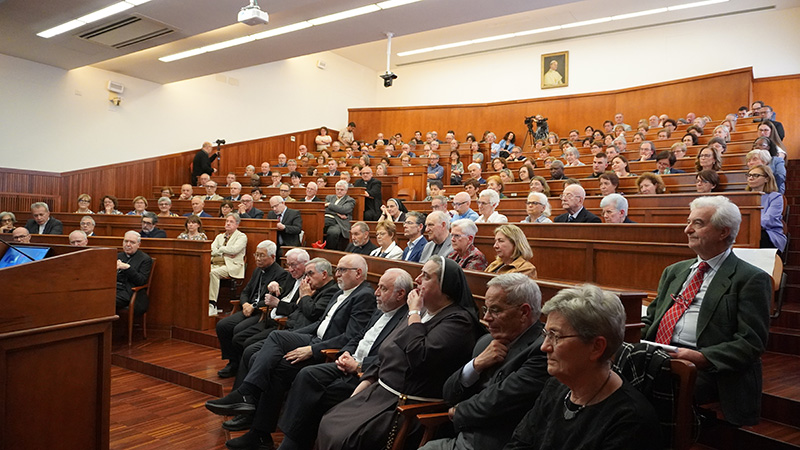
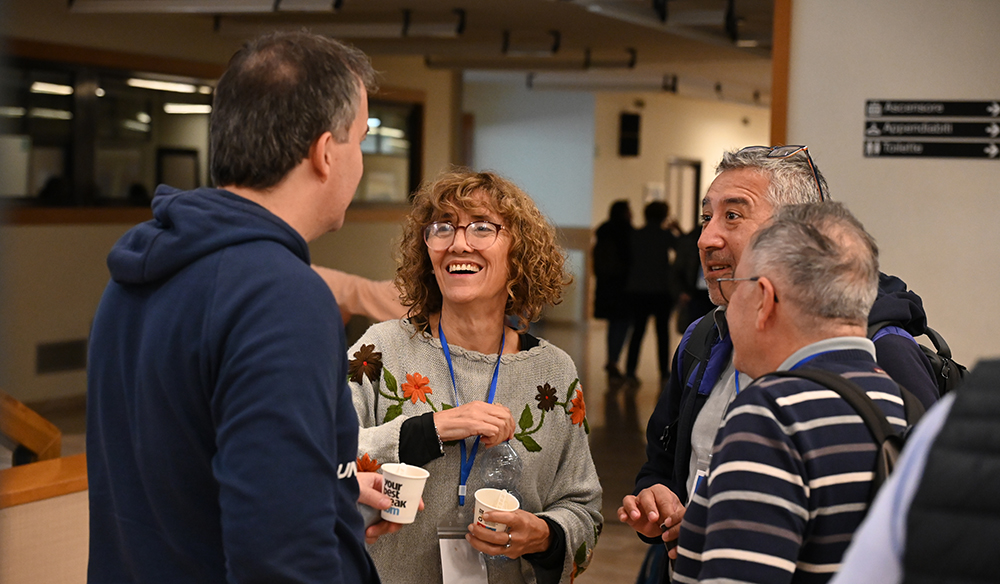
A full lecture hall, attentive, almost suspended in silence. This was the atmosphere in the Paul VI Hall of the Pontifical Lateran University (Rome, Italy) on Friday 22nd May, when Chiara Lubich’s Paradise ’49 was presented to the public for the first time.
It wasn’t simply a book launch. The widespread impression, heard in the corridors and in conversations among those present, was that this was a historical moment: for the first time, a text kept mostly private until now, was being openly offered to ecclesial and cultural debate, in a hall filled to capacity.
Welcoming those present, Anna Maria Rossi, speaking on behalf of the Chiara Lubich Centre – promoter of the series of Works by Chiara Lubich – immediately clarified the meaning of the event, recalling the extensive editorial process that led to the publication of the volume. “It is not an isolated text – she explained – but part of a broader journey, which tells the story of the emergence of a charism in the Church”.
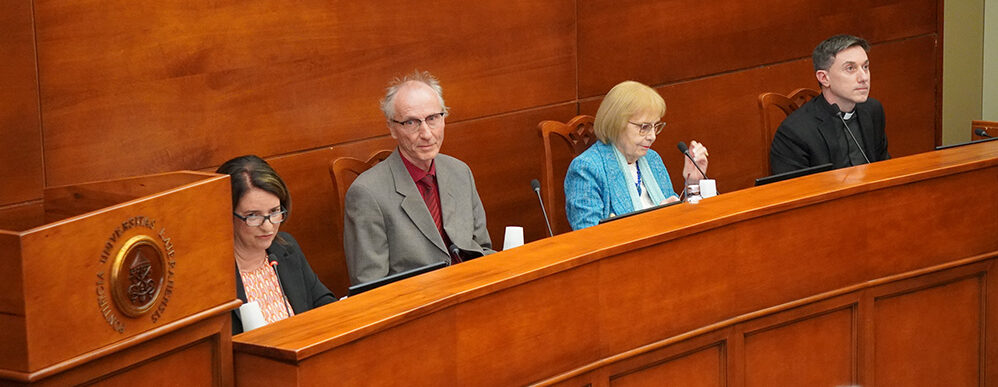
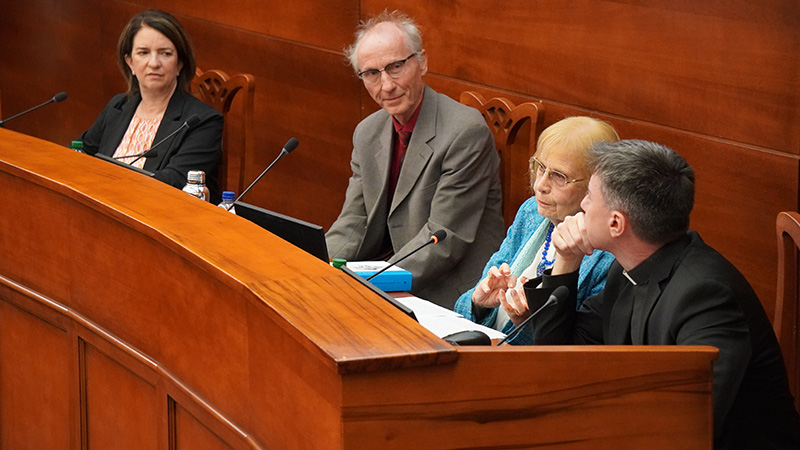
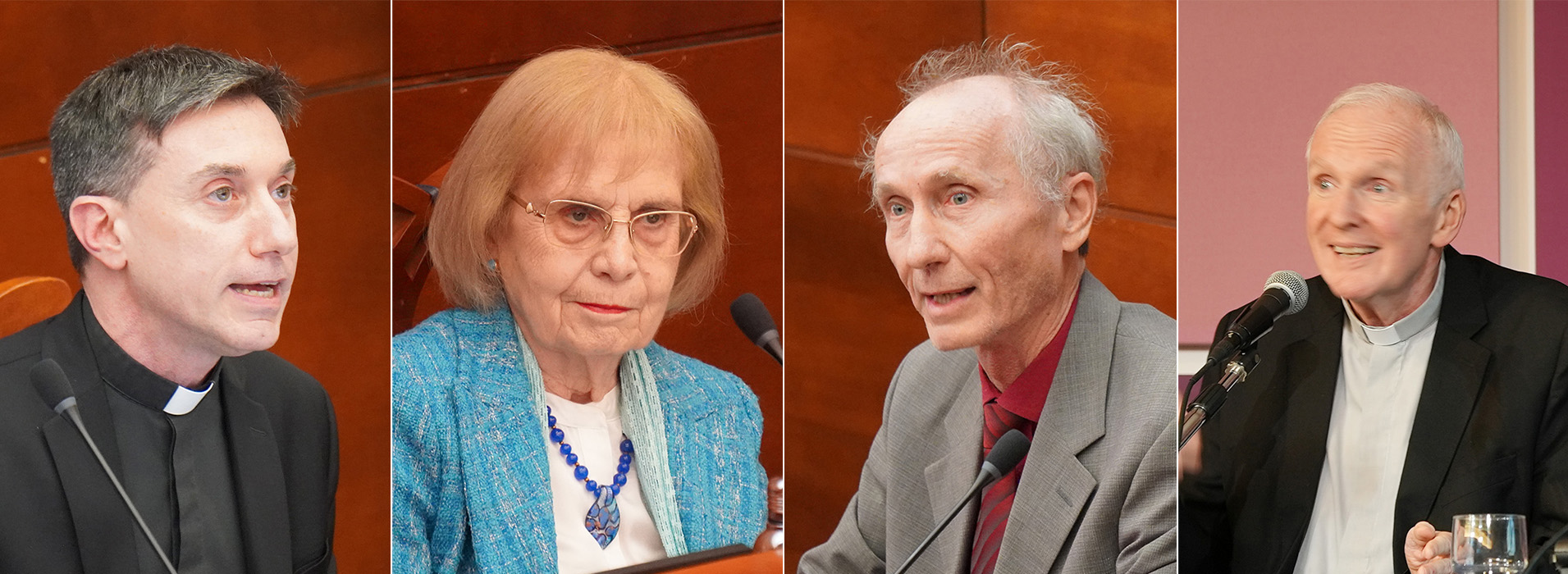
The contents were introduced by speakers from different ecclesial and academic backgrounds. Alessandro Clemenzia, Dean of the Theological Faculty of Central Italy and an expert in Chiara Lubich’s spirituality, offered an important key to the book’s interpretation: “It is not a question of understanding what Chiara wrote, but what God wishes to say about himself through this experience”. A perspective that helped reveal the depth of the text without reducing it to a simple document.
Stefan Tobler, a Swiss evangelical theologian also involved in the reflection on the Charism of Unity, drew attention to the figure of the author: a woman who, through these pages, “offers the most intimate aspects of her relationship with God” sharing her experience in an authentic way.
Particularly anticipated was the contribution of Angela Ales Bello, philosopher and phenomenology expert, the only speaker external to the Focolare Movement. She clearly pointed out that mysticism is not something “strange” or esoteric, but “an illumination of reality lived in faith”. She also highlighted an original feature of Paradise ’49: an experience that involves not only the person, but also the community, almost a “we” that becomes a subject.
Brendan Leahy, Bishop of Limerick (Ireland) and, like Clemenzia and Tobler, also a member of the interdisciplinary study centre of the Focolare Movement known as the “Abba School”, intervened remotely. He highlighted the ecclesial significance of the text. Paradise ’49, he said, is not a systematic treatise, but can “inspire new perspectives” and help us understand the Church as a living and relational communion.
Throughout the meeting, alongside the great enthusiasm, there was also a certain caution: how can such an intense text be received without simplifying or misunderstanding it? The answer emerged several times, almost like a guiding thread: Paradise ’49 cannot be understood only by reading it but by letting oneself become involved in it.
Perhaps this was the deepest meaning of the day. With this publication, the Focolare Movement has taken a step towards greater openness: what was born as a lived experience is now being offered to everyone, not as an object to be analyzed, but as a proposal for life.
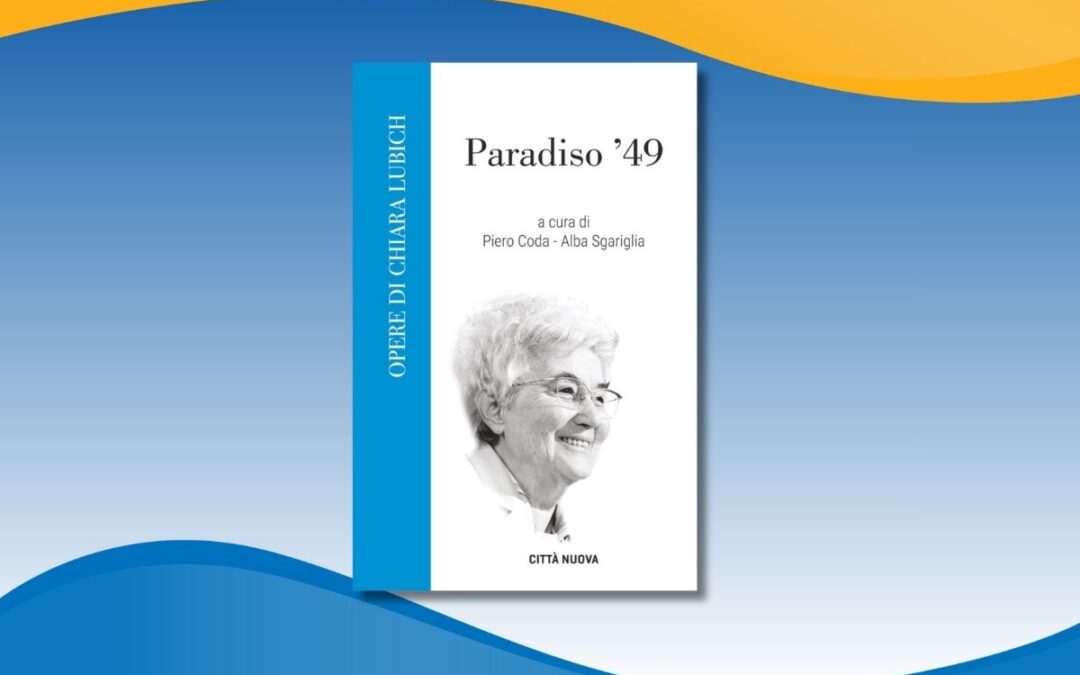
“Let us give thanks together to the Lord for the great spiritual family that has been born from the charism of Chiara Lubich.” These were the words of Pope Leo XIV to the participants at the General Assembly of the Work of Mary – Focolare Movement, on the 21st of March 2026. As the Pope recalls, Chiara Lubich is widely known for her work as a foundress as well as for her ’spirituality of communion’, thanks in part to her numerous publications. Less well known is the mystical experience that lies at the origin of her Movement and from which she has constantly drawn inspiration. The publication of Paradise ’49 is part of the extensive publishing project of her “Works”. This is being undertaken by the Chiara Lubich Centre and published by Città Nuova, and it is the sixth volume in the series. This book now lifts a veil that had previously been kept reserved, which was the understandable wish of the Author herself. It was over that intense contemplative period that stretched from the 16th of July 1949 to the end of 1951, and it is known precisely as “Paradise ’49”.
Before focusing on the book, let us take a look at the event itself, of which the book is a narrative. On the 16th of July 1949, after attending Mass, Chiara wanted to turn to Jesus and call him by name, but she could not. What she had just experienced had transformed her into Jesus; she could not therefore call herself, and from her lips came the words that Jesus used in his prayer: “Abba, Father”. Later, she wrote: “I seemed to understand that the one who had put upon my lips the word “Father” was the Holy Spirit.” It is not merely a word, it is reality: “in that moment I found myself within the bosom of the Father. … I had, therefore, entered into the Bosom of the Father, which appeared to the eyes of my soul (but it was as if I saw it with my physical eyes) as an abyss that was immense, cosmic. And it was all gold and flames above, below, to the right and to the left.” From the very first moment, the event takes on mystical overtones, comparable to similar experiences lived by other mystics. Yet it also reveals a distinctive feature, stemming above all from its unitive, “collective”, ecclesial dimension.
Before attending Mass, Chiara had made a “pact of unity” with Igino Giordani, a well-known writer, Member of Parliament and father of a family. Together they had asked that it be Jesus, who came through the Eucharist in one of them, to “bring about” unity with Jesus in the other, both of them totally open and receptive to his action, as into an “empty chalice”. And that is what happened: upon her and upon him, having become an “emptiness of love”, only Jesus came and remained. The two had become one Christ. It was a repetition of the Apostle Paul’s experience: “It is no longer I who live, but it is Christ who lives in me” (Galatians 2:20): the two souls had become one soul, that of Christ. It is this one soul that entered the bosom of the Father. The mystical experience that took place did not concern just one person but, first two, then an entire group to whom Chiara communicates what she is experiencing, constantly involving new people in the same experience: “I had the impression of seeing in the Bosom of the Father a small company: it was us.” In the bosom of the Father, life is lived as a single Soul (the capital letter is a constant feature of Chiara’s narrative).
Highlights from the presentation at the Pontifical Lateran University
When, shortly afterwards, the phenomenon of the “mystical marriage” occurs—common to many mystics—it is no longer one person who is “married”, but the entire group that has become a single Soul. From that moment begins what Chiara calls “travelling Paradise”, a sort of honeymoon in which the Spouse shows her the realities of Heaven that now belong to her as well. And here we venture into the contents of what she calls “lights”, “revelations”, “understandings”, the experience and insight of the Revelation, of such intensity that she becomes identified with what she “sees”, almost as if she were coming to know the mysteries of the faith from within. These are insights regarding the Movement that is coming into being, guidelines for a pedagogy of the spirituality of communion, indications that translate into prayer and daily life: “on earth, as it is in Heaven”.
The text is not easy to read, both because of its mystical language—filled with paradoxes, metaphors and contradictions—and, above all, because of the richness of its content. The Author composed this work over a long period of years, practically until the end of her life, selecting and organizing the papers from that period of enlightenment. We are faced with a variety of literary genres: letters, intimate pages in the style of a spiritual diary, notes in preparation for talks, newspaper articles and commentaries on the “Word of Life”, autobiographical and speculative reflections, and even a fable. However, although varied, the experience unfolds as if along a golden thread that follows a divine pedagogy, “a revelation of mysteries as light and sweet as Paradise, as logical and progressive as life”. The publication reproduces the complete text, just as she wished to present it, with her own comments added during the slow process of rereading.
The speakers at the presentation: Alessandro Clemenzia, Dean of the Faculty of Theology of Central Italy; Angela Ales Bello, Professor Emerita of Contemporary Philosophy – Pontifical Lateran University; Stefan Tobler, theologian and Director of the Institute for Ecumenical Research at the “Lucian Blaga” University of Sibiu (Romania); Brendan Leahy, theologian and Bishop of Limerick (Ireland)
There are two introductions, one of a historical nature, by Alba Sgariglia[1], which traces the history and complex composition of the text, and the other of a theological nature, by Piero Coda[2], which highlights the nature of the experience and how it fits into the historical journey of the Church, whilst also revealing its novelty. The book is enriched by a glossary, bibliography, and scriptural and subject indexes.
This is a fundamental text for understanding the charism of Chiara Lubich, which extends beyond her Movement. It is a work destined to form part of the Church’s mystical and doctrinal heritage, capable of speaking to every person, “a legacy to be shared and brought to fruition”, as Piero Coda writes.
How should one read this book? “All these papers I have written,” the Author noted as early as the 25th of July 1949, “are worth nothing if the soul who reads them does not love, is not in God. They have value if it is God who reads them in that soul.” It is a fundamental principle for understanding any work: to place oneself on its same level. To understand Paradise ’49 properly, it is essential to listen sincerely to the experience of its Author and almost to enter with her into that “Paradise” to which the book bears witness. Chiara Lubich was convinced of this. When, on the 22nd of November 2003, she began reading her work again, together with a small circle of scholars whom she had gathered around her, called the “Abba School”, she noted in her text: “This time we are reading it with the aim of converting ourselves, translating it into life. We must ensure that the Abba School becomes Paradise. In fact, only in this way can the contents of these volumes be understood….”
[1] Alba Sgariglia is the director of the Chiara Lubich Centre, a researcher at the Focolare Movement’s Centre for Studies, and a member of the Abbà School in the field of theology and Mariology.
[2] Piero Coda is Secretary General of the International Theological Commission and a professor of Trinitarian Ontology at the “Sophia” University Institute. He was a former President of the Italian Theological Association from 2004 to 2011.
The latest volume which contains what Chiara Lubich wrote about her mystical experience: Paradise ’49, is now in the bookshops. In many ways this is a unique text, one that will surely provoke lively reflection. Above all because, for the first time, it places before the wider public, without omissions or selections, the deepest source of the Christian adventure that made Chiara one of the leading figures of the second half of the last century and beyond. It hands on to us a legacy that still remains largely to be explored and developed.
Yes, the deepest source: not the fruit of her imagination, however brilliant, or merely an original inspiration granted to her. It is something more and something different. It is something, as the philosopher Jean-Luc Marion wrote, that comes d’ailleurs, from that “elsewhere” which in Jesus has been given to us once and for all “from within” and “beneath” the history we live, with all its magnificent and astonishing expressions and surprises and with its dramatic and disturbing trials.
Throughout the centuries, this ever new proposition of Jesus, as promised by him: “Behold, I am with you always, even to the end of the world”, is a well-known tenet of the history of the Church. Each time it is unforeseeable and surprising, because it is the work of the Spirit, who “is like the wind that blows where it wills and you hear its sound, but you do not know where it comes from or where it goes.” Yet it is something that can still be recognized and appreciated.
Paradise ’49, once again and in an unprecedented form, is a simple and faithful witness to all this. Here lies its first value. We cannot but be deeply grateful to Chiara who in the end, not without first carefully assuring herself that all was in harmony with the faith of the Church, chose to offer this gift. She considered it something precious and recognized her responsibility toward it, as a gift given by God not only for herself but for everyone. From this comes a second value of these pages: the role they are destined to have for the Focolare Movement. Its charismatic identity was forged precisely through the events witnessed in these pages, so that it might be “the new wineskin” called to preserve and generously pour out the “new wine” of the Spirit that was communicated there, in service of the Gospel’s journey through history.
Finally, there is a third and perhaps decisive value of this writing: making accessible to us today the decisive resource represented by the event of Jesus. It has been said that Christianity has yet to flower fully. . And at this challenging turning point in history, in the fraternal dialogue that the disciples of Jesus are called to live with all who seek truth and serve justice: no, we haven’t said everything yet.
… Which word is it that the Holy Spirit imprinted like a seal on this house, on our Movement, when God first thought of it and started forming it here on earth?
We know what it is. The word is “unity.” Unity is the word that sums up our entire spirituality. Unity with God, unity with our neighbours. Or rather, unity with our neighbours in order to reach unity with God.
The Holy Spirit, in fact, revealed to us a way that is distinctly ours, a fully Gospel-based way to unite us with God,
to find God. … We seek God and find him by passing through our neighbour, by loving our neighbour. We find God when we strive to bring about unity with our neighbour, with every neighbour, if we establish the presence of Jesus among us. Only in this way are we guaranteed unity with God and we can find him alive and beating in our hearts. It is this unity with God which then, in turn, urges us to go out to our neighbours, and helps us to ensure that our love for them is not pretence, nor insufficient, or superficial, but rather is radical, full and complete, given substance through sacrifice, always ready to give our life, and capable of bringing about unity.
Our Statutes place unity at the basis of everything, as the norm of every norm, as the rule to be
observed before every other rule. Unity is the word for us; it is the rock.
We have no meaning in life except in this word, where everything acquires meaning – our every action, every prayer, every breath. And if we concentrate on living this word, if we live it as well as we possibly can, everything will certainly be safe, we will be safe and also that part of the Movement entrusted to us will be safe.
Perhaps, in the future, the Work of Mary, both as a whole or in some of the zones,
will go through quite different times from what we are experiencing now, when we have so many consolations, fruits, light, fire.
Moments of darkness or despair may well arise, there might be persecutions
or temptations. … There might be misfortunes or disasters… But if we stand firm on the rock
of unity, nothing can touch us, everything will go ahead as before.
Chiara Lubich in “Conference Calls – Conversations via Telephone and Satellite Connections”, 2022 New City, pages 342-344
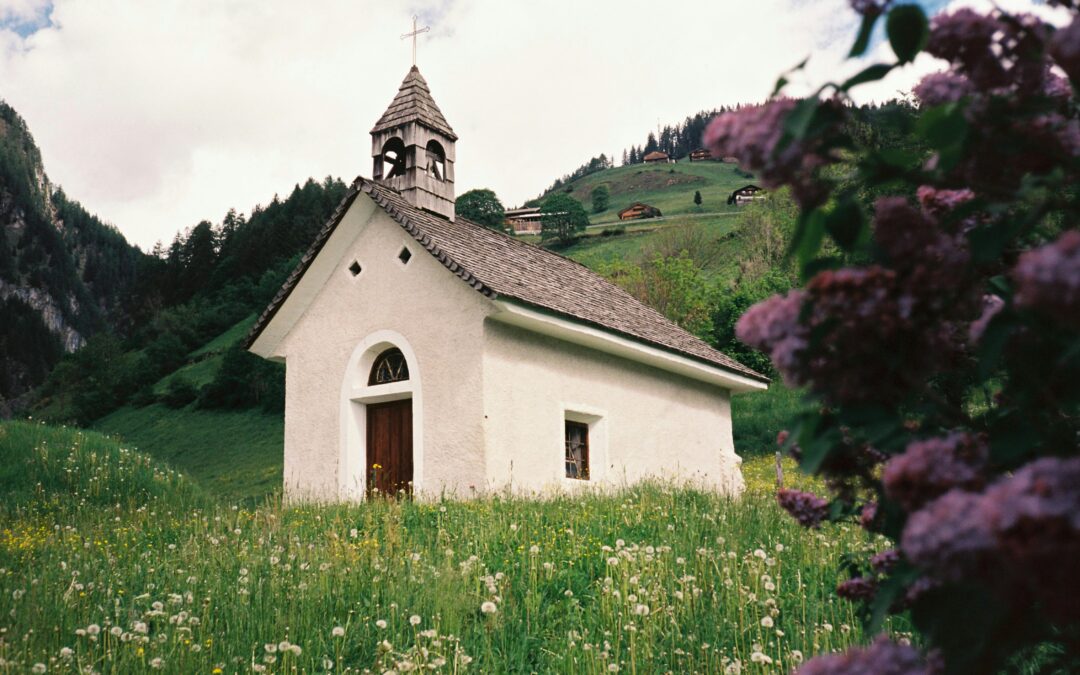
I have felt you beating in the perfect stillness of a little Alpine church, in the shadow of the tabernacle of an empty cathedral, in the breathing as one soul of a crowd who love you and who fill the arches of your church with songs and love.
I have found you in joy. I have spoken to you beyond the starry firmament, when in the evening, in silence, I was returning home from work.
I seek you and often I find you.
But where I always find you is in suffering.
A suffering, any sort of suffering, is like the sound of a bell that summons God’s bride to prayer. When the shadow of the cross appears the soul recollects itself in the tabernacle of its heart and forgetting the tinkling of the bell it “sees” you and speaks to you.
It is you who come to visit me. It is I who answer you: “Here I am, Lord, I desire you, I have always desired you.”
And in this meeting my soul does not feel its suffering, but is as if inebriated with your love: filled with you, imbued with you: I in you and you in me, that we may be one.
And then I reopen my eyes to life, to the less real life, divinely trained to wage your war.
Chiara Lubich in Meditations, New City, London 2005, pages 74-75