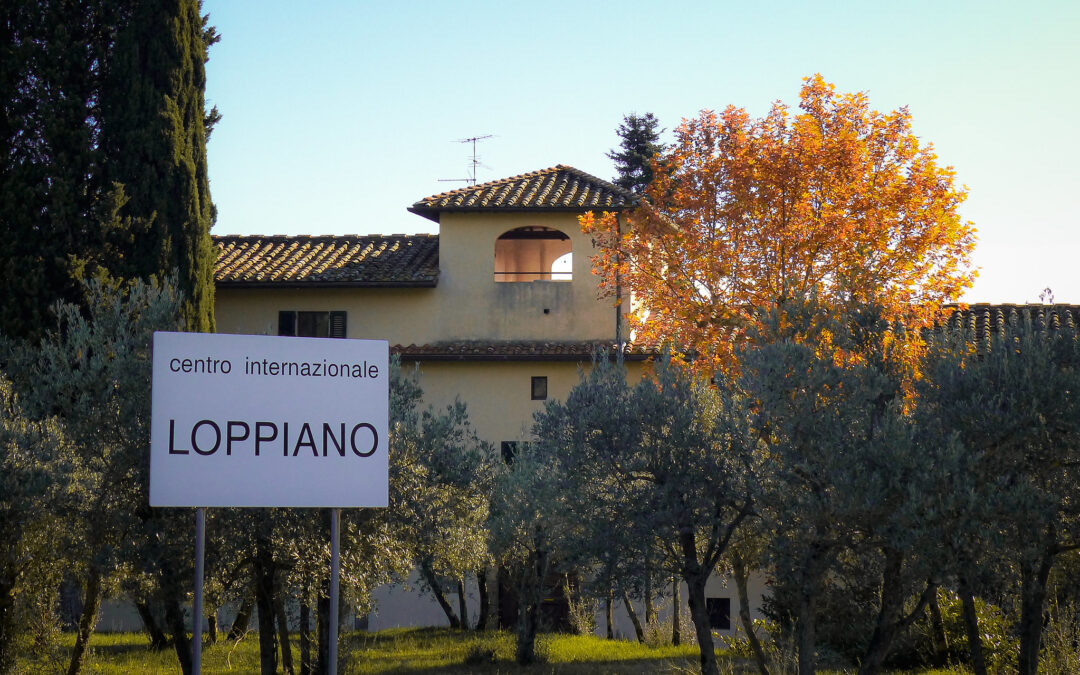
At the launch of the website of the “Co-citizens of Loppiano”, Roberto Brundisini told us that returning to Loppiano after many years reawakened feelings and dreams and inspired the idea of starting new projects.
“One day I went back to visit Loppiano, where I had previously lived for some time. I realized that I felt at home there. I was surprised that I had stayed away for so long and I thought of many others who, like me, had lost touch with this reality. I expressed my thoughts, that this is the home not only of those who live there but also of those who love it. And I know there are many.
Foto: Horacio Conde
The word spread, dormant circuits were reactivated and, as if from a long hibernation, old and new faces were awakened. Loppiano exists, it’s there, it’s still there! The dreams that had fallen asleep come alive again, with a humble determination. Because the dreams that remain in the drawer grow mould.
So, what should we do? Where can we start first?
Then it hits us, maybe we can establish an energy community. “Yes,” someone replied. Maybe we could set up an alternative agriculture. Fantastic! Contribute to the urban and environmental reorganization of the Little Town according to the criteria of Laudato Sì.
What a dream! Why don’t we organize a welcome centre where people can spend a few days relaxing and re-educating themselves regarding nature and human relationships? Fantastic – someone else continued – I would love there to be a hub, a meeting space for cultural exchanges between young people and perhaps also between artists. Sounds exciting! What if we set up a Web-radio with a universal outlook, given the variety of skills, experiences and knowledge that many of us, scattered across the globe, have acquired over the years? Another dream (…)”
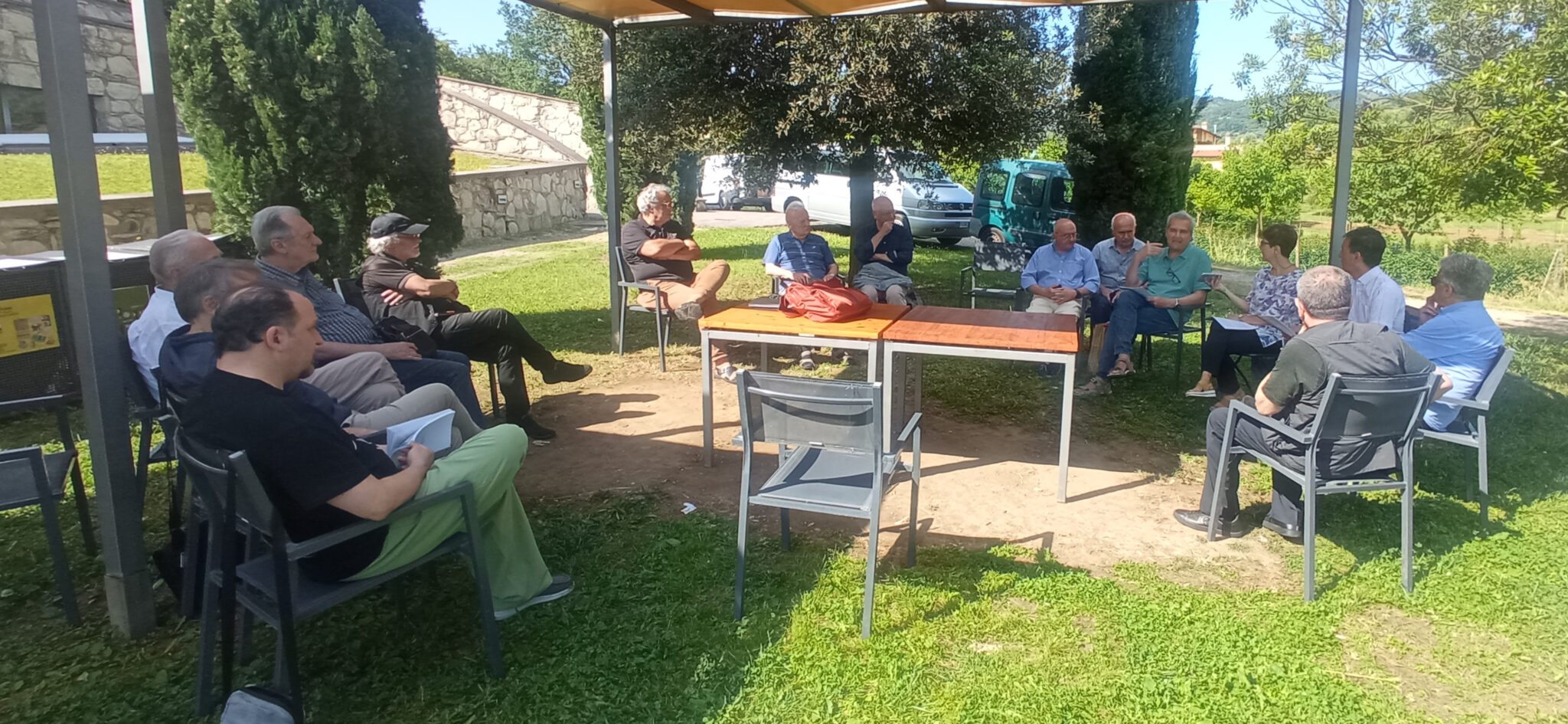
During a recent visit to the International Centre of the Movement, we interviewed the President of the Association, Alessandro Agostini and one of the councillors, Nicola di Settimo.
Turn on subtitles and choose your desired language
Interview Anna Lisa Innocenti e Carlos Mana Editing: Joaquín Masera.
In 2025, the Focolare Movement took additional steps to make its commitment to safeguarding both structural and verifiable, with particular attention to children and vulnerable adults. This was carried out in three areas:
consolidation of regulations
organisational strengthening
educational and cultural growth
Regarding regulations, the Movement has drawn up and approved the Safeguarding Policy of the Focolare Movement, which came into effect on the 1st of January 2026. The Policy brings together values, responsibilities and practices, connects procedures and guidelines, defines codes of conduct, criteria for safe spaces with a clear focus on people who have suffered abuse, providing for listening, accompaniment and – in specific cases – support and measures for compensation.
On an organisational level, on the 2nd of September 2025, the Safeguarding Office was established, with the task of coordinating safeguarding activities, monitoring commitments and deadlines, supervising official communication and supporting local safeguarding officers. It is supported by the Advisory and Action Board: a body composed of experts in the fields of formation, communication, law, and accompaniment of people who have suffered abuse. Its task is to assess the compliance of the actions undertaken according to the founding values of the Focolare Movement, to propose guidelines and strategic plans, and to promote collaboration with external experts and networks, ensuring constant updates on current regulations and best practices in the field of safeguarding.
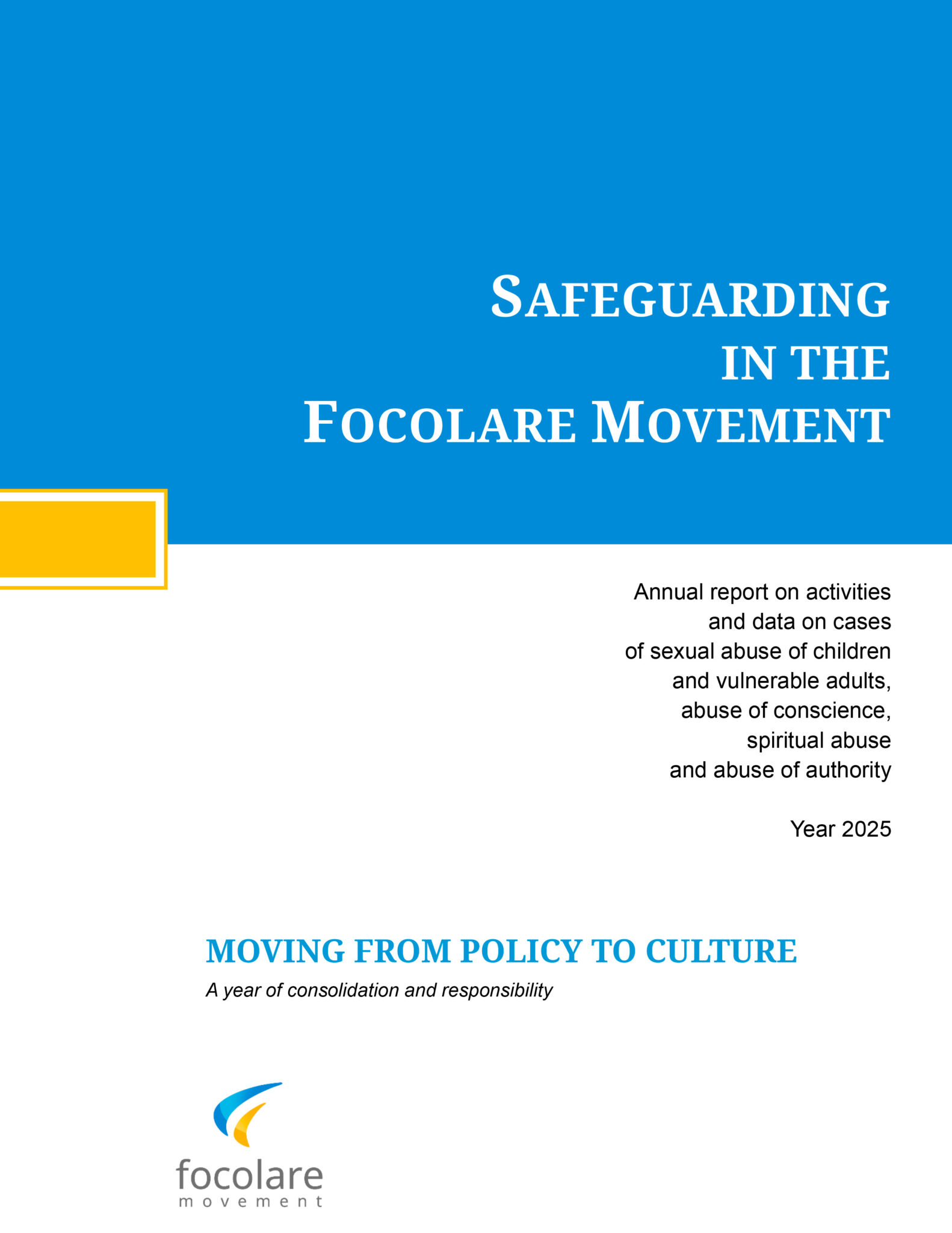
View and download the 2025 Report by clicking on the image
In dialogue with the Catholic Church, in the two-year period 2024-2025, a collaboration with the Pontifical Commission for the Protection of Minors (PCPM) was developed. The Commission examined the Procedures for handling cases of abuse, making several observations; it also requested information to include an analysis of the Movement’s policies in its own2024 Annual Report. The PCPM’s recommendations have led to a process of implementation that has already been partially completed (including the publication of the Internal Regulations of the Independent Central Commissionand the reporting of dedicated resources) and, for the remaining part, is in the process of being defined or developed (additions to be made to the General Statutes of the Focolare Movement, IT tools and institutional channels for data confidentiality).
The commitment to integral formation in safeguarding was outlined in an initial document summarising the courses and initiatives planned for the two-year period 2024–2025. The information shows the work being done to make formation more widespread, strengthen local commissions and coordinators, and at the same time highlights some critical issues that need to be addressed: continuity of formation, intercultural adaptation of materials, and improved flow of communication.
All of these steps – Policy, Safeguarding Office, collaboration with the PCPM, formation and transparency in reporting – express the desire to continue with determination on the path of prevention, shared responsibility and listening to those who have suffered an abuse, in the belief that safeguarding is an integral part of the Movement’s mission and a service to the common good.
In this perspective, the words that the Pope addressed to the participants at
the meeting ‘Building communities that safeguard dignity’ also resonate for
the Focolare Movement as a guideline to follow:
“I therefore appreciate and encourage your intention to share experiences and learning processes on how to prevent all forms of abuse and how to give an account, with truth and humility, of the steps taken to protect minors. I urge you to continue this commitment so that communities may increasingly become examples of trust and dialogue, where every person is respected, listened to, and valued.
Where justice is lived with mercy, wounds are transformed into openings for grace.”[1]
Stefania Tanesini
Interview with Bishop Alí Herrera, Secretary of the Pontifical Commission for the Protection of Minors of the Catholic Church
My name is Vida and for a few years now, I and others from the Lithuanian community have been supporting the family of Julia from Indonesia, whom I met in 2018 in Manila (Philippines) on the occasion of Genfest, the international meeting that brings together the young people of the Focolare Movement. Over this time, despite the distance, a sisterly relationship has developed between us. Her family lives in Medan and is part of the Focolare community there. We have been able to support them at various difficult moments and, it always surprised me and gave me joy that whenever they received help, they immediately thought of other people too.
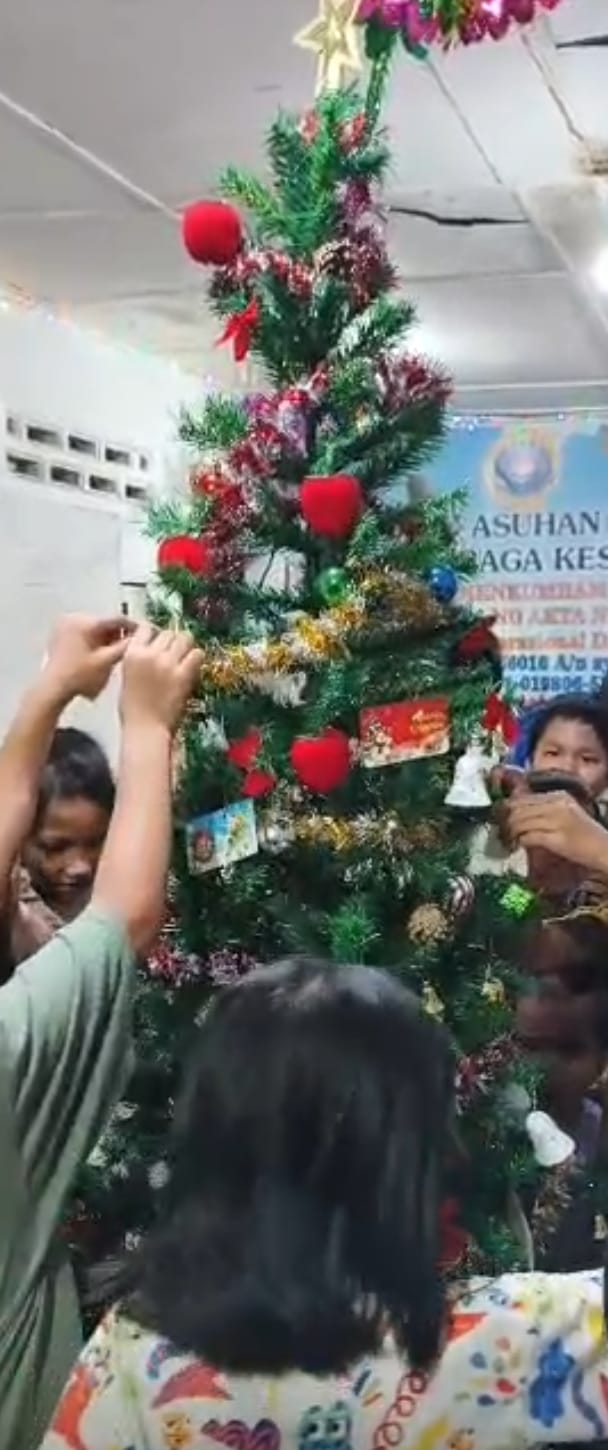
Before Christmas Julia shared with me her desire to help the children in an orphanage. They needed pillows and mattresses as the flood had destroyed those they had. Since she is a very practical person, she had already worked out the amount needed. So I wrote to the Lithuanian community on our shared website, hoping that someone would be able to donate something. “I was amazed to see that in a short time we collected an even larger amount that I immediately sent to Julia who did everything she could to make the children happy. As well as the mattresses and pillows, for the first time, they also had a Christmas tree
The concluding residential week of the first year of the two-year political action training programme will be held from 26th January-1st February 2026. The programme is promoted by the New Humanity NGO of the Focolare Movement in collaboration with the Pontifical Commission for Latin America
L’evento, con la metodologia dell’Hackathon, vedrà la partecipazione di 100 giovani leader dei cinque continenti, impegnati nei propri Paesi in ambito politico e sociale, di diverse culture e convinzioni politiche. Dopo mesi di intenso lavoro online, i giovani si ritroveranno a Roma in presenza per tradurre il percorso di apprendimento, che hanno condiviso da remoto, in proposte di incidenza politica: la sfida che dovranno affrontare è quella di ideare processi e strumenti idonei ad affrontare i punti di crisi che emergono nell’esercizio del potere politico, nelle relazioni e nelle istituzioni politiche.
Great attention will be paid to the participatory dimension of public policies, leading to the definition of shared pathways that will be assessed and presented during an evening open to the public, to young people and interested politicians.
“Oggi ci troviamo di fronte a problemi gravissimi – spiega Javier Baquero, giovane politico colombiano, presidente Movimento politico per l’unità/Mppu internazionale -. Ciò che va coltivata è una cultura politica che guardi all’umanità che è una e al pianeta come casa comune. A nostro parere, c’è un diverso paradigma che dobbiamo esplorare e sperimentare insieme, imparando a comporre le nostre diverse visioni a partire da alcuni valori universali”.
Argia Albanese, President of MPPU Italy agreed, “A meaningful response to the needs of our peoples cannot rely solely on the reform of institutions or from a purely managerial approach, which often seems devoid of democratic content. Our starting point must continue to be the social and community bond rooted in universal fraternity and sisterhood.”
The week concludes the interdisciplinary training focused on integral ecology, civil economy, collaborative governance and generative communication, which began in May 2025 with the support of experts from various academic institutions: Rotterdam School of Management (Netherlands), Universidade de Coimbra (Portugal), Universidad Nacional de La Plata (Argentina), Georgetown University (Washington DC), University of the Philippines, Universidade de Ribeirão Preto (Brazil), Escuela Superior de Administración Pública Bogotá (Colombia), University of Dschang (Cameroon), Sophia University Institute (Italy).
The week in Rome includes:
Two Hackathon days, in which the participants, divided into language groups, will seek solutions to collective problems.
Dialogues with experts and policy makers to connect reflection and proposals within a broad international framework.
A public meeting to present the Hackathon outcomes and to engage with politicians active at various levels and from different perspectives.
Visits and workshop activities in Rome at research and social engagement centres (which support migrants, women’s rights, climate justice, unemployment and disarmament).
Workshops to set up the global network for the second year and its governance.
There will be a much-anticipated audience with Pope Leo XIV in St. Peter’s Square on Saturday, 31st January. Representatives of the MPPU Centres who will come to Rome for the occasion will also participate and will have the opportunity to evaluate the results of the experience with the participants and to plan the next steps.
It is an intensive workshop designed to develop solutions to collective problems. The idea comes from the world of digital innovation, applying the logic of “doing together and doing it quickly” to the civic sphere.
By integrating political, administrative, economic, communication, social and technological skills, the process unfolds in several phases: analysis of problems and needs, definition of priorities and stakeholders, development of operational proposals and tools for public action.
Within the framework of the themes explored throughout the year, participants will address challenges such as corruption, oligarchic governance, media monopolies, polarization, crisis of representation and electoral abstention.
In the time available, with the support of the coaches, each group will move from problem identification to strategic proposal, building problem maps, analysing available data and designing implementable ideas. At the end, the groups will present their solutions: prototypes of intervention plans, political initiatives and cultural impact projects, participatory models and communication methods and strategies.
The added value lies not only in the ideas developed, but also in the method, which demonstrated how solutions to public problems can be co-designed with creativity and rigour, enhancing and integrating different perspectives, in the search for effective solutions to increase the quality and values of a way of living politics at the service of the unity of the human family.
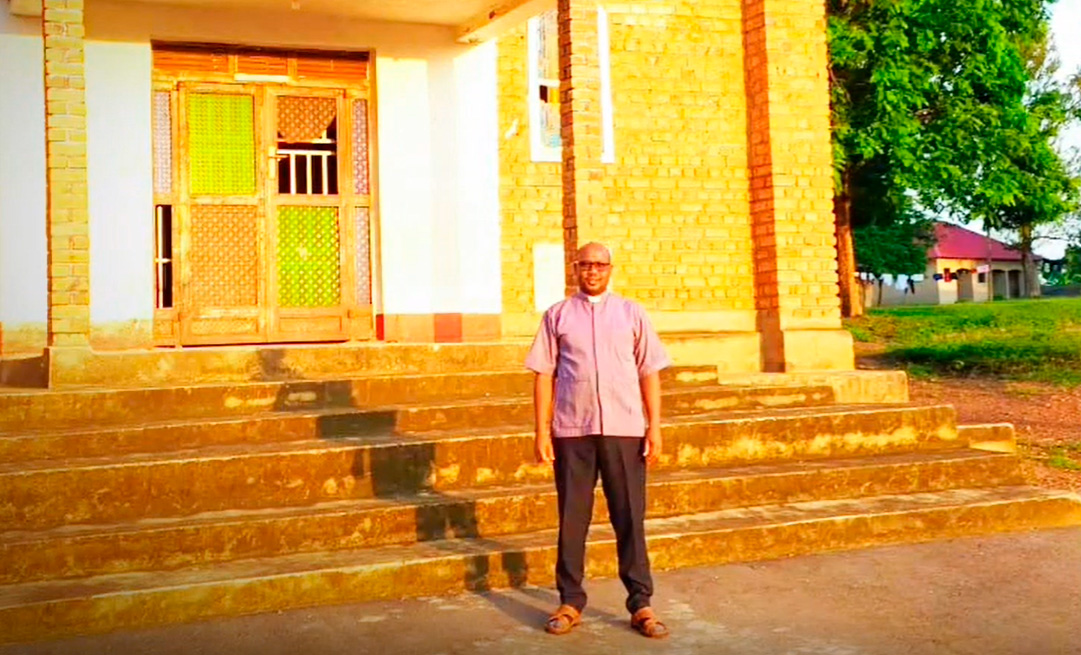
I am an Anglican priest from Uganda and I came to know the spirituality of the Focolare Movement fifteen years ago, when I was in the seminary for ministerial formation. This spirituality has shaped me in an integral way – myself, my family and my Church because it expresses in an exemplary manner, two fundamental aspects: Love and Unity. Nowhere in the Bible do we find Scripture that emphasizes division, separation, hatred, malice, tribalism, denominational divisions, or racial segregation. On the contrary, the Bible calls us to unity and love between people, even when there are differences. We are called, above all, to love our neighbour, because through loving our neighbour we love God. In this way I have learned to see Jesus in every person who is close to me (cf. Mt 25) and I experience great peace every time I share what little I have with those in need.
In one of his last prayers before the Ascension, in John 17:21, Jesus says: “that they may be one, just as I am one with you, Father”. This implies that unity should be our goal in life. Thanks to this awareness, I have had the opportunity to meet and dialogue with many people of different denominations: Catholics, Orthodox, Lutherans and also with people of other religions, Buddhists and followers of traditional religions, at all levels and in all age groups. This has given me a broader view of how to live and approach life in an integral way. I have experienced the joy of recognizing them as brothers and sisters.
I have also seen Bishops of the Anglican Church of Uganda welcome this spirituality through our experience, expression of life and witness. Currently, five bishops are friends of the Movement, including the Archbishop of the Anglican Church of Uganda. Some of them also participated in the international ecumenical conferences of Bishops organized by the Focolare Movement.
Currently we have started a communion group at Uganda Christian University, with the intention of practicing the aspect of love and unity among young people and university students; at the same time, we also transmit the value of “Ubuntu”[1], within the Together for a New Africa initiative, in which I participate as a tutor of this second round. After all this, people often ask me questions that I struggle to answer: “Why are you always happy? Don’t you ever get angry? You are always available. Don’t you have other things to do? Why are you so generous?” My answer has always been: “Do good, the reward is in Heaven”.
After the four Gospels of the New Testament, the fifth Gospel that everyone should read is that of the “you”, in the other person. We must see ourselves as a living witness, so that in our works and actions the image of God may be reflected, doing to others what we would like to be done to us. Putting into practice what the Bible teaches: to love God with all our heart, with all our mind and with all our soul, and to love our neighbour as ourselves.
Reverend Canonico Bwanika Michael Eric
[1]Ubuntu is a word of Bantu origin from sub-Saharan Africa that expresses a philosophy of life focused on compassion, respect and human interdependence, summarized in the maxim “I am because we are”, emphasizing that the individual is realized through community, sharing and collective well-being.
The Seed Funding Program (SFP) seeks to support and encourage meaningful and promising initiatives in different parts of the world for the establishment of local and/or national ecological plans within Focolare communities. Its aim is to transform personal and community lifestyles so as to foster sustainable relationships between people and the planet through ecological and sustainable projects.
With its first launch in 2021–2022, the programme has already funded 15 projects in countries in four continents. Hundreds of young people submitted proposals for the 2025–2026 round. Of these, ten projects were selected: five will be developed in Africa, three in South America, one in the Middle East and one in Asia. For more information on the projects click here.
The Focolare and the environment
Inspired by the example of Pope Francis and encouraged to continue by Pope Leo and other religious leaders for the protection of our common home, the Focolare Movement has also decided, through the Laudato Si’ Action Platform, to develop its own EcoPlan with the goal of amplifying, connecting and expanding environmental work within the Movement. In this context, and with the sponsorship of FaithInvest and Mundell & Associates, the micro-financing initiative of the Seed Funding Program was created, promoted by the New Humanity NGO and carried out in collaboration with United World Community and EcoOne, two networks linked to the Focolare, which are committed to promoting environmental awareness and action through dialogue, education, and personal engagement.
The founder of the Focolare Movement, Chiara Lubich, believed that by addressing local challenges we cultivate the moral responsibility to face global ones. In 1990, in a letter to Rev. Nikkyo Niwano, President of Rissho Kosei-kai (Tokyo), she wrote: “By now, it has been demonstrated by many serious scientific studies that there is no shortage of technical or economic resources to improve the environment. What is missing is that additional measure of soul, that new love for humanity, which makes us all feel responsible for one another in the common effort to manage the earth’s resources intelligently, justly and with moderation. Let us not forget that God the Creator entrusted the earth to all human beings—not to one nation alone, nor to one group of people.”