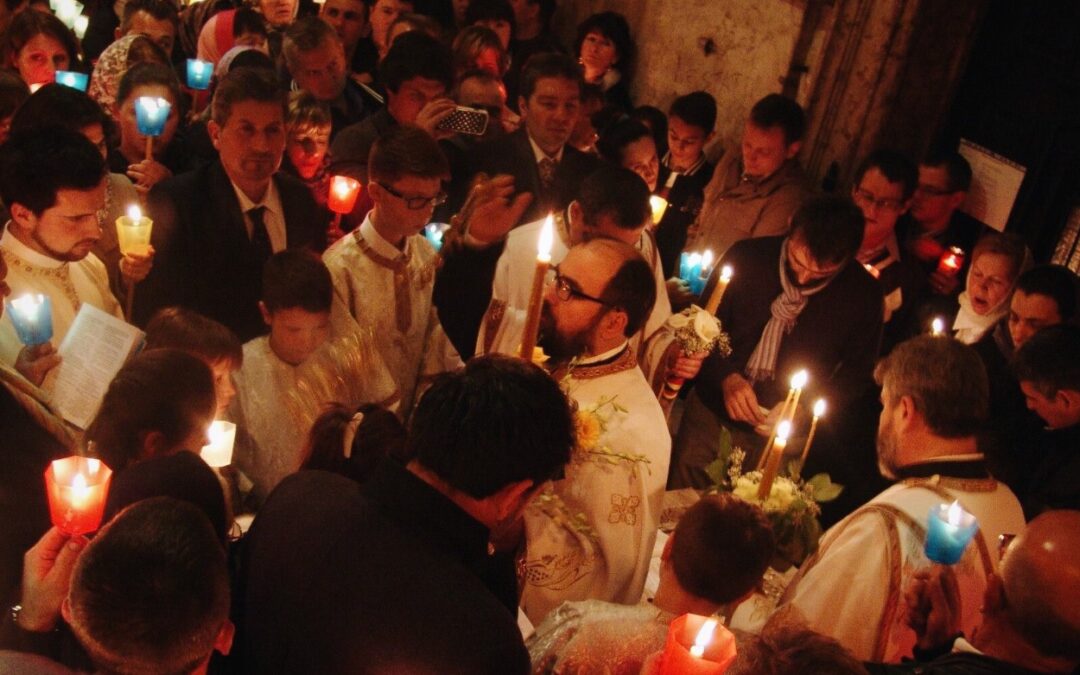
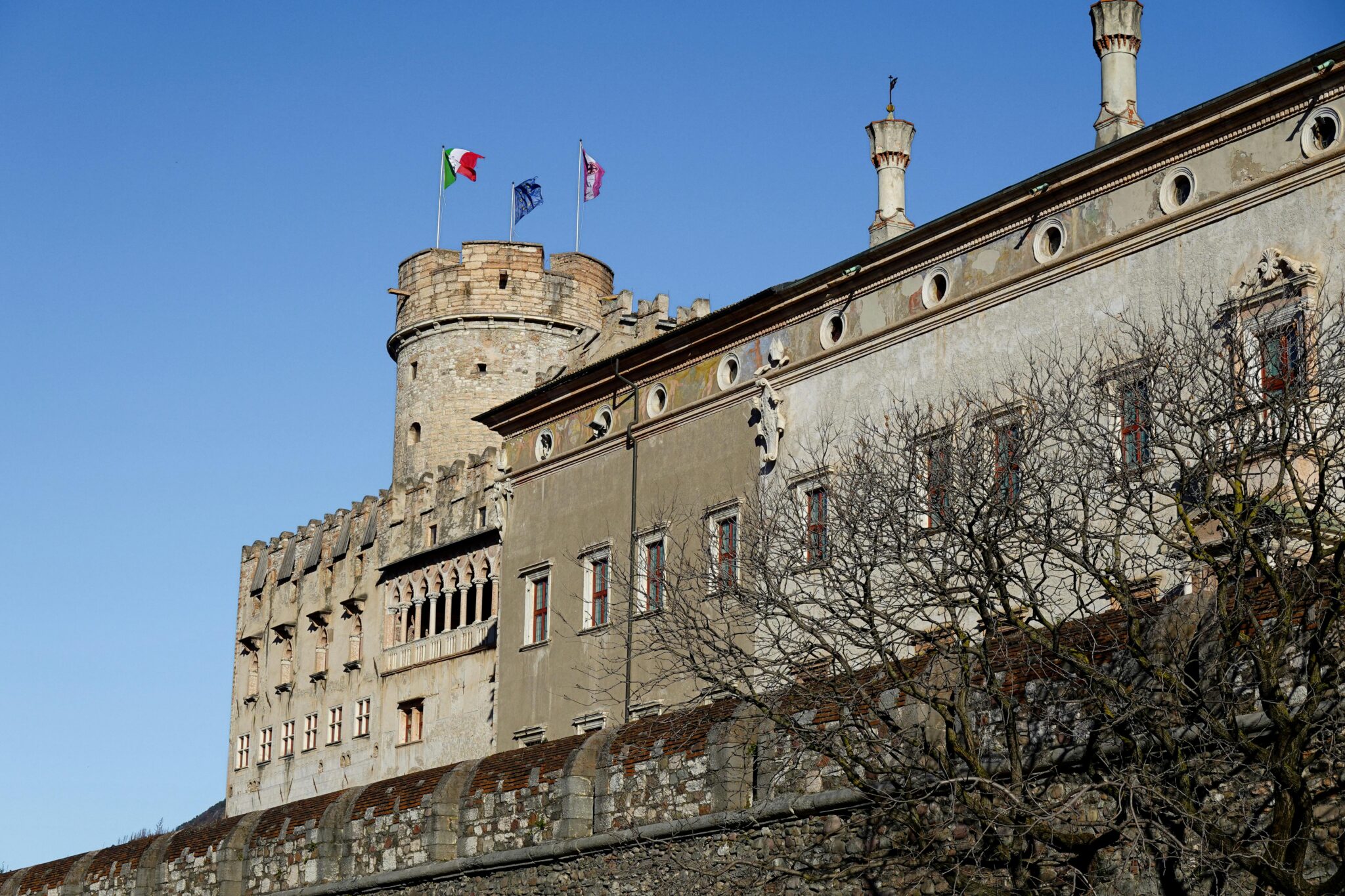
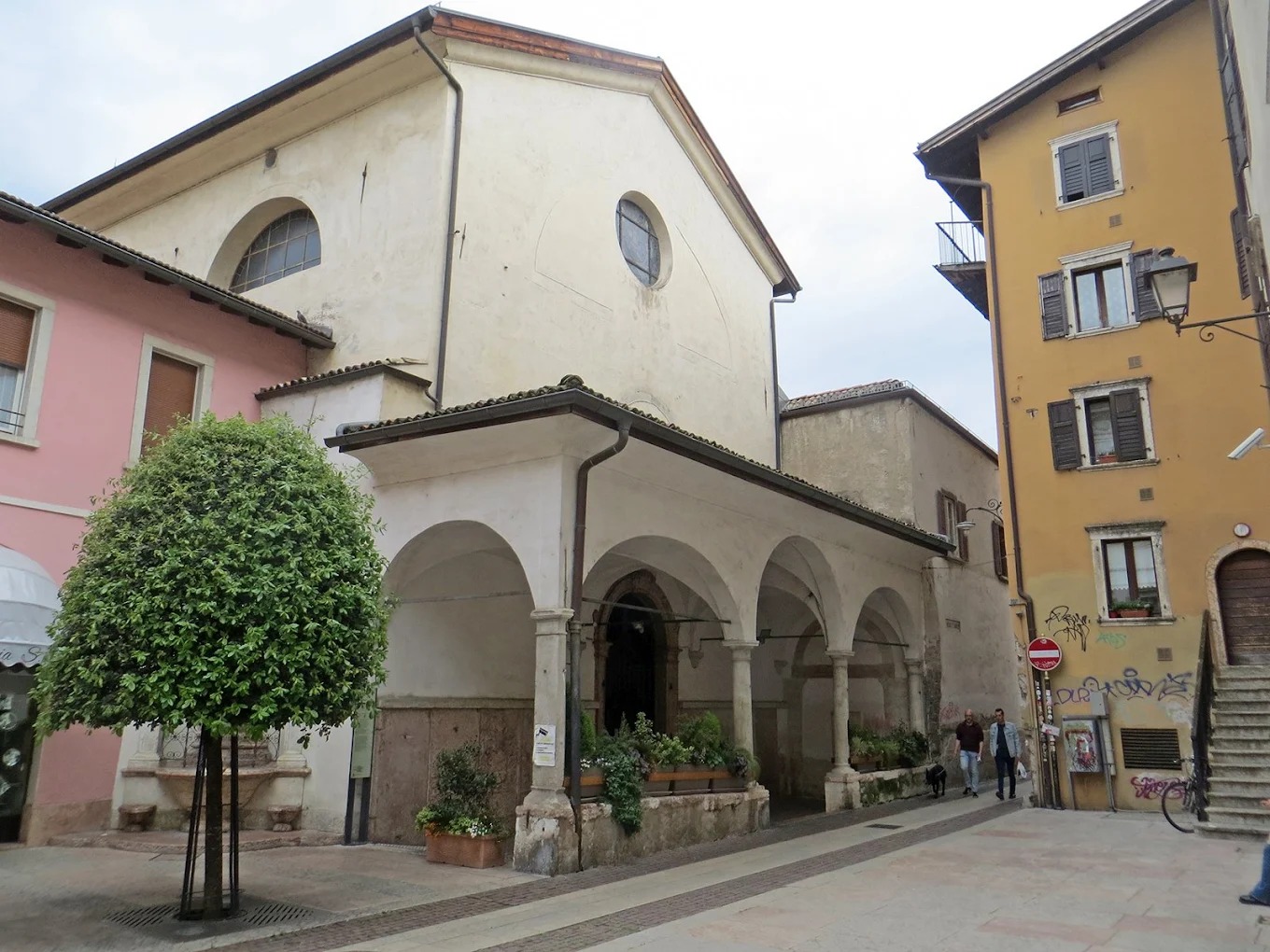
My name is Sarra Marta Lupășteanu, I am nineteen years old and I was born in Trent (Italy).Every time I say this sentence I realize how much my story weaves together places, cultures and beliefs that often do not meet easily.I am an Italian-Romanian girl and above all I am Orthodox, daughter of Father Ioan, priest of the Romanian church here in the city, and of Presbytera Delia Rodica. Our church is located in Via San Marco, in the heart of the historic center: a small Romanian world nestled between the Castle of Buonconsiglio, streets and houses that tell of centuries of Trentine Catholicism.
Growing up here has meant living naturally with the awareness of being a minority. Not a closed or isolated minority, but a different presence, which often requires explanation. When my classmates asked me why at Easter we follow a different calendar or why there are so many icons in our church, I understood that my daily life and theirs did not completely coincide. Yet, I have never felt divided: Catholics and Orthodox believe in the same God, only with different traditions, rites and sensitivities. This is the source of a reflection that stays in my heart: we need dialogue between communities but also good will, because understanding does not come by itself, we must want it.
I study Philosophy at the University of Trento and this choice has increased my ability to observe and understand what I experience. Entering a university environment, where identities mix and sometimes clash, made me reflect even more on what it means to belong to a denomination perceived as “other” compared to that of the majority.
Castillo del Buen ConsejoChiesa di San Marco
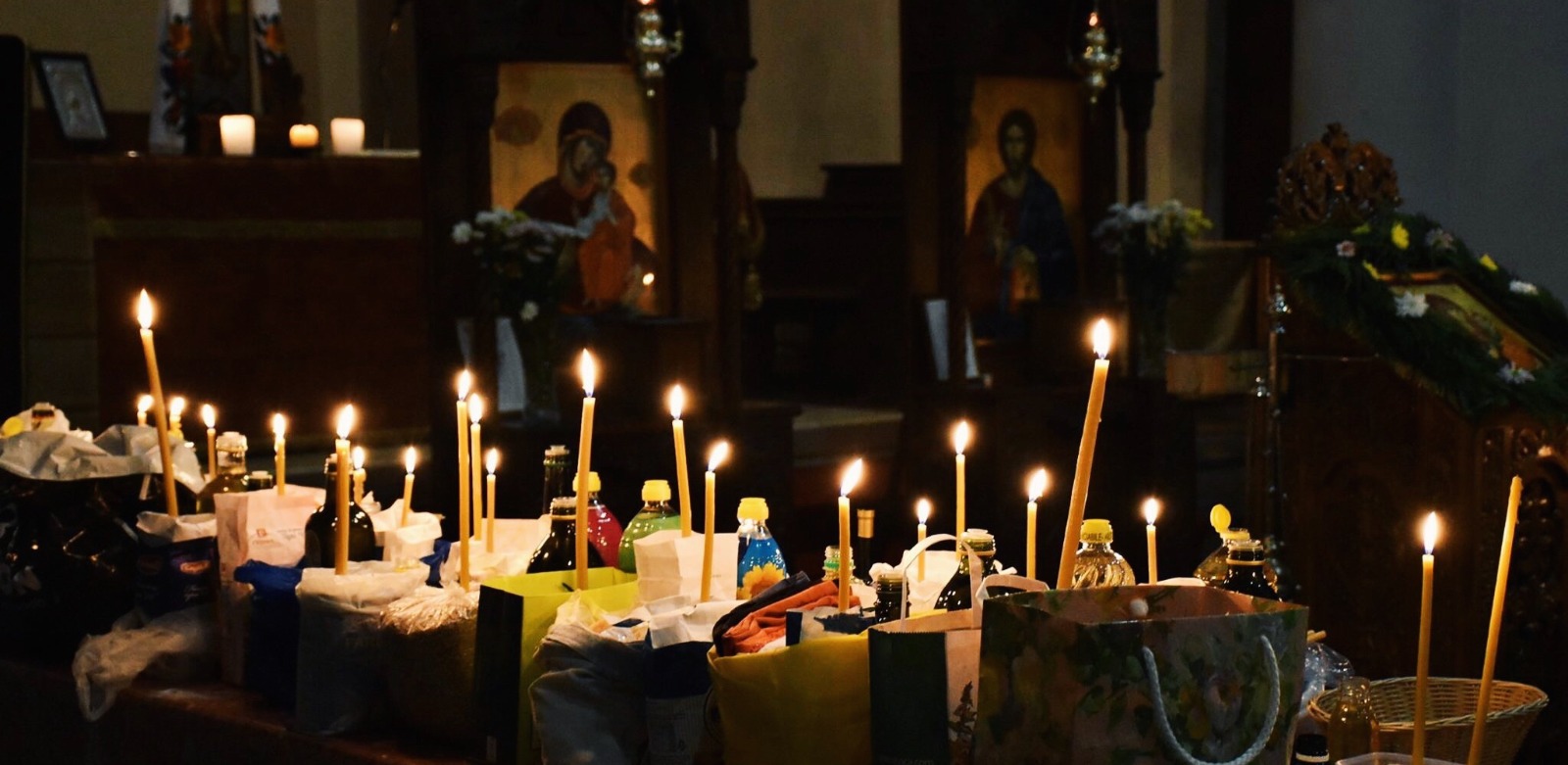
Sometimes I feel as if I am walking on a bridge: on one side, my Orthodox community, with its roots, its songs and traditions that I have absorbed since childhood; on the other, the Trentino society in which I was born, studied and grew up and which, for the last two years, has become my official homeland after obtaining Italian citizenship. I speak Romanian, I know the traditions of my country of origin and my family has taught me to preserve them, but I am also a girl deeply connected to Trent, to its rhythms and its customs. When I enter our church in Via San Marco I feel enveloped by a familiarity that no other place gives me: the golden icons, the voices of the choir during the Liturgy, the community that greets my father calling him “Părinte“. Yet, this difference never made me feel like a stranger. On the contrary, it taught me to look at the world from multiple points of view. In a city with a strong Catholic tradition, the presence of other Christian denominations shows that faith can be plural without losing its truth.
Today, as a young girl building her own future, I know that my identity comes from the meeting of two dimensions, it is a lens through which I read myself and the world. It is the awareness that roots do not prevent you from growing elsewhere. I am a “bridge” and now I am no longer afraid of being suspended: it is right there, between two shores, that I have learned to dwell. And in this space I have discovered my most authentic freedom: to be able to carry both worlds with me without having to choose, allowing them to dialogue, complete one another and make me whole: rooted and still journeying, with my heart open to the future.
by Sarra Marta Lupășteanu Article published in the magazine of the Parishes of Saints Peter and Paul and St. Martin in Trent December 2025 Foto: Chiesa romena di Trento – e Magda Ehlers by Pexels
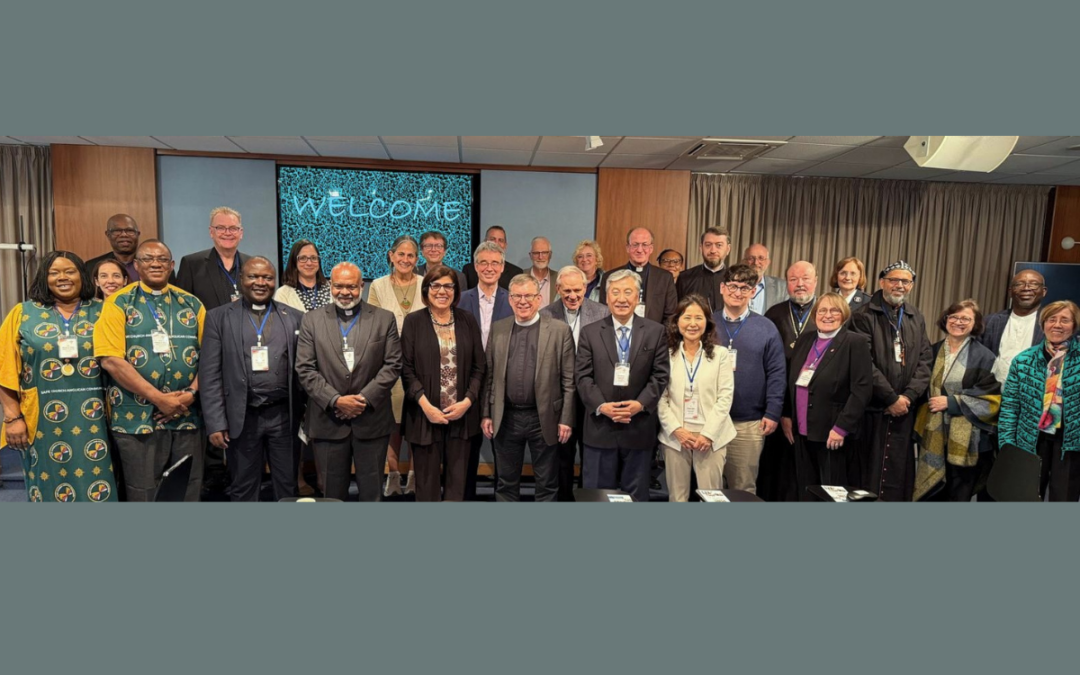
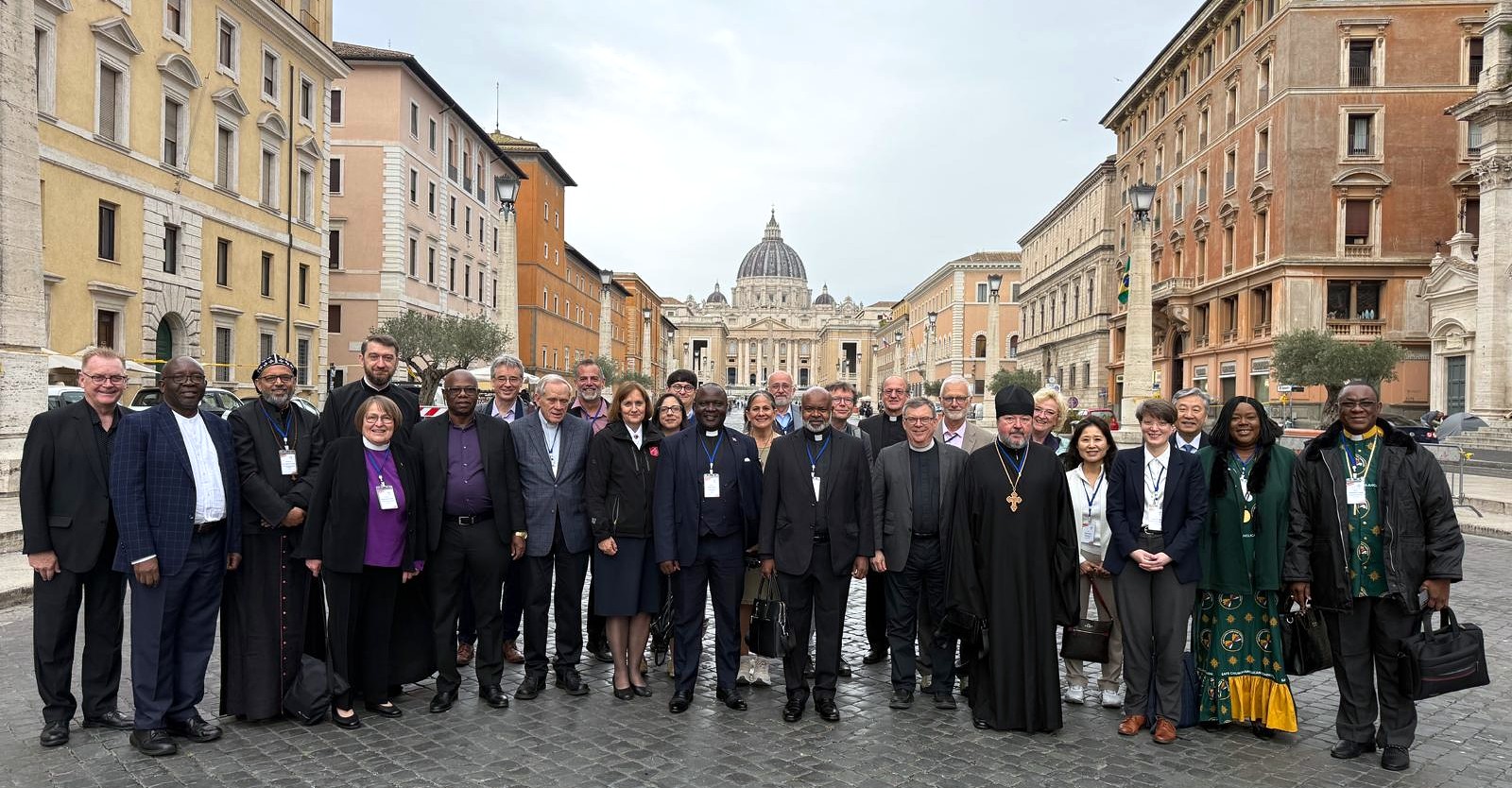
On 22 April, around thirty leaders from global Christian Churches and organisations visited the International Centre of the Focolare Movement in Rocca di Papa. The visit formed part of the programme of the annual meeting of the International Committee of the Global Christian Forum (GCF), which had taken place in Rome in these days, and provided a meaningful opportunity for mutual understanding and ecumenical dialogue.
The encounter offered an opportunity to explore more deeply the history, charism and commitment of the Focolare Movement to Christian unity. Following an introductory presentation, an intense and engaged dialogue unfolded, characterised by numerous questions and reflections. At the conclusion of the meeting, Margaret Karram, Presidente of the Focolare Movement, offered a brief greeting and shared personal testimony, which deeply resonated with those present.
Members of the Committee expressed their gratitude for the warm welcome and for the light that emerged from the encounter. Commissioner Jane Paone of the International Salvation Army commented: “For me it was a very ‘vibrational’ experience: I was touched by the joy and the hospitality.” Dr Hanns Lessing, representative of the World Communion of Reformed Churches, shared: “I was touched by how the Gospel commandment,“’Love your neighbour as yourself’, can today be understood as an invitation to love the other ecclesial community as one’s own.” Prof. Dirk Lange of the Lutheran World Federation highlighted the deep connection between the stories shared and the identity of the Global Christian Forum: “The faith stories of Chiara Lubich and Margaret Karram brought us to the very heart of the GCF: building relationships through self-giving, in the trust that God always provides. God’s love is at the centre, and mutual love unites.”
Participants at the annual meeting of the International Committee of the Global Christian Forum
Founded in 1998 at the initiative of the World Council of Churches, during the term of the then General Secretary Dr Konrad Raiser, the Global Christian Forum is a unique ecumenical space that brings together all the major currents of world Christianity, including Pentecostal and Free Churches. Its distinctive charism lies in the sharing of personal faith stories as a privileged path for building relationships, overcoming historical divisions and promoting unity in diversity. As Dr David Wells of the Pentecostal World Fellowship emphasised in recent days: “The GCF fosters a dialogue that does not begin with doctrinal or political positions, but with people.”
The International Committee, composed of around thirty church leaders – including the Focolare Movement from 2026 onwards – reflected on future challenges in a world marked by growing polarisation, a reality that also affects the Churches themselves. A central question emerged: how can we be reconcilers today?
It became clear to all that the GCF occupies a unique place within the ecumenical landscape. As David Wells added, using a powerful metaphor: “The GCF is like a fertiliser: it works beneath the surface. It is not always immediately visible, but in time its fruits emerge, oriented towards visible unity.”
A strong sense of harmony thus emerged between the goal and the dialogical approach of the Global Christian Forum and the charism and the dialogue of life of the Focolare Movement, opening hopeful perspectives for future collaboration on the journey towards the unity of the Church and of the whole human family.
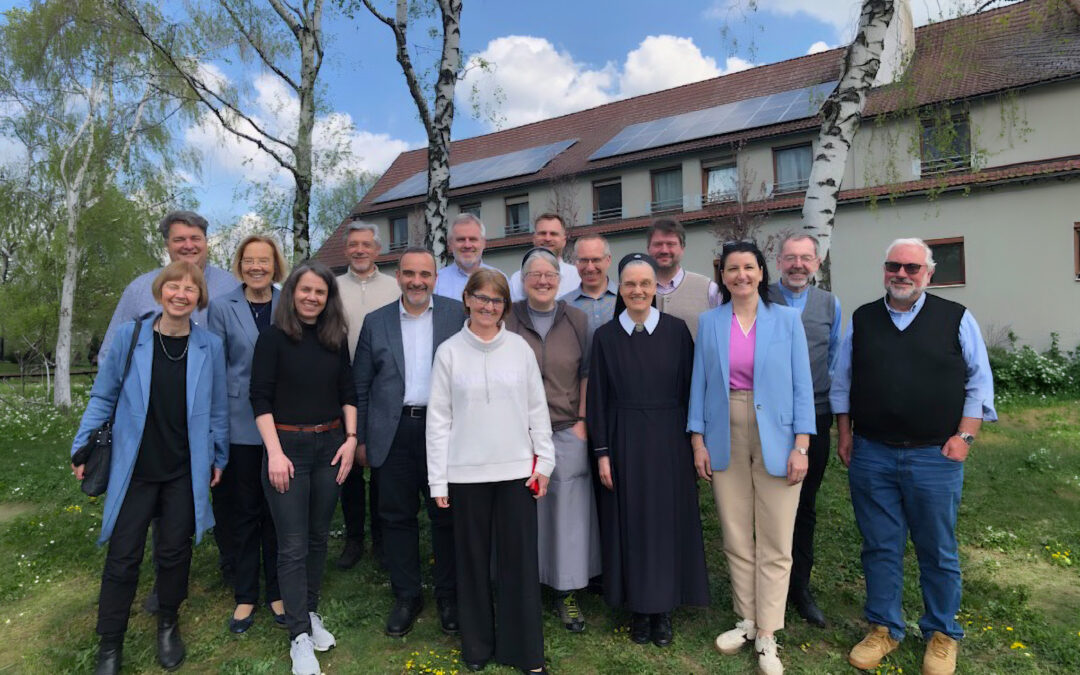
From 16 to 18 April 2026, the Steering Committee of the “Together for Europe” (TfE) met for its annual retreat, this time at the Schoenstatt Centre in Vienna, Austria, on the Kahlenberg. Twenty-six participants, representing eight of the Christian movements that make up the network, reviewed the past year and set out objectives for future projects.
A key aspect of this year’s meeting was the change in membership of the Steering Committee. This transition has been prepared over the last two years in an atmosphere of listening to the Spirit, with a view to ensuring both continuity and fresh impetus.
Margaret Karram, President of the Focolare Movement, expressed her heartfelt thanks in a letter to the outgoing members for their tremendous commitment over the past decades in shaping TfE. The following members bid farewell to the group: Gerhard Pross (YMCA Esslingen), co-founder of TfE and its long-standing moderator, together with Thomas Römer and Walter Kriechbaum (both from the YMCA Munich, who have been involved with TfE since its inception).
Diego Goller (IT) and Ilona Toth (HU), representatives of the President of the Focolare Movement on the Steering Committee, welcomed their successors: Liz Taite (GB), who has extensive experience in ecumenism, and Alberto Lo Presti (IT). The role of General Secretary will be taken on by Maria Wienken (DE), supported by Elisabeth Danner (A), both members of the Focolare Movement. The handover was solemnly celebrated during an evening prayer and sealed by the “Pact of Mutual Love”. Gerhard Pross highlighted the greatness of TfE’s mission and its rich fruits, which have marked important milestones in the history of the Church, as described in the book “Sternstunden der Einheit” (Highlights of Unity).
The role of TfE moderator will now be filled by a group comprising three members of the current Committee: Sister Nicole Grochowina (Christusbruderschaft Selbitz Community), Fr Raffael Rieger (Schönstatt Movement) and Matthias Bühlmann (Vineyard). “This change marks not only the end of an era, but also the beginning of a new phase of collaboration at European level,” commented one of the participants.
Another member added: ‘The days spent on the Kahlenberg have shown that our diversity is our strength. With this new team, we are sending a clear signal of continuity and new horizons.’ Another participant emphasised: ‘TfE is writing a story of hope in these seemingly hopeless times. That is why it is more important than ever to walk together today.’
Agenda and outlook
Another key focus of the discussions was the work of the National Committees, which are taking on an increasing responsibility for establishing TfE in their respective countries.
The following key upcoming events were also discussed:
9-13 May 2026: To mark Europe Day, 120 young Europeans will visit the European Parliament. Inspired by the Christian unity they have experienced at TfE, the young people have drawn up an “Intergenerational Pact” which they will present to MEPs.
29-31 October 2026: The next ‘Friends’ Gathering’ will take place at the Vineyard Centre in Würzburg, Germany.
4-6 May 2028 (date to be confirmed): Major event in Castel Gandolfo and Rome, Italy.
The 2026 meeting of the Steering Committee thus marked an important milestone for the future direction of the network, which remains committed to unity and fraternity across the continent.
The first Pontiff in modern history to have direct knowledge of Africa, Pope Leo XIV, since his time as head of the Augustinian Order, had personally visited all regions of the continent: central, southern, western and sub-Saharan Africa.
On board the papal flight from Rome to Algiers, Pope Leo told journalists: “As early as last May, I said that for my first trip I would like to visit Africa. Many immediately suggested Algeria to me because of Saint Augustine.”
Eleven days, eighteen flights, over 18,000 kilometres: Algeria, Cameroon, Angola and Equatorial Guinea. The journey included 25 speeches and homilies, eight public Masses, meetings with presidents, bishops and imams. In his interventions, the Pope highlighted the Church’s works of mercy through his encounters with prisoners, orphans and the elderly and by meeting hundreds of thousands of faithful. His remarkable gift for languages was evident: “he spoke to us in French, Portuguese, Spanish and English to establish personal contact with the different local populations.”
Blessed Are the Peacemakers
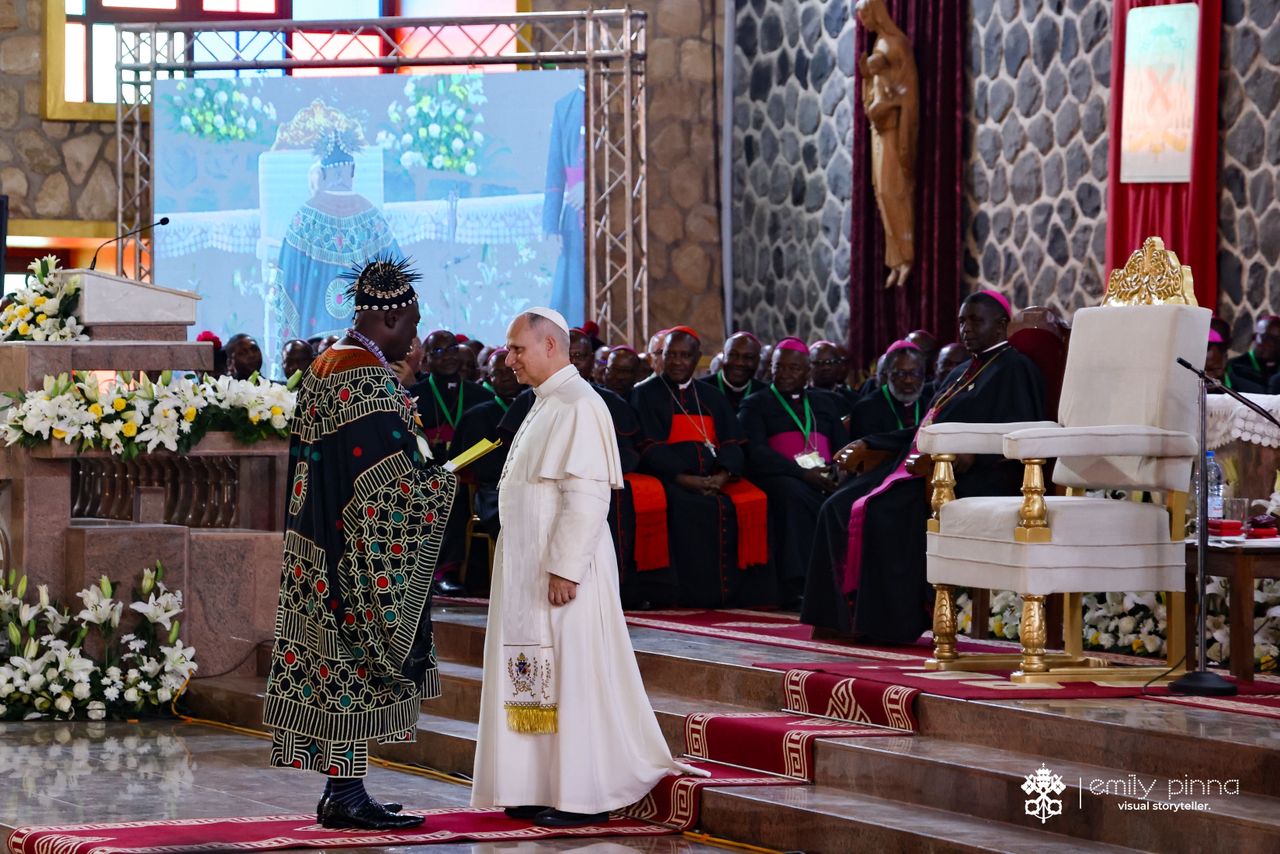
In an historic address to the authorities in Cameroon on 15th April, the day of his arrival, Pope Leo spoke directly about the humanitarian, political and social crisis that has afflicted the country for a decade. He described the human cost in stark terms: lives lost, families displaced, children deprived of education, and a generation of young people left without hope, while praising the country’s cultural and linguistic diversity as a “treasure” rather than a burden.
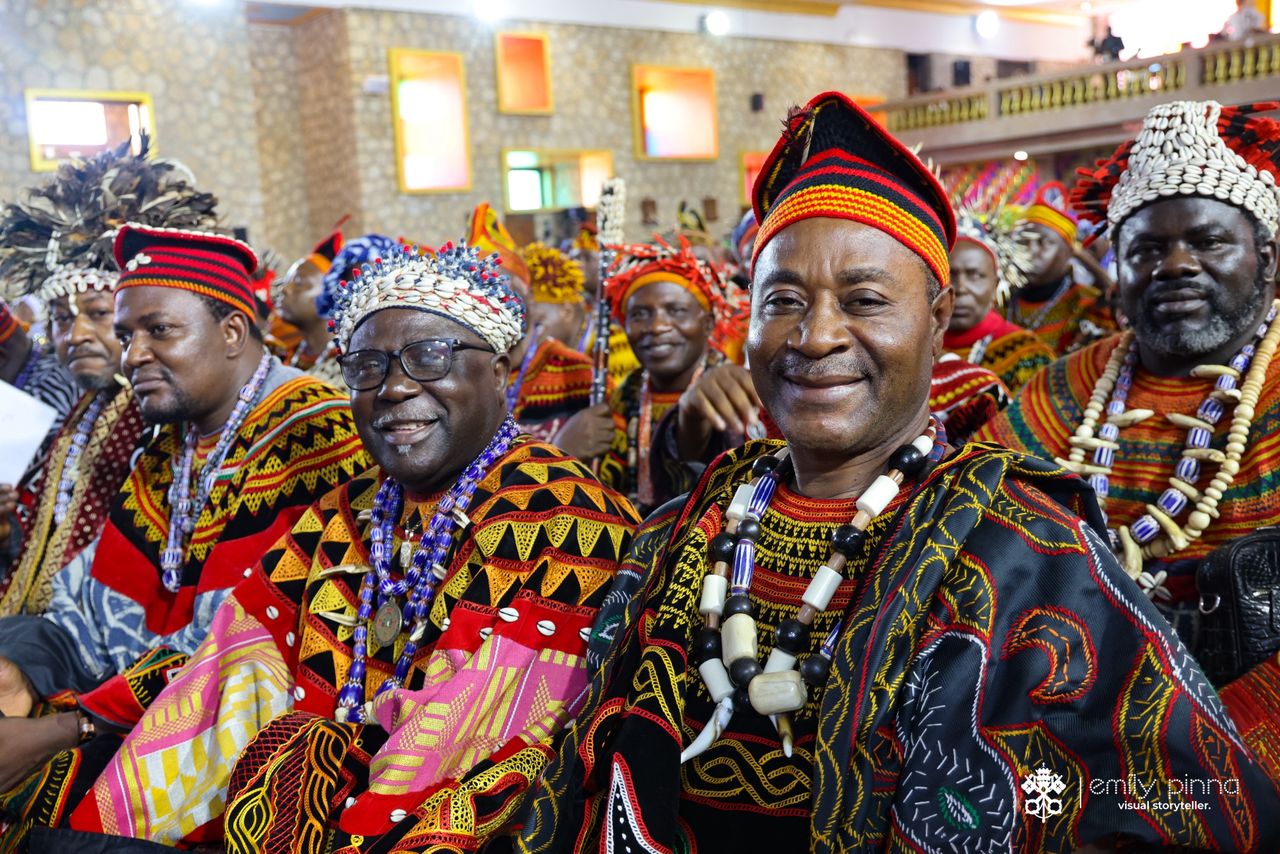
A key moment of the visit took place in Bamenda, at the heart of a region torn apart by separatist violence for ten years. The Pope presided over a meeting for peace at St Joseph’s Cathedral. Around the table sat a traditional leader, a Presbyterian Moderator, an Imam and a Catholic nun. “An evocative image that will nourish our imagination for a long time,” said Elisabeth, a resident of Bamenda: “a Pope surrounded by representatives of different faiths and communities in a city at the heart of an ongoing conflict, who calls for dialogue instead of violence, reconciliation instead of revenge.”
The Pope addressed the entire community, including people who had travelled many kilometres from the North-West and South-West regions, overcoming fear and obstacles to be present. He thanked all those who choose each day to build bridges and heal wounds. But he also issued a warning “to those who manipulate religion and the very name of God for their own military, economic or political gain.” He denounced those, he said, “who rob your land of its resources generally invest much of the profit in weapons, thus perpetuating an endless cycle of destabilization and death.”
“Dear Young People, You Are the Beloved Children of the African Land!”
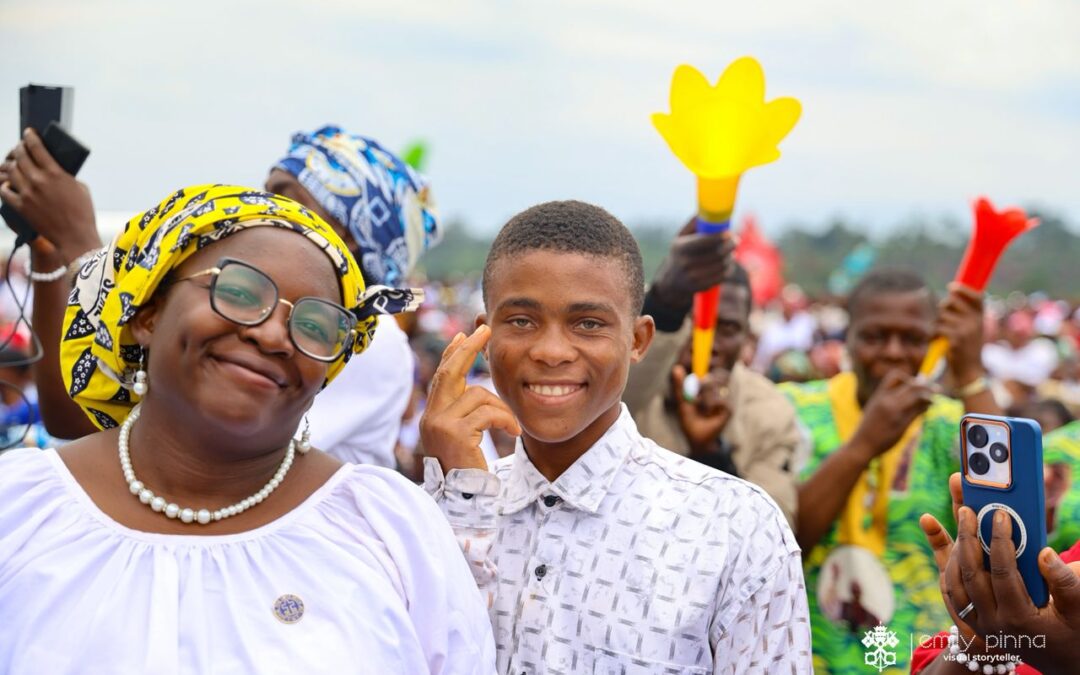
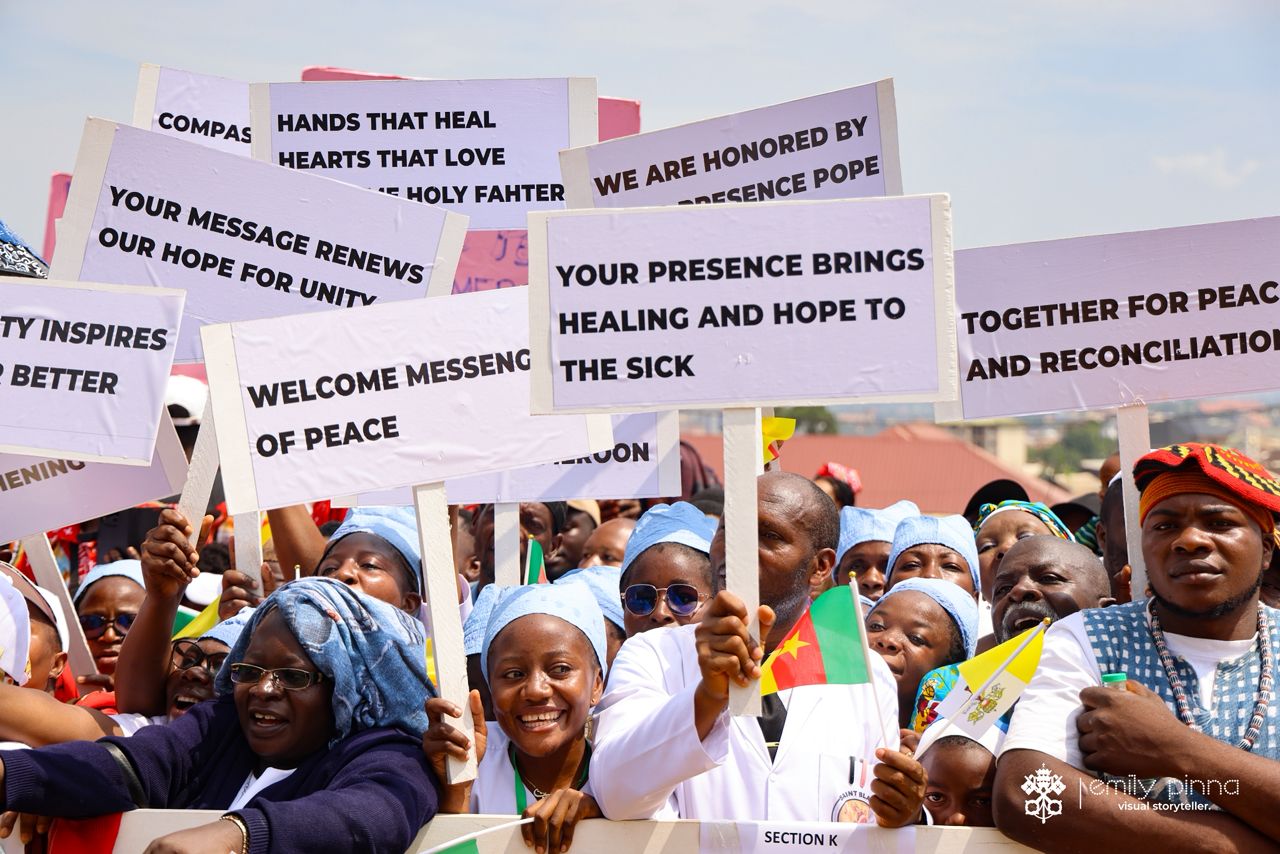
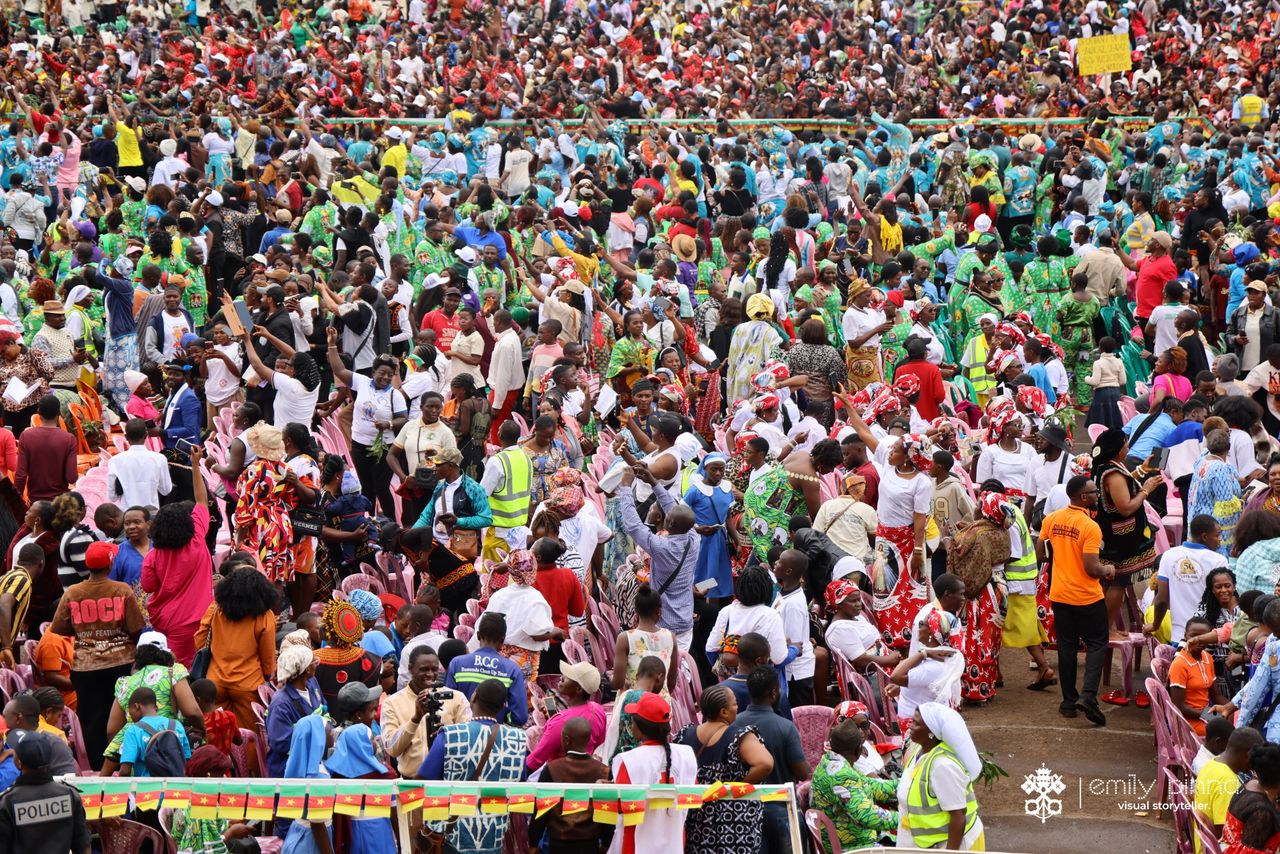
The Pope’s second day in Cameroon was entirely dedicated to young people. Leo XIV chose to directly address this vibrant and dynamic youth in his homily that, first before 120,000 faithful at the Japoma Stadium in Douala and then before students at the Catholic University of Central Africa. He repeatedly urged young people to resist the temptations of emigration, corruption and the illusions of the digital world. Underlying his message—repeated twice that day—was a clear conviction: the future of the continent will be built here, not elsewhere.
At the Japoma Stadium, the Pope did not shy away from the country’s reality, speaking openly about both material and spiritual poverty. He invited the young people “to make your noble spirit the prophetic voice of a new world,” drawing inspiration from the Acts of the Apostles: “the first Christians gave courageous witness to the Lord Jesus in the face of difficulties and threats”. Recalling their perseverance even amid suffering, he urged them to “Reject every form of abuse or violence, which deceives by promising easy gains but hardens the heart.” He reminded them of their true wealth: “faith, family, hospitality and work.” To illustrate his message, Pope Leo XIV referred to Blessed Floribert Bwana Chui, a Congolese martyr killed in 2007 for refusing, in his role as a customs officer, to allow a shipment of counterfeit medicines to pass through. He is presented as a model of resistance to corruption and an example for African youth. The Pope concluded with a powerful invitation: “Become Good News for your country.”
Form “Minds Capable of Discernment”
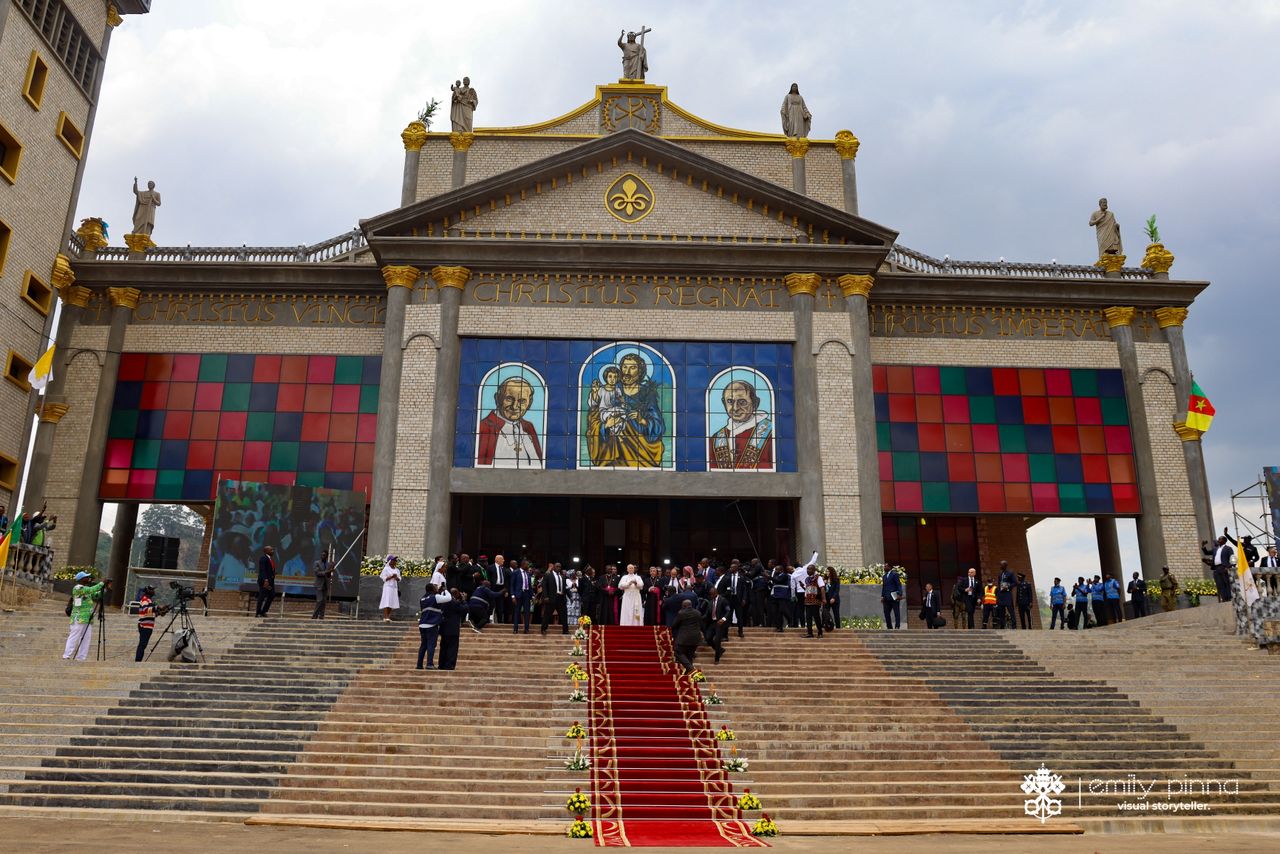
In the afternoon in Yaoundé, the Pope was welcomed at the Catholic University of Central Africa, a leading institution in the region that attracts over 5,000 students each year, particularly from Gabon, Chad and Equatorial Guinea. Around 8,000 people gathered to greet him with the enthusiasm typical of the academic world.
Addressing this audience of young Africans, Pope Leo XIV spoke about pressing and sensitive issues: corruption, artificial intelligence and its risks, migration and more.
He placed at the centre of his reflection the tension between the temptation to emigrate and responsibility towards one’s own country. “In the face of the understandable tendency to migrate, which may lead one to believe that elsewhere a better future may be more easily found, I invite you, first and foremost, to respond with an ardent desire to serve your country”, he told the students. He reminded them that the university was founded thirty-five years ago precisely to form “witnesses of wisdom and justice, of which the African continent needs.”
Speaking about artificial intelligence, the Pope warned with unusual gravity: “When simulation becomes the norm …. We thus come to live within bubbles, impermeable to one another. Feeling threatened by anyone who is different.” His conclusion was direct: “In this way, polarization, conflict, fear and violence spread. What is at stake is not merely the risk of error, but a transformation in our very relationship with truth”
The Pope also highlighted the environmental and human cost borne by Africa in the extraction of cobalt, an essential mineral for the batteries which power data centres and internet-connected devices. He spoke plainly: “the darker side of the environmental and social devastation caused by the relentless pursuit of raw materials and rare earths” must be denounced.
Liliane Mugombozi (Cameroon)
Photo: Courtesy of the Apostolic Nunciature in Cameroon
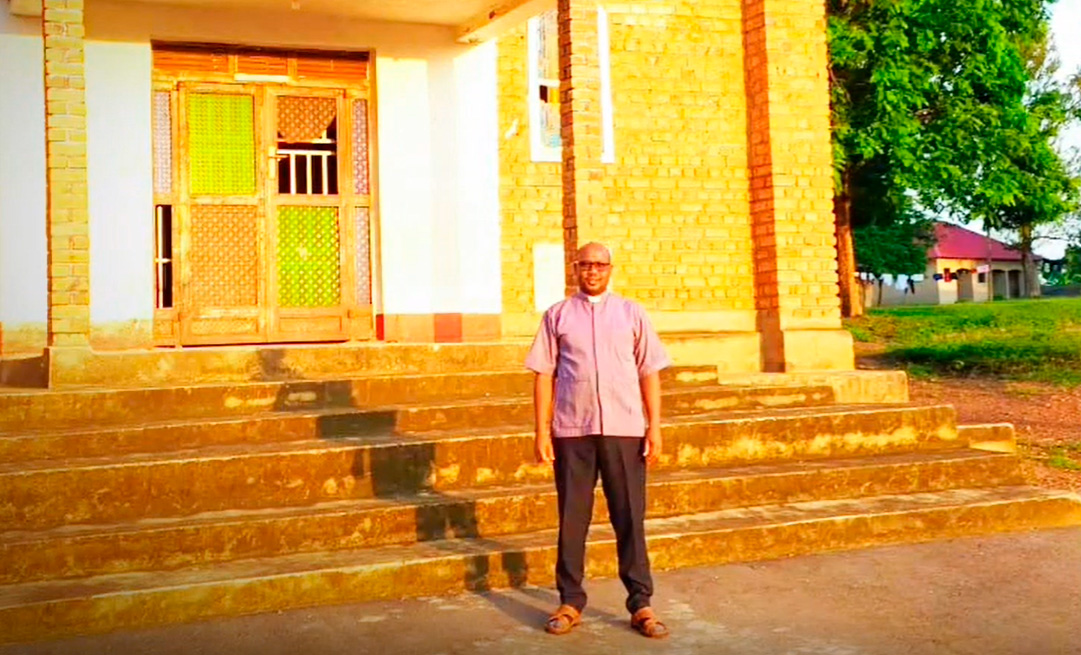
I am an Anglican priest from Uganda and I came to know the spirituality of the Focolare Movement fifteen years ago, when I was in the seminary for ministerial formation. This spirituality has shaped me in an integral way – myself, my family and my Church because it expresses in an exemplary manner, two fundamental aspects: Love and Unity. Nowhere in the Bible do we find Scripture that emphasizes division, separation, hatred, malice, tribalism, denominational divisions, or racial segregation. On the contrary, the Bible calls us to unity and love between people, even when there are differences. We are called, above all, to love our neighbour, because through loving our neighbour we love God. In this way I have learned to see Jesus in every person who is close to me (cf. Mt 25) and I experience great peace every time I share what little I have with those in need.
In one of his last prayers before the Ascension, in John 17:21, Jesus says: “that they may be one, just as I am one with you, Father”. This implies that unity should be our goal in life. Thanks to this awareness, I have had the opportunity to meet and dialogue with many people of different denominations: Catholics, Orthodox, Lutherans and also with people of other religions, Buddhists and followers of traditional religions, at all levels and in all age groups. This has given me a broader view of how to live and approach life in an integral way. I have experienced the joy of recognizing them as brothers and sisters.
I have also seen Bishops of the Anglican Church of Uganda welcome this spirituality through our experience, expression of life and witness. Currently, five bishops are friends of the Movement, including the Archbishop of the Anglican Church of Uganda. Some of them also participated in the international ecumenical conferences of Bishops organized by the Focolare Movement.
Currently we have started a communion group at Uganda Christian University, with the intention of practicing the aspect of love and unity among young people and university students; at the same time, we also transmit the value of “Ubuntu”[1], within the Together for a New Africa initiative, in which I participate as a tutor of this second round. After all this, people often ask me questions that I struggle to answer: “Why are you always happy? Don’t you ever get angry? You are always available. Don’t you have other things to do? Why are you so generous?” My answer has always been: “Do good, the reward is in Heaven”.
After the four Gospels of the New Testament, the fifth Gospel that everyone should read is that of the “you”, in the other person. We must see ourselves as a living witness, so that in our works and actions the image of God may be reflected, doing to others what we would like to be done to us. Putting into practice what the Bible teaches: to love God with all our heart, with all our mind and with all our soul, and to love our neighbour as ourselves.
Reverend Canonico Bwanika Michael Eric
[1]Ubuntu is a word of Bantu origin from sub-Saharan Africa that expresses a philosophy of life focused on compassion, respect and human interdependence, summarized in the maxim “I am because we are”, emphasizing that the individual is realized through community, sharing and collective well-being.
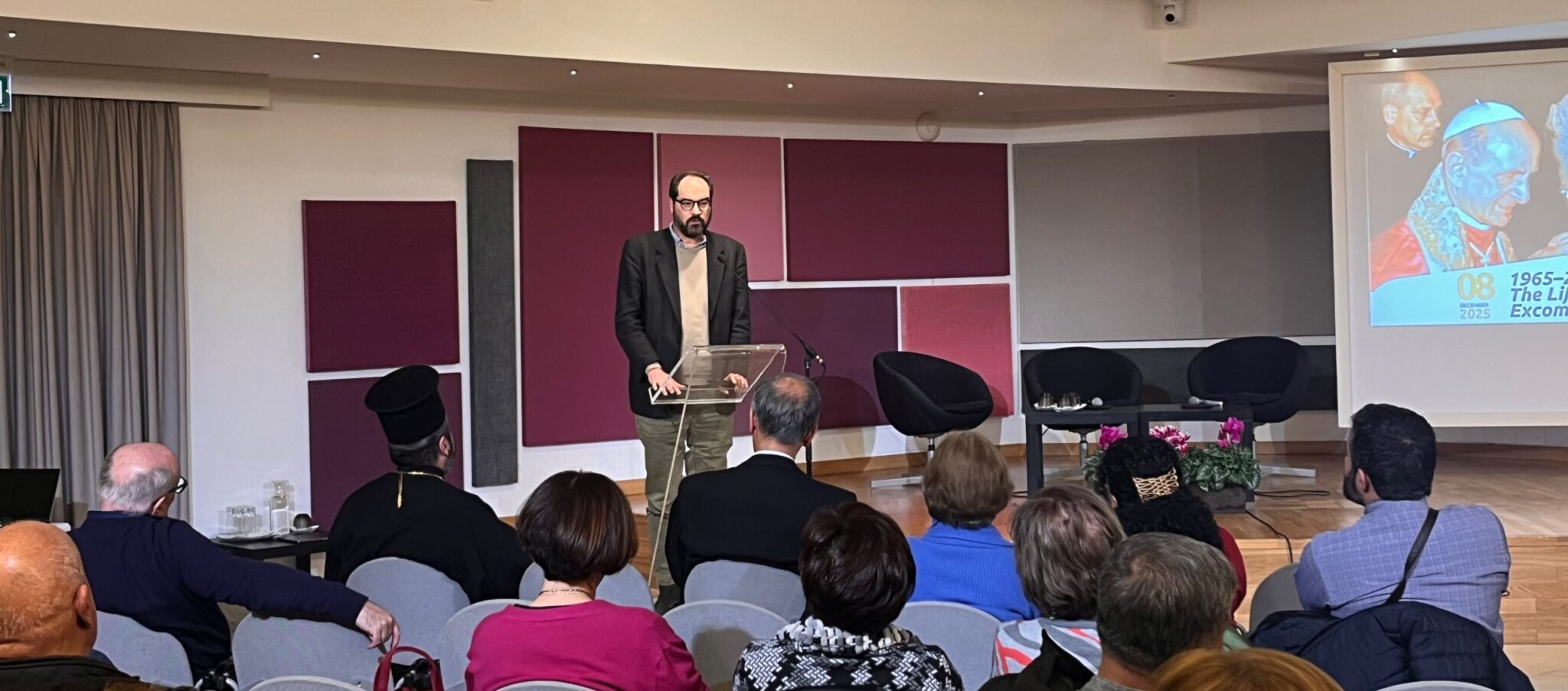
The year 2025 has been a year full of ecumenical anniversaries and events. The meeting of Pope Leo XIV and Patriarch Bartholomew in Nicaea with the leaders of Churches and ecumenical bodies, followed by various appointments in Istanbul, bore witness to the desire and commitment of the Churches to continue on the path towards unity. Another ecumenical event of great importance, whose 60th anniversary was commemorated, was the revocation of the excommunications between Rome and Constantinople by Pope Paul VI and Patriarch Athenagoras I, which took place on 7th December 1965. It was an event that ushered in a new season of relations between Catholics and Orthodox. Paul VI and Patriarch Athenagoras, holy men of broad vision and devoted solely to the will of Christ for his Church, had the courage to break the spiral of hostility and enmity by meeting as brothers in Jerusalem in January 1964, thus preparing the ground for the revocation of those excommunications exchanged between the legates of the Pope and the then Patriarch of Constantinople in 1054. This event marked the beginning of a dialogue of charity that saw the two pioneers engaged in a continuous and increasing commitment so that the two Churches, Catholic and Orthodox, might once again recognize each other again as sister Churches.
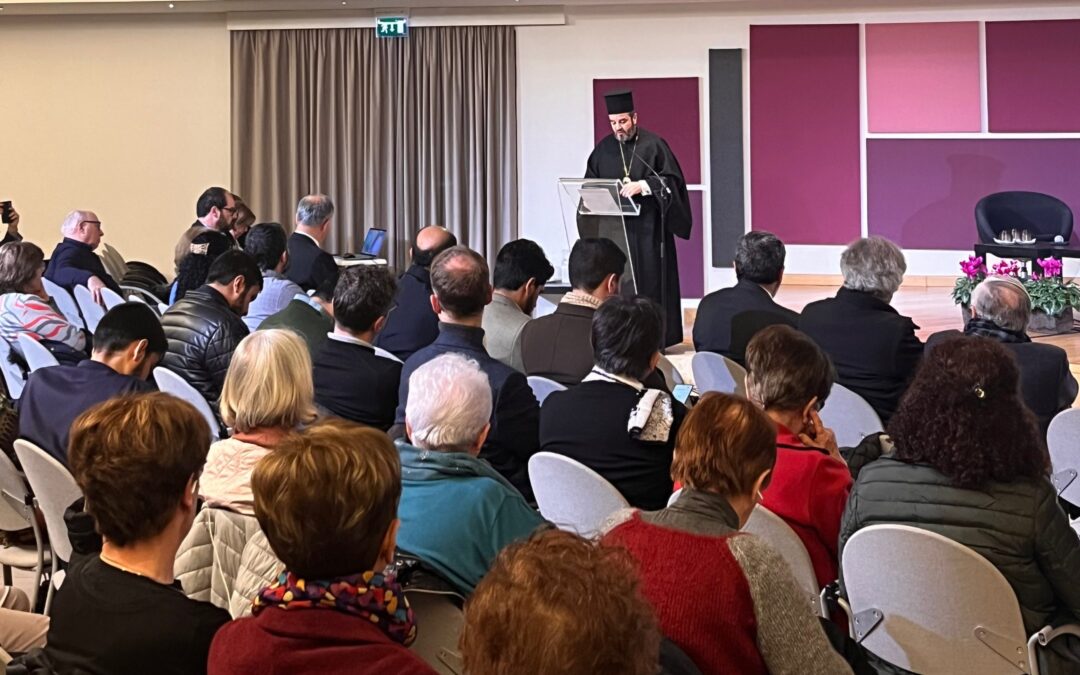
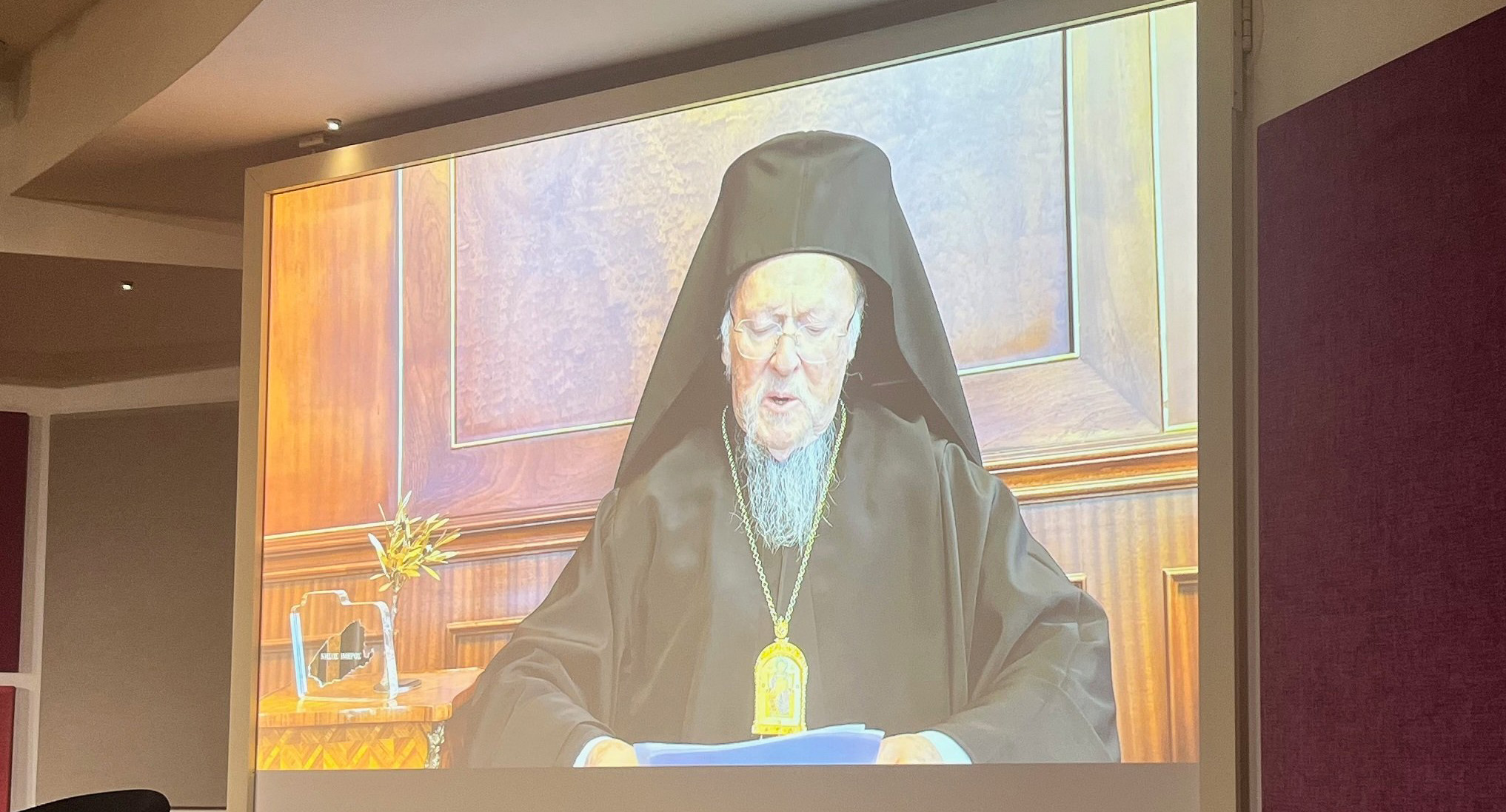
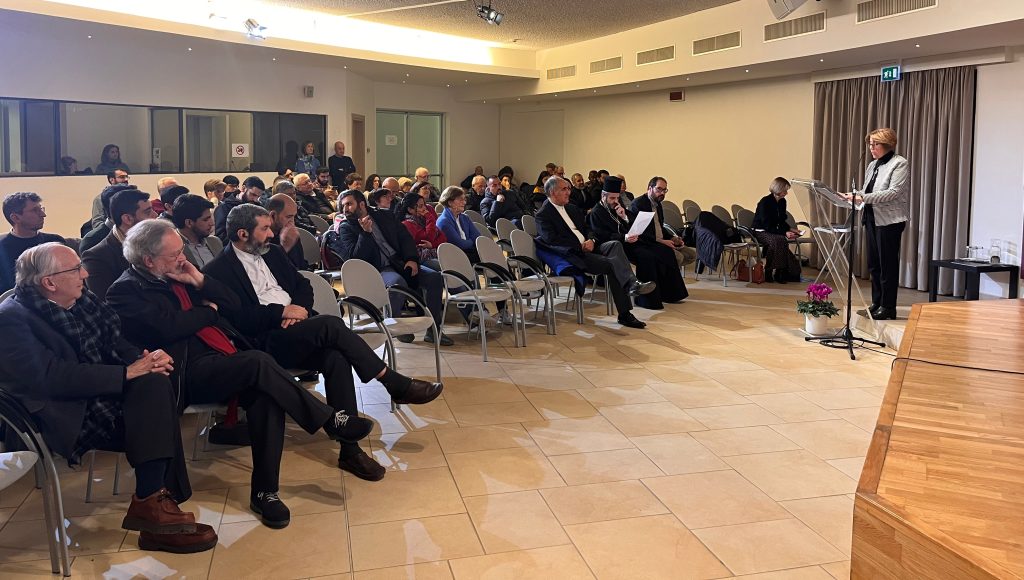
Given the importance of this anniversary, the Patriarch Athenagoras – Chiara Lubich Ecumenical Chair of the Sophia University Institute in Loppiano held a Seminar. The proceedings opened with messages from Patriarch Bartholomew of Constantinople, Pope Leo XIV (signed by the Cardinal Secretary of State, Pietro Parolin) and Margaret Karram, Vice Grand Chancellor of the Sophia University Institute and President of the Focolare Movement.
Pope Leo XIV stressed the importance not only of “reflecting on what happened in the past”, but also of “suggesting new concrete steps that we can take together”.
Patriarch Bartholomew, recalling the centrality of Christ’s Resurrection for the Christian faith celebrated at Easter, lamented the fact that we rarely celebrate this feast on the same date and noted how much he and Pope Francis have done to resolve the question of the common date of Easter.
Margaret Karram, in her video message, while looking back at history and thanking God for the miracles accomplished, invited everyone to look ahead and to renew our hope that the unity between the Churches will come in God’s time and in the way known to Him, echoing the thought of Patriarch Athenagoras: “Union will happen. It will be a miracle. When? We do not know. We must prepare ourselves because, like God, a miracle is always imminent ”.
The various inputs illustrated the historical, spiritual, theological and canonical aspects of this journey. Mons. Piero Coda, professor and Secretary General of the International Theological Commission; member of the Joint Commission for dialogue between the Catholic Church and the Orthodox Church and of the Commission of theologians for the synodal journey, emphasized that that prophetic gesture of the revocation of excommunications exhorts us to live, think, dialogue and act in that light and love in which together, we can all prepare for and welcome the blessed day when, through a miracle of his love, the Holy Spirit will enable us to transcend, under the tender and strong gaze of Mary, full of grace and the ‘Theotokos’, everything that still separates us from the overflowing fullness of our shared communion in Christ..
Sandra Ferreira Ribeiro, an ecumenist theologian and co-director of the “Centro Uno” centre of the Focolare Movement, outlined the historical context that preceded and prepared for the revocation of the excommunications and the acts that implemented it in 1965, inaugurating a new climate of dialogue.
Declan O’Byrne, professor and rector of the Sophia University Institute, co-holder of the Sophia Institute ecumenical chair, stressed the importance that the profession of faith proclaimed at Nicaea becomes a lived reality through charity among Christians and the pursuit of theological clarity.
Metropolitan Maximos Vgenopoulos of Selyvria, co-holder of the Ecumenical Chair and member of the International Joint Commission for Theological Dialogue between the Catholic Church and the Orthodox Church, explored the theme of Primacy and Synodality in the second millennium and today, the theme of the most recent document of the Joint Dialogue Commission which met in Alexandria, Egypt in June 2023, concluding that while the two Churches are moving “in love and in truth” towards unity, the document opens up positive paths and perspectives for the future with regard to the authentic understanding of Primacy and Synodality, especially in the context of the ongoing official discussions on Synodality within the Roman Catholic Church.
Dimitrios Keramidas– professor of ecumenism and Orthodox theology at the Angelicum Institute in Rome, recalled that the sharing of the common blessing of the Pope and the Ecumenical Patriarch at Phanar, the recitation of the Our Father and the ecumenical prayer held in Nicaea were further signs of the recognition of the ecclesial nature of the two Churches: a true and visible spiritual sharing.
Augustinos Bairachtaris, Associate Professor of Ecumenical Studies at the Patriarchal Ecclesiastical Academy of Crete, emphasized the need for a theology of the cross and a spirit of metanoia that must always accompany ecumenical dialogue.
Highlighting the harmony that the unity sought among the Churches represents, the pianist Fr. Carlo Seno offered an exceptionally beautiful musical piece.
The seminar highlighted the indispensable role that the Patriarch Athenagoras – Chiara Lubich Ecumenical Chair can play in promoting ecumenism and the growing mutual knowledge and appreciation of Christians for one another, taking into account the exhortation of Pope Leo XIV and Patriarch Bartholomew in their Joint Declaration: “We strongly urge all the faithful of our Churches, and especially the clergy and theologians, to embrace joyously the fruits that have been achieved thus far, and to labour for their continued increase “.
Sandra Ferreira Ribeiro (Centro “Uno” per l’unità dei cristiani)