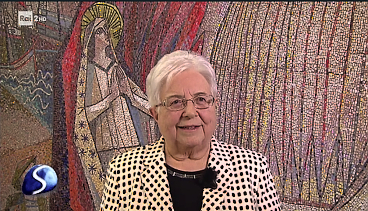
Maria Voce
She realised that choosing to live the Gospel could bring about change in herself and change around her, and so she launched herself into this Gospel revolution. …
Chiara Lubich showed us a pathway to holiness, one that is now being examined by the Church as it studies carefully the cause of Chiara’s possible canonisation. But that is not all. Chiara helped us understand that holiness is built up by doing the will of God moment by moment; that holiness is not about ecstasies, or miracles, or anything extraordinary. It is about doing God’s will moment by moment, and therefore everyone can reach it.
Even our Statutes state that our first and general goal is to be perfect in charity. But this perfection, which is therefore holiness, is reached moment by moment in God’s will, which is different for each person. For a mother of a family it means being a good mother, for a student it means being a good student, but this can lead us to the perfection of charity. I believe this is a very pertinent message and one that attracts people because it is not an extraordinary kind of holiness, made up of images or devotions, no! It is building up a relationship with God moment by moment, and a relationship with others in love.
That is the first important feature.
The second is that holiness must be useful to others. It is not holiness for its own sake, because none of us lives for ourselves, because God created us and redeemed us together. Jesus came on earth to redeem all of us as his people, as Church, the Body of Christ, and so he wants this kind of holiness to extend to the whole of humanity.
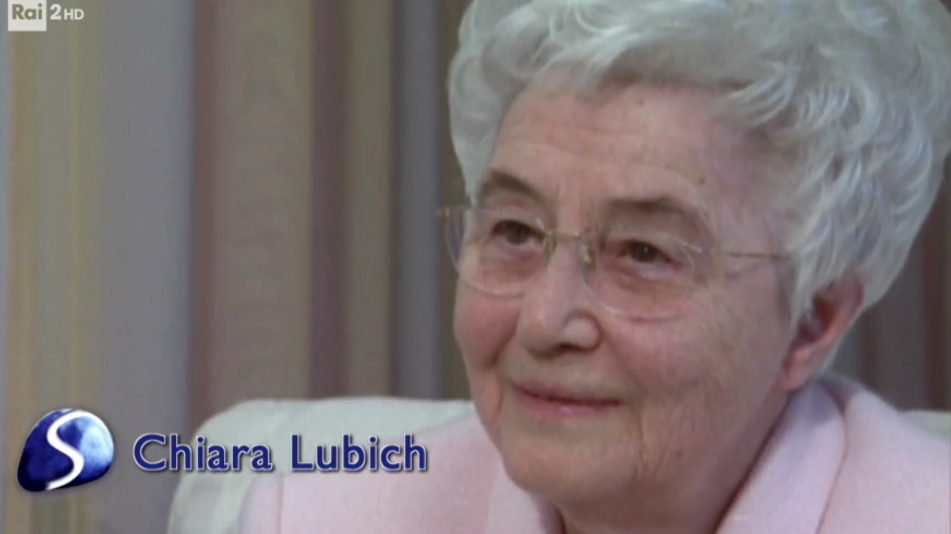 The message that Chiara left us is that of being open to everyone
, not looking at anyone as if they were different from you, but seeing everyone as your brother or sister. This “everyone” means people from your own country and those from other countries, Christians and non-Christians, believers and non-believers, those who understand and accept what I am saying and the person who contradicts me, because even someone who contradicts me is my brother or sister. This is what Chiara taught us and what she did herself first of all, having a heart that was able to welcome each person as if they were the only person in the world, whether they were a head of State, a child or a relative; a Church leader or a leader of another religion. Chiara had the same love for all. I believe this is the most important message for today when there is a growth in tension and violence, selfishness and mutual indifference. We can build a world guided by the Gospel, where all people are brothers and sisters and truly live as one family.

0 Comments