
The year 2025 has been a year full of ecumenical anniversaries and events. The meeting of Pope Leo XIV and Patriarch Bartholomew in Nicaea with the leaders of Churches and ecumenical bodies, followed by various appointments in Istanbul, bore witness to the desire and commitment of the Churches to continue on the path towards unity. Another ecumenical event of great importance, whose 60th anniversary was commemorated, was the revocation of the excommunications between Rome and Constantinople by Pope Paul VI and Patriarch Athenagoras I, which took place on 7th December 1965. It was an event that ushered in a new season of relations between Catholics and Orthodox. Paul VI and Patriarch Athenagoras, holy men of broad vision and devoted solely to the will of Christ for his Church, had the courage to break the spiral of hostility and enmity by meeting as brothers in Jerusalem in January 1964, thus preparing the ground for the revocation of those excommunications exchanged between the legates of the Pope and the then Patriarch of Constantinople in 1054. This event marked the beginning of a dialogue of charity that saw the two pioneers engaged in a continuous and increasing commitment so that the two Churches, Catholic and Orthodox, might once again recognize each other again as sister Churches.
Given the importance of this anniversary, the Patriarch Athenagoras – Chiara Lubich Ecumenical Chair of the Sophia University Institute in Loppiano held a Seminar. The proceedings opened with messages from Patriarch Bartholomew of Constantinople, Pope Leo XIV (signed by the Cardinal Secretary of State, Pietro Parolin) and Margaret Karram, Vice Grand Chancellor of the Sophia University Institute and President of the Focolare Movement.
Pope Leo XIV stressed the importance not only of “reflecting on what happened in the past”, but also of “suggesting new concrete steps that we can take together”.
Patriarch Bartholomew, recalling the centrality of Christ’s Resurrection for the Christian faith celebrated at Easter, lamented the fact that we rarely celebrate this feast on the same date and noted how much he and Pope Francis have done to resolve the question of the common date of Easter.
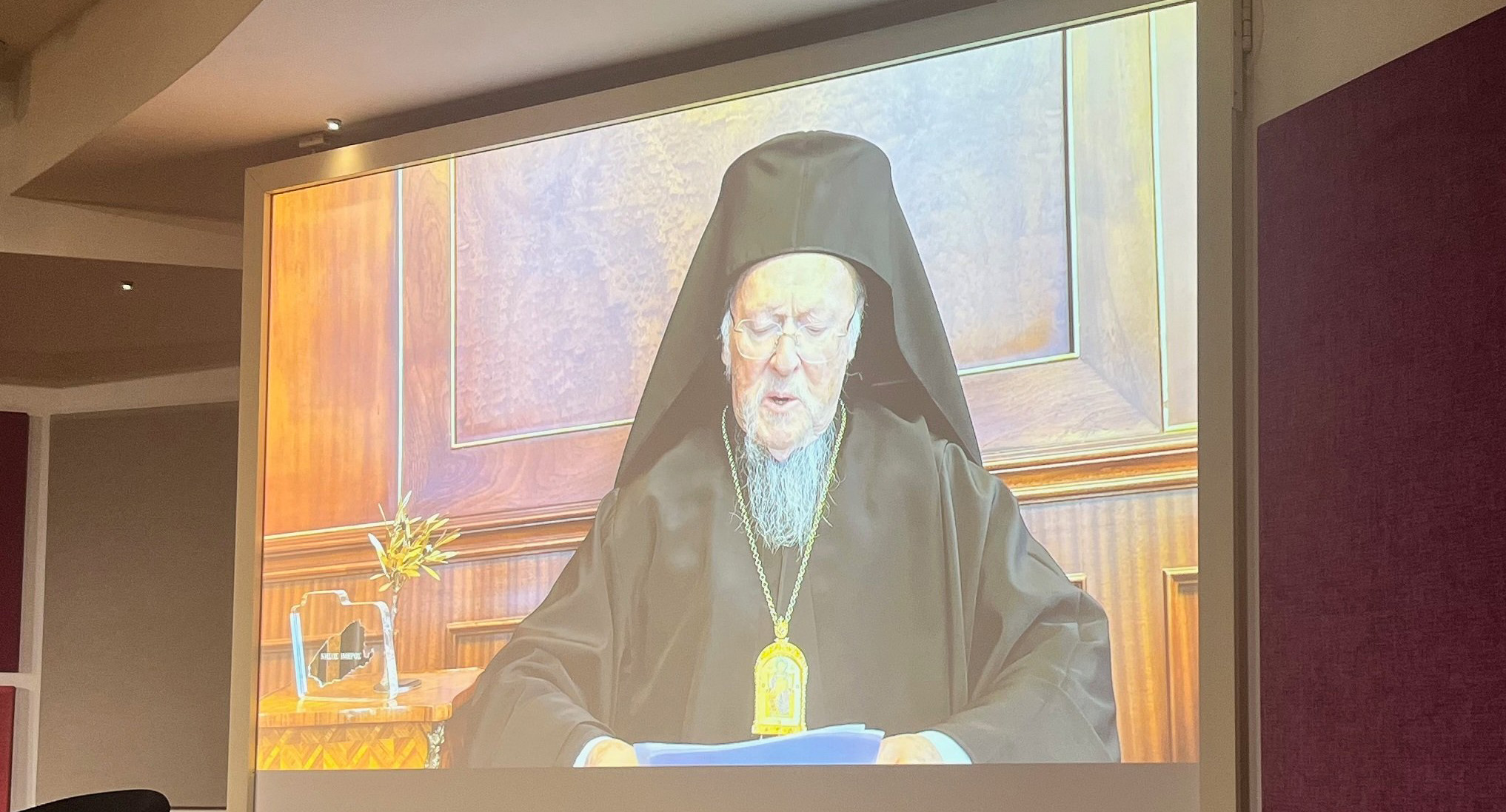
Margaret Karram, in her video message, while looking back at history and thanking God for the miracles accomplished, invited everyone to look ahead and to renew our hope that the unity between the Churches will come in God’s time and in the way known to Him, echoing the thought of Patriarch Athenagoras: “Union will happen. It will be a miracle. When? We do not know. We must prepare ourselves because, like God, a miracle is always imminent ”.
The various inputs illustrated the historical, spiritual, theological and canonical aspects of this journey. Mons. Piero Coda, professor and Secretary General of the International Theological Commission; member of the Joint Commission for dialogue between the Catholic Church and the Orthodox Church and of the Commission of theologians for the synodal journey, emphasized that that prophetic gesture of the revocation of excommunications exhorts us to live, think, dialogue and act in that light and love in which together, we can all prepare for and welcome the blessed day when, through a miracle of his love, the Holy Spirit will enable us to transcend, under the tender and strong gaze of Mary, full of grace and the ‘Theotokos’, everything that still separates us from the overflowing fullness of our shared communion in Christ..
Sandra Ferreira Ribeiro, an ecumenist theologian and co-director of the “Centro Uno” centre of the Focolare Movement, outlined the historical context that preceded and prepared for the revocation of the excommunications and the acts that implemented it in 1965, inaugurating a new climate of dialogue.
Declan O’Byrne, professor and rector of the Sophia University Institute, co-holder of the Sophia Institute ecumenical chair, stressed the importance that the profession of faith proclaimed at Nicaea becomes a lived reality through charity among Christians and the pursuit of theological clarity.
Metropolitan Maximos Vgenopoulos of Selyvria, co-holder of the Ecumenical Chair and member of the International Joint Commission for Theological Dialogue between the Catholic Church and the Orthodox Church, explored the theme of Primacy and Synodality in the second millennium and today, the theme of the most recent document of the Joint Dialogue Commission which met in Alexandria, Egypt in June 2023, concluding that while the two Churches are moving “in love and in truth” towards unity, the document opens up positive paths and perspectives for the future with regard to the authentic understanding of Primacy and Synodality, especially in the context of the ongoing official discussions on Synodality within the Roman Catholic Church.
Dimitrios Keramidas– professor of ecumenism and Orthodox theology at the Angelicum Institute in Rome, recalled that the sharing of the common blessing of the Pope and the Ecumenical Patriarch at Phanar, the recitation of the Our Father and the ecumenical prayer held in Nicaea were further signs of the recognition of the ecclesial nature of the two Churches: a true and visible spiritual sharing.
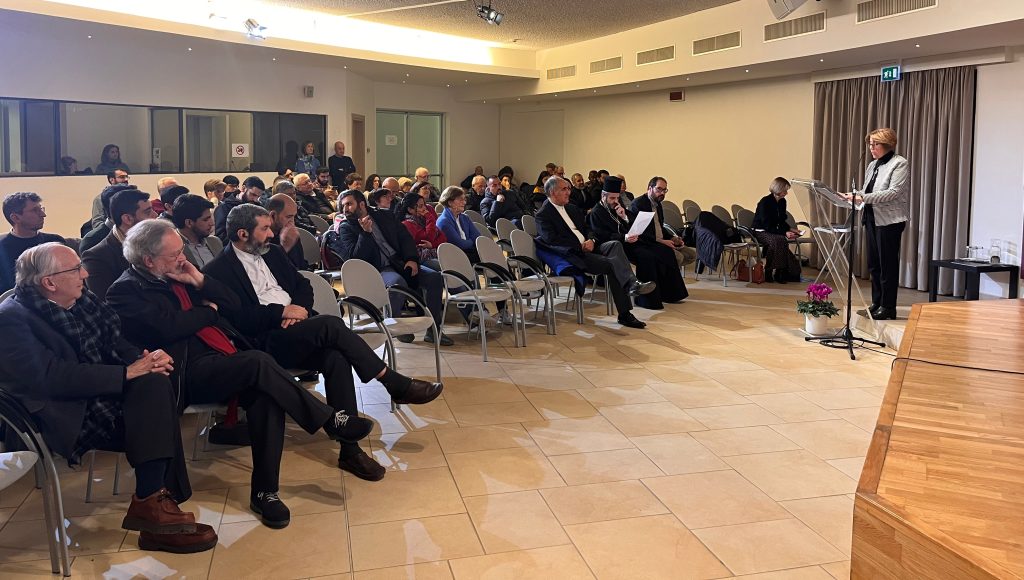
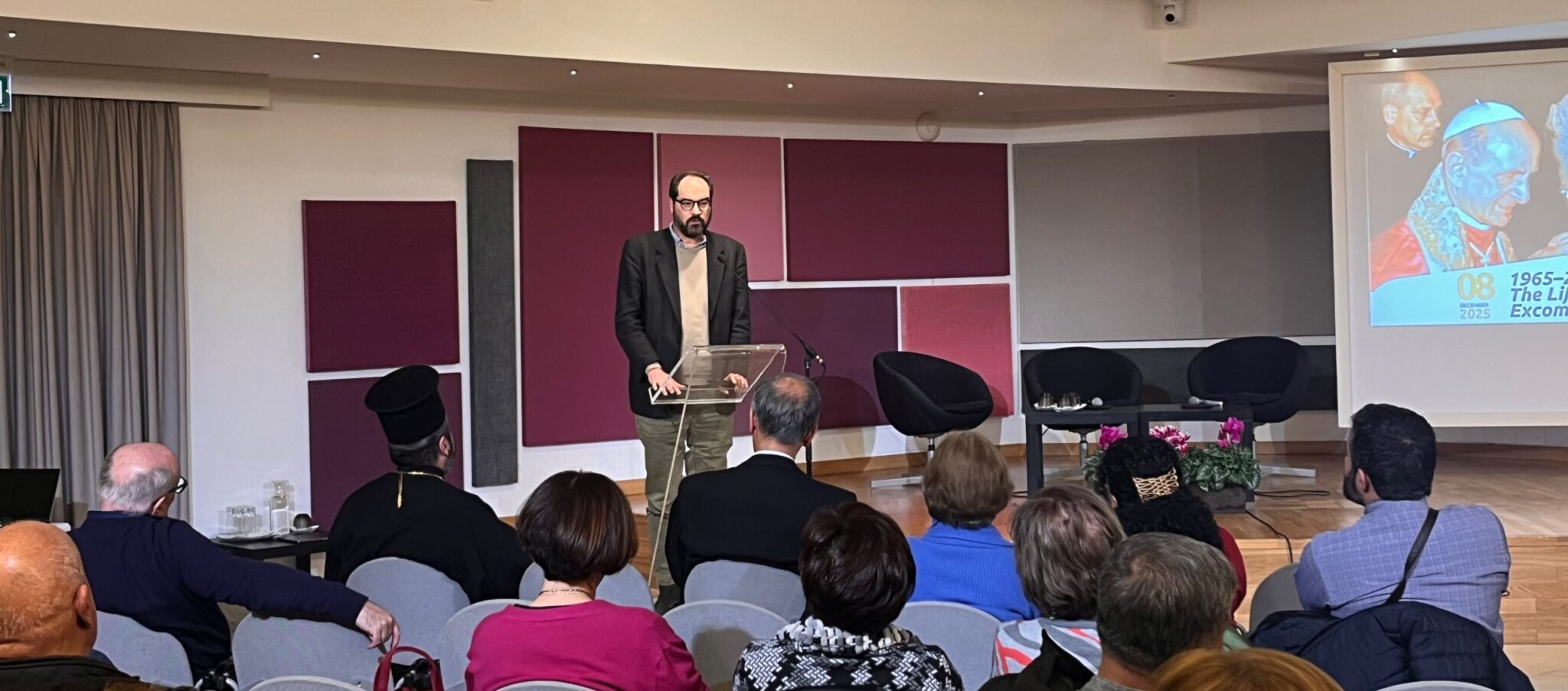
Augustinos Bairachtaris, Associate Professor of Ecumenical Studies at the Patriarchal Ecclesiastical Academy of Crete, emphasized the need for a theology of the cross and a spirit of metanoia that must always accompany ecumenical dialogue.
Highlighting the harmony that the unity sought among the Churches represents, the pianist Fr. Carlo Seno offered an exceptionally beautiful musical piece.
The seminar highlighted the indispensable role that the Patriarch Athenagoras – Chiara Lubich Ecumenical Chair can play in promoting ecumenism and the growing mutual knowledge and appreciation of Christians for one another, taking into account the exhortation of Pope Leo XIV and Patriarch Bartholomew in their Joint Declaration: “We strongly urge all the faithful of our Churches, and especially the clergy and theologians, to embrace joyously the fruits that have been achieved thus far, and to labour for their continued increase “.
Sandra Ferreira Ribeiro
(Centro “Uno” per l’unità dei cristiani)
Photo: @ Mariane Gonçalves de Araújo
Beautiful, what a joy let’s keep going together