
One year after the eruption of the Taal volcano in the midst of the Covid-19 pandemic, reciprocal love is the foundation for rebuilding both places and relationships in the Focolare community. 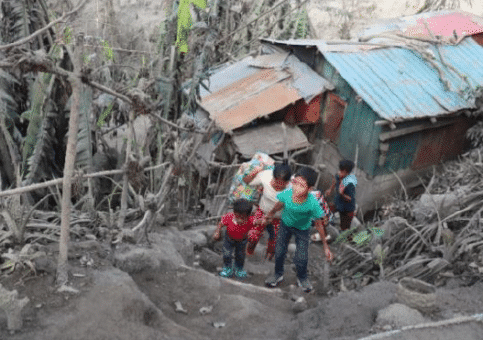 “Life continues at Mariapolis Peace,” says Ting Nolasco, focolarina at the Movement’s centre in Tagaytay, Philippines, explaining how the Focolare community there lives today, one year after the eruption of the Taal volcano on January 12. “We are living reciprocal love among us with an intensity we’ve never experienced before, perhaps because of the great sufferings that we have had to face together. These have made our relationships deeper and simpler, our love and care for each other more tangible and concrete, and our smiles and willingness to stop and listen to each other more spontaneous and natural.” The volcano’s destruction, which saw the surrounding area covered in ash and mud for kilometres, with displaced populations without food, water or electricity, did not prevent the rebirth of both places and communities. Rather, these were renewed by the need to rebuild structures and relationships together. “Seeing the outpouring of generosity from people from all over the world donating aid,” Ting continues, “and seeing the convoy of trucks arriving in the morning from faraway places to help people in the affected areas was overwhelming.”
 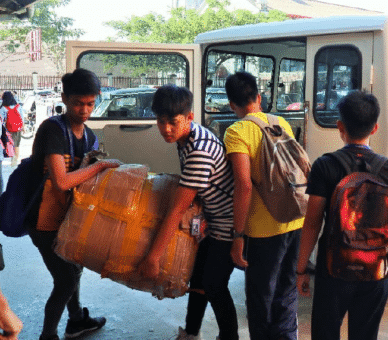 The focolarini, young people, religious and families who live at Mariapolis Pace were forced to evacuate, and some lodged in a house that was later transformed into a logistics centre for the distribution of aid. Once the emergency was over, they dedicated themselves to rebuilding, which was an opportunity to see the generosity of many people at work: families, students, people who had received support from the centres offered to help, even risking their own safety, “as an expression of gratitude and reciprocity for what they had received”. Now, even the surrounding area seems reborn. “Our surroundings, once grey and seemingly dead, have now exploded into a riot of colour and an abundance of green,” says Ting. “Flowers, trees, fruit and vegetables are growing more vigorously thanks to the natural fertilizer that the falling ash mixed into the soil has brought. “It’s a resurrection experience.”
 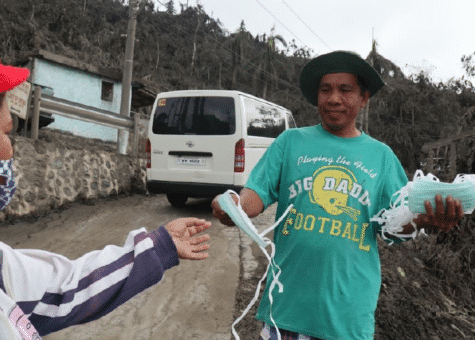 A few months after the eruption, however, the outbreak of the Covid-19 pandemic brought the community to its knees once again, yet without stopping its journey of rebirth. “There was a drive to live for others,” says Ting, “especially for those who are engaged on the front lines. The children prepared postcards to show their love and appreciation. “With the help of our families, we made 2,500 visors to distribute to hospitals, health centres, the Red Cross, municipalities and schools. “In return, donations came in, which covered expenses and allowed us to purchase additional relief goods and distribute money to families. In all of these cases we felt the hand of God at work. “God allowed us to face these two apparent calamities so that we could experience his immense love and see the goodness in people’s hearts.”
Claudia Di Lorenzi
0 Comments