
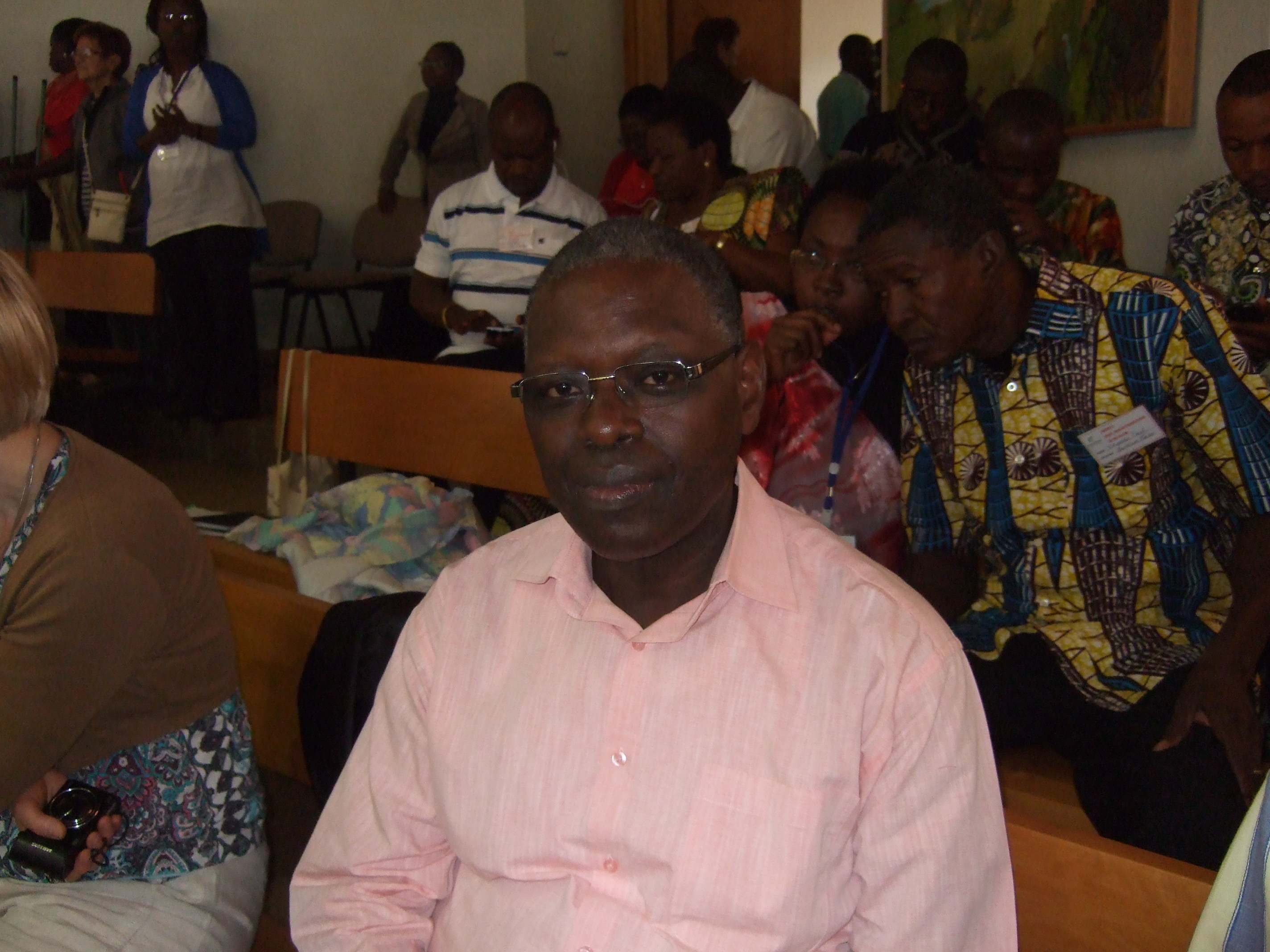
 Several concerns were raised during the School of Inculturation, regarding those aspects of the modern world that can overshadow basic African cultural values. Yet, progress and development can never be stopped. In your opinion, what is the way to salvage the values that are contained in the traditions? “I actually think that development can not be avoided. The culture of tradition in African cultures is also always changing. However, modernity does penetrate African traditions with such things as materialism, individualism and the primacy of money and capitalism. I don’t say that money is bad, but the wrong use of money makes us put aside our humanity which in Africa we refer to as ubuntu. But modernity also contains some positive aspects: democracy, human rights, pluralism that leads to the acceptance others and their differences. In some African countries people kill for lack of pluralism; there is a collective sense of self that is very dangerous. In that sense, individualism – a Western value – does not seem entirely negative because if I wish to escape from the collective sense of self, it will take a good dose of individualism. In short, I think there is need for a balance between individualism and pluralism. It’s important to become aware of this and reflect upon it, even though it’s not sufficient in itself.” I think we should illumine the African culture that has been contaminated by the negative values of modernity. I think that this is the point when Christianity must intervene, which looks upon the other person as my path to sanctification. The Gospel invites us to give money the second place. Jesus gives the human person first place, the neigbour. For me this is important, it seems to me the path for salvaging the universal values that are contained in the traditions.” What impressions do you take away with your from these days? What are the challenges to be faced in the daily lives of the African peoples? “Through one simple situation that I found myself in I felt that I could be reborn in these days, like Nicodemus. It was my beginning of the School of Inculturation. The second striking impression was to see the people who are here, to discover that Africa is pluralistic, that there is a pluralism of Africas. I wanted to know every one of them, to understand how they live; to talk with a Cameroonian, who is quite different from a Burundian, a Rwandian, or Ethiopian. Here I experienced Africa’s pluralism. But as Africans, we come together on certain values: solidarity, the family and family relationships, communion, the centrality of our children’s education. This is important for us Afrcicans, even though we are so diverse. For me, the challenge for defeating the internal battles, passes through the incarnation of the words of the Gospel in daily life, social and political life. This is the challenge that rises from these days: When we get home, how will we behave towards people that are different from us? How will we behave towards our enemies? Towards the people who do not belong to my political party, who don’t appreciate me? Will I be capable of loving them? Will I be this pure white light of the Gospel, in society, politics, in the lack of understanding among groups of the same nation? This is the commitment I take away with me: the challenge of our times for overcoming the great problems of Africa.” Compiled by Irena Sargankova
Be generous towards the needy
Be generous towards the needy

0 Comments