4 May 2017 | Focolare Worldwide
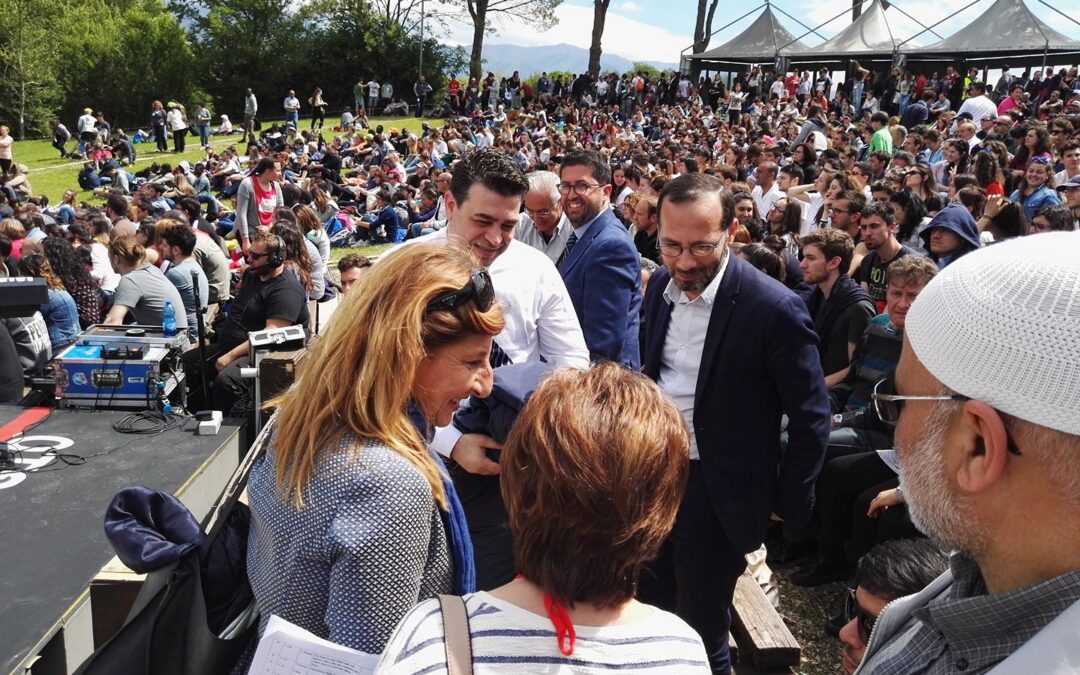
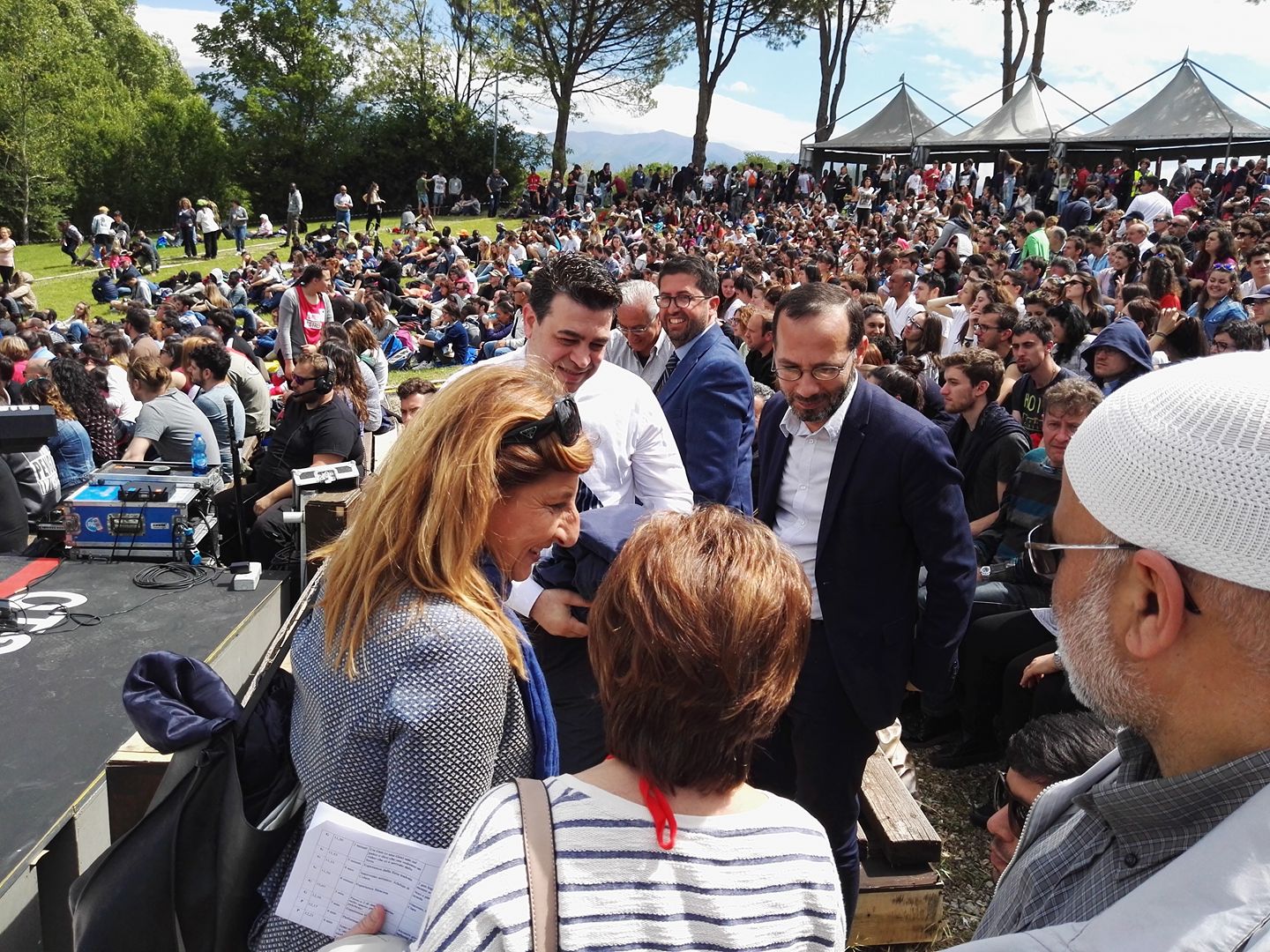
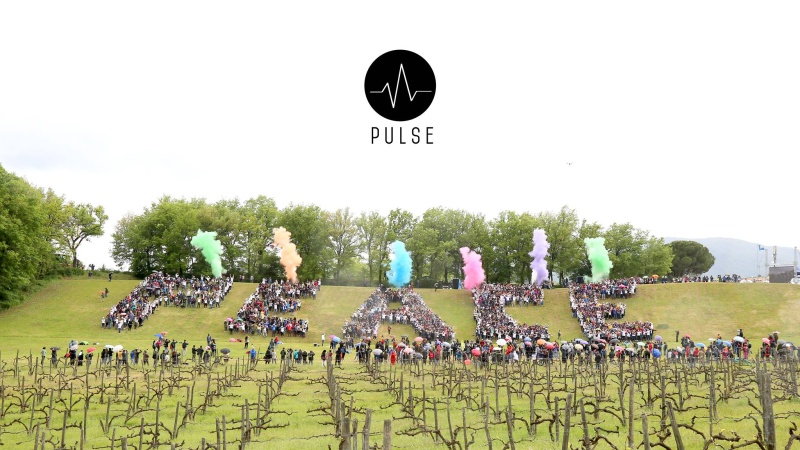 One image stood out, the word PEACE formed by the participants themselves on the front of a hill. One sound stood out, the sound of hand clapping to the same beat, a symbol of many hearts together in the boat of life where we are all migrant voyagers. On song for all, Hope is the eternal voice that guides us towards salvation. The annual appointment came to its symbolic end beneath an explosion of cannons loaded with colours – from green to fuchsia, on the first of May in Loppiano, at the International Meeting of Young People for a United World, during United World Week 2017, which was titled “Pulse: Change your heart, change the world.” Ever since 1973 when the first edition of the event was held in the small city of central Italy, a colourful crowd of crowd of thousands of young people from Italy, Europe and around the world have descended on Loppiano every May. It is a festive event that is like a model of living in peace with others, beginning from the young people, generations that are interconnected by nature and culture, and more inclined to putting up bridges rather than walls. Daily events included discussions, testimonies, music, dance, choreographies, all in the name of peace and the construction of a more united world, which has seen the commitment of the young people from t he Focolare Movement in collaboration with other associations and movements, such as New Horizons, the Community of San Egidio, La Pira International Centre, Living Peace, Robins, Barbiana, Economia disarmata, Il varco, and Non dalla guerra.There was a significant presence from the Muslim community of Italy, with support from the Imams of Massa Carrara, Teramo, Trieste and Veneto. The artistic quality was ensured thanks to the Gen Rosso and Gen Verde musical groups, DanceLab Cultural Harmony Associaton, singing performers Amara and Paolo Vallesi, who were on their way back from the Sanremo Musical Festival, and numerous other bands from different cities of Italy – all of them united by a strong desire for peace, and by the dream of a more inclusive world, more equal and fraternal. And that enthusiasm, not even the rain could wash away. While the greats of the world threaten new and ruinous acts of war, which are appalling to most, on the main stage of the natural amphitheatre of Loppiano, a series of stories “from below” were being proclaimed, real stories that if they were told enough times would change the course of history. Like the story of Mohamed, recounted by Luca, who had arrived in Italy in a boat after a dangerous crossing. Or like the story of a group of very young Christians from Syria who in a video message expressed their love for their martyred land. The forward gaze of the Harmony Dancelab Association was not a fake facade of pacifism, while it is holding Fine Arts workshops for children of the Palestinian territories with the help of Father Ibrahim Faltas from the Custody of the Holy Land.
  Heedless of all the rain, on the first afternoon, the young people began to trace the silhouette of a boat. Or perhaps the rain was precisely the missing detail, since the the journeys of today’s immigrants who are at the mercy of the waves in the hope of finding a peaceful and dignified future, are not void of threats and dangers. This is something that Giusi Nicolini, Mayor of Lambedusa, Italy and 2017 Peace Prize winner knows well. It’s raining on the hill as the message of peace is being formed, which is the theme of the musical piece by Amara and Paolo Vallesi, and it has become the theme of the day. But the brilliant colours exploding from un-warlike cannons, manage to overcome the grey clouds, the same colours that the young people gather from large sacks, before departing amidst a festive atmosphere. It represents the promise and commitment to “get their hands dirty” in bringing about a world of peace.
3 May 2017 | Focolare Worldwide, Senza categoria
“May peace be with you,” Omar Abou Baker exhorts, who has been a peace ambassador since 2016 when the World Forum of Young People for Peace, held in Egypt, named him and 47 other young people between the ages of 8 and 23 ambassadors of peace. “I belong to the Heliopolis Choir of Cairo, which was begun for the sole purpose of spreading a culture of peace. Last year we organized a celebration for World Peace Day. This was the first time we presented ourselves to different embassies, explaining who we are and what our goal is. Through our shows we managed to convey to a vast audience that included ambassadors, actors, songs and famous people, our desire to build peace in our world.” During Ramadan, a sacred month for the Muslim world, when you fast from first light until sundown, the ambassadors organized dinners for 400 people in need. Everyone got to work using their own special talents: some got food, others presented songs, recitations, dances, games, face-painting for the children . . . But mostly we put our efforts into creating personal relationships. Together with other organizations we were able to hold a marathon for athletes with disabilities. Their lives represent a constant challenge. Each ambassador was responsible for one aspect of the event. The choir prepared songs to celebrate their feats; others worked on presentations, taking pictures or running particular events and workshops. On the National Day of Orphans the children sang in the choir with us. It was a meaningful experience for them, because by expressing themselves through music, they developed a bit more self confidence.” “I believe that peace is a very high concept that is attainable only if people make every effort possible to render it real. Because peace isn’t a word in an article or a lyric in a song. It’s a common effort that should be based on a whole series of values to be lived out by each and every one of us: justice, tolerance, helping others . . . The only way to actually build a world of peace and brotherhood is to put love into action. If I’m here today,” Omar concluded, “it’s to testify both with my word and with my life, that peace is possible if it begins from me.”
1 May 2017 | Focolare Worldwide
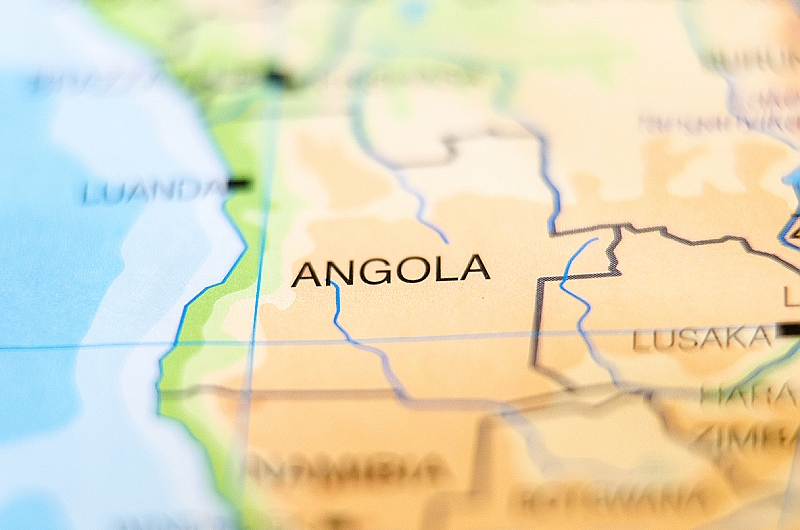
“My brother was born on 12 March 1995 in a city of Bié, south of Angola. He was a cheerful child, loved nature, and enjoyed climbing trees, gathering their fruit and bringing them to others. He had been lively and active since he was a child and had started to work. At the age of 15 he had started to reach his objectives. Not wanting to weigh on his parents, he started working as an assistant bricklayer, and then at 16, as a motorcycle and bicycle mechanic. He dreamt of becoming a doctor to help people, like our dad. Yes, this story is about my brother. Two years ago, he went to the sea with three of his friends. On their way home they were surprised by some policemen. In those days there was a big tension in the city, and a lot of violence. To prevent it, the police had set a curfew: all those who were out and about after 6 pm were arrested. It was a way of frightening criminals and assuring the population. Most of the people, however, had not been informed of this decision, and it was the first curfew day. Among these were my brother and his friend, who found themselves simply in the wrong place at the wrong time. My brother, mistaken for a criminal, was arrested. Time passed and he had not returned home. Anguished we went to search for him everywhere: in the house of our relatives, hospitals, prisons, and at the beach where he had gone. But nobody had any clue as to my brother’s whereabouts. In the end, an uncle proposed looking in the last place we would have ever wanted to go: the orbituary. His body was there. He was only 20 and with all the future before him. It was a really difficult moment, an immense suffering for our family. From the signs on his body it was clear that the policemen had been very cruel and he had suffered greatly before dying. This tragedy provoked a deep crisis, especially in my father. He had chosen to work to save human lives, and now before him was the drama of a son he was unable to help…. I knew the spirituality of the Focolare Movement for a long time, and tried to put the Gospel into practice. In giving myself to the others I had found my fulfillment, but with my brother’s death, a sentiment of hatred grew in me towards the policemen who had done this atrocity. The pain dug an unbridgeable void deep inside me. It was a long internal trial: in the depth of my heart, in fact, I wanted to start a process towards forgiveness. It wasn’t easy. Only God could fill this void and make my heart capable of mercy. In this path, the love of the Focolare community in my city was fundamental. I felt loved, welcomed and helped by all. I thus found the strength within me to make this choice. I have rediscovered the gift of peace, by building it firstly inside me, up to the point of looking at every policeman with my eyes and heart full of mercy.”
29 Apr 2017 | Focolare Worldwide
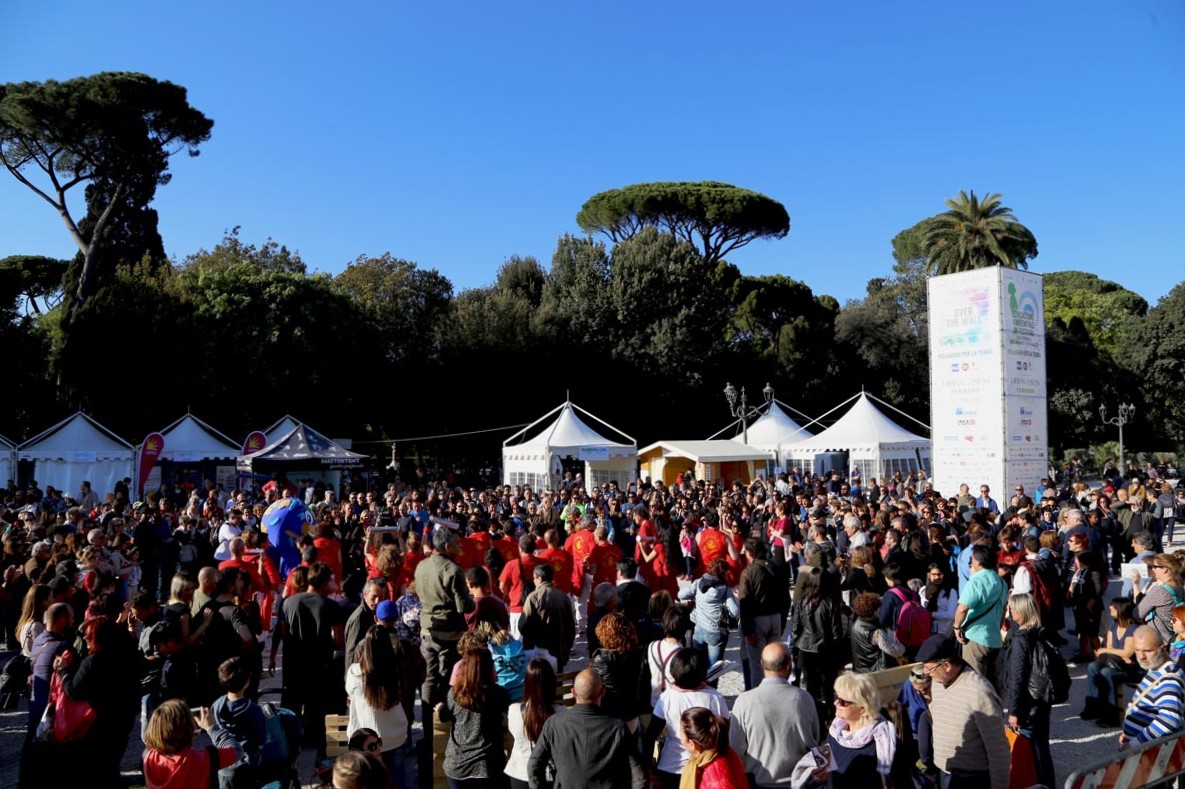
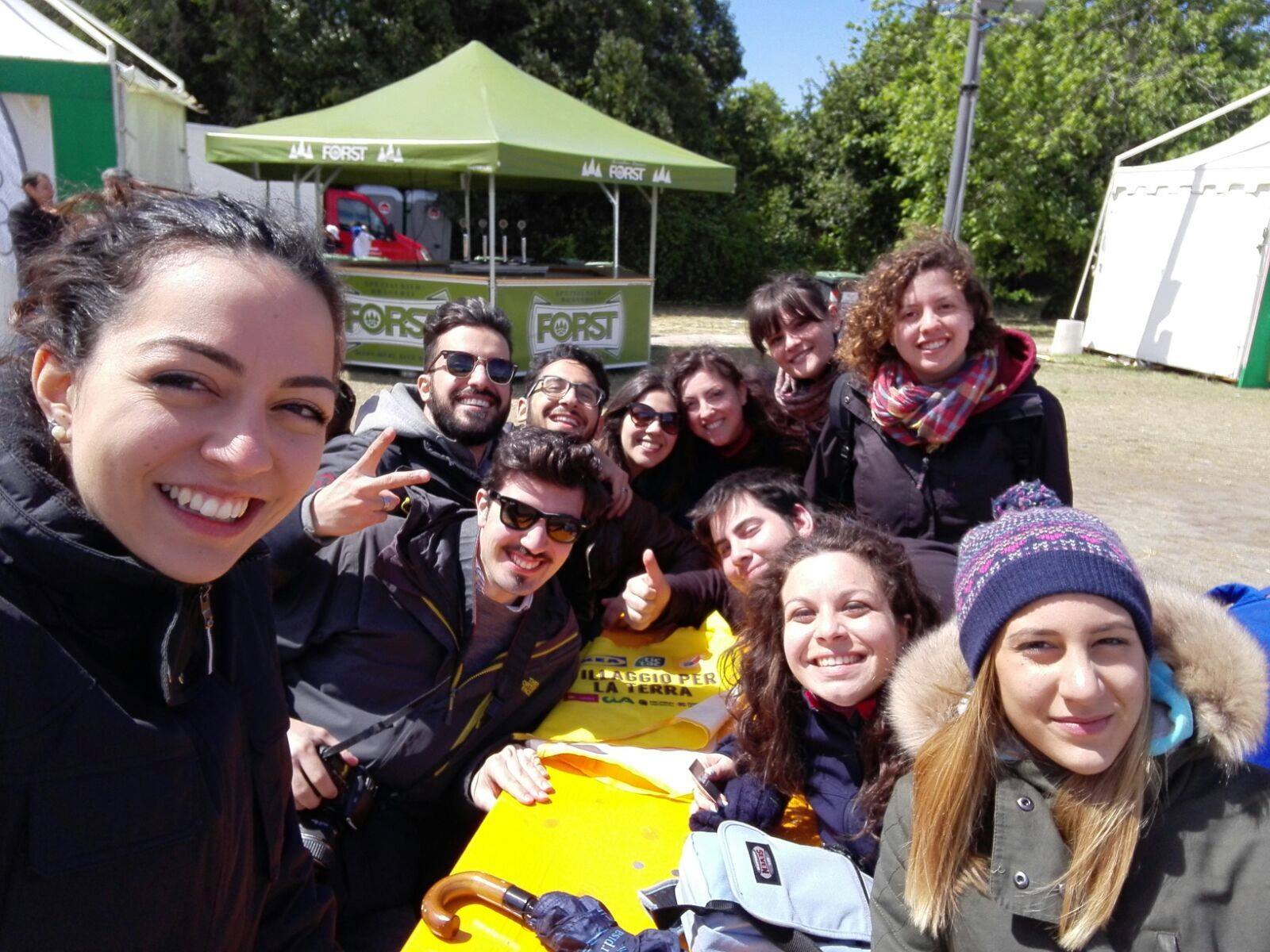 The Pincio Hill is a privileged terrace looking out over Rome, an observation point with a breathtaking view of the city skyline. But from 21 to 25 April a festive population stole the limelight to become an undisputed protagonist: the participants of “The Earth’s Village”, an event organised by Earth Day and the Focolare Movement within the setting of Villa Borghese, the capital’s green lung in the city centre. There were about130,000 visitors, families, children, youth, transiting citizens, but also ministers, key figures in the country’s economic and cultural life, cardinals and heads of various religions. It was a five-day event of institutional meetings, theme forums, courses, shows (also some stars of the musical world), a children’s village – within the context of the celebrations dedicated worldwide to the themes of ecology and respect for the environment – that contaminated also the strolling tourists, who thronged the place also due to the radiant sunlight and festive air. Like last year, the Focolare Movement found in the Earth’s Village the ideal place to hold one of its most important gatherings, the Mariapolis: a temporary but insightful city, whose inhabitants renew their decision to live the Golden Rule which invites to “do to others what you would like others to do to you.” “For us, this rule is the throbbing heart of integral ecology,” explained the organisers of the event, which last year had received the unexpected visit of Pope Francis. The concept was also taken up by Cardinal Parolin, Vatican Secretary of State, during a mass celebrated in the Village: “the spark of interest for the things of God» is like a “spark of interest for our own selves, for the truest, deepest and most essential part of ourselves (…). A new attitude towards creation, the promotion of an integral ecology lived with joy and authenticity, following the example of St. Francis of Assisi.”
  Among the many issues were discussed, a specific theme was Economy of Communion which is based on a market concept which surpasses the logic of savage capitalism and aims to make the economy an instrument for the humanization of relationships. The forums on Economy of the Village, The Community and the Enterprises, also saw the participation of the economist Stefano Zamagni. This educational phase proposed to the participants – citizens and economic and cultural operators – a space for the sharing of ideas, experiences and projects based on peace and economy, a dual term which today seems unachievable, given that behind every conflict, even behind the migration of thousands of refugees, lie enormous financial interests. And yet there are – and we saw them in the Village– economists and businessmen who have chosen to go against the current, to build enterprises that produce profits to be partly allocated to solve situations of poverty. These, in the current panorama, are concrete answers that bring hope. Another central theme was intercultural and interreligious dialogue. There were moving testimonials from Fontem, offered by Maria Bencivenni and Martin Nkafu. In the tiny village, north-west of Cameroon, wedged in the equatorial rain forest, stands the hospital Mary Health of Africa, founded in 1964 by the Focolare. Due to the high infant mortality rate the king of the village had asked for help. In response, the Focolare had sent doctors, nurses, civil engineers and technicians, and thus initiated an extraordinary story of friendship and harmonious co-existence between Christians and the faithful of other traditional religions, Europeans and Africans. Livia Turco, in the past Health Minster and Beatrice Lorenzin, current Italian Health Minister, together with Vittorio Pelligra, professor of Economy, presented the book entitled Creative Fidelity. A Charism’s Implementation Challenges by Jesús Morán, current Co-President of the Focolare Movement. An exchange of ideas on politics and charisms, two apparently distant fields, to the point that Chiara Lubich herself had defined politics the “love of loves,” the tool par excellence that can respond to the present needs. A creative fidelity: ideals and concreteness, novelties and faithfulness, a challenge of identity in every field. “Creative fidelity means not fearing to face challenges but at the same time signifies firmness in one’s own values and principles. In the globalization world, it is not easy to build equality and social justice – affirmed Turco. It is a great and very difficult challenge.” A strong message of peace was launched on the last day. While the children were busy in the Playing together for peace workshop where they learned the differences between the Christian, Jewish, Muslim and Buddhist religions and the various places of worship, and built a mosaic with the words they had just learned, 7 women of 5 different faiths gave life to a panel called “Mothers of the Earth,” a round table of interreligious dialogue on the protection of the environment envisaged by the various religions. “Women,” declared Franca Coen, president of the Jewish Beth Hillel community, “by nature know what it means to take care of and protect a seed so that it can develop into a healthy and harmonious being. Through dialogue between the various cultures and religious faiths, they can overcome the fear of the diverse and operate in synergy honouring the work of the Only Creator.” Lilamaya Devi, of the Italian Hindu Union added: “According to our tradition, God rests on stones, breathes with the trees, sleeps with the animals and awakes in man. Religions have a very important function, that of reminding all of the deep union with the Earth.“ Mervat Kelli, a Syro-Orthodox Syrian said: “Nature is a shrine that teaches us how to create reciprocal relationships and live in profound harmony.” The Earth’s Village closed shop but opened many hearts. The participants returned to immerse themselves again in the reality of the metropolis, with the firm intention to live in full communion with the surrounding environment and humanity.
27 Apr 2017 | Focolare Worldwide
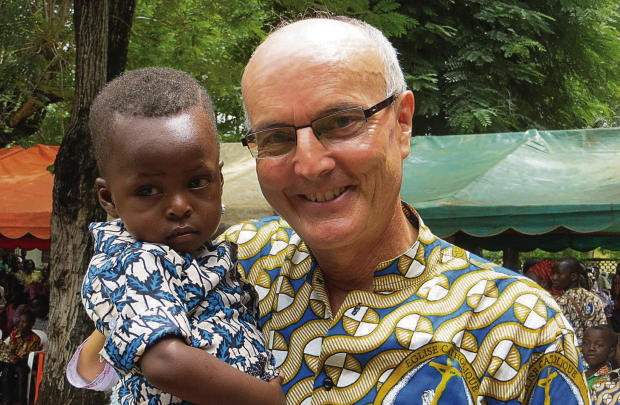
“In 2010 I had been sent to the parish of St Marie, on the outskirts of Man, which is the capital of Ivory Coast. At that time I wasn’t familiar with the culture and traditions of Africa. I was immediately struck by the strength and vitality of the people, despite the great poverty and consequences of the war. Over time I learned to recognize the ancestral fear towards white people. For me, as a priest from Switzerland, it wasn’t so much a matter of providing economic support, but of putting myself in a position of deep listening. What I had to offer was me, my availability, my lack of pretensions. I lived in the Focolare town of Mariapolis Victoria, near Man. From there I travelled every morning on bicycle towards my quarter, on my way to meet people in the shops, offices and along the road. I waved to everyone on my way and stopped now and then to put a stop to some large or small argument. I paid special attention to the children. I talked to them and played with them. If any of them were sick, I’d take them to the infirmary at the Mariapolis. I did the same for their parents and relatives. This is how nearly all the children in the parish came to recognize me and introduce me to the adults. During the feasts I’d go through the quarters with them, to extend my best wishes to the families, Christian and Muslim alike. This also led to friendships with Imams and Evangelical pastors. One day, a boy from the parish approached me. He wanted to do something for the children of the village, although he had previously grown far from the Church because of a misunderstanding. I encouraged them to do small fund-raisers to support their journeys, a gesture of auto-financing that was greatly appreciated by the local bishop. We visited 11 villages in which the young people were trained in visiting the sick and elderly. During the Year of Mercy, with the help of the residents of Mariapolis Victoria, we supported the bishop’s projects in the diocese, sponsoring a meeting of traditional leaders, pastors from the Evangelical Churches and Imams. The campaign for brotherhood among the populations that spread through the region concluded at the Mariapolis. I substituted for the chaplain at the public jail for a while. During the celebrations of the mass, I tried to underscore the importance of living the Gospel. Sometimes I invited others to join me, who shared their testimonies. These masses were celebrated under a roof, in a courtyard, in the midst of a lot of confusion. So, I brought along a loud-speaker, inviting them to use it when they had other events. I later learned that they shared it with the Muslims and that the Imam was touched by their generosity, which he called “typically Christian”. Before my departure, they wanted to hold a send-off feast for me with the director of the jail. They told me: “You always practiced what you preached.”
![Fazenda de la Esperança visit the Focolare]()
25 Apr 2017 | Focolare Worldwide
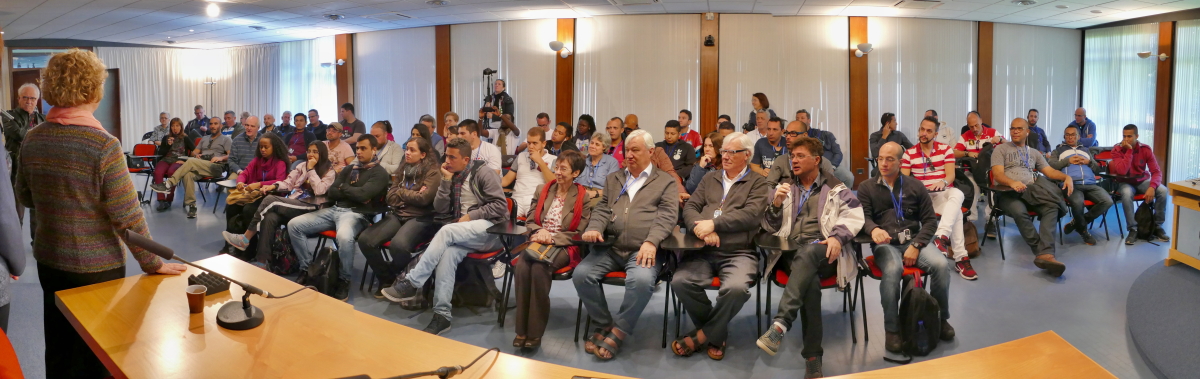 The Focolare has shared a long-standing friendship with Fazenda da Esperança (Farm of Hope) which goes back to the very first farm. It was 1983 when Nelson Giovanelli, a young Brazilian from the city of Guaratinguetà. Inspired by the words of Saint Paul, “I became weak with the weak,” he approached a group of young drug addicts. One of the young people felt drawn in and asked for help in giving up drugs. Many others followed him. Nelson lived Chiara Lubich’s spirituality of unity. He was joined by German Franciscan Friar Hans Stapel who supported his efforts right from the start. The work grew and developed with the support of the “two charisms”, said Pope Benedict XVI during his 2007 visit to the community of Pedrinhas, Brazil – the charism of Chiara Lubich and the charism of poverty of Saint Francis of Assisi. On Sunday, April 23, 2017, a group of 60 young people and adults visited the International Centre of the Focolare Movement in Rocca di Papa, Italy. Most of them were from Brazil, but there were also representatives from other Latin American countries like Uruguay, Argentina, Paraguay and Mexico; Germany and Switzerland; Angola and Mozambique; and Philippines. They were accompanied by 14 founders: Friar Hans Stapel, Nelson Giovanelli Rosendo dos Santos, Lucilene Rosendo, Iraci Leit, and their General Council for Europe.
 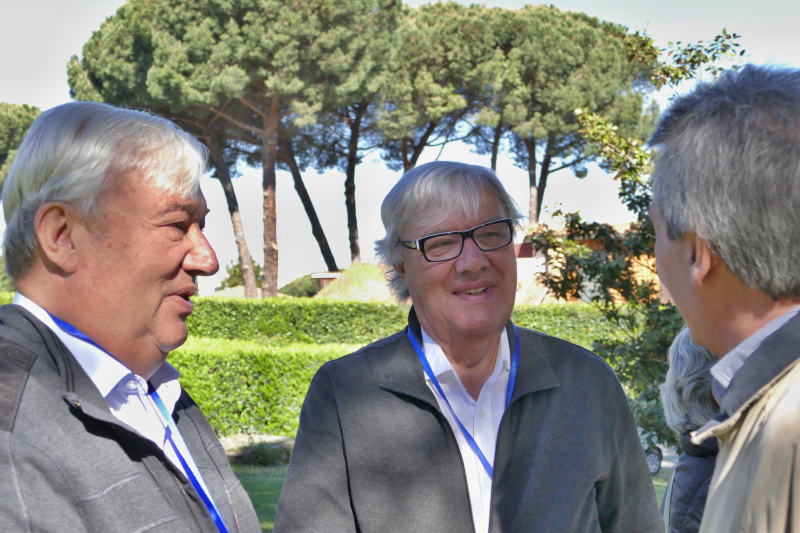 “The purpose of this trip,” Friar Hans explains, “is to make the experience of the Fazenda known in Europe. To offer this alternative assistance to young people who suffer from the slavery of addiction. We’ll also travel to Switzerland, Germany, France, Poland and Portugal – all places where we have Fazendas, and these 60 people will share their testimonies. Among us they found a new life and decided to become missionaries and evangelizers for three months in Europe. They made a great effort to pay for the flight, so that their testimony could be freely-given.” What was the reason for visiting the International Centre of the Focolare? “It was because of everyone’s huge desire to get to know the origins of othe charism that gave the roots to the Fazendas,” says Nelson Giovanelli. He recalled a letter he wrote to Chiara Lubich in 1990, in which he shared with her his calling to love “Jesus Forsaken in the people who have fallen victim to drugs.” Chiara encouraged him to follow the promptings of the Holy Spirit. Currently there are 124 Life Communities around the world. They take in 3,000 young people who are trying to free themselves from drug addiction, through a personal rediscovery of their human dignity and of life values. There are 14 Fazendas in Europe and, during the coming months, another 4 will be opened in France, Poland and Italy.
 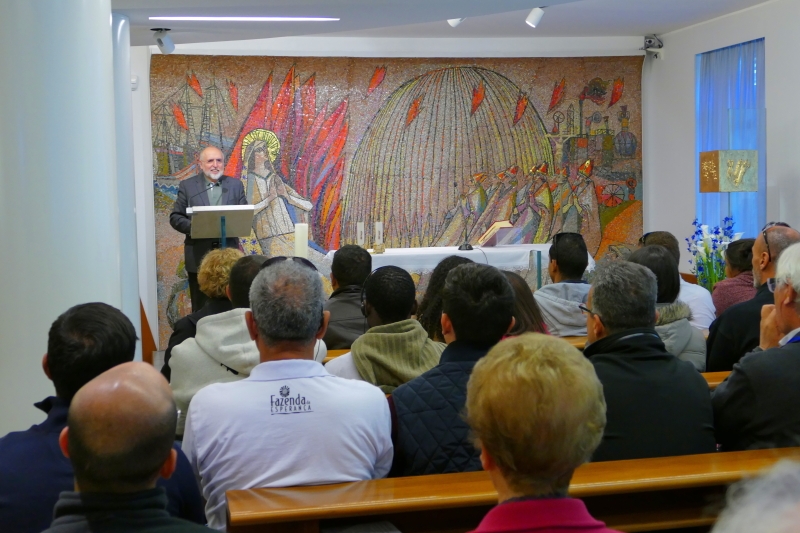 In the Fazendas da Esperanca you have people who voluntarily dedicate themselves with commitment and complete generosity to the service of young people with whom they create the community of the “Family of Hope.” “My father was an alcoholic . . . he didn’t believe in love . . .” says Priscila, a young woman from Argentina. “When I found and got involved as a volunteer at the Fazenda, I regained my relationship with him after 15 years of estrangement. I forgave him and, little by little, he gave up alcohol. For me, forgiveness is everything. It’s the essence of my life: I find God in the love I give away.” The Focolare’s co-president, Jesús Morán, brought greetings from Maria Voce and thanked them for their witness to the Gospel. He augured that they would “always be close to the suffering, to Jesus Forsaken, so that will be one, beginning from the least.” Their stay in Italy will include a visit to the city of Saint Francis and to the international Mariapolis of Loppiano where they will take part in the Pulse Meeting and the annual May 1st Youth Festival.
