5 Apr 2016 | Focolare Worldwide
“March 22cnd will be forever marked by the cowardly attacks in the airport and in the metro in Brussels. They were actions of people who were not able to see love of neighbour as a priority in life, precisely during the days of Easter, a feast that proclaims: Love conquers all. It’s been a week in which feelings of deep hatred and a sense that God is requiring us to love every neighbour. That’s certainly not easy in moments like these. It’s in our nature to find perptrator. That’s what’s happening here in Belgium. We wonder where we went wrong and who was responsible for the radicalisation of that human being. It was also a week filled with novel questions for me. It’s been like constantly writing little letters to God and running every day to the mailbox to see if He’s answered them yet. It’s even worse when my own friends wonder why I still defend Muslims: ‘It’s all because of them,’ they say. ‘We should send them home. Why give to the refugees, and then they do away with us?’ I came to realize that I had to keep on doing the same exercise over and over again: to put myself in the skin of my friends who perhaps have not had the good fortune of experiencing God so near to them. Perhaps they haven’t realised that He is the only one that can give the answer: an answer of Love. They feel the fear that pushes them to prefer security and their own future. My effort was to show them the other side of the story: ‘Those people (the terrorists) aren’t Muslims. Islam embodies values that spread love. But when you try to do that, you are always met with resisitence. The wound is still fresh. I was hoping that I’d be able to bring enough healing to the wounds, but a complete cure will take time. This Good Friday I returned to my house weary and fed up with caring for “the wounds”. I can well imagine that it must have been a very hard week for the people who were on the front lines, caring for the wounded in body and in spirit. It is said that the young people of today don’t dare to express their faith. We no longer dare to talk about the things we believe in for fear of being cast from society. We no longer dare to do what we believe should be done. Perhaps it’s not fear of expressing ourselves, but tiredness because believing in Christian ideals is a tiring venture. The faith of Belgium is so exceptional and should muster up the strength to uphold its values. The young people choose to stop believing in order to avoid criticism. And this made me understand once more the strength of the ideal of peace and unity that Chiara Lubich taught us. It’s a sort of “cafe” for our weariness. It helps us to smile when we’re presented with cynical questions from our friends. These become opportunities for sharing our message . . . that’s the reason I follow Jesus! I’d like to ask God for more fire than I had before, a fire that lights candles in the hearts of young people. Candles that will enable us to look at one another in a positive light instead of criticising each other, so that the downward spiral will become an upward spiral and the faith will become a celebration rather than a preoccupation. A place where each of us can find the key to build a world in which attacks like those of March 22nd never happen again.”
4 Apr 2016 | Focolare Worldwide
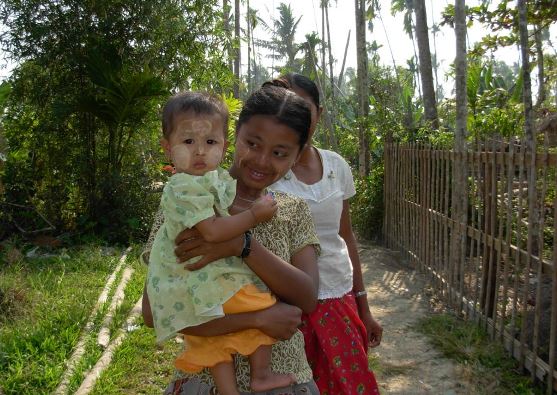
During the last visit to Taungoo, one of the regions where the Long Distance Support Project in Myanmar was launched, “we came to realise how many kids on Long Distance Support are now walking on their own,” writes the representative of AfnOnlus in Myanmar, Myanmar Vivienne Arpon. The visit by the local staff of Long Distance Support to the families of the children being supported was an opportunity to bring some concrete love and to better understand the difficulties they were facing. Marta had been abandoned by her husband when the children, Justin and Joseph, were small. Through the project she found the strength she needed to raise her family. When he finished school Justin won a scholarship in culinary arts at an Institute in Yangon, and Joseph became personnel assistant at a fabrics company. Philip and Anna’s family had been living in a slum in poor hygienic conditions. Long Distance Support has enabled them to live in a decent house and have a more dignified life. Although Philip is still studying, his parents have generously committed to support those who are worse off than they. “What gives us joy,” says Vienne, “is to notice how the improvement in the physical living conditions of these families has led to human and spiritual growth.” Since 2006 the project has expanded in response to requests for help from Eric, the Burmese coordinator. Thanks to the intervention of other NGOs it was possible to build a new school in Yenanchaung, the Magway region and find teachers and qualified personnel. The school children have been orphaned by HIV/AIDS or abandonment. Many of these teenagers have been able to find good jobs now, so that in addition to being financially independent they can even contribute something to their families. “We’re pretty confident,” Vivienne writes speaking to supporters, “that the future of these children is assured, not only because they can study, but because they felt the love from your side, which assures them. For all this, thank you very much for the sacrifices you have made. In fact, it is not always easy to live solidarity, but when you take into consideration those who are living in worse conditions than yours it can redimension your own needs and wants and can lead to a more sober lifestyle, perhaps even a freer life for yourself. One family from Messina, Italy writes of how their experience with long distance support with AFNonlus is enrichment for them that has opened them to the whole world. The boy they were supporting has grown up and, thanks to the support he received through the programme, is now working. Nevertheless, there are many other children living in conditions of need and the Sicilian family, in spite of the financial problems that everyone is going through, didn’t turn their backs on them. They decided to continue contributing their support: “With four children it isn’t easy to make ends meet. In spite of the uncertainty, we believe in this project and are very happy to offer some concrete help to people who are worse off than we are . . . in this case, little Vincenzo from Myanmar.” The Myanmar project extends through a territory which, due to environmental conditions and historic reasons was never developed adequately. Many families and children are victims of malnutrition and illness, such as malaria, tuberculosis and AIDS. With the support from contributors, the project is giving hope to people, offering a different future to the new generations and contributing to the human development of the population. For more information: The Focolare has been in the Asian world since 1966. Recent cultural and interreligious events have remembered those years: 50 anni di storia.
3 Apr 2016 | Focolare Worldwide
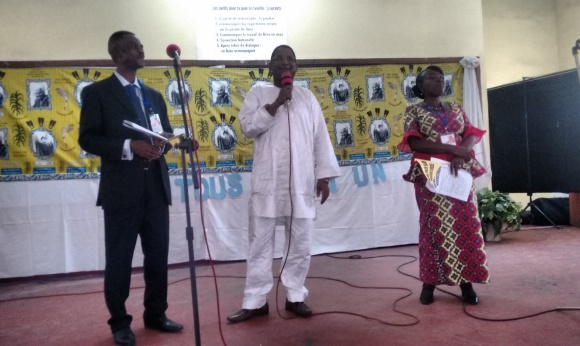
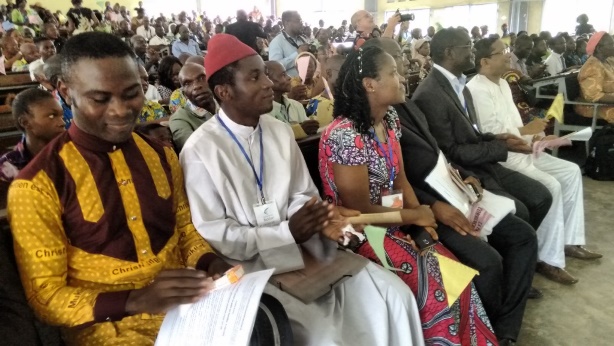 “When the family suffers, society suffers,” said one of the participants going straight to the heart of the main message of the event: “The Family And Peace. Tools For Peace In The Family: 5 Secrets.” Similar events were held in 8 cities of the Democratic Republic of the Congo and Congo, Brazaville, with a massive attendance on March 13th. The organisers report 1000 people in Kinshasa, 500 in Goma, 600 in Lubumbashi and 1,500 in Kikwit. There were another 110 in Bukuvu, 83 in Uvira not counting the Masses celebrated in other locations, inlcuding 14 in Congo Brazzaville. In Lolo 170 adults with 40 children “celebrated” – because thoughought Congo as in other African countries it is the feast of “Mamma Chiara,” as she is affectionately known on that continent.
 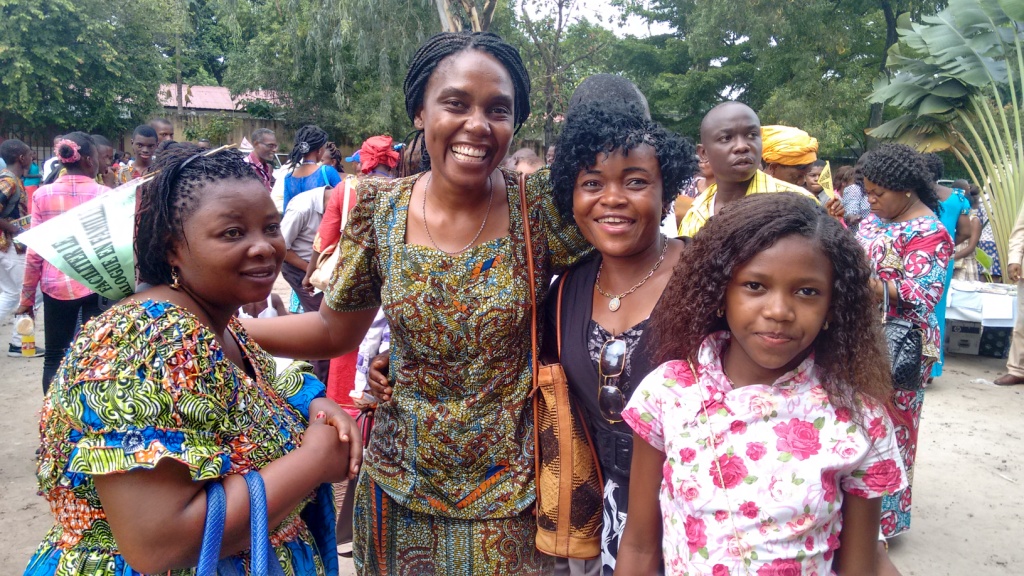 “With its spirituality of unity the Focolare Movement hoped to create synergy by providing opportunities for sharing and exchange with structures of the local Church that serve the family,” writes Martine from Kinshasa. “Friends from the Church of Christ in Congo and from the Muslim community also participated. The event raised enthusiasm and joy, and we met several times to prepare it together: some sharing their testimonies, some singing and dancing – very group wished to contribute something to the day.” The event was also covered in the media, on television and in the newspapers: L’Observatuer, Le Phare, Le Potentiel, Le Congolais, to mention a few. In Kikwit the Muslim radio also covered the event! The “5 Secrets” are actually elements from the charism of unity applied to family life: the pact of mercy (forgiveness between family members); communion of the experiences of living the Word of God; communion of souls; and fraternal correction. Finally, conversations with people who can assist the family along its way if their are problems. “These secrets,” they write, “barely revealed, are already helping several families to rediscover their peace and harmony.” During his thank you address, Abdourahamane Diallo from UNESCO in the Democratic Republic of the Congo, stated: “I would like to offer my congratulations to the organisers of this day in favour of peace in the family. We at UNESCO also think that we need to lift up the defense of peace through education, dialogue, tolerance and culture. I render homage to the family because that is where education begins. I thank you for this work you are doing.” “At this meeting I discovered a reality of God to which we are called to live together, doing all we can so that it continues,” declared Imam of Kikwit. “We all have one only God, the One who sent the Angel to Mary to announce the glad tidings.” The person in charge of Comunità Vie Nouvelle: “I’m glad to have discovered the 5 secrets for building peace in the family. This evening I telephoned my son who is having family problems, to share all of this with him. I needed this theme!” “This experience with the local Church,” Martine concludes, “and with our Protestant and Muslim friends with whom we continue to grow the relationship, has been a step forward towards Mamma Chiara’s and our dream of unity.”
2 Apr 2016 | Focolare Worldwide
A conference for mathematicians “A couple of my colleagues also attended a conference with their small son. After supper they took turns putting him to sleep and were never able to spend an evening together. I sensed that things weren’t going well between them and wondered what I could do to help. I suggested that one evening I could stay up with the boy, since he knew me quite well. The following day my colleague thanked me: Ever since the little one was born, he told me, they’d never had a moment just for them, and that evening was very important.” M.Z. – Poland My neighbour is another me “I study art at university. Shocked by the suffering of so many Syrian families, I thought of organising an art exhibit with some friends. We could use the money we earned from selling our artwork to help those families. We called the exhibit: ‘My neighbour is another me. Break down the walls of indifference’.” One of the main pieces was a wall made of tiles. Each visitor could take one tile home as a reminder that we’re all connected and invited in our daily lives to do something for people who are suffering. There were a lot of problems involved in organising the exhibit. At one point I was really tired, but thinking about the suffering of the Syrians I found new energy to carry on. The art sale brought in 4000 dollars that will be donated in full to several Syrian families.” J.T. – USA The goodnight kiss “Once again, that night Papa had dumped all the day’s stress on Mamma. Without a reply, she went to iron in the kitchen as he read in the living room. A wall had been built between them. Feeling the atmosphere growing heavier and heavier, my brothers and I went to our rooms. But I couldn’t fall asleep. A sentence kept coming to my mind: “Where there is no love, put love and you’ll draw out love.” Overcoming my human pride, I got up and went into the kitchen. “Good night, Papa,” and I gave him a kiss. Then, “Good night, Mamma” and gave her a kiss. They looked at each other and the wall between them collapsed. I went back to bed happy.” G.M. – Switzerland One small act of love “I’m a Franciscan. After giving the last hoe I had to a poor person I said to Jesus: “Okay, now you take care of it!” I heard on the radio that a whole party of hoes were arriving. I asked an NGO to make me one of the beneficiaries: I received 200 hoes along with machetes and sacks of seed that I distributed. Many people from the place ask me for help: Members of a Protestant sect from Kimbangisti and even a witch doctor. He invited me to his home and, offering me 5 litres of palm wine, he thanked me for all that I do for his people. All because of one small act of love. . .” G.B. – Angola
1 Apr 2016 | Focolare Worldwide
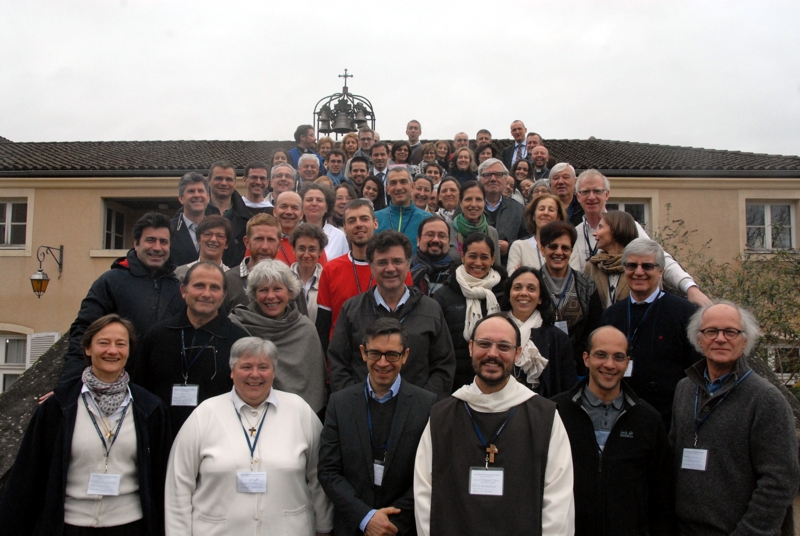
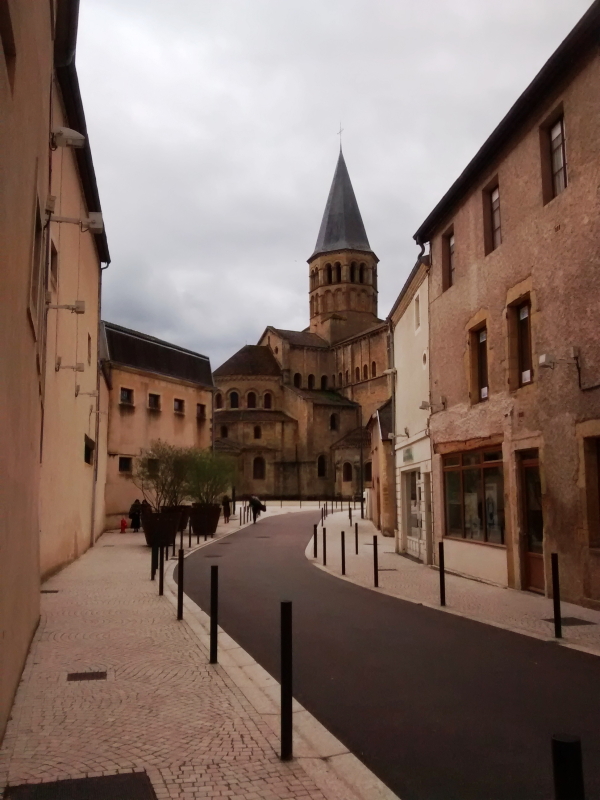 Paray-le-Monial, a city in the Burgundy region is not far from other places with a rich spiritual heritage, like Cluny and Taizé, and embodies the artistic heritage of the places of worship it boasts of (this is where Cluny and Cistercian architecture originated), set along the “roads of Romanic culture,” leading to Santiago di Compostela. Furthermore, Jesus appeared here to Saint Margherita Maria Alacoque and this gave rise to the spirituality of the Sacred Heart. The participation of 14 Movements and new Communities, with over 70 members of various ages and experiences, was driven by a fraternal friendship and the desire to broaden their knowledge. Thus a meeting entitled, “Communion and mercy – Experiences and challenges,” was set for 3 – 6 March. Also the bishop of Le Mans, Bishop Yves Le Saux was present. The choice of the place was triggered by the invitation of the Community of Emmanuele since it was here where an important historical phase of the community began in 1975, and which then diffused worldwide. Some of the participants had already attended last year’s event held near Florence, in Loppiano, while some were there for the first time. “Unity is lived like a polyhedron “– Pope Francis had said to the Catholic Fraternity in 2014. It invites us to marvel at what we are. In his welcoming speech, Laurent Landete, head of the Emmanuele Comunity, stressed that “Through a spirit of wonder, we contemplate the profiles of your communities.” Mercy is the name of God, the Pope affirmed when he opened the Jubilee Year, and this was the framework which each of the 14 communities placed as the setting of their projects and testimonials. For the Arche group, the aim is to heal the wounds of disability. The Community has to become a place of forgiveness: and though fragile and vulnerable, we can experience the Father’s mercy. The Pope John XXIII Association targeted sharing with the poor and learning forgiveness. For the Speranza, New Horizons families and the Cenacle Community, it means going into the depths of addiction and existential fragility to bring the resurrection, mercy and reconciliation with oneself and the world. All this may appear to be mere social actions, but upon listening to their experiences, a profound spirituality ensued, and they became striking examples of the pedagogy of the Gospel. For the Canção Nova Community, mercy means using the means of communication to be able to bring the good news to all of humanity. Unity for the Focolare is the renewal of its choice to stand in every moment, side by side with each person we meet, with the inevitable alternation of light and shadows. Love for our brother and the “pact of mercy” are the practices that help reach this goal. The Catholic Shalom Community instead targeted mercy as a mission, in unforeseen situations such as that of the Carnival of Rio. The Community of the Beatitudes chose to share the path in identifying and expressing its ecclesiastic features in its Statutes, and the Regnum Christi Community focused on sharing the Church’s goals and fraternal friendship in Christ as referral points of light. The current events gave a strong imprint on the relationships that ensued during the meeting. The Emmanuele Community shared its interreligious dialogue initiatives, especially with the Muslims. This was an important fact, considering the serious attacks that came about in the country. Also the Sant’Egidio Community stressed the importance of peace, the acquisition of a vision of a world that discovers brotherhood as its innermost being. The Chemin Neuf Community stressed that sharing strengthens communion, and makes us experience the extraordinary mercy of the Father who is unity: the source of their mission. “Diverse charisms in the kaleidoscope of the testimonials, appeared like God’s Love reaching out to humanity today”, declared Lina Ciampi who participated on behalf of the Focolare. There was a strong desire in everyone to meet again, and the determination to keep in touch and pray for one another. A pact of benevolence among us, concluded the meeting.
30 Mar 2016 | Focolare Worldwide
Foto: Flickr CC / NC_20 CNA
