30 Mar 2016 | Focolare Worldwide, Senza categoria
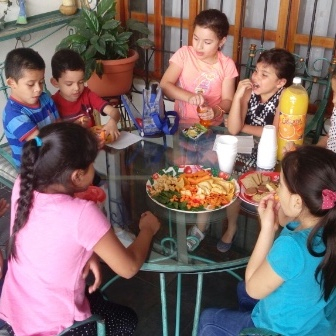
Protecting minors is a civic obligation which is also finds it fulfilment in the utmost respect for human rights. It is an obligation, therefore, but one that is loaded with foresight, precisely because of the inestimable value it represents for the new generations. Upon reviewing the various articles of the El Salvador law which entered into force in 2011, the novelty stands out, with respect to the previous law which only highlighted the cases where this is missing, such as situations regarding survival, disability and abandonment. This new norm which refers to the guidelines of international laws provides for the protection of all children from their conception up to the age of 18, ensuring adequate opportunities for integral development and a life that reflects the standards of human dignity. As in many countries, also in El Salvador social phenomena that endanger these principles abound, precisely due to the typical vulnerability to which infants and adolescents are exposed. And as in any other place on the planet, also here the population is called to collaborate actively with the institutions to safeguard every human right, but especially those rights every child in the world is entitled to. In 2014, a Document drawn up by the Focolare “for the promotion of the wellbeing and protection of minors” had aroused in the Movement worldwide, a renewed awareness of this responsibility. Also due to this initiative, the El Salvadorean community of the Focolare is now giving its valid contribution to a widespread knowledge of children’s rights and of how we must act to promote their integral development and the psycho-physical-spiritual wellbeing of minors, while also denouncing certain hidden and subtle practices with which parents and educators involuntarily damage their harmonious growth. This action of the Focolare found support in the local Catholic Church which in turn encourages the associations to adopt all the means possible to help forestall any action that may infringe these rights. The Focolare’s training programme provides for a reading of the law in the light of evangelical love, in the perspective of concurring to form new generations that are increasingly aware and free to make their independent choices for values in life. This programme also includes the recent “ Up2meProject” created by the Focolare and adjusted to the various development phases. It is enthusiastic work carried out by adults, youth, adolescents and children, to open a dialogue on various themes that are ever more actual today.
29 Mar 2016 | Focolare Worldwide, Senza categoria
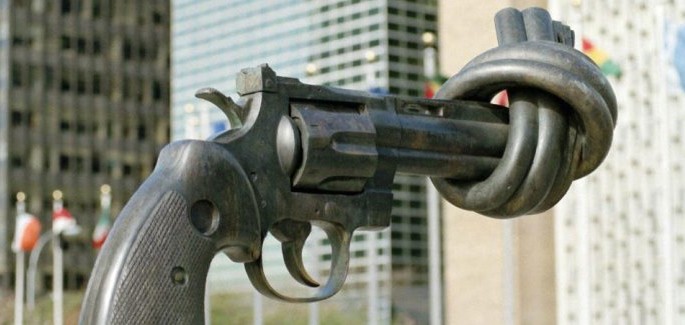
“At the age of 19 I left my home in Abruzzi, Italy, to study aerospace engineering in Pisa. It was an exhausting but satisfying journey. In 5 years I finished the specialisation with honours and an internship in Germany that enriched my skill set even more. All of it thanks to the sacrifice and support of my family. After graduation I was anxious to find my place in the work world. But I had to deal with youth unemployment, which is 40% in our country, and with companies that at best offer only fixed-term contracts or consulting positions with quarterly or even semi-annual salaries. After a few months spent sending my resume in vain, I started thinking that maybe I had to apply to other areas of the industry. Or emigrate. But quite unexpectedly I received an offer from a company that represents Italy in the major European Consortium manufacturer of missiles and defence technologies. The idea of a real job in a major company like that was very tempting. After a successful telephone call I was invited to an interview with the technical staff. The environment was youthful and stimulating, serious and quite professional. Designing missiles didn’t really reflect my principles, but inside me I cradled the hope that I would be offered a job that wouldn’t involve me in the manufacturing of weapons. The interview went well. Just a week later, I was asked to sign a contract, it being understood that this was a job directly related to the production of missiles. I felt like my back was against the wall. On one side was a steady job with a permanent contract, a very good salary and possibility of a career. On the other side was my belief as a citizen, but first of all as a man committed to building a non-violent society based on respect for human rights, social justice, a correct balance amongst human needs, the natural environment and the use of resources. I’ve always believed in a society where the ambitions of a few don’t trample on the dignity and economic success of others, that they don’t make me forget that I am a human being. Things were further complicated by my colleagues from school who were pushing me to accept regardless of my moralizing, reaffirming their indisputable thesis that a 25 year old graduate cannot afford these days to refuse such a job with so many benefits. With a thousand arguments they were trying to put me in front of reality telling me how lucky I was and … irresponsible! Not least of all with this work I could relieve my family of their commitment and be able to support myself. Something else besides my conscience played a decisive role: the people who are closest to me, the family, my girlfriend and the Youth For A United World that I grew up with. They helped to mature in me the idea – which became clearer and clearer – that in order to build a supportive and non-violent society, you need to act concretely, paying personally and giving witness. This was my opportunity to do that. I told the company that I couldn’t accept their offer, clearly explaining my reasons. Naturally, it wasn’t an easy decision, especially since I didn’t have any other offers. But I didn’t let that stop me. I continued with my job search and in a few weeks I received other offers that led me to where I am now happily satisfied with my job as a civil aerospace engineer.” Source: Città Nuova See also: Arms? No, thank you.
28 Mar 2016 | Focolare Worldwide
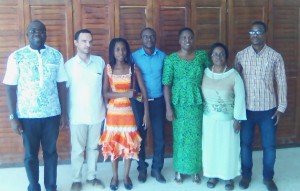
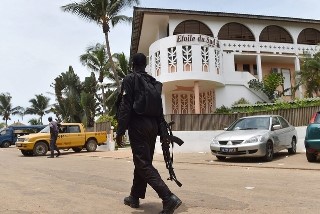 “Last March 13, the Ivory Coast and the entire world learned to their surprise that the seaside city of Grand-Bassam had been hard struck by unknown assailants and that it was difficult to know the number of victims,” write Jeanne Kabanga and Damase Djato from the Focolare in Abidjan. “One can imagine the slaughter with all the people that go there every week to rest on the shore in front of the hotel they call the star of the south. It is a place visited mostly by tourists of every provenance. Grand-Bassam had been the first capital of the Ivory Coasts and is classified as a UNESCO World Heritage Sight.”
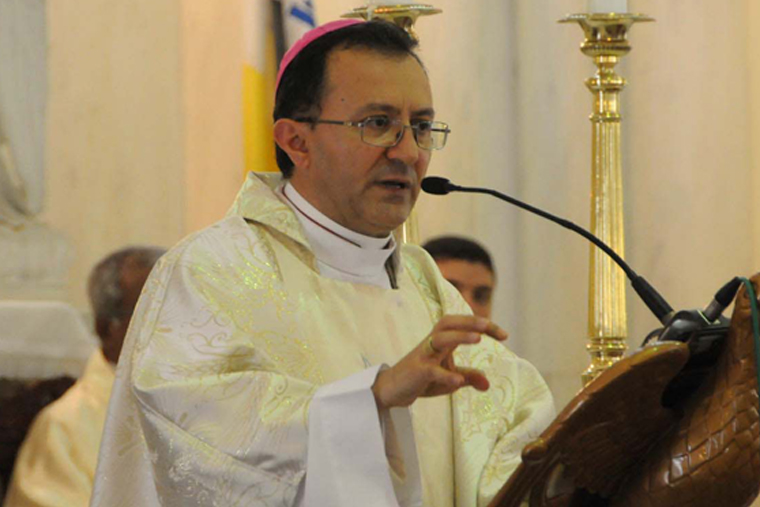
Msgr Joseph Spiteri

24 Mar 2016 | Focolare Worldwide, Senza categoria
 “I’ve never been so close to the site of a terrorist attack. Nowadays we are somewhat accustomed to seeing such catastrophes everyday on the news but passing in front of the metro station only a few minutes before and thinking that it was so close by and not knowing exactly what to do is quite another thing. I’m a firm believer that a united world is possible. Through my commitment in New Humanity, but mostly through the small daily actions, I try to live and act in a spirit of fraternity that is also expressed in the Universal Declaration of Human Rights. But, as the news came and the howling of sirens intensified outside my window, I was blown away. Okay, it was all so close by, but still what could I do? Stay put and respond to all the messages from friends and relatives who were asking for news? Should I take to the streets and go to help who knows who and how? Should I keep working as if nothing had occurred? It was surreal, and I found myself disoriented and helpless. It also made me question the meaning of it all. What could have moved them to push some young people like me to hate to the point of being ready to sacrifice their lives in order to kill so many defenseless passengers, chosen at random and pressed into a packed metro car? I wondered what crime I would had committed that I should have to die with them. I could not find any satisfactory answers in any of the theories I had learned at university in political science class. What did give me some light was the memory of the previous evening spent with several youth who are engaged in living the same commitment as me, and during that evening we had promised another time to be instruments of brotherhood and dialogue for the people around us. Trying to put aside my confusion, I realized that, in those moments, it was (almost) as if I was experiencing the war in my own skin, all the more reason to be a peacemaker beginning with the people who were with me at the moment. Colleagues, friends and acquaintances… in spite of the terror and shock, I slowly began to realize that I was not the only one to think so. Everybody – each in their own way we’re dealing with their emotions – none of them found words of hate for what had happened, but everyone was convinced that dialogue was the only way possible to respond to such insane acts. The words spoken by Chiara Lubich, founder of New Humanity and the Focolare Movement, when she was awarded the UNESCO Peace Education Prize in December 1996, seemed truer to me than ever. “Anybody who would like to clear today’s mountains of hatred and violence finds themselves in front of an immense and weighty task. But what is impossible to millions of isolated and divided individuals, seems possible once they make mutual love, mutual understanding and unity the essential activity of their life.”
23 Mar 2016 | Focolare Worldwide
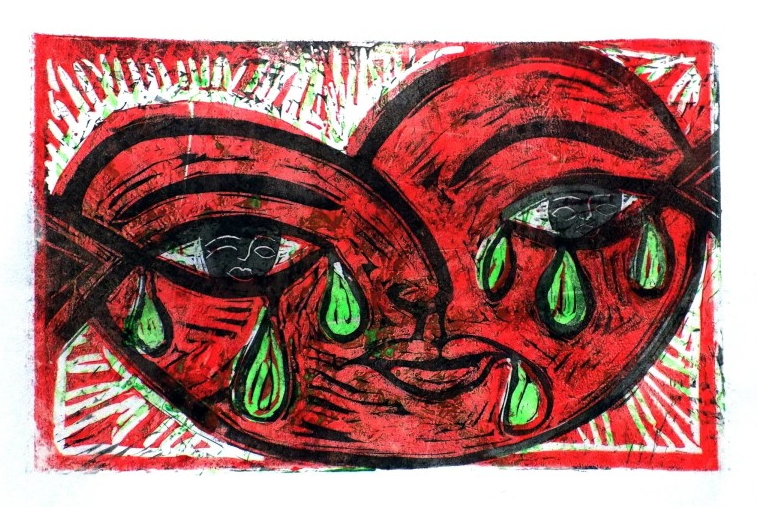
“A Bruxelles, Dieu pleure avec nous” © Michel Pochet
23 Mar 2016 | Focolare Worldwide, Senza categoria
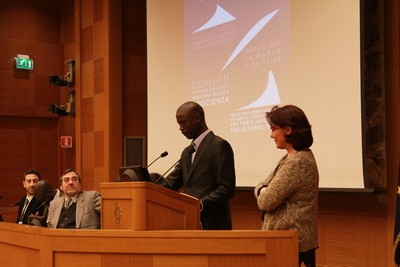
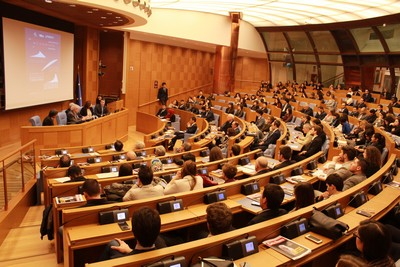 Faced with the increasingly untenable situation of widespread armed conflict, large fringes of civil society continue to make noise in an effort to curb the actions of governments that with their choices support arms trafficking, which is identified as one of the causes that prevents resolutions to the conflicts. The Political Movement for Unity has long been engaged on this issue. Through its Città Nuova, the Political Movement for Unity and especially its schools on participation in politics, it continues to expose the involvement of Italy in the production of war. The country, in fact home to strategic military bases, continues to produce high-tech weapons that also arrive in Middle Eastern countries, as reported by Città Nuova. Bombs are transited from the ports of Sardegna destined for Saudi Arabia, a country interested in the Syrian conflict and driving a coalition committed to the war in Yemen, with thousands of victims and condemned by the UN.
 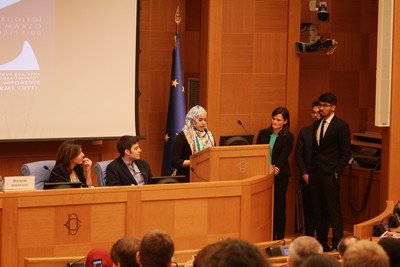 What to do then? A year of work accompanied by experts of international geopolitics, led to the drafting of an appeal made of concrete demands, presented to the deputies and senators available: • Respect for 185/90 Law, concerning the “export control, import and transit of military goods.” In particular, it asks for the termination of exportation and transiting on the national territory to direct weapons to countries in conflict or who are committing serious human rights violations. • The allocation of funds for the conversion of the military industry into civil purposes, with reference to the provisions in Art.1 paragraph 3 of the 185/90 Law. • Transparency and control of banking transactions related to imports, exports and the transit of arms. To these were also added the request for the insertion of the themes of integration and welcome in the political agenda, and the investment of more resources in international cooperation. The youth promoters of the March 16th Meeting are well aware of the powers that be and the apparent judgment, even benevolent, of naivety that accompanies their concerns, but, as they say: “We believe we have a responsibility, due precisely to the ideals that motivate us, and therefore we cannot be silent or passive as we look at the world around us. We work in our daily lives to build fraternity and that is where we begin from in engaging governors.” The reflection in Parliament was enriched by the contributions of Pasquale Ferrara, diplomat and university professor Interrnational Relations; Shahrzad Houshmand, Islamic theologian who teaches at the Pontifical Gregorian University; Michele Zanzucchi, director of Città Nuova; and Professor Maurizio Simoncelli, co-founder of the Institute of International Disarmament Archival Research. At the root is the spirituality of Chiara Lubich, who saw the horrors of World War II in her own city of Trent, Italy, and throughout her life, through dialogue with people of different faiths and cultures, sowed seeds of peaceful coexistence. Chiara, just 28 year old, had also set foot in the Italian Parliament when she met Igino Giordani in 1948. “The hope is that young people can have an impact on the political agenda, as citizens of the present and the future”, says Silvio Minnetti, chairman of the Political Movement for Unity in Italy (MPPU). “Young people are asking us questions, challenging, demanding, and and those of us where are in political field want to welcome them, becoming directly engaged in their voting choices, but also by initiating a serious reflection in order to give substance to the answers.” In an attempt To affect the political agenda even more, the Political Movement for Unity in Italy is planning to organize a mutual listening and sharing workshop to be held in the Seat of the Italian Chamber of Deputies in the coming months, to discuss the young people’s Appeal. It will include the participation of parliamentarians, experts, young people and representatives of the Italian government. See also: Build peace each day (Full text of the Appeal in Italian)
