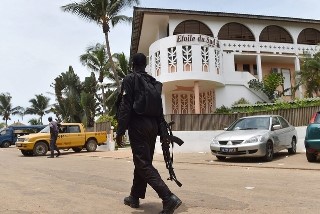
 “Last March 13, the Ivory Coast and the entire world learned to their surprise that the seaside city of Grand-Bassam had been hard struck by unknown assailants and that it was difficult to know the number of victims,” write Jeanne Kabanga and Damase Djato from the Focolare in Abidjan. “One can imagine the slaughter with all the people that go there every week to rest on the shore in front of the hotel they call the star of the south. It is a place visited mostly by tourists of every provenance. Grand-Bassam had been the first capital of the Ivory Coasts and is classified as a UNESCO World Heritage Sight.”
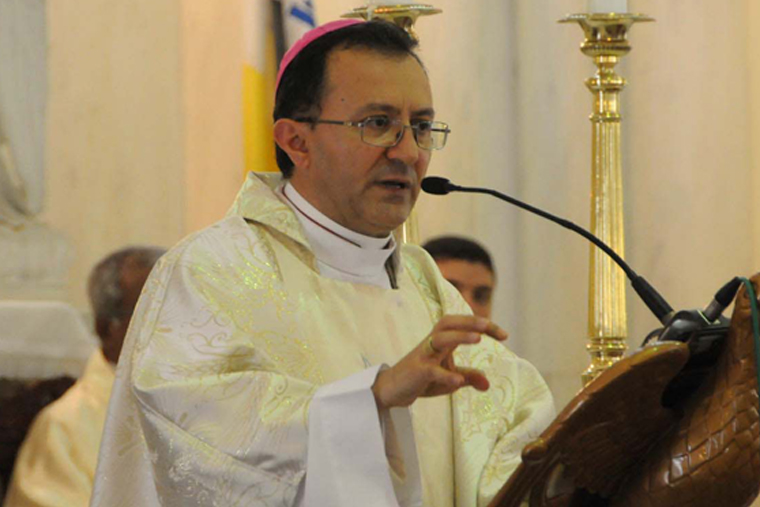
Msgr Joseph Spiteri
of the message of
Chiara Lubich who had been awarded the UNESCO Peace Education Prize in 196, and had died on March 18, 2008. Amongst the guests were the Apostolic Nunzio in the Ivory Coast, Archbishop Joseph Spiteri and Imam Diaria. Every year, at his invitation, the Focolare community takes part in the celebration of the Maouloud ( birthday of the Prophet). “From their words – and proceeding from the Chiara’s invitation to the political deciders to live the art of loving as a true therapy for out times – we rediscovered our common duty to exert ourselves with fidelity to love without distinction, to not get lost in fundamentalism, but to cultivate hope and mercy.” “Our tendency, instead,” the Nunzio pointed out, “is to put judgement before mercy,” whereas “if Muslim and Christians love one another,” the Imam insisted, “the world would be saved.”
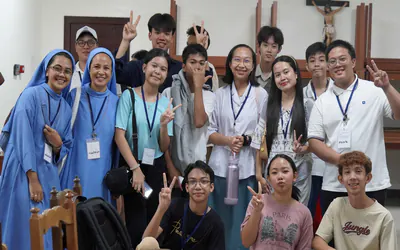
Young people at the event told of their efforts to collect signatures for peace: After they had carefully prepared quotes from Ghandi, Mother Teresa of Calcutta, Chiara Lubich and the Dalai Lama, they distributed them on the streets. “It wasn’t easy to approach the adults and present our project,” What moved everyone the most, were the testimonies of the little children because they were so concrete and showed their commitment in being “messengers of peace” in their own environments. “One day, at home,” Marie Lucie recounted, “my youngest sister hadn’t washed the dishes. So, at lunchtime we couldn’t eat. I had told her to do them, but she didn’t want to. I said to myself, if I washed them I would be doing an action of peace. That’s what I did, and we ate.” “At school,” Prince reported, “some of my friends were making fun of another boy who seemed weaker, insulting and beating. Another boy and I decided to intervene, speaking to them, telling them about the ideals of peace that we believe in and asking them to let him be.” They stopped and are now friends.”
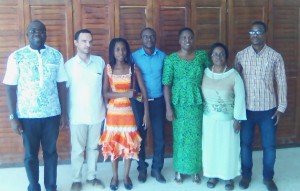
Within such a context, the presentation of the
Economy of Communion which, in the Ivory Coast has already made some moves and turned out to be a possible antidote to the poverty and misery: small actions like Firmin’s teaching activity a quarter of Abidjan. And the signature campaign for peace brought out the personal commitment of each person.
“It was only when we got home,” Jeanne and Damase continue, “that we learned from the television news about the attack in Grand-Bassam. After a day of listening to talk about peace and experiencing peace, we feel a clear call to be workers of peace, putting into practice what we learned and, above all, living peace within and amongst ourselves in order to give it to the people around us. It seems to us that this is the only way we will be able to give our contribution to defuse terrorism and every sort of hatred.”

0 Comments