
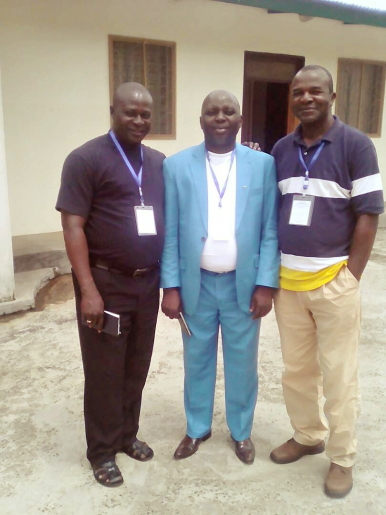
 “Even if it is not officially declared, also here we are fighting the ‘third piecemeal war’. The transitional government is trying to rebuild what the recent civil war has demolished, but has to contend with the strife that often breaks out into fratricide struggles.” Martial Agouais a Catholic priest of the Central African Republic, a country where the majority are Christians and 15% are Muslims. In the absence of a national defense body, the UN sent the peacekeepers, called the “blue helmets”, of some foreign contingents, but there are many interests at stake. The perpetration of the guerilla paradoxically acts also as a cover for foreign hoarders, greedy forthe country’s precious mineral resources. Enemy hunts are always ongoing, and often are fatally found in the tribe right in front, or in the village which practices another religion. The recent news reported about a Catholic bishop, Bishop Juan José Aguirre Muñoz who opened his parish in Tokoyo to host 2,000 Muslims under the attack of the anti-Balaka, also called Christian militias, originally formed as a sort of self-defence groups of the Islamic Seleka gangs, but which lately have often become terrorist groups. This has made no difference between the violent groups who had triggered the revolt, and the civil Muslims, peace-loving people of merchants and the Peul tribe (nomadic cattlemen, also called Mbororo). “My parish,” recounted Fr Martial, “dedicated to the Holy Family, is in Sibut, the capital of the KemoInbingu region. Here in Sibut a meeting of all the authorities was held recently, from the prefect to the mayor, the tribe chiefs of the Munisca force to the district chiefs of the Burundi contingent, and the ex-Selekato the anti-Balaka. At a certain point the chief of the anti-Balakaspoke up to say in a loud voice that the pastors of the various churches, priests, religious men and women must no longer speak about social issues in the churches. All were scared and nobody dared to contradict him. Also I didn’t speak, but that threat did not stop my Christian commitment. I had learned from the spirituality of the Focolare that we have to love everyone, and be concerned about the rights of all. And I said to myself, if I have to choosewhat side to take, I will always choose to stand by the weaker people, the most defenceless.” Two days later, the Peuls were attacked by the anti-Balakain the forest where they were pasturing their cattle, at 18 km along the Bangui axis. Four men were killed and seven among the women and children were wounded. The Munisca brought the wounded to the central hospital of Sibut, but for two days they did not receive any treatment or food. Everyone was afraid to approach them to help them, including the NGOs and the humanitarian services. “When I found out about the situation,” the priest explained, “I took courage and went to the chief of the anti-Balakato ask him to accompany me to the hospital. Upon seeing those wounded Muslims left to themselves in a room with an unbearable smell and in pitiful conditions, both of us were moved to tears. I ran to some Christian families living close to the hospital to ask for water for drinking and to wash them, and also food. I then obtained from the diocesan Caritas director, a means of transport that would bring them to Bangui, 200 km away. Thank God, in three weeks all of them were healed and the Caritas was able to bring them home to their families safe and sound.” Abbé Martial Agoua – Sibut (R.C.A.)
Practice doing good
Practice doing good

0 Comments