
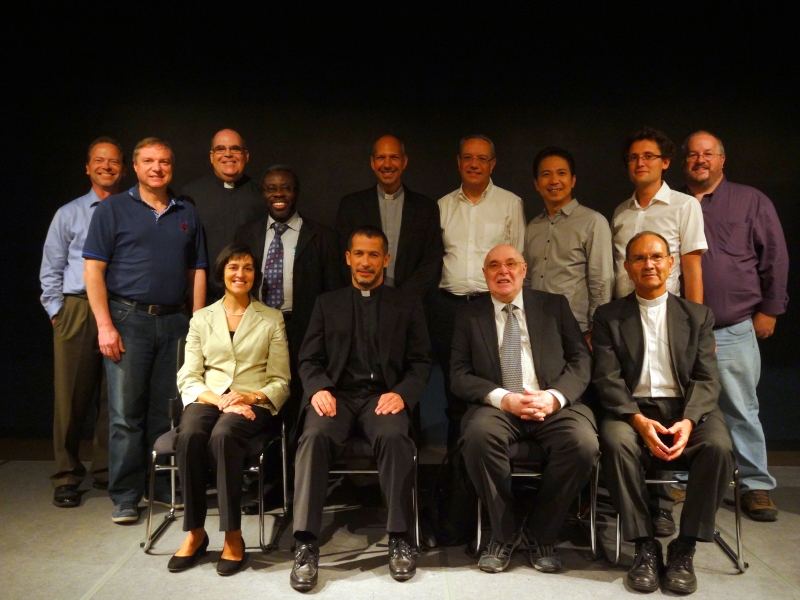
 “The place of my dreams, ever since I was small, was Canada. I would certainly never have dreamed of actually going there, much less in a town called Saskatoon in the prairies of Saskatchewan. Even more beautiful was the reason that brought me there. I went to take part in the final session of the Consultation between the World Evangelical Alliance (WEA) and the Pontifical Council for Promoting Christian Unity of which I have been a member since 2009. I thought back over some experiences that were undertaken with Lutherans in South Brazil that followed a safe path. But with the first contact, I immediately realised that here it was another reality. I encountered a group of Evangelicals – in some countries they are called ‘Evangelists’, in others ‘Evangelicals’. There was a group of Christians included amongst them from different churches: Lutheran, Reformed, Baptist, Pentecostal, Mennonite and Anglican. They identified with a common missionary project, while living and being Church in very different ways from one another. There were thirteen of us – five Catholics and eight Evangelicals. I was the only lay person, and a woman. They came from Brazil, Canada, Colombia, Philippines, Germany, Guatemala, Italy, Kenya, Spain and the United States. It was an unforgettable week marked by prayer, study, reflection and, at times, heated discussions. The questions we asked helped us to know one another better, especially on a confessional and missionary level: What do we have in common? What still divides us? The diversity I encountered was a valuable enrichment and a serious challenge. Above all, we tried to clarify our positions in order to overcome the conflicts through truthful dialogue in charity. It wasn’t easy, and there wasn’t a lack of problems. We experienced the pain of the divisions. We realised that the road ahead would be long. What to do? Let it go, or carry on? Personally, I discovered that any obstacle can become an opportunity for dialogue and an invitation to have an even greater measure of love. We faced the problems in the light of the Gospel, working like real disciples of Christ. Amongst the Catholics were bishops, priests and laity; and we also came from different countries and backgrounds, different points of view. Yet, together, we managed to have a living experience of full and real communion which we enjoy. This is fraternal communion born over years together, along with the hope that every one of us can contribute something towards the reconciliation between Catholics and Evangelicals in our own country. Now, we are awaiting the publication of the final report of this Consultation. Because of the personal friendship established with them, Pope Francis has triggered a new ‘march’ of this dialogue. Encouraged by him, we would like to promote this experience everywhere, because it is in the local community that we live with one another; it is there that we forgive one another; and it is there that we offer the witness that Jesus asks us for: “By this everyone will know that you are my disciples, if you have love for one another” (Jn 13:35).
Use your goods responsibly
Use your goods responsibly

0 Comments