
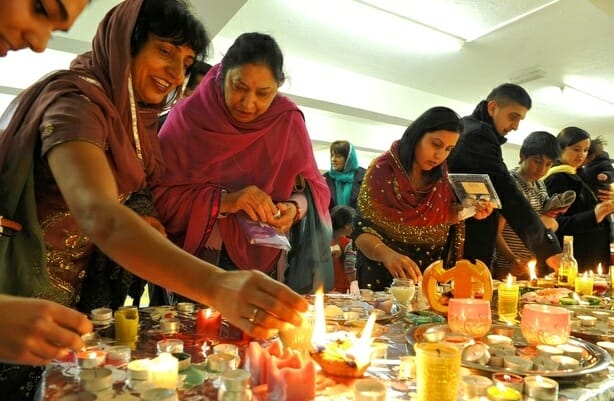
 During the Ashwayuja month, which usually falls between October and November, India is clothed in celebration and light. It’s Diwali, a tradition that goes back to the ancient legend of King Rama who after 14 years of exile in the forest, returned to the city of Ayodhya where he was welcomed by a parade (avali) of lights (dipa) in his honour. Hence the name: Dipawali or Diwali.This year it was celebrated during 10-15 November. The festivities begin with a good house cleaning while many small lamps are positioned in several points of the dwelling – entrances, window sills, lounges – and in the darkness of the night the whole city is transformed into a dreamlike fairyland scene. The light symbolises knowledge and inner awareness. But like a kaleidoscope, the meanings intersect and are magnified: knowledge conquers ignorance; interiority brings peace. Good conquers evil; light triumphs over shadows of darkness, and it unleashes the life force. People look forward to the feast all year. On the third day – the actual Diwali – people put on new clothes, adorn themselves with wreathes of flowers and glittering jewelry. They exchange gifts with relatives and friends, especially sweets and homemade snacks. Everyone attends the religious services in honour of Laskshmi, the goddess of wellbeing. In an atmosphere of peace, they carry leaves, coins and religious images, chanting Vedic mantras to receive her blessing. Then there are the games: cards, especially rummy, mimes, dances, treasure hunts and fireworks.
 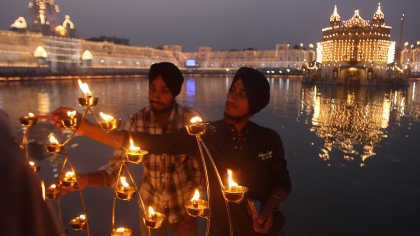 Diwali is not only a Hindu feast. It is a cultural and social event that involves the whole country, with some variations depending on the region and its dominant religion. It is celebrated by Muslims, Buddhists and Christians. For five days the Focolare houses in Mumbai, New Delhi, Bangalore, Goa and the 13 educational centres that are connected to them, are covered in light. The centres serve 1,500 children and teenagers, most of them Hindu who, thanks to financial support from a distance are provided with an education, a daily hot meal and health care (www.afnonlus.org). The Diwali rituals reveal the great sensitivity of the Indian people the way it values the family, friendship, harmony of life and respect for the natural environment. It is significant that for Diwali, you buy impersonal objects, but you give gifts that have been made by your own hands. It is also significant that along with prayers, fruits of the earth are offered as an expression of gratitude towards Nature and its gifts. This custom is echoed in Pope Francis’s Encyclical Laudato si’. It was precisely that document and the inseparable link between living in harmony with creation and with others, that inspired the Pontifical Council for Interreligious Dialogue to send the Deepavali Message from Pope Francis to the nearly billion followers of the Sanatan Dhama (what Westerners call Hinduism). Pope Francis’s Message shares the wish that: “we Hindus and Christians, together with people of all religious traditions and good will, always foster a culture which promotes human ecology.” The Message also expresses a wish that “together, we consciously give ourselves to protecting nature, defending the poor, and building networks of respect and fraternity” (Laudato Si, 201). This will anticipate “the growth of the tree of peace” for those who wish to prepare themselves well for the feast of Christmas.
Be kind to everyone
Be kind to everyone

0 Comments