
The Global Compact on Education, suggested by Pope Francis, invites all people to adhere to a Pact. This was discussed this with Silvia Cataldi, a sociologist and professor, who lectures at La Sapienza University, Rome. 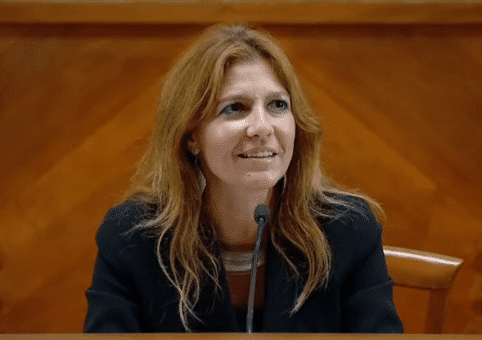 The protagonists are the ones who hope in a world of more justice, solidarity and peace. The Global Compact on Education, suggested by Pope Francis, speaks of youth as being, at the same time, both beneficiaries and agents in the field of education. Together with their “families, communities, schools, universities, institutions, religions and government” they are called “to subscribe to a global pact on education” and to commit themselves to a more fraternal and peaceful humanity. This was discussed during the meeting entitled “Together to look beyond”, held at the Pontifical Lateran University, in Rome on October 15. In a video message, the Holy Father urged all people of good will to adhere to the Pact. Silvia Cataldi, sociologist and professor at La Sapienza University in Rome commented on the Pope’s words In recent years we have noticed the youth’s sturdy protagonism where important current affairs are concerned. The educational model that sees them as passive subjects seems to be obsolete… “Often, educational models limit themselves to think of culture as a concept. The pedagogist Paulo Freire speaks of the “banking model of education”, where knowledge can be poured or deposited as if in a container. However, this knowledge has two risks: that of remaining abstract and detached from life, and that of assuming a hierarchical vision of knowledge. With respect to this, the Pact strikes me as an educator, because it invites us to listen to the cry of the younger generations, to let ourselves be questioned by their questions. We must realize that education is a participatory path, and not a unidirectional one”. So, what does to educate mean? “The term culture stems from colere and it means to cultivate, a verb which indicates that one needs to dedicate time and space, by starting from questions and not from providing answers. But it also means to take care, to love. This is why I am so impressed by the Pact, because it strongly affirms that “education is above all a matter of love”. When we speak of love we think of the heart, of feelings. But love has an eminently practical dimension, it requires hands. So, we educators do our work only if we manage to understand that education is care. Daily care is revolutionary because it is an element of criticism and of transformation of the world. Hannah Arendt explains this well when she says that “Education decides whether we love the world enough because it leads to its transformation”. How can we make sure that the Pact does not remain just an appeal? The call to universal brotherhood – the core of the Pact – has important implications, but to have a transforming power it must promote a change of perspective that leads one to welcome diversity and heal inequalities. The French sociologist Alain Caillé says that “fraternity is plural”, and this means that if in the past brotherhood was only among peers, relatives, in a class or in a group, today it requires recognition of “the specificity, beauty, and uniqueness” of each one. Moreover, if we are all brothers, then our way of conceiving reality changes, because we look at it from a specific perspective, which is that of the least ones, and we are pushed to act, as for example, to protect the fundamental rights of children, women, the elderly, the disabled and the oppressed”.
Claudia Di Lorenzi

0 Comments