
Does it still make sense to work for fraternity in politics? A pact for the brotherhood of peoples, originally drawn up 60 years ago, will be renewed on August 10 at the European Mariapolis. We spoke with Marco Titli from the Focolare’s Movement for Unity in Politics. Echoes from the war could still be heard back on August 22, 1959. Yet at the end of the Mariapolis that was being held in the Primiero Valley that year, representatives of the five continents came together and established a pact of unity. Praying in nine languages, they consecrated their own peoples to Mary, affirming that fraternity was truly possible. Sixty years later, descending to the current political climate, the idea of a pact of unity for the brotherhood of peoples seems utopian – both because it comes from a low point (as it did in 1959) and because it would need to come from governments themselves. Do we need to resign ourselves – or does it even make sense – to work for political fraternity? We discussed it with Marco Titli, 33, who works in parliament and is active in the Movement for Unity in Politics, a district councillor in Turin. What message does the European Mariapolis give to a Europe that is divided between integrating and special interests? “The role of the Mariapolis is not to enter into political debate. The message that we hope to give is that the unity of Europe is a value worth safeguarding, while respecting each country’s individual identity. If Europe breaks up, we end up back to defending borders. Instead, it is bridges and roads that widen our perspectives and bring well-being. The Focolare is part of a network of other efforts in the Church, such as actions against arms exports to Yemen, or combatting against problem gambling.” There is a crisis of trust towards political parties that has exacerbated, and citizens step back from active participation. How can we rebuild trust? “Alongside the political crisis I also see another in the media, which spotlights bad news. Many mayors risk their lives fighting against organised crime and risk their reputations accomplishing brave things for their cities. At the national level as well, there are politicians who fight for the common good. If you look beyond the political apathy, there are many great people in politics today.” Holding fast to your ideals can sometimes mean making someone else unhappy. How do you decide on which actions to take in politics? “In politics, you need to be ready to compromise. We live in complex situations. But not just any compromise – when faced with illegal activities or serious incidents you need to be able to say no. That means you need to take risks. Many public servants have fallen because they said no and were not even understood by their own constituencies. Yet if you shun compromise and go into politics to defend your ideas, you bring division. It is a hard road, and there can be opposition, but a politician is called to listen to special interests and then compose a mosaic with them.” Can you tell us about collaborative efforts between parties in your city? “We were building a bridge near the Porta Susa station in Turin, which joins two parts of the city that were once divided. Together with others in my district and those on the other side of the bridge, I proposed that we name the structure after the European Union, a symbol of unity between different peoples. The project was unanimously approved, and a number of political groups attended the naming ceremony. It was a moment of hope, and my wish is that signs like this can build citizens’ trust towards politics.”
Claudia Di Lorenzi
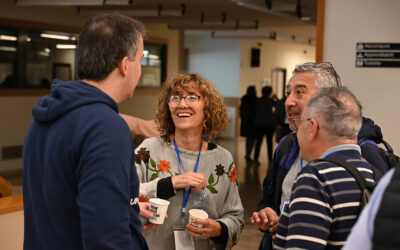
Immagine:© Ufficio stampa Mariapoli Europea
0 Comments