
Focolare Movement

Giving Visibility to Peaceworkers

Oct 31, 2016

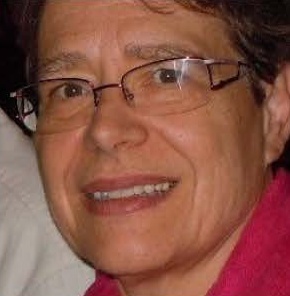
Interview with Chantal Grevin, New Humanity’s representative at UNESCO, concerning the November 15th event to be held in Paris, France, for the 20th anniversary of the conferral of the UNESCO Peace Education Prize to Chiara Lubich.

ChantalGrevin

Chantal Grevin

How does an organization like UNESCO serve peace? First of all, you need to remember that UNESCO belongs to the United Nations. Peace is what is at the basis of the United Nations. The scope of UNESCO’s is to coordinate international cooperation as it regards instruction, science culture, communication and, in some way,  ethical application. Therefore, its basic purpose is peace, especially through dialogue among cultures. Its intergovernmental scientific program, which is dedicated to social transformations (MOST), highlights how no change may take place if it is not integrated by the different cultures.  In fact, UNESCO is known for its promotion of cultural pluralism. But what is the connection between seeking unity and finding a way of making the voice of New Humanity[1] heard among the promoters of peace? If  the diversity of cultures needs to be protected along with biodiversity, then where is the unity that humanity aspires to? We haven’t yet overcome this stage? In this regard, the Universal Declaration of Human Rights (UDHR) is a common basis even though it is still contested; but it still remains for us to find those common universal values that are indispensable for our global social contract. The November 15 event will allow us to reflect on all this. New Humanity’s public event at UNESCO contributes to UNESCO’s work, what we have to offer: best practices joined to deep reflection. Our NGO can help to understand how unity is the source and goal of humankind’s life. In a world torn by conflict, isn’t it a bit utopian to put any credence into one small event? It’s true that the world is going badly, but we have reason to believe in peace. The event will make visible those who make it possible. The promotion of a culture of peace will never really be able to be measured, but the way is open. I personally believe in the international organizations. They might seem to be impotent, but it is no small matter that 195 countries can come together to discuss, and that countries that are belligerent towards one another can meet in the same room. In the moment that you place yourself on a cultural plane rather than a political one, there is a more free exchange. For example, when Palestine couldn’t join the United Nations, UNESCO made it possible by placing it on a cultural plane. We hope that our event will have an impact through what has been sent to the ambassadors at UNESCO. The Acts of the event could become a reference point, an interesting cultural patrimony for researchers and for all the people of the world – and for many years to come.      [1] New Humanity was granted membership among the 350 NGOs in partnership with UNESCO, in 2008.

0 Comments

Submit a Comment

Your email address will not be published. Required fields are marked *


Subscribe to Newsletter

Thought of the day

Related post

“Be the Good News for Your Country”

“Be the Good News for Your Country”

The Pope’s journey to Algeria, Cameroon, Angola and Equatorial Guinea marked a milestone for these nations, from which Leo XIV launched strong messages of peace and solidarity for the African continent and beyond.

Pope Francis: A Legacy That Lives On

Pope Francis: A Legacy That Lives On

Pope Francis passed away a year ago, on Easter Monday 2025. In this brief video we recall a few of the many moments that illustrate his friendship with the Focolare Movement and express the fraternal gaze that accompanied and supported the Focolare community throughout his pontificate.

With Pope Leo for Dialogue and Peace

With Pope Leo for Dialogue and Peace

“I am not a politician; I speak of the Gospel (…) and to the leaders of the world I say: no more wars.” Pope Leo XIV began his journey to Africa with these words, answering journalists aboard the plane en route to his first stop, Algeria. It is a tireless and courageous commitment to peace, one that the Focolare Movement wholeheartedly supports. Peace and interreligious dialogue were recurring themes in many of the testimonies presented to the Pope, including that of the Focolare community.