Focolare Movement

Great and Holy Synod of the Orthodox Church

Jul 6, 2016

The Great and Holy Pan-Orthodox Council in Crete (June 18-26, 2016) concluded with an encyclical and final message “to the Orthodox faithful and to all people of goodwill”.

© POLISH ORTHODOX CHURCH/JAROSLAW CHARKIEWICZ.

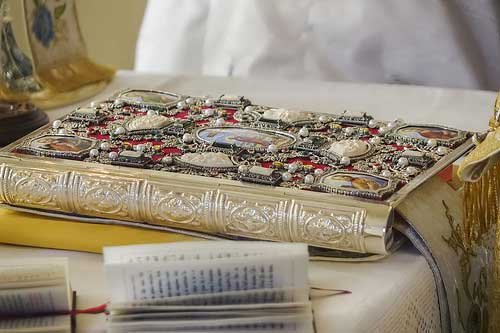
Divine Liturgy at the Patriarchal and Stavropegial Monastery of Gonia. PHOTO: © POLISH ORTHODOX CHURCH/JAROSLAW CHARKIEWICZ.

Expectations were high for the Council that had been being prepared since 1961 when the first Pan-Orthodox conference was convened by Patriarch Athenagoras I. The title was quite meaningful: “He called all to unity” from the Pentecost Anthem of the Byzantine Rite. Driven by the need to face the challenges of the new millennium, the Orthodox Churches share a desire to move towards a more explicit collegiality and sharing, as well as to reaffirm the unity of the Orthodox Church. This Council marks a new openness: to ecumenism and interreligious dialogue; to new scientific and technological discoveries; to spending energy on the question of ecology and to the drama of immigration and the persecution of Christians in the Middle East. It opens “the horizon on the current multifaceted world”. Convoked by unanimous agreement amongst the leaders of 14 Orthodox Churches during their gathering in Chambésy, Switzerland, last January, it was marked from the start by great suffering: the physical absence of 4 of those 14 Churches. The Russian Orthodox Church has not yet made a pronouncement regarding the Council and is waiting for the reunion of the Sacred Synod in July to give an assessment of the recent event. There were also 15 observers from other Christian Churches at the Synod, who attended the opening and closing sessions. Non-Orthodox Christians from around the world were praying for this important event in the Orthodox Church: “Please pray for the Pan-Orthodox Council, I ask it of you as if it were a Council of my own Church, because it is my Church at this moment,” Maria Voce had remarked to a group of focolarini from different Churches who were gathered together in Rocca di Papa, Italy at the end of May. What many people are highlighting is not so much the final decisions – the six documents that were signed by the Patriarchs on the mission in the contemporary world, the importance of fasting, the relationship of the Orthodox Church with the rest of the Christian world, marriage, the Orthodox diaspora and the autonomy of the Churches – but the very nature of the Synod, that is, the fact that it was held and that this encounter had finally taken place. There is also hope that the Synod may not remain an isolated event, but become an ongoing practice of the Church on its journey. On the return flight from Armenia, Pope Francis responded to a journalist’s question about how the Pope would judge the Pan-Orthodox Synod that had just concluded. The Pope answered: “A positive judgement! It was a step ahead – not a hundred percent – but a step ahead. The things they had to justify (in quotation marks), the absences, are sincere for them, they’re things that will be resolved over time.” “The mere fact that these autocephalous Churches came together in the name of Orthodoxy, (…) is extremely positive. I thank the Lord. The next time, they’ll be more. Blessed be the Lord!” And speaking to the Orthodox delegation for the feast of Saints Peter and Paul, Pope Francis cited the Pan-Orthodox Council to invoke “abundant fruits for the good of the Church”. Encyclical of the Holy and Great Council of the Orthodox Church

Message of the Holy and Great Council of the Orthodox Church

Maria Chiara De Lorenzo

0 Comments

Submit a Comment

Your email address will not be published. Required fields are marked *

Subscribe to Newsletter

Thought of the day

Related post

A precious legacy: Chiara Lubich’s ‘Paradise ’49’

A precious legacy: Chiara Lubich’s ‘Paradise ’49’

The first presentation of Chiara Lubich’s book ‘Paradise ’49’ took place on the 22nd of May 2026 in the Paul VI Hall at the Pontifical Lateran University in Rome. The book is a collection of writings in which the Foundress of the Focolare Movement bears witness to and shares her mystical experience from the years 1949 to 1951.
Chiara Lubich: “Do you know where we are?”

Chiara Lubich: “Do you know where we are?”

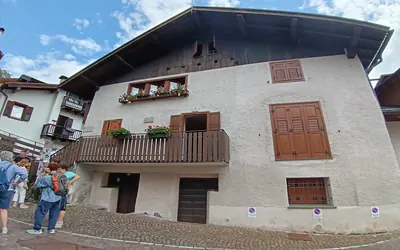
It is the 16th of July 1949. Chiara Lubich is in Tonadico, in the Dolomite Mountains in northern Italy, for a period of rest together with some of her first companions. They are joined there by the Honourable Igino Giordani, whom Chiara called Foco. On that day, Chiara and Foco sealed a Pact of unity, a prelude to the spiritual and mystical experience that Chiara would live between 1949 and 1951. This period is known as “Paradise ’49”, the writings from which have recently been published in a book (for now in Italian). In the introduction to the book, the theologian Piero Coda offers some insights “For a theological reading” of the text. Here is an extract, relating specifically to the Pact of the 16th of July, together with a short video of Chiara Lubich from 20 December 1999, in which she shares this experience of light with the Gen, the young people of the Focolare Movement.