
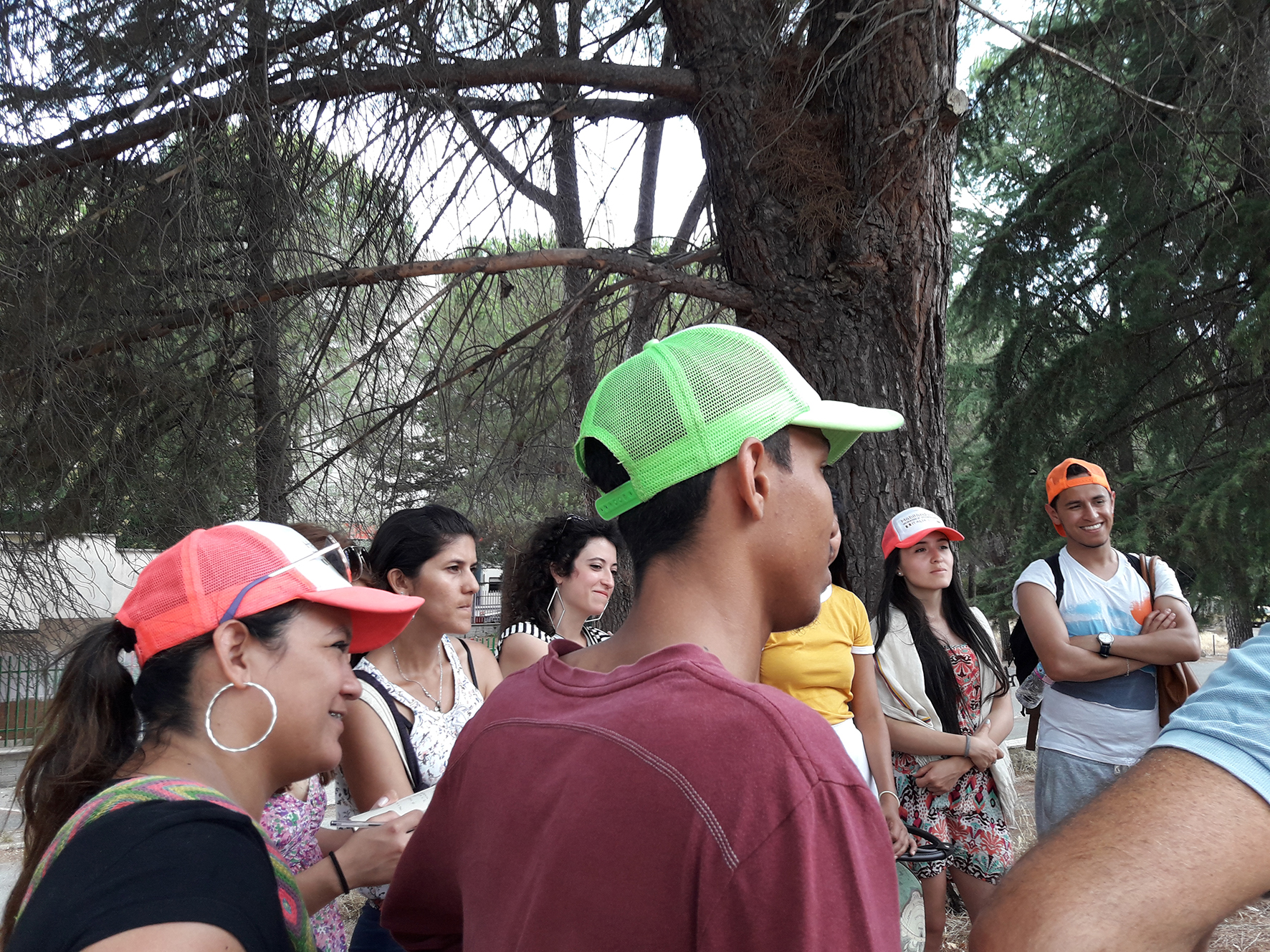
 To inhabit a place in just two weeks, a place that is geographically and culturally far away from your home. This was the challenge of Habitandando: to build new bridges between, and on the other hand, a young and contrasted people, whose richness and inequalities are reflected also in its territory – made of megalopolises and immense regions. However, how do you build a bridge between Italy and Colombia in just fifteen days? How can you get to inhabit a place, to become familiar with it as if it were your home? Travel as a method therefore: to get to know a place by experiencing it, using as a testing ground for generating new and challenging ideas. And even this year, the experiences were the most diverse: crossing Central Italy by car, to distinguish how landscapes change from the coast to the mountains; living at Piazza del Campo in Siena, to observe how a public space has been functioning perfectly for centuries; walking for many hours around the centre of Rome, to distinguish each epoch in the thousand layers composing the city; exploring Tor Bella Monaca, a neighbourhood in the Roman periphery where failed architecture projects add up to a fragile social condition.
 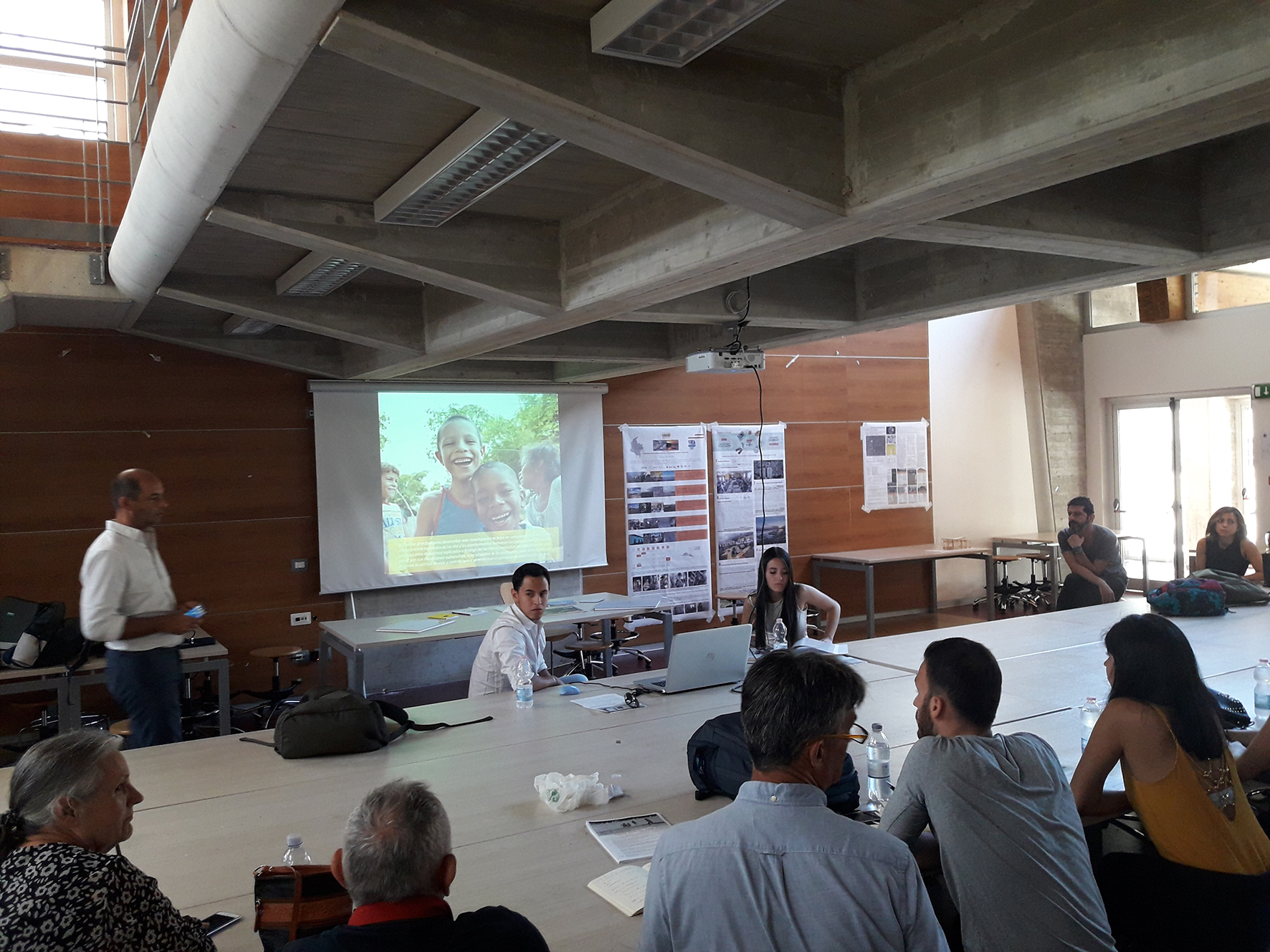 The travel is the method and the territory is the classroom. Each stage of the travel was devoted to a specific issue: for example, the Tuscany countryside explains territory and landscape, the Amalfi Coast shows both the antique and the modern, the towns hit by earthquakes in Central Italy show the relationship between memory and catastrophe. Having the territory as classroom allows first-hand observation of each issue, but is it’s not simply a way of going beyond the simplistic explanations by tourist guides and school textbooks. Rather, it is an occasion to incrementally build by yourself the knowledge on a given place. In fact, the participants were asked to focus on each place that they visited by writing pieces for different audiences, taking photographs with different communicative aims, developing their own explanations on specific settings and phenomena. Day by day, the first ingenuous reactions leave space to deeper reasonings. Maybe Tor Bella Monaca, the neighbourhood in the Roman periphery, provides the most interesting example: the initial skepticism (“Is this a poor and degraded neighbourhood? If only all poor places in Colombia were like this!”) is replaced by all the new ideas that it can generate. The participants’ disorientated looks of the first days were gradually replaced by more relaxed ones, once a relationship was established with the visited places and also the challenges facing them. The tension between memory and innovation were the guiding thread behind this year’s initiative, and this emerged also from the comments made at the end of the travel. For a Colombian student, Italy carries with her centuries of history but does not know how to manage such heritage, does not understand how nowadays heritage can interact with the demands of the habitat. These reflections were developed in the last days of the travel, spent in Montefalcone Appennino, It was the beginning of a think-tank which can yield varying results, but which already demonstrates what can be achieved through a new way of studying the habitat, by going out of the classrooms into the territory, inhabiting it on the move so to speak: to inhabit a place is not just to know it, but also to start imagining it differently from what it is right now. Compiled by Dialogue in Architecture
Be merciful
Be merciful
0 Comments