
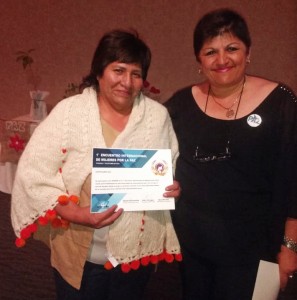
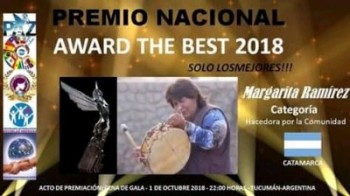
 Many of our readers are familiar with the story of Margarita Ramirez De Moreno who comes from Santa Maria di Catamarca in the north east of Argentina. She is a descendent of Calchaquies Aborigines whose leader was Juan Calchaqui. These people were well known for their abilities in many forms of traditional crafts. Margarita certainly inherited an enterprising spirit and great talent in weaving from her ancestors. When she was young, she studied for a diploma at the “Aurora School” in her town: this institute is recognised by the Argentinian government for the outstanding contribution it makes to teaching about designs and traditional skills deriving from the “quechuan” culture. Later on in life, Margarita was unemployed but she did not give in to the personal challenges that she and many women like her faced but decided to open a spinning mill to provide thread for the looms in the school workshop. This enabled her to overcome discrimination and reclaim her cultural identity. On October 1st in Tucuman, Margarita received an award during the first international meeting of “Women for Peace” organised by the “World Federation of Grand Master Ladies”. This is an international association, found in many parts of the world that works with individuals, groups and foundations: its spirit facilitates women in establishing links of friendship, fraternity and support and enables them engage politically in initiatives promoting peace, security and protection.
 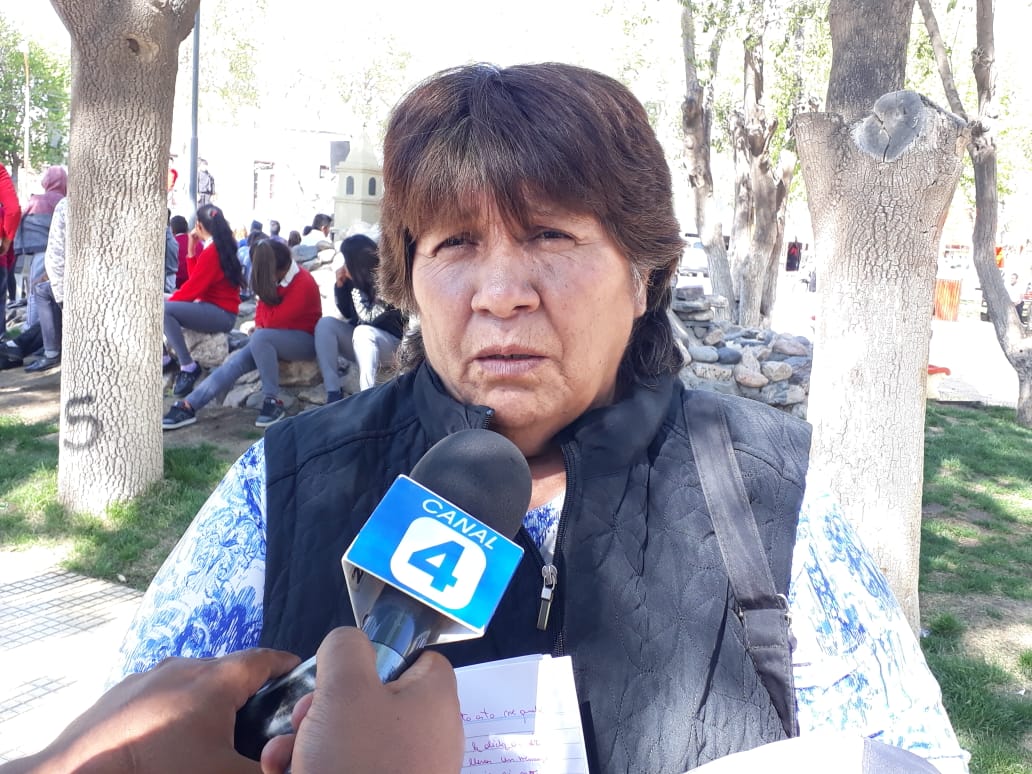 “There is no peace without justice and there is no justice without peace,” affirmed Mariela Martin Domenichelli, the co ordinator of the Latin American branch of the federation. “It’s important to listen to the women describing the situations in which they live so they can transform their ideas into political action that benefits the entire community.” The meeting wanted to showcase the positive contribution made by women in various fields of action. After the federation visited her area, Margarita was chosen as the person who symbolises the complete integration of women and the entire Aboriginal community to which they belong. Margarita – who now has seven children – said that it had not been easy to convince women in her area to work in spinning mills once again because they had suffered discrimination for so long. In addition, they had to walk long distances, crossing rivers to reach the mill because there was no transport. However, they gradually began to share the little they had: a bobbin, some wool or their skills in traditional crafts.
  “The cost of machinery was a big problem,” Margarita said. “One day I was getting a lift and I told the driver about the difficulties we had. He told me that he knew how to make spinning machines and that we could pay him later, when we had the money. There were many difficulties but there were also signs that confirmed that what we were doing was right.” Margarita continued, “One day, when we were moving some fittings in the workshop, we found a picture of Mary, the Mother of God. This made a big impact on me and I felt that we should make a pact together to always love one another each day at work. We did this and soon after we received a donation that we used to buy better fittings and machinery.” We named our workshop “Tinku Kamayu” which in the local dialect means “Gathered together to work.” “We have found our identity and with that comes hope, growth, job opportunities for ourselves and others and the richness of our cultural origins. We feel we are useful – we don’t feel humiliated any longer. Other people appreciate us and want to hear our ideas.”
Persevere
Persevere

0 Comments