
“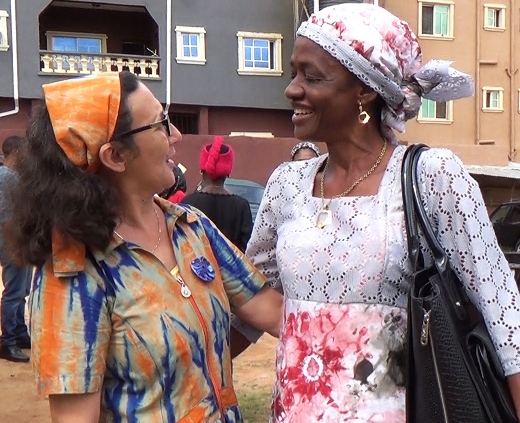 I had only been married a short while when my husband fell gravely ill. At the same time I discovered I was pregnant.” This is how one Nigerian woman’s story begins. Far from her own family and alone, she asked her husband’s family for help, but only found closed doors. “We lived through hell,” she said. Fortunately other doors opened soon after: those of Casa Alba. And for her, like many other young women in difficulty, a new day began. “I don’t know how I would have survived otherwise. Now, thanks to God, things have gotten better.” Casa Alba is one of the Focolare Movement’s projects in Nigeria. For many years, it was once just called a “gen house” (for “new generation”, the young people of the Focolare). Only later did Chiara Lubich propose naming it “Alba” (“dawn”), with the hope that it might become a true house for many vulnerable girls from all over Nigeria. Here many – some were living on the street – have been welcomed and learned a trade. Both sewing work (which became a course in itself) and batik (the art of dying fabric), which at first were just a way to earn some money, have become a true recovery project. Spiritual and ethical training are also integral parts of the program. In May Casa Alba celebrated its 25th anniversary at the Mariapolis Center of Onitsha – an entire weekend with a concluding mass outdoors. Four hundred people were invited, many of whom donned typical brightly colored African coloring, decorated with batik techniques. Auxiliary Bishop Denis Chidi Isizoh, celebrated the mass. “Focolare means fire,” he said during the homily. “It is the fire of encouragement, of evangelization, of love.” He described the times he had met Chiara Lubich personally, when he worked with Cardinal Arinze at the Pontifical Council for Interreligious Dialogue. “A French scholar once wrote, ‘I think therefore I am.’ No African would ever say this. Africans would say ‘We are, therefore I am.’ I am a person because I belong to a community, to a group. This is what the members of the Focolare Movement tell us: when we are united like a community, that is when we find ourselves.”
 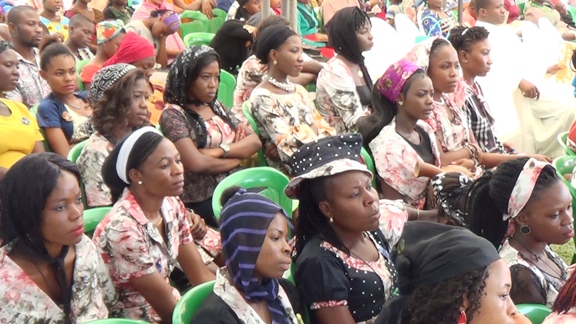 Let’s go back for a moment. Some time ago Elde de Souza, who directs Casa Alba, visited Bishop Denis to inform him of funding difficulties that the project was having and that activities would have to be suspended. In response, the bishop renewed his faith in the program and relaunched it. Instead of its closing, he proposed celebrating Casa Alba’s 25th anniversary in grand style. “The Focolare in Nigeria is too quiet!” he said. His proposal was too good to ignore, and the entire community mobilized. Everyone, old and young, got to work. Bishop Denis’s enthusiasm is contagious. “Nigeria is a happy place. We are happy people. Yet some are not, and are in really difficult situations. This is what life is about,” he says, concluding that we are all able to unite our sufferings to those of Jesus on the cross. At the celebration, all the Casa Alba “girls” are present. Some are teens; others are already grandmothers. The celebration is a chance to retrace paths and stories. “It changed me and my life.” “Before I had a short temper, but here I calmed down.” “It is wonderful to hear how this small seed produced so much fruit,” says Mama Regina, 83, one of the early teachers. The next day, the newspaper of the archdiocese (which has 2 million Catholics), called the anniversary “a colorful spectacular.” “The Focolare Movement has dried the tears of hopeless young people, who today live above the poverty line thanks to the skills acquired at Casa Alba.” The event was covered on radio and television, and the regional newspaper printed a call to raise funds to relaunch the project. A new day is beginning for Casa Alba as well.
Pray for pece
Pray for pece

0 Comments