
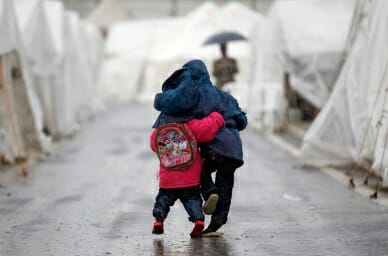
Photo: REUTERS/Murad Sezer
“While the mortar shells are falling near us, fear and worry assail us both for our lives and for the lives of those we know, Christians or Muslims, Syrians or foreigners: our common bond is our humanity, our being brothers and sisters. On the streets of Damascus we live and die together, without distinction.
The death toll of the bombing is tragic: 9 dead and 52 injured. Yet no one speaks of it. For now, Paris has the spotlight. But these are the statistics of the war on the other side of the Mediterranean, these are the statistics of today. I don’t want to intensify the horrifying nature of what is a normal daily reality for everyone. As soon as the din settles, because the noise of the bombs is deafening, I grab my cell phone and call my family and friends: “Are you ok? Where are you? Don’t move! Wait there… .” These are the recurring questions after every bombing or neighborhood shooting. We advise each other to remain where we temporarily found shelter and safety, and there we stay, not knowing where to go. The office, the kitchen, or the hall become shelters or tombs, depending on whether the bombs missed you or hit you. The questions in my head persist, like a mantra: ‘Is it normal to live with this anxiety? Is it normal that people have to live in fear, always? Why does the other side of the world keep silent? How long must this absurdity last? Is it possible that power, money, and profit can defeat the desire for peace common among peoples and communities?’ At the beginning of November, Aleppo remained 15 days without food or supplies, and all access roads were closed. The mines are another of the legacies left by this war. Each transit route must be de-mined before reopening it. A village near Homs was targeted by ISIS and there are about 3,000 displaced persons. The people want the war to end and are full of questions: ‘Who supplies the weapons to this cruel militia? Why do ammunition and explosives arrive, but no food?’ These questions lacerate us, while prayer becomes a balm, our rock. The Christian community seeks to live with a sense of normalcy, meeting for celebrations, working at many solidarity projects, but we are few. People depart inexorably, leaving a beloved homeland because they have no prospects and everything is costly, from medicines to food. But even those who leave want to return: their life is spared, but it isn’t the same as life in Syria, nor the same relationships, nor the same tastes, nor the same complicity. And yet we are not divided. We are scattered, but we continue to live together for the same peace.” Source: Città Nuova
0 Comments