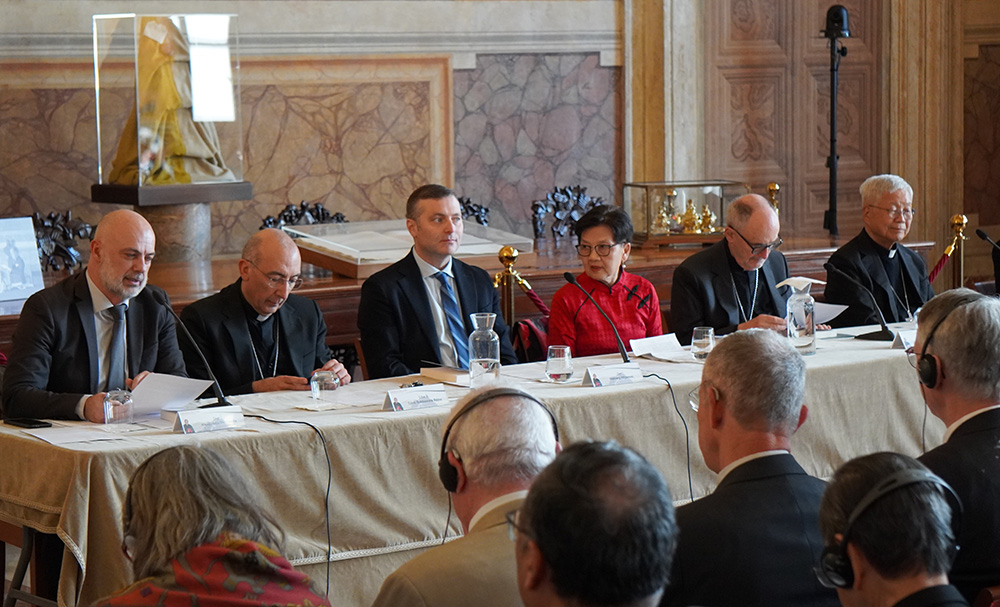
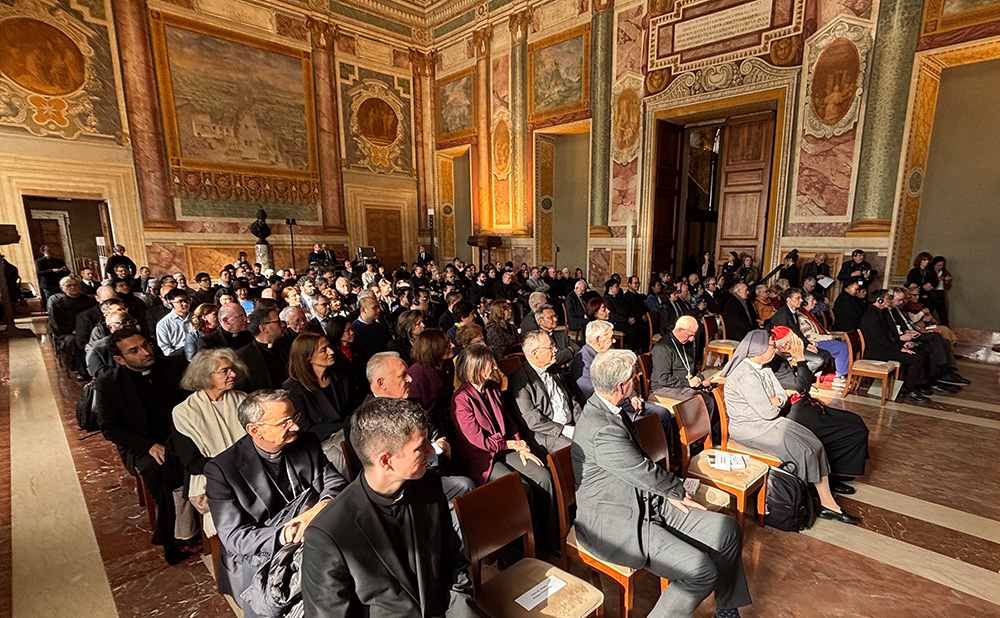
25th March 2026 – The event was held in the Sala della Conciliazione of the Lateran Palace where, after decades of conflict, the Catholic Church and the Italian State signed the Lateran Treaties in 1929. In this same historic place, in 2013, the diocesan phase of the Cause of Beatification of one of the most important spiritual figures of our time concluded: the Vietnamese Card.François-Xavier Nguyễn Vân Thuân.
220 people were present, Cardinals, Bishops, family members, priests, nuns and lay people from Vietnam and other countries. Thousands more were connected via streaming in seven languages on Vatican Media’s YouTube channels. The reason for this gathering was the occurrence of 50th anniversary since Nguyễn Vân Thuân, then a young Bishop, in the first months of his imprisonment that began on 15th August, 1975, managed to send his faithful 1,001 short meditations written on scraps of old calendars. The event was organized by the Cause of Beatification of the Vietnamese Cardinal, together with the Dicastery for Promoting Integral Human Development which is responsible for the Cause, in collaboration with the Dicastery for the Clergy, the Diocese of Rome and Città Nuova Publishing House.
Pope Leo marked the occasion with a Message signed by Card. Parolin, Secretary of State, expressing the hope that “this significant event will foster a renewed appreciation of the fervent witness of such ac courageous disciple of the Gospel and generous Shepherd”. His example – he continued – “is profoundly relevant today because it reminds us that Christian hope is born from an encounter with Christ and takes shape in a life given to God and neighbour”.
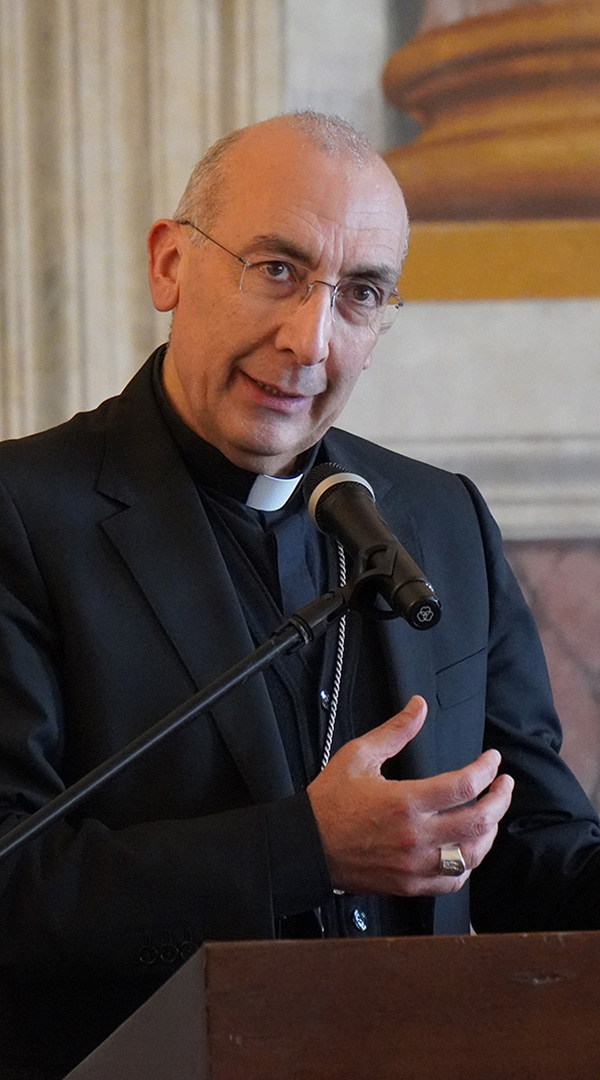
Cardinal Baldassare Reina, the Pope’s Vicar General for the Diocese of Rome, welcomed the participants. He recalled the relevance of Nguyễn Vân Thuân’s life in the aftermath of the Jubilee of Hope, at a time when the Gospel is transmitted above all through witness.
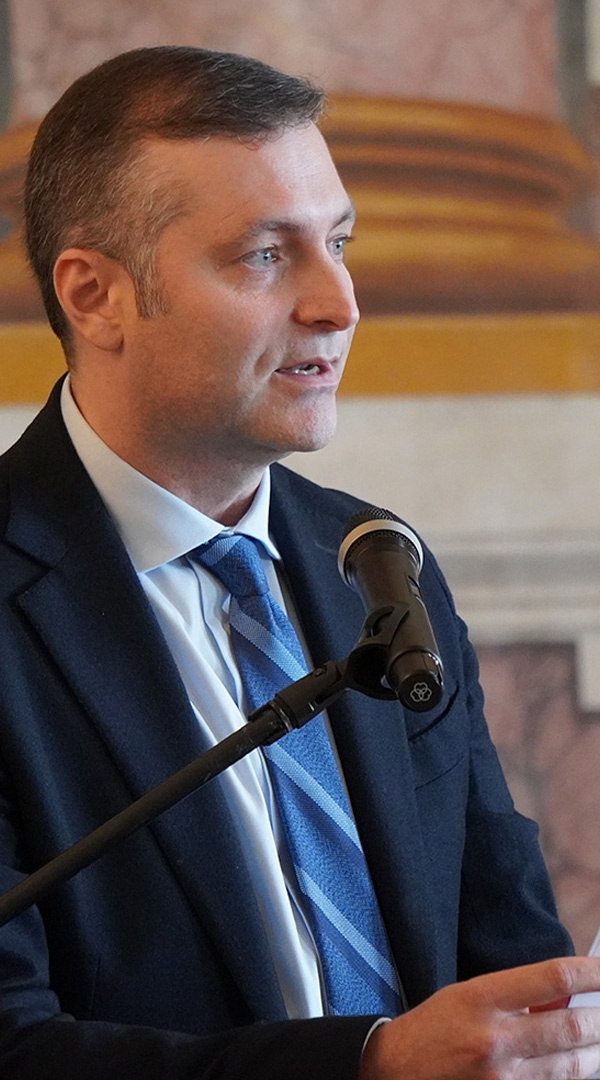
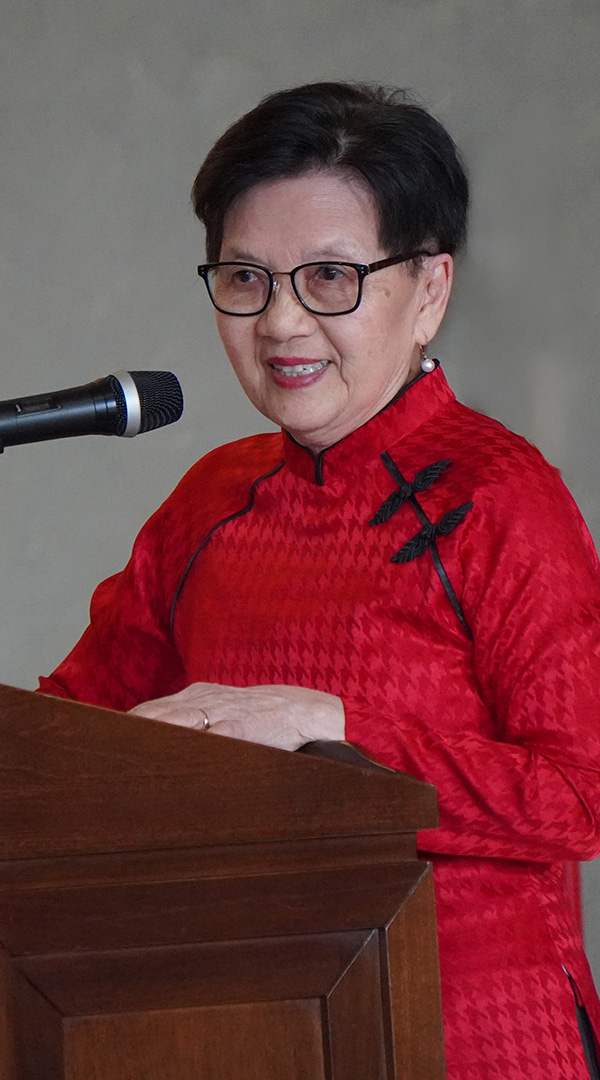
Cardinale Baldassare ReinaDr. Waldery HilgemanSig.ra Élisabeth Nguyễn Thị Thu Hồng
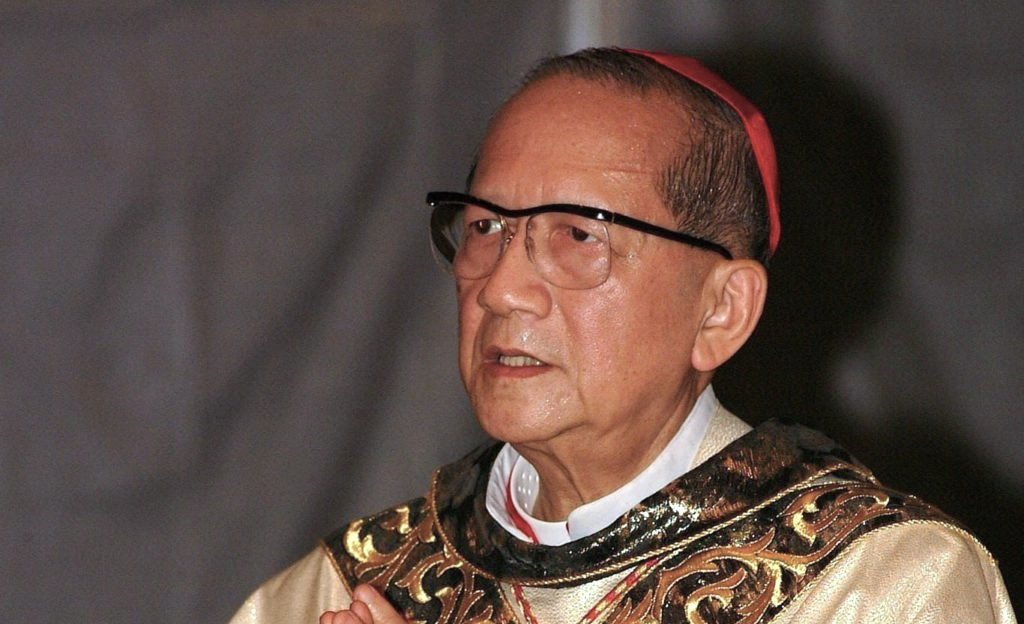
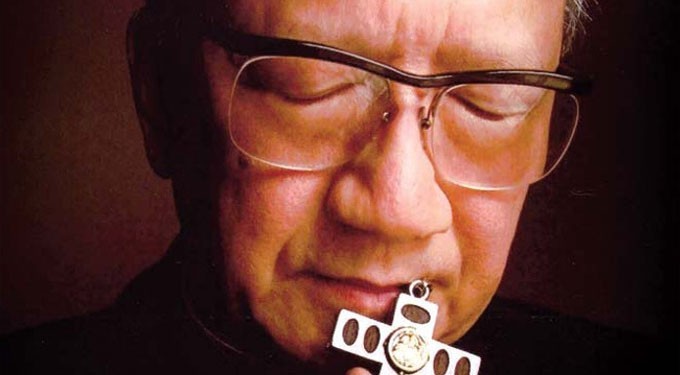
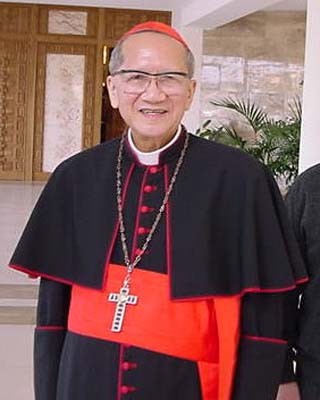
But who was this Vietnamese Cardinal? A brief biographical sketch was offered by Dr. Waldery Hilgeman, Postulator for the Cause of Beatification. A descendant of a family that in the nineteenth century included martyrs among its ancestors, from a young age François-Xavier was attracted by the example of the saints and later to contemporary spiritual movements, including the Cursillos and the Focolare. He entered the seminary, became a priest and obtained a doctorate in canon law. In 1967 he was consecrated Bishop of Nha Trang. When Paul VI appointed him Coadjutor Archbishop of Saigon in 1975, a long trial began: he was arrested and spent thirteen years in prison, of which nine in solitary confinement. He later recounted that there he learned “to choose God and not the works of God”. He understood that God wanted him to be with the other prisoners, almost all non-Catholic, as a presence of God and of His love, “in hunger, in cold, in hard labour, in humiliation and injustice”. He was released in 1988. He lived in Rome from 1991, where John Paul II appointed him first Vice President and then President of the then Pontifical Council for Justice and Peace and in 2001 made him a cardinal.
Elisabeth Nguyễn, the Cardinal’s sister, recounted the remarkable story of the 1001 thoughts. Smuggled out from house arrest, “they began a journey of evangelization from one family to another, from one prison cell to another, before crossing the oceans with the boat people“. Years later, they became the book The Road of Hope.
Powerful and moving experiences, augmented, halfway through the meeting, by a piano piece performed masterfully by Don Carlo Seno: “La Campanella” by Franz Liszt.
Over the course of just an hour and a half, guided by the journalist Alessandro De Carolis of Vatican Media, additional aspects of Nguyễn Vân Thuân’s life emerged. Cardinal Lazzaro You Heung-sik, Prefect of the Dicastery for the Clergy, spoke of him as an “evangelizer in every circumstance”, recounting the testimony of a Buddhist monk: “It was winter, it was two degrees below zero and we did not have enough blankets in the re-education camp. The Bishop would go out several times every day to collect branches and pieces of wood to heat the camp at night… He was what we Buddhists call a “Bo tac”: a very holy man. ”
Cardinal Luis Antonio Tagle, Prefect of the Dicastery for Evangelization, recalled how in 1995 a personal friendship was born with Nguyễn Văn Thuận: “I was struck by the fact that, while he recounted painful and even humiliating experiences, his voice remained calm and his face serene. There was no hint of bitterness or hatred in him. I couldn’t take my eyes off his radiant and smiling face. ”
Along with his spiritual stature, his deep concern for global issues of justice and peace emerged. Cardinal Michael Czerny SJ, Prefect of the Dicastery for Promoting Integral Human Development spoke of this. For the occasion, he had published the Italian translation of a new biography of Nguyễn Văn Thuận, written by his sister Elisabeth together with the Belgian priest Stefaan Lecleir.
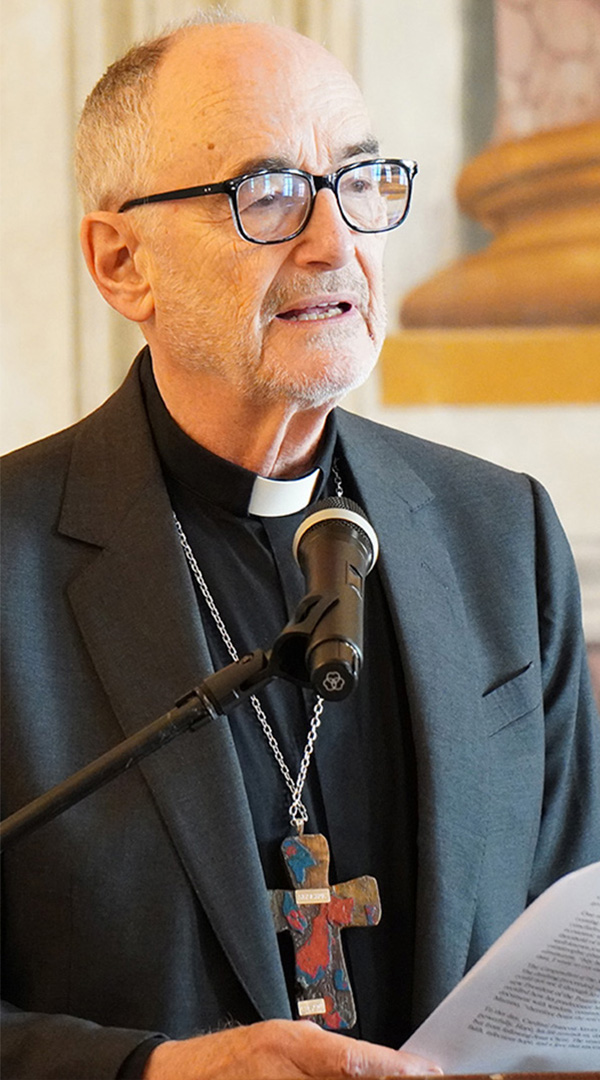
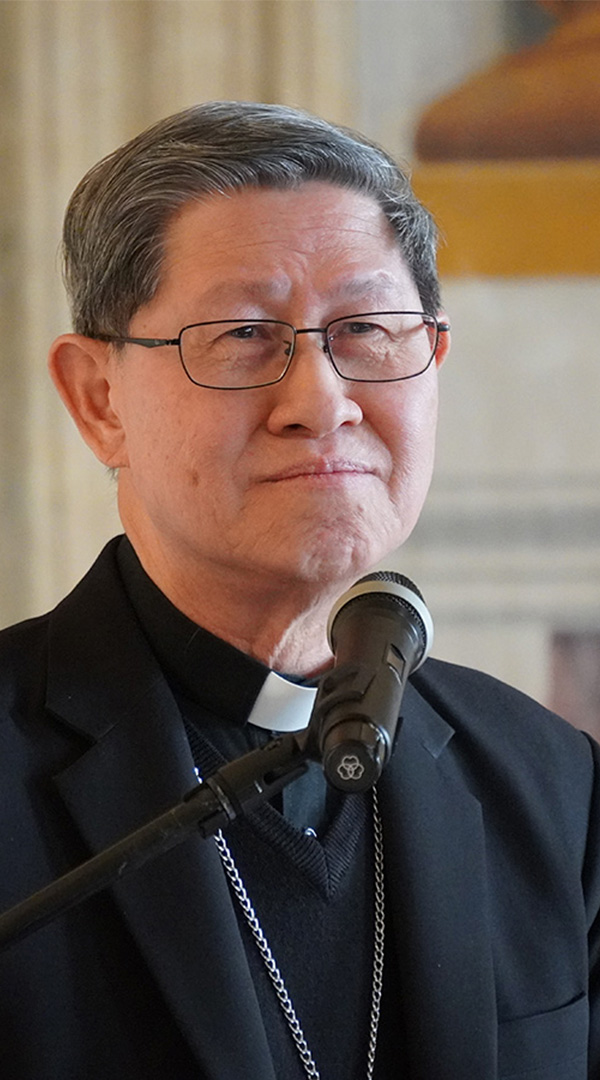
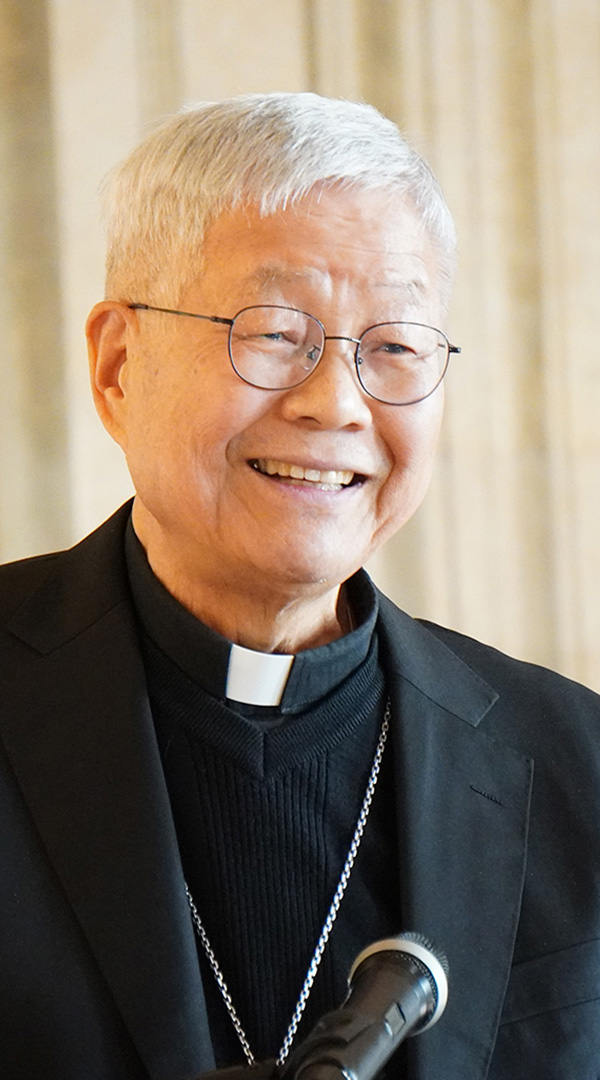
Cardinale Michael Czerny, S.J.Cardinale Luis Antonio TagleCardinale Lazzaro You Heung-sik
Card. Czerny explained, “His main contribution at a global level was his role in the development of the Compendium of the Social Doctrine of the Church (2004)”. He then referred to a striking question posed by the Vietnamese Archbishop: “Faced with the current political and economic situation, some wonder: will we be able to cross the threshold of the new millennium with hope?” In response, he cited a well-known journalist who predicted “three catastrophic phases” for impoverished societies: exploitation – exclusion – elimination. “When I think of all this,” commented Nguyễn Văn Thuận, “my heart is torn and I would like to shout: ‘impossible’.”
At the end of the event, the actor and journalist Rosario Tronnolone read some passages from The Road of Hope that resound like the golden seal: “You want to carry out a revolution: to renew the world. You will be able to accomplish this precious mission that God has entrusted to you, only through “the power of the Holy Spirit”. Every day, where you live, prepare a new Pentecost. Commit yourself to a campaign that aims to make everyone happy. Sacrifice yourself continually, with Jesus, to bring peace to souls, development and prosperity to peoples. Let this be your spirituality, discreet and concrete at the same time. “
“In order to hold on firmly to your faith, you must choose the Road of Hope followed by the disciples of Christ”. This is one of the 1001 thoughts addressed by the then Archbishop François Xavier Nguyễn Văn Thuận to his faithful during his long years of imprisonment for his faith: a collection of reflections, warnings, and encouragements, later collected in the book “The Road of Hope”, considered the “spiritual testament” of the Vietnamese Cardinal, declared Venerable by Pope Francis.
On the occasion of the 50th anniversary of the book’s publication, the Cause for Beatification of Cardinal Văn Thuận and the Dicastery for Promoting Integral Human Development, which is acting as the promoter of the cause, together with the Dicastery for the Clergy, the Città Nuova Publishing House, and the Diocese of Rome, wish to honor the memory of the Vietnamese Cardinal by celebrating a conference entitled “François Xavier Nguyễn Văn Thuận. Witness of Hope ”.
The event will be held on March 25 in Rome, at the Sala dei Trattati Lateranensi, in the Palazzo Apostolico Lateranense, from 4:00 p.m. to 5:30 p.m.
Ms. Élisabeth Nguyễn Thị Thu Hồng, sister of Cardinal Văn Thuận, will be present.
Through the testimony of those who knew him, and with excerpts and music from his writings, the conference aims to highlight the relevance of Cardinal Văn Thuận today: a faithful pastor who was able to transform his experience of imprisonment into a space of prayer, forgiveness, and sacrifice, showing how the light of the Gospel can overcome all darkness. His words convey a message of hope, a universal spiritual heritage.
His Eminence Cardinal Baldassare Reina, Vicar General of His Holiness for the Diocese of Rome, will open the proceedings. Speakers will include His Eminence Cardinal Michael Czerny, S.J., Prefect of the Dicastery for Promoting Integral Human Development; Dr. Waldery Hilgeman, Postulator of the Cause for Beatification of Cardinal Văn Thuận; His Eminence Cardinal Lazzaro You Heung-sik, Prefect of the Dicastery for the Clergy; His Eminence Cardinal Luis Antonio Tagle, Pro-Prefect of the Dicastery for Evangelization.
Don Carlo Seno, priest of the Diocese of Milan and director of the “Vinea mea” Spirituality Center, will perform on the piano.
The meeting will be moderated by journalist Alessandro De Carolis of Vatican Radio – Vatican News.
During the conference, the Italian edition of the new biography of Cardinal Văn Thuận, written by his sister Élisabeth and published by Città Nuova Editrice, will be presented, with a preface by Cardinal Michael Czerny.
The event is open to the press, upon request for accreditation at the Holy See Press Office, and will be available via streaming in Italian, with simultaneous translation into English, French, Spanish, Portuguese, German, and Vietnamese.
By the Cause for the Beatification of Cardinal Văn Thuận
The life, works, and spirituality of Cardinal Văn Thuận are also illustrated on the website dedicated to him, in several languages, at https://www.cardinalvanthuan.va/it.html
François-Xavier Nguyên Van Thuân was born in Huê (Vietnam) on 17th April 1928 into a deeply Catholic family. Ordained a priest in 1953, he zealously dedicated himself to the formation of seminarians, distinguishing himself as a professor, rector and spiritual guide. Appointed Bishop of Nha Trang in 1967, he promoted a missionary ministry, close to the poor and attentive to the apostolate of the laity.
In 1975 Saint Paul VI chose him as Coadjutor Archbishop of Saigon, but only a few months later he was arrested by the communist regime. He spent thirteen years in prison, nine of them in solitary confinement. During that trial he knew how to unite himself intimately to the crucified Christ, transforming suffering into an offering and solitude into communion with the Church. During those years his “Thoughts of Hope” were born, which became a real spiritual testament, capable of illuminating the faith of millions of people around the world.
A decisive moment in his life was, towards the mid-1970s, when he met Chiara Lubich and the spirituality of the Focolare Movement, whose charism of unity and focus on Jesus Forsaken – Jesus who experienced the abandonment of the Father on the cross, the maximum expression of love – became a source of strength for him, even in the darkest moments.
Released in 1988 and exiled, he settled in Rome, where Saint John Paul II called him to serve the universal Church as Vice-President (1994) and then President (1998) of the Pontifical Council for Justice and Peace. In this role he tirelessly proclaimed the Gospel of peace and justice, traveling throughout the world.
In 2000 he was invited by St. John Paul II to preach the spiritual exercises for the Roman Curia. Created Cardinal in 2001, he lived his final period marked by illness, with serenity and total abandonment to God. He died in Rome on 16th September 2002, leaving behind a spiritual legacy of unshakable faith, luminous hope and merciful love.
Today his figure continues to speak to the Church and the world: his life, shaped by the cross and hope, testifies that the love of Christ can transform every night into dawn.
Hope Thoughts of François-Xavier Nguyen Van Thuan written during the first months of imprisonment (*)
979. You want to bring about a revolution: to renew the world. You will be able to carry out this precious mission that God has entrusted to you, only with “the power of the Holy Spirit”. Every day, wherever you live, prepare a new Pentecost. 980. Commit to a campaign that aims to make everyone happy. Sacrifice yourself continually, with Jesus, to bring peace to souls, development and prosperity to peoples. 981. Remain faithful to the apostle’s ideal: “to lay down one’s life for one’s brothers”. Indeed, “no one has a greater love than this” (Jn 15:13). 982. Proclaim only one slogan: “All one”, that is: unity among Catholics, unity among Christians and unity among nations. “As the Father and the Son are one” (cf. Jn 17:22 -23). 985. Stick firmly to a single guiding principle: prayer. No one is stronger than the person who prays. 986. Follow one rule: the Gospel … It is not as difficult, coFmplicated or legalistic as others: on the contrary, it is dynamic, gentle and inspiring. 994. For your apostolate use the only effective method: personal contact. With it you enter into the lives of others, understand them and love them. Personal relationships are more effective than sermons and books.
(*) From: The Road of Hope. Witnessing the joy of belonging to Christ, Città Nuova, 6th ed., Rome 2004.