
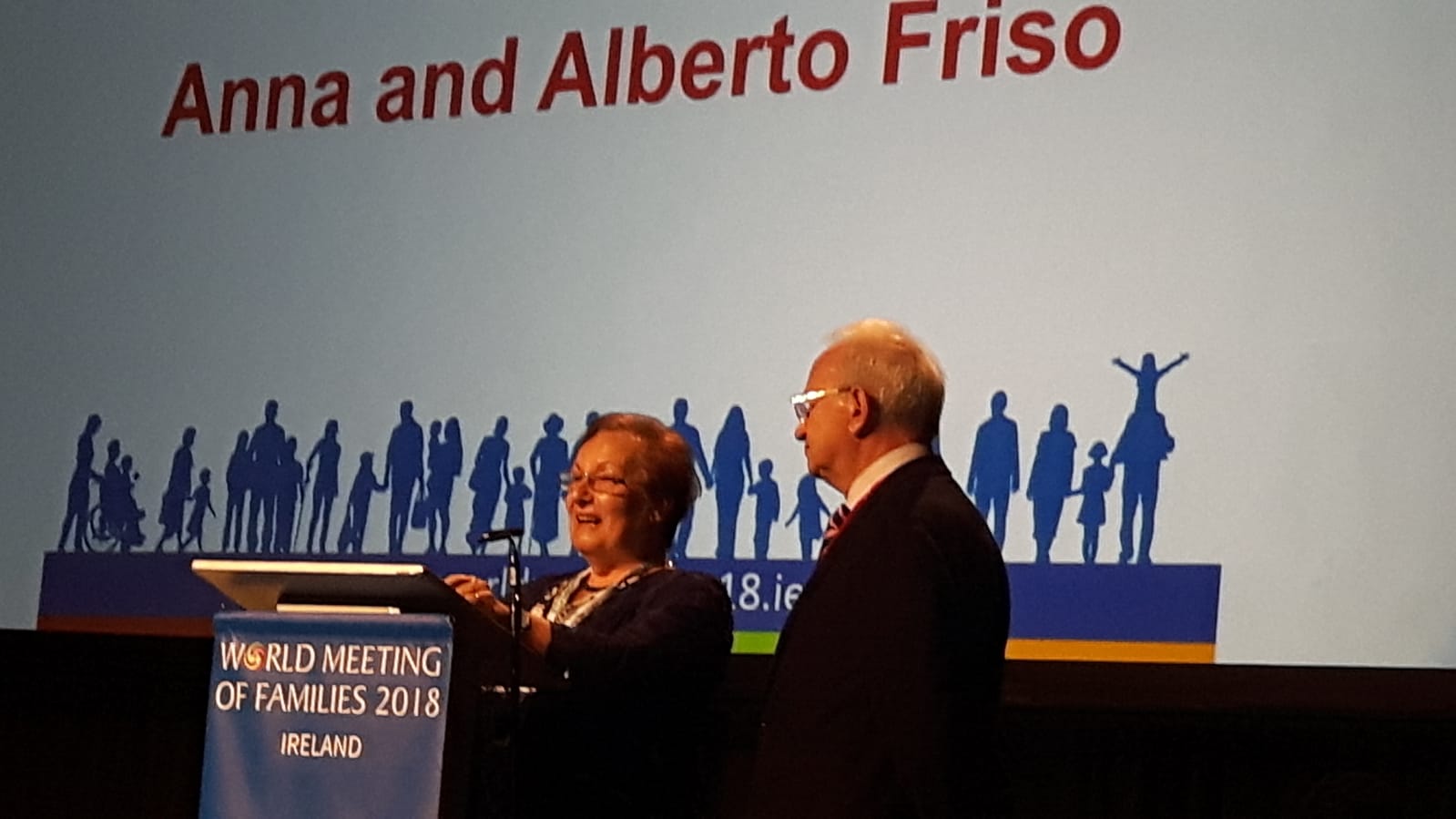
 A love just declared, but already burning the soul. The enchantment of being together, such a happy scene that leads to further choices. That’s the opening scene of any marriage. But then? The contribution to the World Meeting of Families from Anna and Alberto Friso of the Focolare Movement and collaborators of the Dicastery of the Laity, Family and Life.
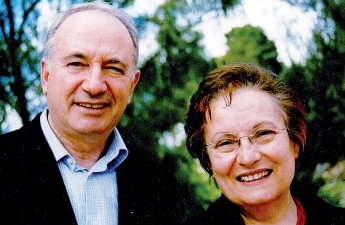 Fifty years ago we ourselves did not know the origins of our love. We were content to know that we had undertaken a journey which had no end in sight, amazed that our differences could be so balanced, so enjoyable and complementary, so much so that although we were different we felt we were wonderfully equal. We felt we were ready for everything, convinced that no one loved in the way we loved, because we had invented love. Less than a year after that wonderful ‘yes,’ some clouds already began to darken our horizon. Work, tiredness, routine… Yes, we all know that being in love ends at some point. It was then that someone revealed to us that God is the source of every love. God who is love. We should have known all this, because when we pronounced our wedding vows He was there with us and from then on he had even dwelt amongst us. But we did not realise what a gift we had, we did not know what a gift we had, we did not know his presence was part of the package! We realized afterwards, he gives the whole of himself to us asking in return just a small, agreeable, daily contribution: that we love one another with his very own love. Does being in love come to an end? [Yes but] love needs to take its place. Because if faith is, so to speak, an interior virtue, love is its outward, visible fulfilment. Love is greater than anything else: greater than faith, greater than hope. In the Next Life, there is no more need for these two virtues. On the other hand, love remains in Paradise. Love makes of the two one body. Which means one reality that is untouchable and indissoluble. It is a ‘we’’ that is open to the Absolute. Love must reach the paradox of knowing how to become nothing in order to put yourself in the other person’s shoes. Only in this way will our love mirror its original plan which comes forth from nothing less than the Trinity.
  The ‘we’ formed by the couple is the first and living fruit of our love. The complimentarity of male and female expresses itself in a thousand daily gestures of mutual service and tenderness, up to the fullness of bodily intimacy. It is also expressed in sharing space, time and tasks. [The ‘we’ formed by the couple] knows how to go out first of all to their children and then towards others. The ‘we’ is the couple’s characteristic way of evangelizing, placing themselves before others as one example among many, and never as a model of the ideal family, which does not exist. Love is our unique opportunity, even if we feel that we are not perfect, even if we feel we have failed in everything. What matters is to believe that in the present moment we are the right person for the other; and that is what we are in the moment we decide to love them as they are, without any expectation that they will change, putting into action the three ‘magic’ words which Pope Francis teaches: please, thank you, sorry. It is said that today the family is going through the most tragic of all crises. Let us not regret the good old days, if ever such days existed. It is in the family that life is kindled. It is there that we learn to share, to rejoice, to suffer, to know sickness and to face death. Love makes it the most concrete of utopias. Families that welcome children even if disabled, others who adopt them precisely because they are disabled, those who welcome elderly parents, those who open their homes to migrants, those who help their children recover from addiction. In the fifty or more years that we have been together, life has taught us many things. We have cried and we partied. So many times we were wrong, but with his grace and forgiveness, we have started again. Putting our love again and again into the hands of God, who is our love, he has never hesitated, like at Cana to change our poor water into wonderful wine, making it wonderfully available also to those who are around us. And now, despite the fact that over the years our passion has diminished and the limitation of our characters are more evident, we continue trustfully to draw water from God’s unending source, happy to feel we are companions and accomplices right to the end.
Respect others
Respect others

0 Comments