
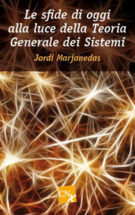
 The term “system” is perhaps among the most used in our language. Almost without realising, it always seems to crop up, whether we’re talking about elections, football pools, stars, units of measure, politics, irrigation, the kids’ algebra homework, security, transportation, medicines or mountain chains. Simple or complex, nerves or finances, a “system” (from the Greek systema, to combine) is always on our lips. In 1937, and more “systematically” in 1945, an Austrian biologist named Ludwig von Bertalanffy (b. Vienna, 1901–d. Buffalo, New York, 1972) was the first to announce General Systems Theory, a method for reading into and interpreting the world as it exists. “Every organism is a dynamic order of processes that reciprocally act on each other.” Jordi Marjanedas, from Catalonia, class of 1940, has scrupulously dedicated himself this theory in his recent volume entitled, Today’s Challenges in the Light of General Systems Theory, published by Città Nuova. The text stretches from biology to the life of the universe, from ecology to anthropology, from history to ethics, to social sciences and religion, searching every field of knowledge for elements of integration and cohesion, according to a unified vision of humanity and creation. Why is systems theory so important? The development of modern science brought about a proliferation of knowledge that is partial, fragmented and hyper-specialized. To the point that, ironically, to the writer G. K. Chesterton it seemed that “eventually they end up knowing everything about nothing.” In medicine, for example, a human being is not just liver or limbs, but a harmonious and unified togetherness of spirit – soul and body. In philosophy, there have been numerous theories and closed systems that claimed to explain all reality with a single meaning (totalitarianism is one example). Aristotle himself admitted that “the whole is more than the sum of its parts.”

A priest presents the Pope with the book


0 Comments