Focolare Movement

We can feel the nails

Apr 3, 2015

Holy Saturday, in anticipation of the event which will change history. A reflection by Klaus Hemmerle.

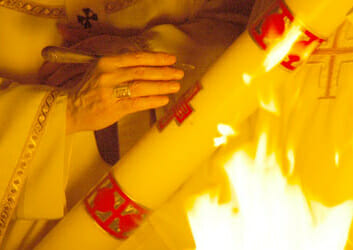
26“Oh, there’s a light with nails on it!

So exclaims a child in front of the Paschal candle.

We can feel the nails.

But can we see the Light?

And what about us … do we give out light?

We are nailed

to ourselves and to others;

to our time and our responsibilities.

The Holy One has allowed himself to be nailed to our cross.

And it was from there that he come down.

He was nailed right up until he died.

In this way he became light for everyone;

that light which penetrates closed doors.

He is risen

and shows the signs of the nails.

Light which was nailed.

We feel the nails.

But can we see the Light? And what about us … do we give light?

(From a pastoral letter on the occasion of Easter 1984)


Klaus Hemmerle, “La luce dentro le cose”, Città Nuova, Rome 1998, p. 109.
0 Comments

Submit a Comment

Your email address will not be published. Required fields are marked *

Subscribe to Newsletter

Thought of the day

Related post

Pre-Assembly process: a journey of conversion and sharing

Pre-Assembly process: a journey of conversion and sharing

From 20 December 2025, preparations for General Assembly will continue with a series of meetings known as the pre-assembly process. This will be a time of preparation, discernment, but above all, of sharing and will involve many people from the most diverse parts of the world.

Baby Jesus is back at the heart of Christmas

Baby Jesus is back at the heart of Christmas

Founded in 1997, the initiative ‘They have evicted Jesus’ originates from a reflection by Chiara Lubich, foundress of the Focolare Movement, who, struck by the absence of any reference to the true meaning of Christmas, invited people to bring Jesus back to the heart of it.

50 Years of the Diocesan Movement: A Trail of Light

50 Years of the Diocesan Movement: A Trail of Light

A number of events marked the fiftieth anniversary of the birth of this reality of the Focolare Movement, which contributes to embodying the ideal of unity through the structures of the local Church.