15 Jul 2017 | Non categorizzato
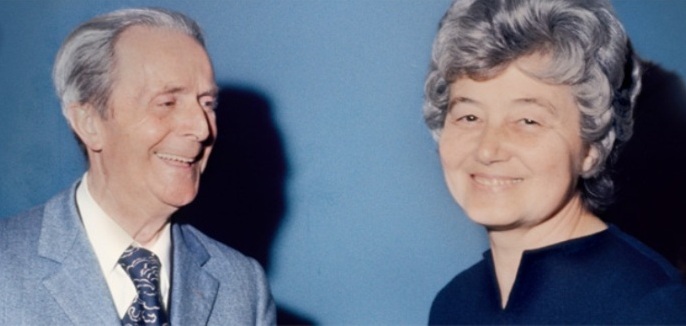
«While playing games in the shade of the fir trees beneath the rocks, Chiara continued to speak to her companions about God, the Virgin, and supernatural life, the nature of which was supranature. She co-inhabited always with the Lord, an effect of charity which was edified, atom upon atom.. And so when they would go to the countryside, those alpine forests were transformed into cathedrals, treetops seemed like the heights of holy cities, and flowers and grass were coloured by the presence of angels and saints: all were enlivened in God. The material barriers were removed. This was also a form of reconciliation between the sacred and the profane, due to which, once the ugly, the evil, and the deformed were eliminated, everywhere the values of the life of nature were recovered in all its aspects. Her words, like her works seemed to be an assiduous clearance of mortal debris to reestablish communication. In itself it was simply a merging of nature and the supernatural, of matter with the spirit, and of the earth with heaven. It was a duplication of the values of life on earth, to open a gateway to Paradise. It was the summer of 1949. That enjoyable holiday was enhanced by the inheritance of a cottage in Tonadico di Primiero from Lia Brunet. In July, Chiara Lubich, Foco (Igino Giordani) and the focolarine had gone there to bask in the sunlight and take some personal rest, after the works achieved all year round for the poor. The cottage consisted of an upper barn which they entered through a winding ladder from the ground floor, and was composed of a room and small kitchen. They set up some cot beds and a cupboard that was hauled up by a winch, and the place acted as their dorm. Foco went to the Orsinger Hotel and had the chance to speak before the hall of Capuchins. In their Church he felt the desire to bind himself “tightly” with a vow of obedience, which Chiara felt, however, did not conform to Focolare customs. Instead she proposed making a pact of untiy, in the sense that at the next Eucharistic communion, on the nothingness of their souls, Jesus in her would seal the pact with Jesus in him. That morning at mass, upon receiving communion the two of them made Jesus seal the pact with Jesus. It was then that she started to experience a series of enlightening insights». Igino Giordani, History of the Focolare Movement, an unedited piece.
14 Jul 2017 | Non categorizzato
On July 12th the Venezuelan bishops sent out an “urgent message to Catholics and all people of good will.” They ask the government to “retract the proposal of a constituent assembly and allow the elections that are authorized by the Constitution,” and to “recognize the autonomy of the public authorities, abandoning the inhuman repression of those who show dissent, to dismantle armed groups” and free “the people that were deprived of their freedom for political reasons.” The bishops called upon political leaders to be committed “solely to the people and never to their own self interests,” respecting “the democratic will of the Venezuelan people.” Moreover, to work at “solving the very serious problems of the people and to allow humanitarian aid to reach those who need it most.” They asked the National Armed Forces to “perform their duty of serving the people with respect and in accordance with the constitution.” They ask educational and cultural institutions to collaborate in “bringing down the walls that divide the country,” encouraging “every effort in favour of peace and coexistence, based on the law of brotherly love.” The message concludes with an invitation to “our brothers in the faith and other believers, to a Day of Prayer and Fasting on July 21st, to ask God to bless the efforts of the Venezuelan people in favour of freedom, justice and peace.”
14 Jul 2017 | Focolare Worldwide
A project that is already a real life experience, an invitation to build bridges of brotherhood and contribute to the tearing down of barriers of indifference, prejudice and selfishness. Begun in 1973 from an idea of Chiara Lubich, foundress of the Focolare Movement, the Genfest is a gathering of young people from across the globe. The 11th edition of Genfest will be held in Manila. The Genfest has turned out to be a festival of ideas and projects that inspire thousands of young people from different ethnic groups, cultures and religions to change and point their lives towards ideals of brotherhood and a united world. The main event will be held in the World Trade Centre Metro Manila, while all the workshops will be held at De La Salle University. BEYOND ALL BORDERS is the title of the next Genfest, which underscores the frontiers to be overcome both personally and as a society in order to build a happier and more united world, to breathe, love, work and live with an open and inclusive vision. The program will include musical and artistic performances, forums and expos. The Genfest’s logo can be summed up in one word: essential. “Less is more.” In a world where communications and information is too much, the message from Manila will be marked by simplicity and the power that every word can bring to the world. Therefore, the Genfest logo is made of only three letters and a simple line underneath the title. A stark symbol that calls us to beyond the borders, to underscore the only thing that matters in life: reaching out to everyone and moving together toward universal brotherhood. Contact us: info@y4uw.org Registration will begin from October 2017 Source: Y4UW International https://www.youtube.com/watch?v=C8NvjNYgNEc
13 Jul 2017 | Focolare Worldwide, Senza categoria
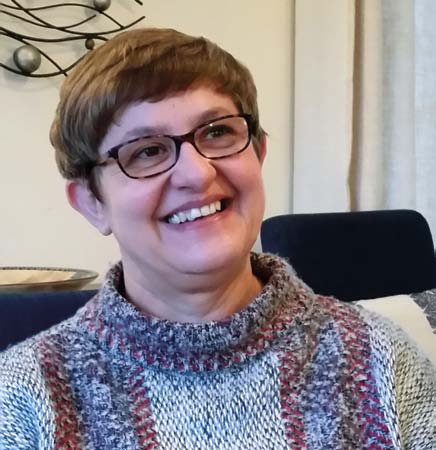
Elisa lives in the Focolare Centre in Welwyn Garden City, 35km north of London, in the County of Hertfordshire. It is a “garden city”, founded in the 1920s, with graceful neo-Georgian buildings, roses around the porches, tree-lined avenues. She recounts: “I was born in Northern Italy in a small village. The nearest city was Novara. I am the eldest and I have two brothers. My family was a very Christian family and gave us all solid values, such as always thinking of others. I was twenty, I had just finished studying and I was looking for a job. I studied French and English. Finding a job in a small town was difficult and I was very discouraged. Then a friend invited me to a meeting where plans were being made to go to a Genfest in Rome, a huge youth festival of the Focolare Movement at the Flaminio Stadium. It was May 1980. I went just to get away for the weekend. Instead I was was taken aback by the scene that met me, posters talking about a united world and tens of thousands of young people. During the first break I was in tears because I knew I had found something precious. I kept in touch with those people. I can’t put my finger on it but there was something that attracted me to the point that I went to every meeting. I started to visit the Focolare centre and gradually inside of I started to understand what I wanted to do with my life. It was to give my life to God through the Focolare. I got a job with Caritas, the social action of the Diocese. It was challenging and interesting. After three years I was asked by the Focolare to transfer to Bologna. But the priest tried to convince me not to leave. On that day, the Gospel reading at Mass said ‘Those who do not leave mother, father, fields… cannot be my disciples’. I felt as if Jesus was speaking directly to me. I left without delay. During the years 1985-1987, I attended the international school of formation in Loppiano (near Florence, Italy). And then … Africa! My first impression was like being in a film because everything was new and different. The next day I went into a chapel and I saw the tabernacle and I said: ‘You’re the same Jesus, I gave my life to you and I find you here too.’ Initially I spent one month in Fontem, Cameroon. Then I went to Nigeria and lived there for twenty years. In Lagos, in 1989, we started a project for girls who wanted to know more about the spirituality of unity. There was a religious sister who offered us accommodation in the staff quarters of her missionary hospital. Then a family gave us a house for five years free of charge. Later we found a piece of land and those same people, together with others, helped us build the first focolare house in Nigeria. Everything about that house came from providence. We started a small business making items in batik as one girl knew how to dye material. Someone in the community gave us some money in order to start it up. Everyone supported us and the project has helped countless girls over the years. In 2002 around one thousand people in Jos, northern Nigeria lost their lives in a clash between Muslims and Christians. No-one could understand how it had happened because these groups had always lived peacefully side by side. Our community asked if the Mariapolis could be held in Jos even though it was still a dangerous situation. There we spoke of dialogue, peace, reconciliation because there were a lot of physical wounds and emotional hurt. People had lost their businesses, places of worship had been destroyed. There was a lady invited by her sister and was one of the people inciting the boys from her village to fight against the rebels. At the end of the Mariapolis she said she had understood that violence was not the answer. The Bishop also came to the Mariapolis and was planning to undertake a reconciliation process for a month going from village to village. I subsequently went to Douala (Cameroon) where I lived for six years. Then, in 2013, I arrived in Great Britain and am now living in Welwyn Garden City. In my first year here it snowed from February to April! While externally everything is different, nothing has changed. Wherever God wants you to be, that is your home.” Source: New City Magazine (UK)
12 Jul 2017 | Focolare Worldwide, Senza categoria
Fi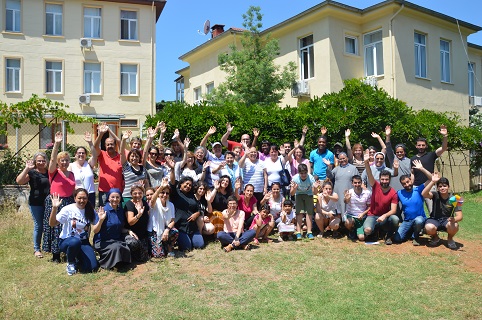 fty years have passed since that first quiet meeting which would produce unimagined openings between the Ecumenical Patriarch of the Orthodox Church and the Focolare Movement – They write from the Focolare of Istanbul -. A few weeks ago Metropolitan Gennadios Zervos said it in this way: “Up until today the full importance of that encounter has not yet been appreciated” (see Quel dialogo volute da Dio). We can have some sense of the vital force of that seed when we consider the first Honorary Doctorate in Culture and Unity that was conferred on Patriarch Bartholomew by Sophia University Institute in Loppiano, Italy, last October. That led to a project that is now a reality and enriches the formative offerings of the Institute with a permanent Chair for dialogue between the Orthodox Church and the Catholic Church, named after Patriarch Athenagoras and Chiara Lubich. On June 13th, the actual anniversary of their meeting, several of us gathered spontaneously at the Orthodox Patriarchate in Fanar. In front of the beautiful icon of Mary we concluded the day with the Magnificat, our song of thanksgiving: “The Mighty One has done great things…Holy is His Name.” But it was also a golden anniversary at the local Mariapolis held in Istanbul. Just as Pope Francis had visited the Mariapolis in the city of Rome last year, this year the citizens of the Mariapolis in Istanbul were joyfully honored by the visit of Patriarch Bartholomew. The School of Theology on the island of Halki with its splendid park provided the backdrop of an unforgettable celebration.
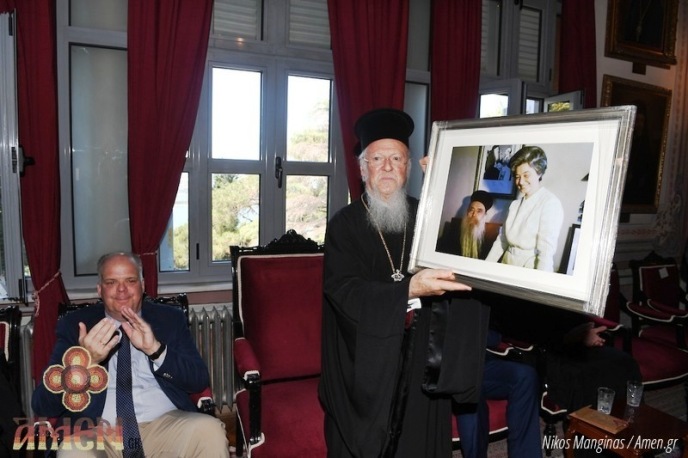
 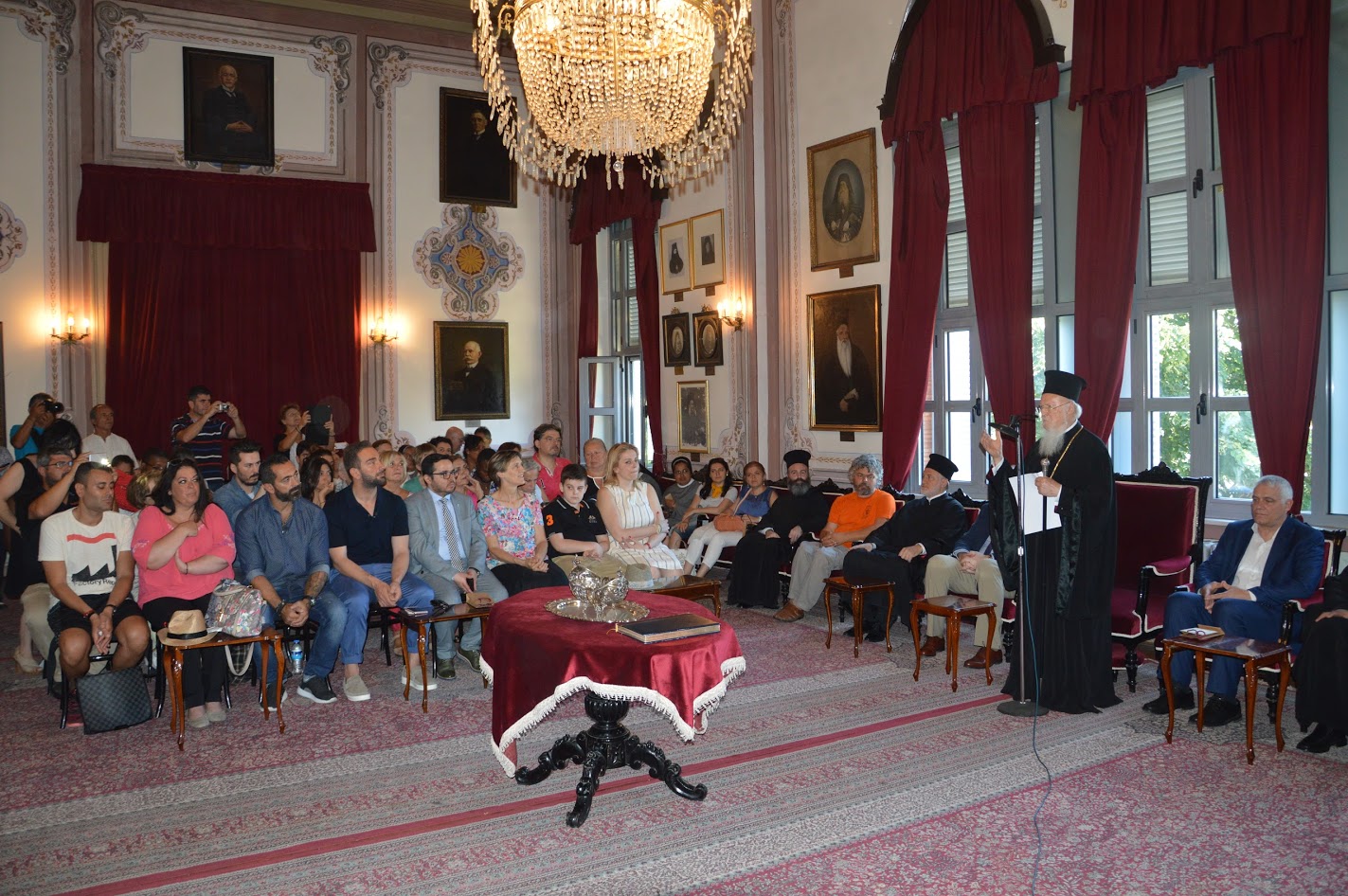 On Sunday, June 25th, the Mariapolites from a variety of confessions, nationalities and languages, went up to the hall where Patriarch Bartholomew gave his speech: “We are now talking about a story that is fifty years old, of a very strong bond between the Greek Patriarchate and the Focolare Movement. And we can by now call it a tradition, because Our predecessor Patriarch Demetrios had continued the relationship with Chiara and the Movement. And We have continued and brought forward that tradition for 26 years. We are very happy and it is a cause of great joy for Us that the major part of the years of this tradition were spent with Us.” We are not new to such expressions of affection and esteem from the Patriarch, but he always manages to surprise us. His joy because of the part he played for 26 years out of 50 is no formality, he told us! And speaking off-the-cuff he added: “But already before being patriarch, working beside my predecessors, I lovingly served this relationship. He went on to say: “I see that the good God has blessed you, because your number and your service have grown, because with the life and testament of Chiara that you have embraced, you give service to all humanity with the same pure heart, with the same faith, with the same love and with the same industriousness [as Chiara]. Like the blessing of Pope Francis, so too Our blessing and Our prayer is with you always that you might sow seeds of peace and of love in people’s hearts. May God always lead your steps toward good works.” His speech was followed by an exchange of gifts, which included a framed photo of Athenagoras and Chiara during one of their meetings. Everyone then sang in several languages, including Greek, the Focolare song Love and you’ll understand which was a favorite song of Patriarch Athenagoras and describes the essence of the Mariapolis: the light that comes from loving. The Patriarch invited everyone to an exquisite lunch in the adjoining dining room and the morning concluded with the official photos, selfies and conversations with Bartholomew. “Golden is the inheritance left to us by Patriarch Athenagoras and Chiara, the protagonists and initiators of the ‘dialogue of Love,’ great creators of the dialogue of the people (…) initiators of the new ecumenical Era; they taught peoples, giving them courage, strength, patience, fidelity, willingness, love and unity” (Metropolitan Gennadios Zervos).
