9 Jun 2017 | Non categorizzato
 Youth for a United World is an international movement which gathers young people of different races, cultures, religions from 180 countries and across 5 continents. They strive to live for a more united world by putting into practice the Golden Rule: “Do to others what you want them to do unto you; don’t do unto others what you don’t want them to do unto you”. In order to be better connected with young people throughout the world, Youth for a United World have created new communication channels, one of which is the newly launched website yfuw.org which includes content about the movement’s history, news items as well as past and forthcoming events. Genfest 2018: the worldwide event which will take place next year (6-7 July) in Manila, Philippines. More interaction: y4uw.org gives the possible to connect up with young people around the globe.It’s possible to post comments, suggestions, feedback regarding website content but also to convey news about local youth activities. New design: the revamped website makes it easier to view current projects and to contact the protagonists. It’s possible to contact Youth for a United World through the social media: Instagram & Twitter: Y4UW.official Facebook: Y4UW.international
8 Jun 2017 | Non categorizzato
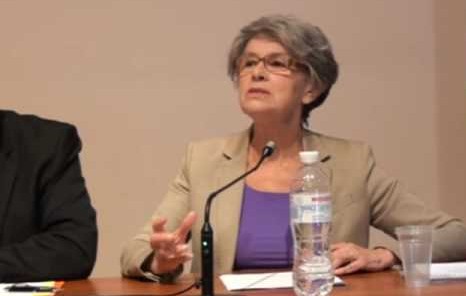
Anne-Marie Pelletier
Maria Rita Cerimele
Source: Città Nuova
7 Jun 2017 | Non categorizzato
“The role of women in the education towards universal brotherhood,” is the theme of the plenary session of the Pontifical Council for interreligious Dialogue, programmed for 7-9 June, in Rome. The event will highlight four Conferences: Sr. Nuria Calduch-Benages, Spanish biblist will speak about “Women educators in universal brotherhood,” Sr. Raffaella Petrini, professor in the Social Doctrine of the Church, will focus on “Women’s qualities against the technocratic paradigm: a Catholic and social perspective on the contribution of women to fraternity;” Marie Derain, French lawyer and infancy civil defence attorney will discuss the theme “Building peace: the role of women ;” and then Clare Amos, of the Ecumenical Council of Churches will expound on “the role of women in education in universal brotherhood.” The participants will be received by the Pope.
7 Jun 2017 | Focolare Worldwide
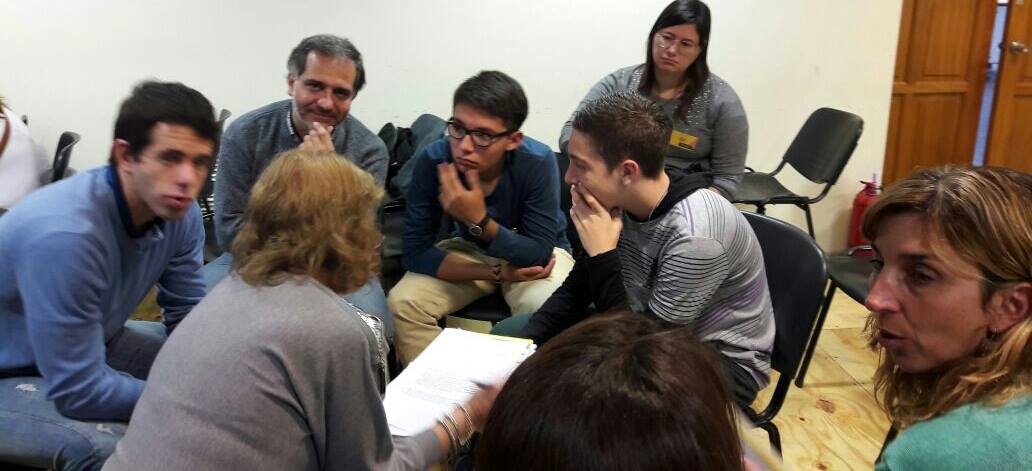
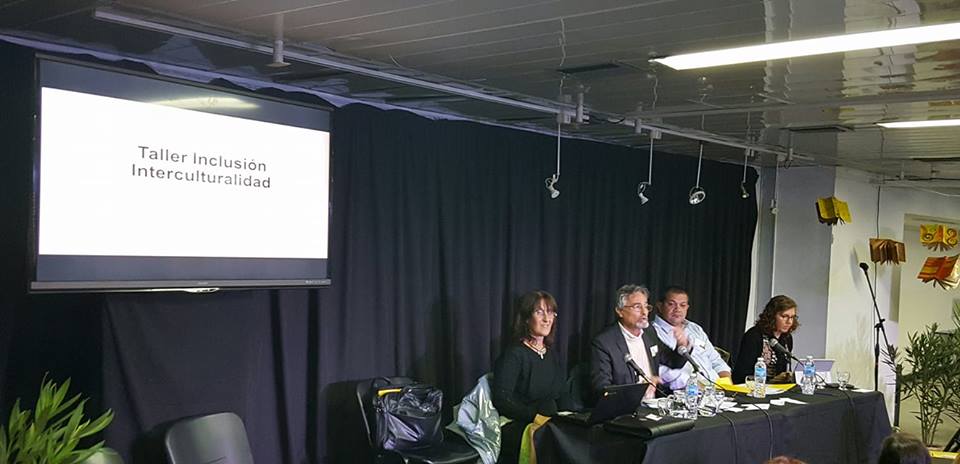
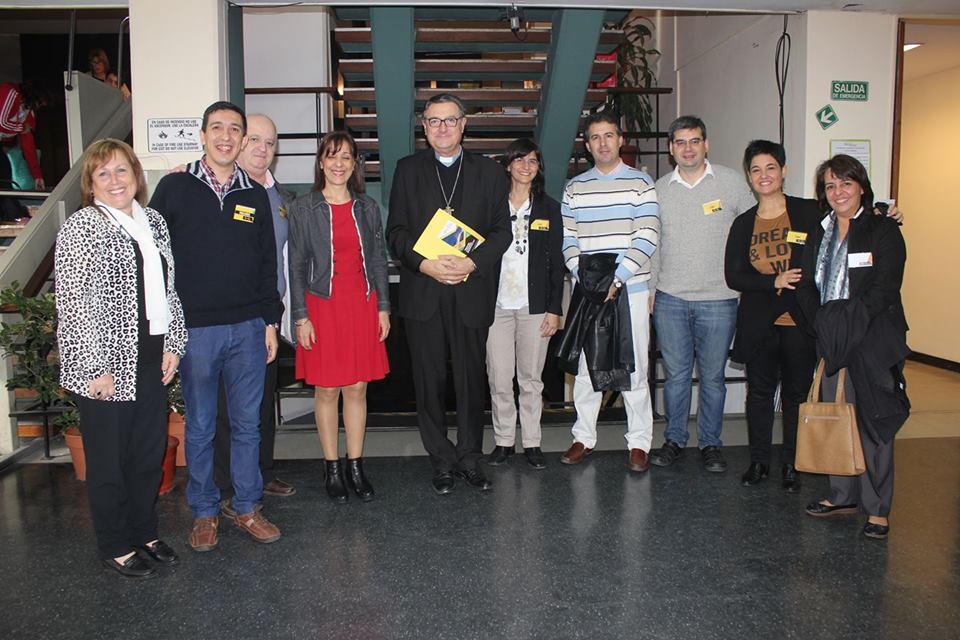 «This is not just a meeting for educators», one of the participants commented with emotion. «I am no longer the same person I was when I got here». «Fraternity, as a lifeoption is the blood that must run in my veins.» There were some impressions of the many participants from countries of the Southern Conethat gathered from 12-14 May in Rosario, Argentina. Besides these, about 500 educators took part directly via streaming during the various moments dedicated to the theme of the Meeting: “The service to learning service,” “Education for a fraternal economy,” “Inter-generational dialogue, and “Empathy and intercultural Workshop” to name a few. The first day started with the visit of the Governor of Santa Fe, Miguel Lifschitz, and authorities of the other local institutions. The Archbishop of Rosario, Bishop Martin, gave a speech the day after and started by affirming that the word,“fraternity,” says that we are not alone.«In this country God brought us together and the challenge we had before is called coexistence…You are not only diffusing theories but you start off from life, and concrete facts.» What came to light was not only the life of fraternity between the students and with their teachers but also between directors and inspectors, proposing innovations for the benefit of the entire educational community. The schools with artistic orientations and which had adhered to the objective of brotherhood gave their testimonials on how interculturality is lived through art, demonstrating new ways of interpreting life as artists. The workshop on inclusion helped to clarify the concept of how “the other, with all his differences is a gift.”
  The theme on education and training outside the school environment, which is a life-learning process focusing on brotherhood as its methodology, indicated a pathway which consists in going out towards the peripheries with a programme centered on values. The experiences on the relationship between education and technology were presented as the great opportunity to achieve fraternity, setting the relationship between students and that with the teachers on the same level, and as the possibility to bring out the best in the others, and learn from everyone. Also many educational practices that had produced excellent results were presented, and concerned the potential of body language and the golden rule in the field of sports as a way of building bridges in such important fields. All this can be summarized in Chiara Lubich’s educational proposal to be applied in many educational realities worldwide, inspired by love for the more vulnerable, “ignorant,” abandoned people who are excluded from the system. It is a path that identifies the presence of Jesus Crucified and Abandoned: an abandonment that found its answer of love in the Resurrection, which is thus a key to building fraternity right in the heart of the “divide.” «I leave with my heart full of hope knowing that this paradigm exists, knowing that there are a lot of people working to combat verticality, the lack of mutual listening, the widespread mentality for which knowledge is only in the hands of the teacher, the adult – said Enzo of Chacabuco, specialized in music therapy. – This is a different road. I hope the second edition of this Convention will be organised soon.» Source: SiteSouthern Cone
6 Jun 2017 | Focolare Worldwide
On May 31, 2017, the University of Tubingen, Germany, conferred an honorary doctorate to the Ecumenical Patriarch of Constantinople, Bartholomew I. The degree honours his long years of work in promoting understanding between the Orthodox Church and the Protestant Churches; his efforts for the protection of the Creation; for Europe and for dialogue among religions. The University is one of the oldest in Germany, founded in 1477 and stands among the most internationally reputable centres of study for students of Medicine, the Natural Sciences, Human Sciences. It currently serves some 28,500 students.
