26 Apr 2017 | Non categorizzato
Only three days remain until the opening of the United World Week with the long awaited International Meeting of Youth for a United World in Loppiano, Italy. Five hundred young people are the starting blocks. “United World Project” is their slogan that will carry them through the race they are spreading by every possible means of communication. They are all directly involved in the project, a network of numberless concrete and courageous gestures that build bridges and open paths of dialogue and solidarity. The main working document of the Meeting, entitled “Universal Brotherhood: An Opportunity for the World” states: “The financial, economic and, above all, cultural crisis the has spread in every country poses epochal questions”. How can a future of justice, freedom and peace be given to all the peoples of the earth? We would like to begin from unity, the unity of the human family and to aim towards a horizon of the universal brotherhood among all peoples. This is our project.” The border that extends from the Gulf of Mexico to the Pacific Ocean, with its 3,169 kilometres of metal barriers and barbed wire and control towers, representation of the broken dreams of many immigrants in search of a better future. In the same vicinity, in Mexicali and in Calexico, a group of young people have believed in a world without walls and have been keeping busy. “We began singing in one of our city parks which is located right next to the border wall. It was a way of offering a bit of relief to the people who were passing through that area. The second step was to go inside the city’s maximum security prison where 4 thousand people are living, to offer them some music and song. After going through a lot of security controls, we were given permission to spend a few hours with 130 inmates inside a big hall. During lunch they told us that our visit was the only one they had received in two years.” The 2016 Worldwide Run4Unity Relay was held right next to the wall. “We wanted to plant our flag along the border wall as a sign of the unity that we’re committed to building with the people living on the other side.”
![Fazenda de la Esperança visit the Focolare]()
25 Apr 2017 | Focolare Worldwide
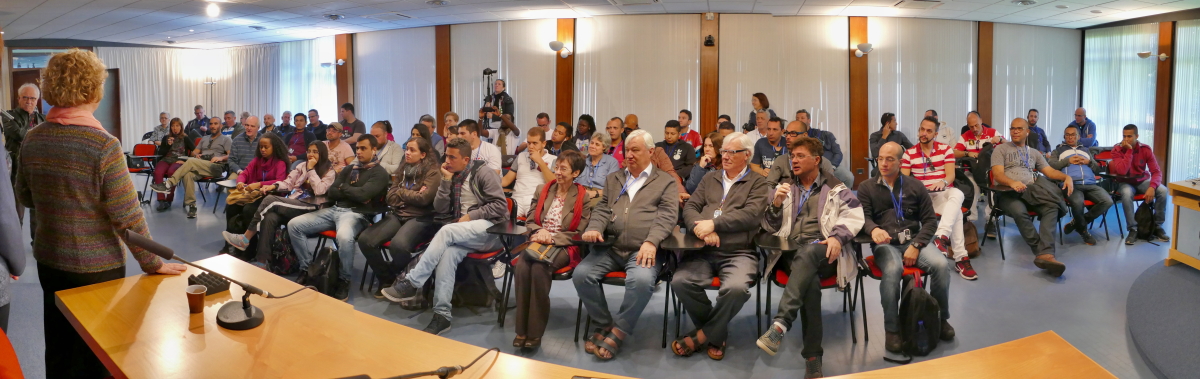 The Focolare has shared a long-standing friendship with Fazenda da Esperança (Farm of Hope) which goes back to the very first farm. It was 1983 when Nelson Giovanelli, a young Brazilian from the city of Guaratinguetà. Inspired by the words of Saint Paul, “I became weak with the weak,” he approached a group of young drug addicts. One of the young people felt drawn in and asked for help in giving up drugs. Many others followed him. Nelson lived Chiara Lubich’s spirituality of unity. He was joined by German Franciscan Friar Hans Stapel who supported his efforts right from the start. The work grew and developed with the support of the “two charisms”, said Pope Benedict XVI during his 2007 visit to the community of Pedrinhas, Brazil – the charism of Chiara Lubich and the charism of poverty of Saint Francis of Assisi. On Sunday, April 23, 2017, a group of 60 young people and adults visited the International Centre of the Focolare Movement in Rocca di Papa, Italy. Most of them were from Brazil, but there were also representatives from other Latin American countries like Uruguay, Argentina, Paraguay and Mexico; Germany and Switzerland; Angola and Mozambique; and Philippines. They were accompanied by 14 founders: Friar Hans Stapel, Nelson Giovanelli Rosendo dos Santos, Lucilene Rosendo, Iraci Leit, and their General Council for Europe.
 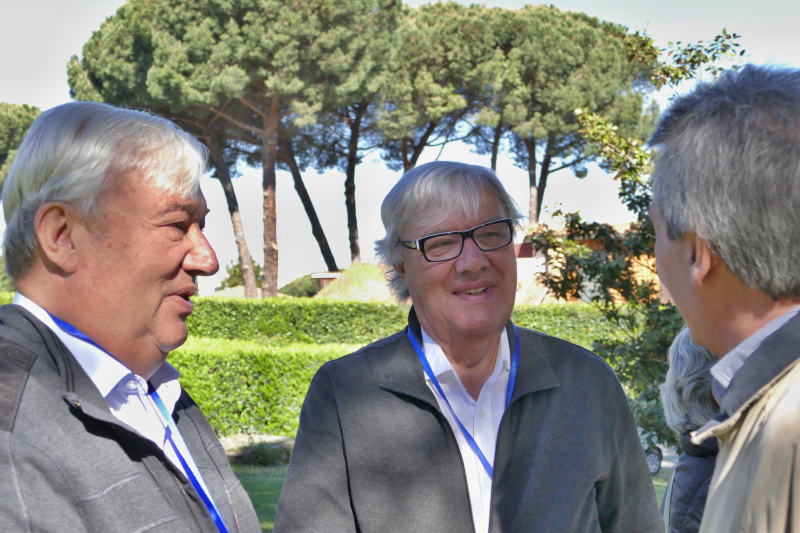 “The purpose of this trip,” Friar Hans explains, “is to make the experience of the Fazenda known in Europe. To offer this alternative assistance to young people who suffer from the slavery of addiction. We’ll also travel to Switzerland, Germany, France, Poland and Portugal – all places where we have Fazendas, and these 60 people will share their testimonies. Among us they found a new life and decided to become missionaries and evangelizers for three months in Europe. They made a great effort to pay for the flight, so that their testimony could be freely-given.” What was the reason for visiting the International Centre of the Focolare? “It was because of everyone’s huge desire to get to know the origins of othe charism that gave the roots to the Fazendas,” says Nelson Giovanelli. He recalled a letter he wrote to Chiara Lubich in 1990, in which he shared with her his calling to love “Jesus Forsaken in the people who have fallen victim to drugs.” Chiara encouraged him to follow the promptings of the Holy Spirit. Currently there are 124 Life Communities around the world. They take in 3,000 young people who are trying to free themselves from drug addiction, through a personal rediscovery of their human dignity and of life values. There are 14 Fazendas in Europe and, during the coming months, another 4 will be opened in France, Poland and Italy.
 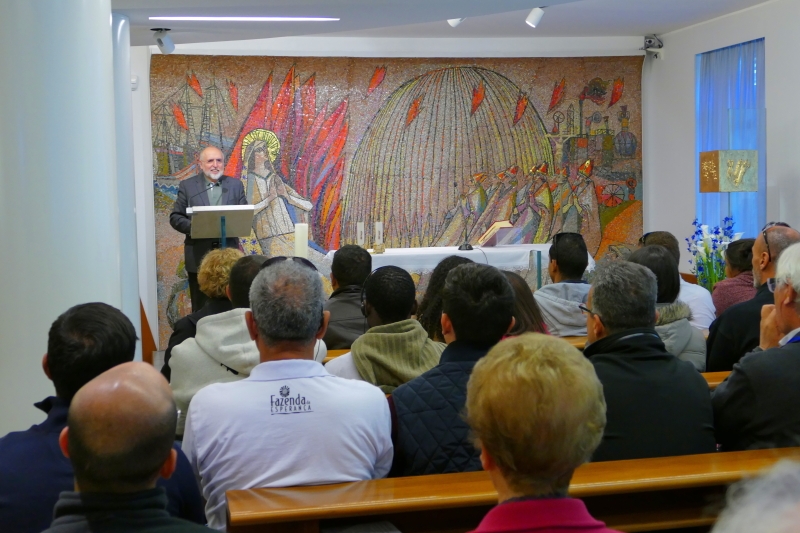 In the Fazendas da Esperanca you have people who voluntarily dedicate themselves with commitment and complete generosity to the service of young people with whom they create the community of the “Family of Hope.” “My father was an alcoholic . . . he didn’t believe in love . . .” says Priscila, a young woman from Argentina. “When I found and got involved as a volunteer at the Fazenda, I regained my relationship with him after 15 years of estrangement. I forgave him and, little by little, he gave up alcohol. For me, forgiveness is everything. It’s the essence of my life: I find God in the love I give away.” The Focolare’s co-president, Jesús Morán, brought greetings from Maria Voce and thanked them for their witness to the Gospel. He augured that they would “always be close to the suffering, to Jesus Forsaken, so that will be one, beginning from the least.” Their stay in Italy will include a visit to the city of Saint Francis and to the international Mariapolis of Loppiano where they will take part in the Pulse Meeting and the annual May 1st Youth Festival.
24 Apr 2017 | Non categorizzato
Program: 2 May – Communion & Law Seminar: “Law as a Tool for Integration in a Multicultural Society” 5 May – Meeting with His Grace Msgr. Charles J. Scicluna, Archbishop of Malta – “Dialogue or Dialogues? A style of life” : a talk to to commemorate the 40th anniversary of the foundation of the Diocesan Ecumenical Commission. 7 May – Participation in the Forum: “The State of Europe”
24 Apr 2017 | Non categorizzato
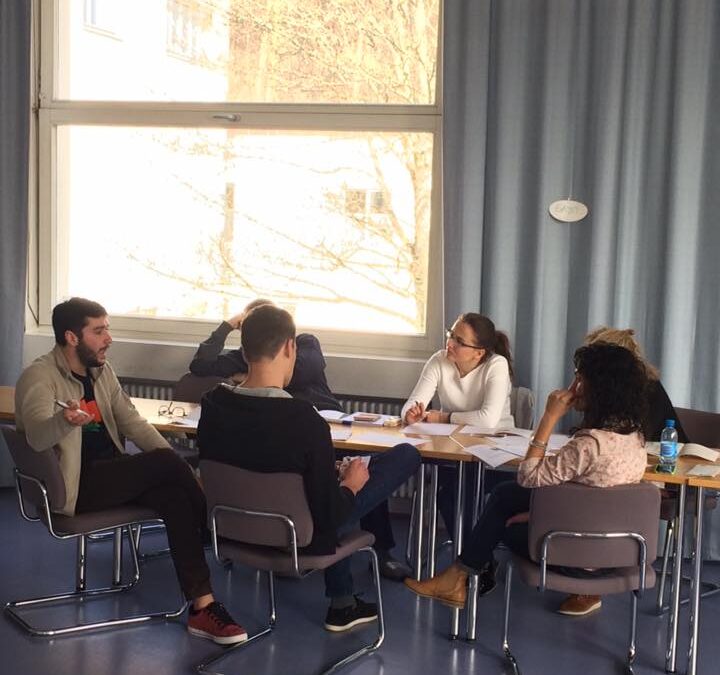
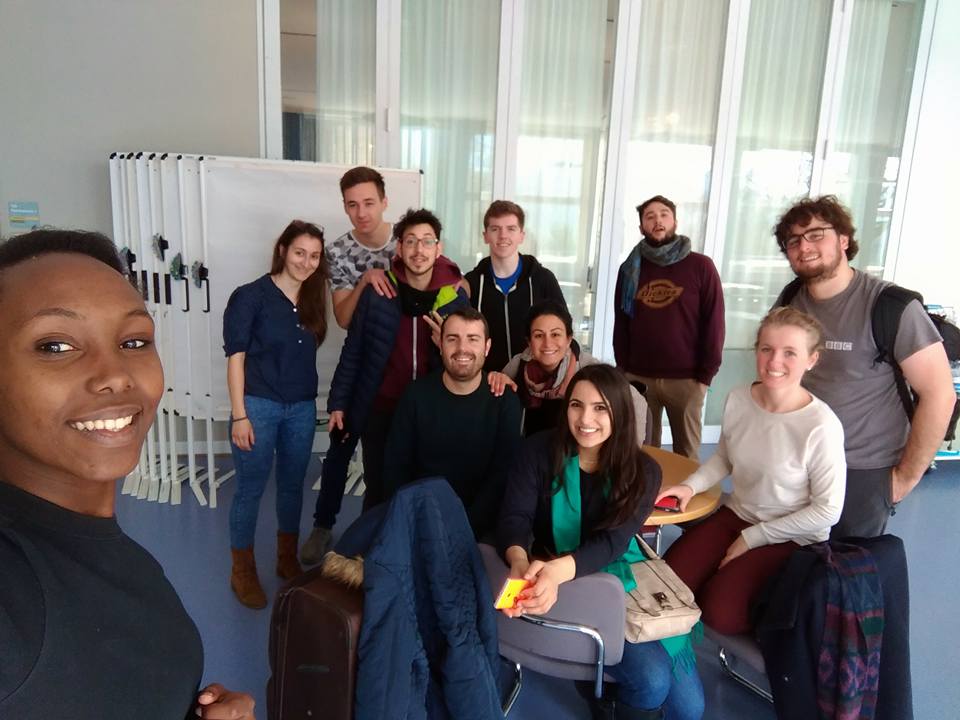
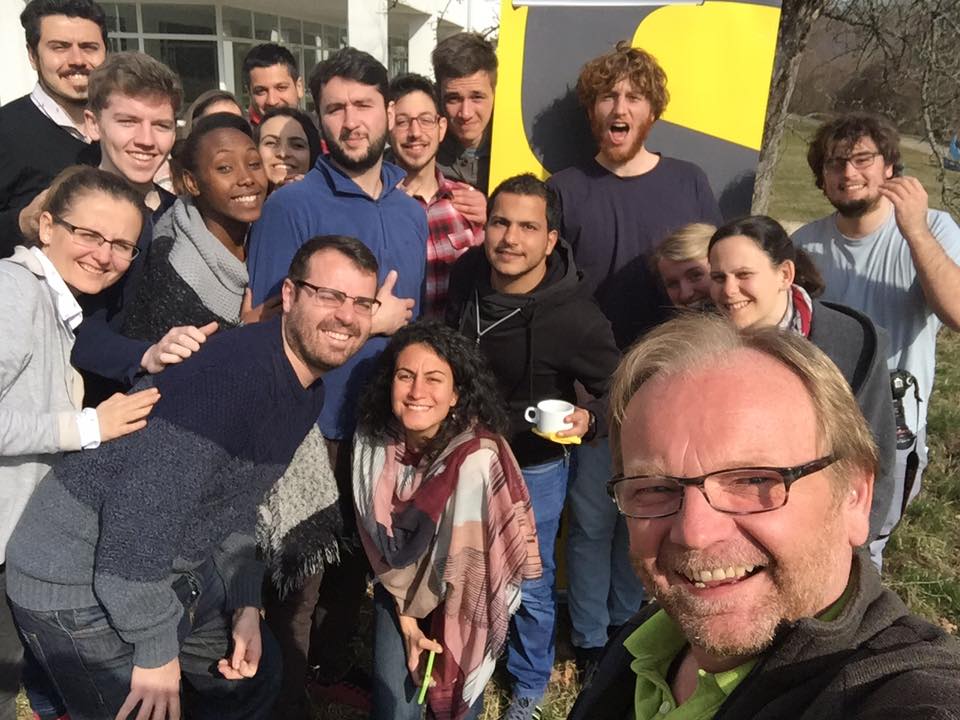 “The refugees are not numbers that fill the news but are people to be welcomed in their human dimensions as women and men who have been denied sentiments and projects.” This was the conviction reached by the 18 youths of five European and Middle East countries that gathered in Bad Urach (Germany) from 12 to 17 March for the second phase of the Host Spot project, promoted by New Humanity and Starckmacher together with other associations, and co-financed by the Erasmus+ (EU) programme. Host Spot targets two objectives: Host focuses on hosting programmes, and Spot on the achievement of brief video-documents to influence public opinion.
  In the first phase of the project held in Jordan in August 2016, the youths had gathered from the live recounts of the Syrian and Iraqi refugees – guests of the Jordan Caritas – the dramatic stories of their forced migration, documented with video shoots. It was an experience that made them realize the true reasons that had pushed them to leave their own countries, the risks they had incurred during the exodus, and the precarious arrival in the new land. The idea of spreading this painful situation had already dawned in the days of Amman. The youths began to be convinced that bringing this information to light could give the undergoing discussion, centred mostly on political strategies and economic-social costs, a truthful vision of the migration phenomenon, and that they could give their concrete contribution through a public awareness campaign. The Bad Urach meeting focused on developing in the youth, the technical competences in the field of communication and production of social documentaries. Some experts were present and worked in direct contact with the refugees. The refugees furnished them with a lot of information on the situation in Germany, and the European hosting system. This was an important contribution to the diffusion of correct knowledge of the situation, often reported by the media in a partial and manipulated way.
 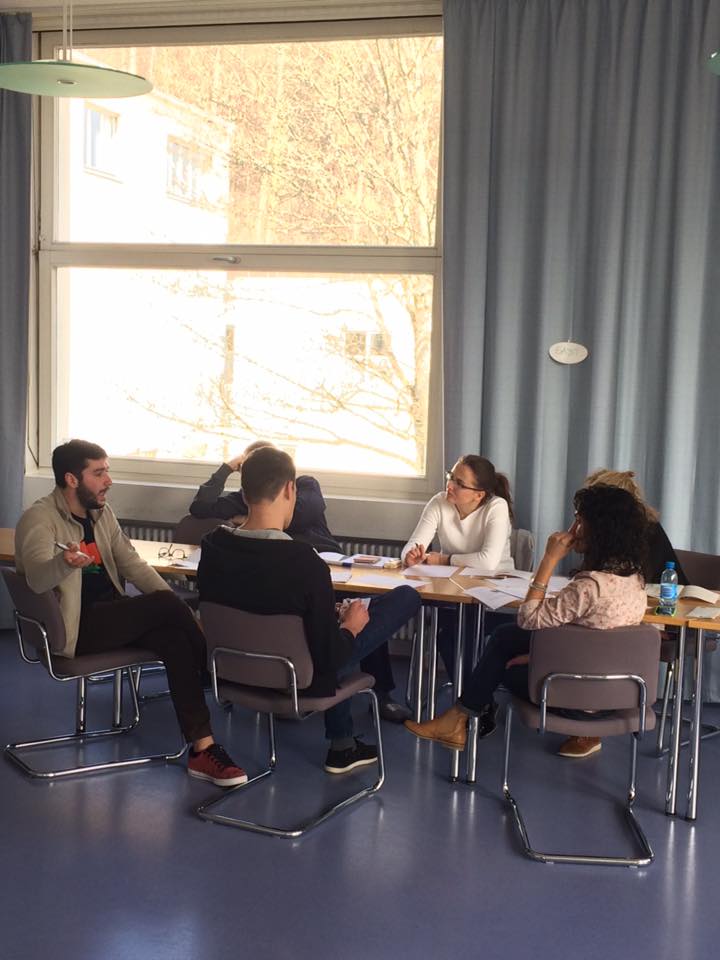 The young participants had brought with them their own cultural heritage and the vision of migration lived and faced in their countries. They got involved in the game through an exercise of reflection and listening, to receive and comprehend the philosophy of the others, convinced that the contribution they could have given in those days, though small, could have brought about some changes. The success of this phase of the program consisted in the achievement of an international learning session in an atmosphere of sharing among youths of various languages and cultures. Through workshops, seminars, and debates, a lot of prejudice and stereotypes were disproved, with the discovery that despite the diversities, there are many values in common. As a concrete result, three video spots were produced to be shared with the peers of their countries, to encourage them to make similar experiences, and thus become promoters of change. The third and last step of the project will be held in Egypt at the end of October 2017. On Facebook
