11 Apr 2017 | Non categorizzato
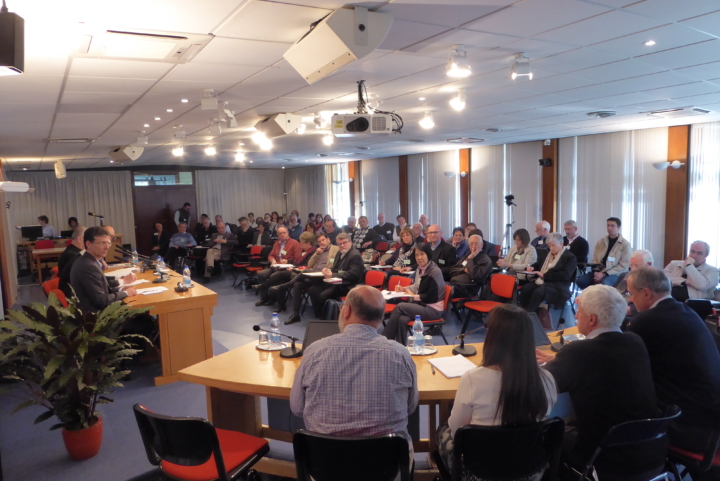
The Gospel and Culture is a delicate topic. It has been widely discussed for centuries in theological, sociological, pastoral, political and educational environments. There are Church documents, such as Evangelization in the Modern World and the Gospel of Joy that are indispensable references. If you add the word “charism” to the mix – which nowadays is being attributed to non-ecclesial figures and realities as well – then the search for agreement becomes challenging, especially when you put together experts from different cultures. Yet, this was the striking feature of the “Gospel – Charism – Culture” conference held on April 6-7 at the Focolare International Centre in Rocca di Papa, Italy. In her welcome address, Maria Voce pointed out the deep goal of the gathering: to promote “a culture of peace, a culture of resurrection” that will have a growing impact.” Experts from Asia, Africa, the Americas and Europe compared notes during three thematic sessions. Charisms and the evangelization of the culture. The first session dealt with two questions: “How to respond to the urgency of the Gospel becoming culture” by Archbishop Zani; “How to accelerate the communion among charisms in the face of present challenges?” by Sister Motta; and how “nowadays, many “charisms” are born in non-religious environments, while there is not enough prophecy in the Church itself,” by Luigino Bruni. During successive discussions the experts underlined how “every confrontation with the other is an encounter with a social family’s history and culture” (Guadiano); that “the media have their own charism for a united world, if they maintain their autonomy” (Zanzucchi); that “the evangelization of the culture does not pass through the authority, but through the witness” (Archbishop Zani). Finally, there was the appeal made by Bruni: “We need a new narrative; the young people of today do not understand a language from the 1900s.” From inculturation to interculturality. The second session was opened by Jesús Morán: “European elaborations on culture are far from all there is to say about Christ. In the encounter with other cultures something is expressed that has not yet been expressed.” The goal, as Philippine Andrew Recepcion recalled, “is not a non-Western Christianity, but a beyond-Western [Christianity].” Soni Vargas from Bolivia showed some passion when asking that we move on from the paradigm of inculturation, which does not express the active reciprocity required by Chiara Lubich, to a paradigm of interculturality: “No longer “mission”, but “inter-gift” within a Trinitarian dynamic in which a superiority of one culture over another doesn’t even exist.” During the debate, Chinese Vania Cheng, remarked: “Asia is asking for listening, respect and silence because the inner being reveals more than the word.” Cameroonian, Raphael Takougang, remembered that “in interculturation,the knowledge isn’t communicated, it’s passed on by having an experience together.” Roberto Catalano underscored what Chiara had seen long ago when she invited everyone to “make Christ to be born in the heart of the cultures.” Lucas Cerviño, who was on a link-up from Mexico: “I need to create the conditions so that the seed of God that is already inside a culture can flower . . . but never imposing the way.” Morán concluded: “It’s true that there must not be control or superiority of a culture over another, but this doesn’t mean that there isn’t a central point: Christ is the heart of the world.” Youth – faith – vocational discernment. The third session focused on the upcoming Synod of Bishops and was opened by Italo Fiorin: “Educating means helping an other to find the meaning of his or her own existence. Educating is the art of accompanying.” Sister Jenny Favarian testified to how: “the discovery of the vocation to love makes totally beautiful flowers to blossom.” Maria Rosa Logozzo told about the contact of a group of young people from different cultures – both believers and non-believers – with the focolare in Dublin, Ireland: “The possibility of having an experience of God in a community draws them.” After a rich debate, Fiorin concluded by underscoring the importance of the “pedagogy of reality” and especially of service learning: “learning to serve; serving to learn.” On the final afternoon, theologian Piero Coda gave a presentation on the question: What does it mean when we say that the Church is born from the abandonment of Jesus on the cross? “A life in exile: the capacity to detach from one’s own roots in order to live the other . . . testifying to the folly of God’s love. . .” The discussions from these two days, Francisco Canzani recalled, will be transformed into articles for the Gen magazines, Unità e Carismi, Nuova Umanità, Città Nuova that will help to reflect on current ecclesial and cultural times.
10 Apr 2017 | Focolare Worldwide
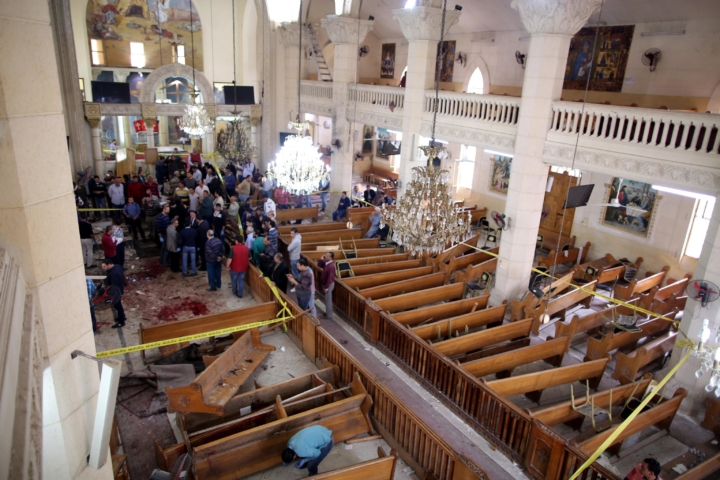
“It’s an attack not just on Christians but on religion as well,” commented the members of the local Focolare community in Egypt, with reference to the bombings on Palm Sunday. This sentiment was confirmed through the immediate solidarity shown by the Muslim community, many of whom offered to donate blood at the hospitals. “Being deeply religious people, Muslims and Christians in Egypt felt called upon to strengthen their faith after the attacks,” a member of the Movement said. Two Coptic Christian churches were targetted by terrorists in the city of Tanta in the Nile Delta, and in Alexandria, the second largest city of the North African country. In Tanta the Church of St George was hit causing 27 casualties. In Alexandria, Church of St Mark was bombed killing 18 people. The President of Egypt, Abdel Fattah al-Sisi has declared a three-month state of emergency, during which all public manifestations and events will be suspended, among other restrictions. The attacks coincided with the celebration of Palm Sunday, which marks the start of the most important liturgical week for Christians. It was a sombre beginning to Holy Week. The passage of Revelation came to mind which describes a “great multitude (…) from every nation (…) holding palm branches in their hands” who had “washed their robes in the blood of the Lamb (…)”. (Revelation 7:9-14). On Sunday morning, at St Peter’s Square, the Holy Father prayed “for the victims”, expressing his condolences “to my dear brother, Pope Tawadros II, the Coptic Church and the entire Egyptian nation.” And he concluded: “May the Lord convert the hearts of those who sow terror, violence and death.”
10 Apr 2017 | Non categorizzato
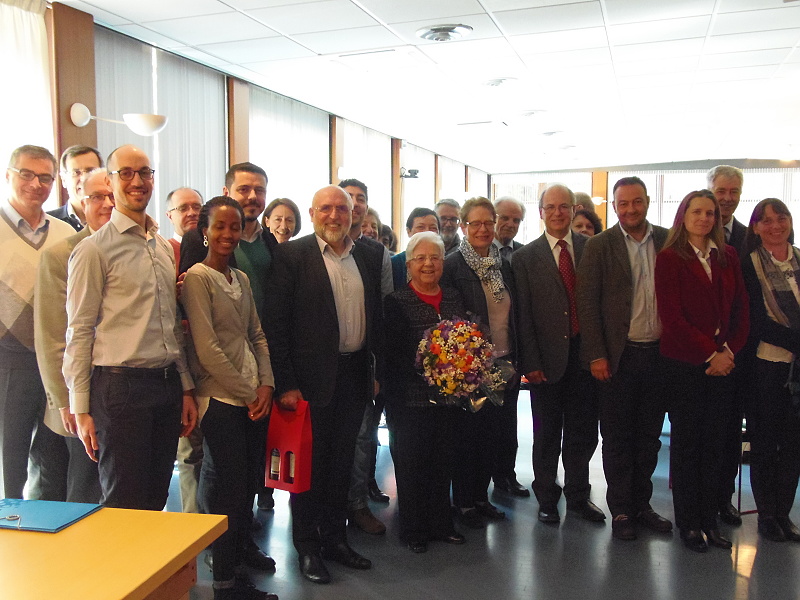
With Maria Voce and Jesús Morán
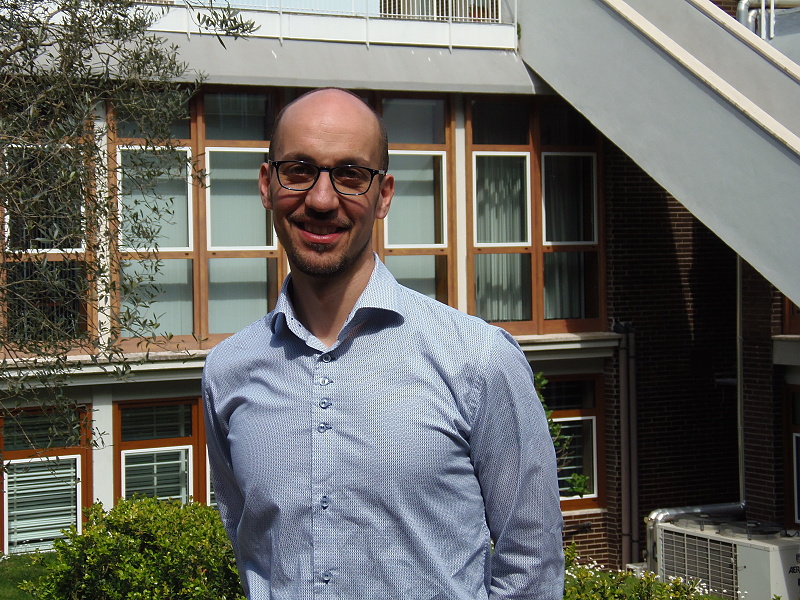
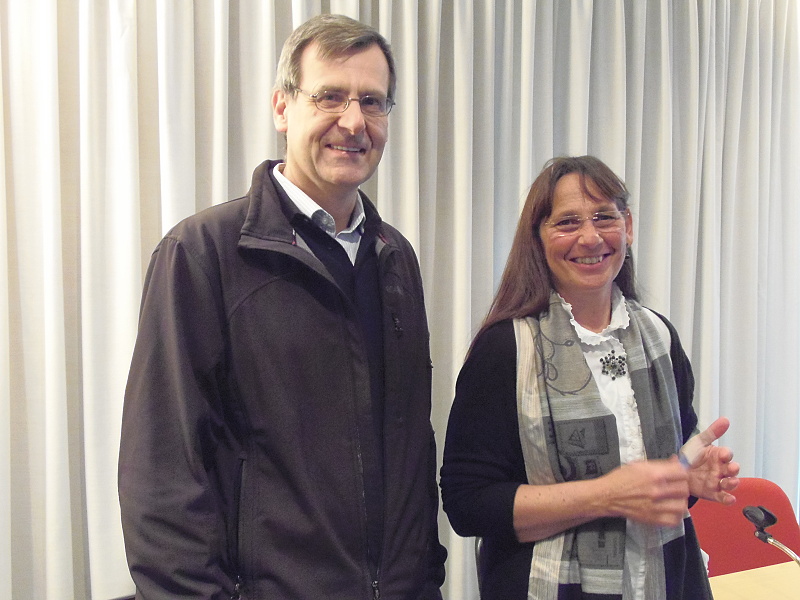
avide Bilardi, adjunct representative at the centre in Geneva, has been working in New Humanity for seven years: Davide Bilardi
Marco Desalvo, President and Cecilia Landucci, Vice president
9 Apr 2017 | Non categorizzato
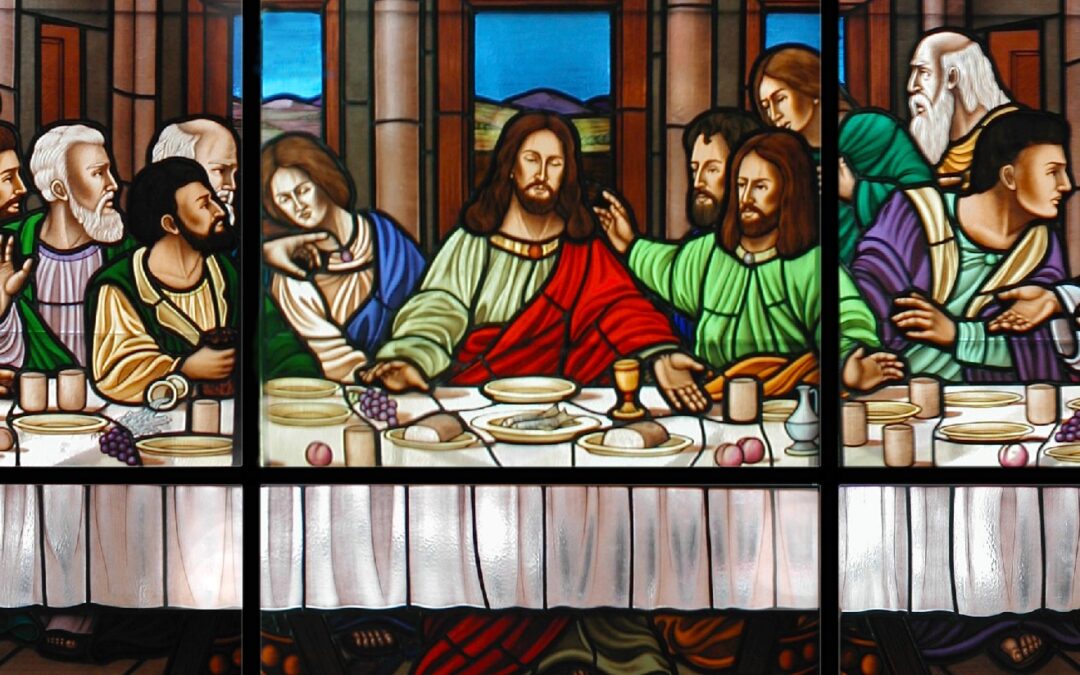
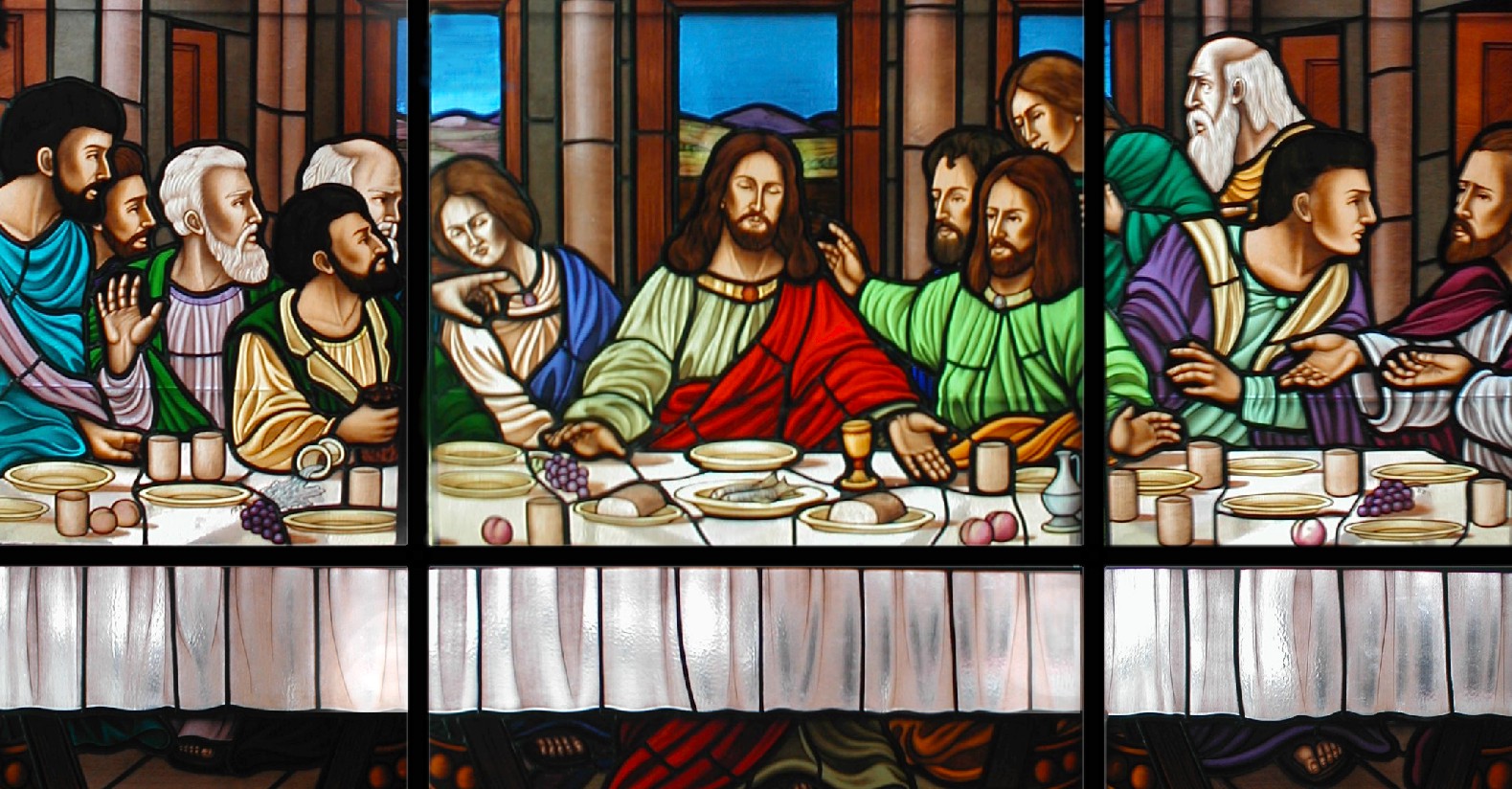 In the man Jesus there is participation in the very life of the Trinity, in the social life of God. This supernatural social life, which the life of grace brings to man, never destroys his natural life. There is instead a marvelous interweaving of the two. The supernatural social life, which is grace, will give origin to and allow for a social life that is naturally perfect, sincne Chrtist will found a visible Church. […] But what is the crossing point between Christ and the Church? How do move from the spiritual presence of the humanity of Christ to the presence of Christ in humanity? In order to understand it we must contemplate the human nature of Jesus before his death and after his Resurrection. We must meditate on his own flesh and blood which, after his exaltation, becomes life-giving. […] Before the crucifixion, the range of action of Christ’s humanity is circumscribed by the limits of his mortal body that is liable to death; with his death and Resurrection, it becomes life-giving spirit. […] Therefore, on the glorious Easter Sunday, when the Spirit penetrates and illumines every part of Jesus’s body, the Church also receives the Holy Spirit: it becomes the Body of Christ. You could say that Christ planted a particular body and raised up [a] Mystical Body, the Church. And so the mystery of human social life re-flowers also in these marvelous events. Since Christ wished to become a member of the human community, he became its Head. To this end, by suffering on the cross, he redeems the human race, since it it spiritually enclosed in him, and also his own flesh through which he wished to work the redemption; and so it acquires certain infinite dimensions. It is spiritualized and becomes the very image of the new humanity. That body which for the man a limiting principle, for Jesus after his Resurrection, is a universalizing principle of life. […] The term “Mystical Body of Christ” and its more precise and determining meaning, refers to the Church that continues the very work of Jesus here on earth. […] Christ, the Son of God, was a true man, he was perfect man; likewise, the Mystical Body is fully human, perfectly human, besides divine. The Incarnation is daily continuing its work, until the end of the ages, in the visible Church. Pasquale Foresi From: Pasquale Foresi, Teologia della Socialità, (Rome: Città Nuova, 1963), 85.
6 Apr 2017 | Non categorizzato
The countdown for the 21st United World Week started. “We would like to generate a tam tam that, starting slowly, will rise up to generate much noise in the world!”, wrote us Youth for a United World. “Let us show the world all the concrete actions that, day after day, build bridges of brotherhood with #fraternitychallenge.On your Facebook wall, write something positive and invite two friends who will do the same for another 5 days … and so on, up to the United World Week! Use all the hashtags: #UnitedWorldProject, #FraternityChallenge, #Pulse, and #4Peace.
