17 Sep 2019 | Non categorizzato
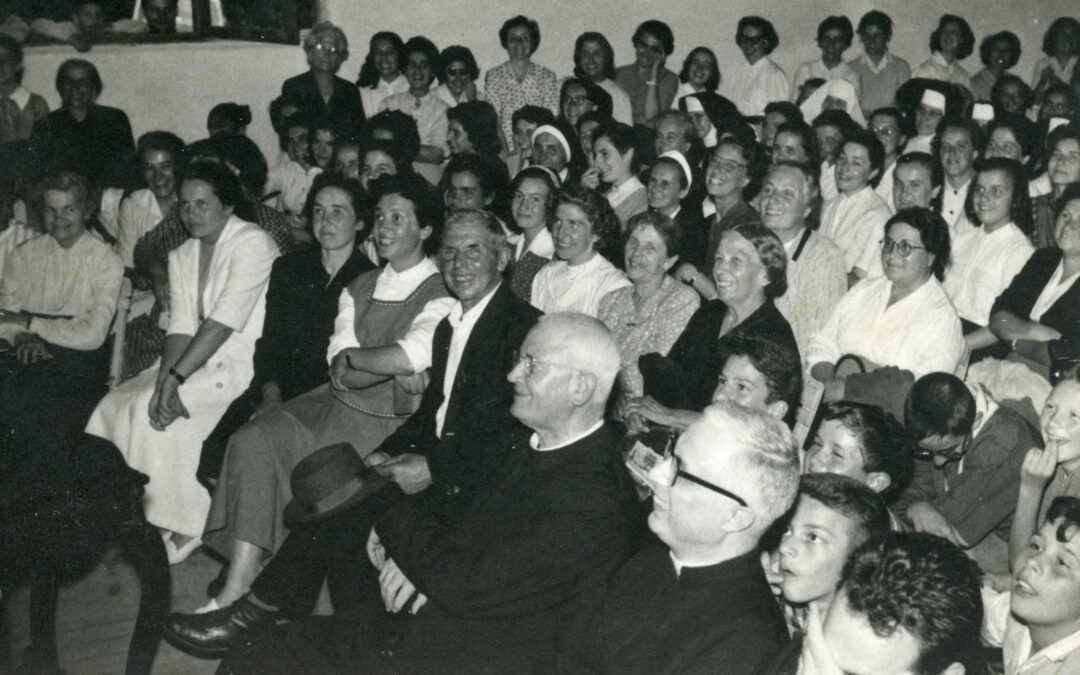
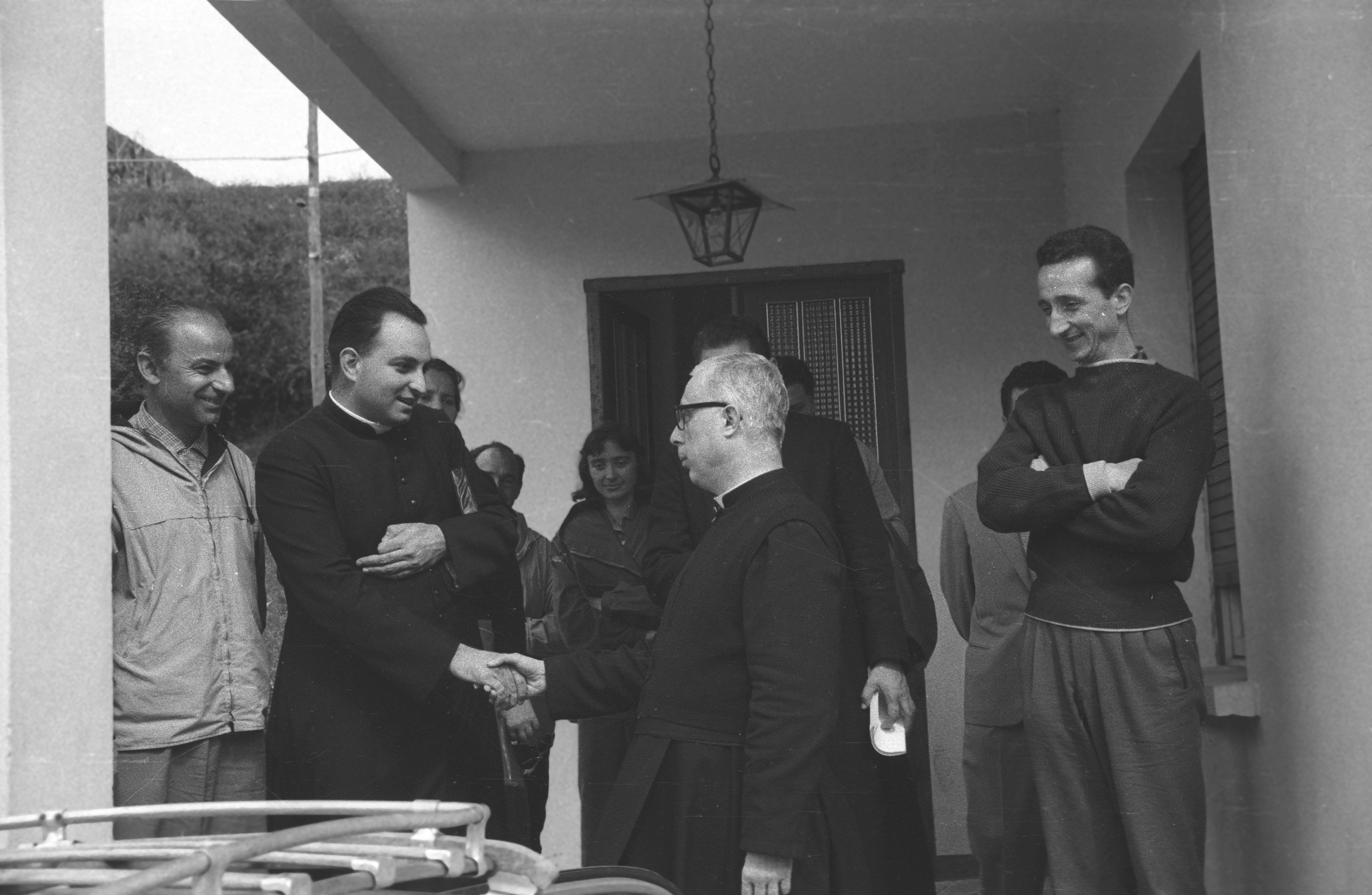
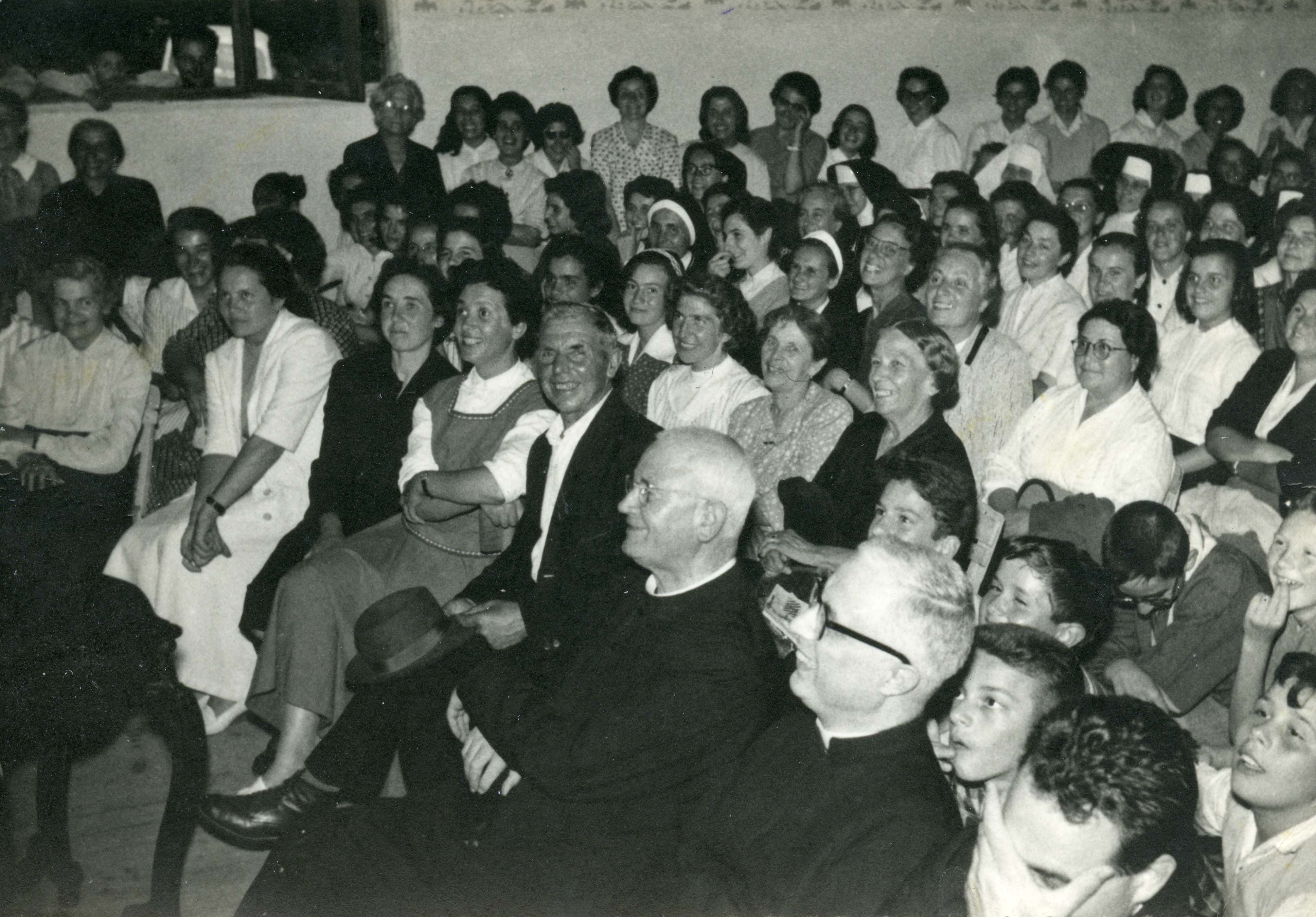
In order to carry out his mission to reform the Church, the Italian Jesuit Father Riccardo Lombardi (1908-1979), tried to mobilize the crowds by preaching in the squares and on the radio. Forty years after his death on September 9th, 2019 in Rome, a conference was held to rediscover this charismatic figure who also played an important role in the history of the Focolare. 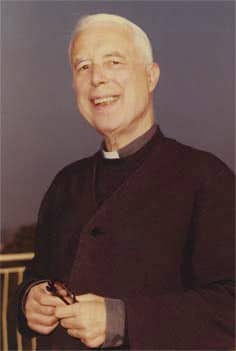 The greatness and – we could even dare to say – the holiness of charismatic figures can be verified when God puts them to the test by taking away their health, their inspiration or even the work they founded. This gospel logic can be clearly seen in the life of Father Riccardo Lombardi, an Italian Jesuit, a great preacher and founder of the Movement for a Better World. This was highlighted by a conference in Rome organized by his Movement, 40 years after his death, in collaboration with the Focolare and the Community of Sant’Egidio. Faced with the power of self-destruction achieved by man and in the rubble at the end of the Second World War, Lombardi became a preacher of universal fraternity in the squares and on the radio, an activity for which they called him “God’s microphone”. After a famous exhortation that Pope Pius XII addressed to the Diocese of Rome in 1952, Father Lombardi wanted to create a group of people who would renew the Church according to a spirituality of communion. Andrea Riccardi, historian and founder of the Community of Sant’Egidio, stressed during the conference that Lombardi did and said what Pope Pius XII could not say and do publicly and thus also became the “microphone of the Pope”, to whom Lombardi was particularly attached.
©CSC media
©CSC media
Joachim Schwind
10 Sep 2019 | Non categorizzato
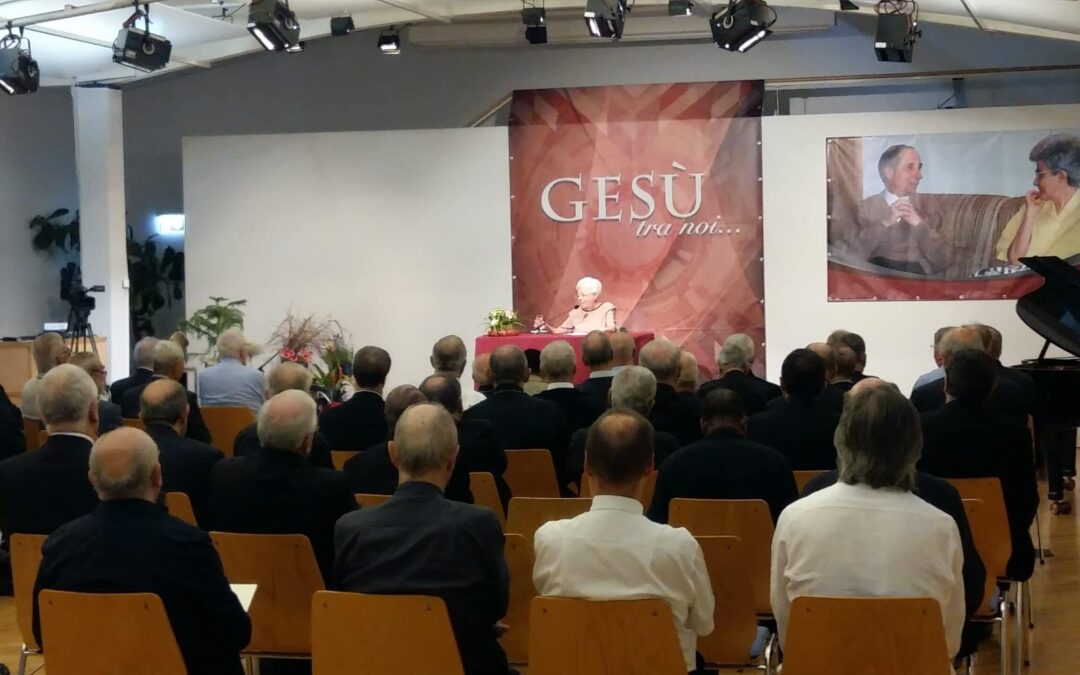
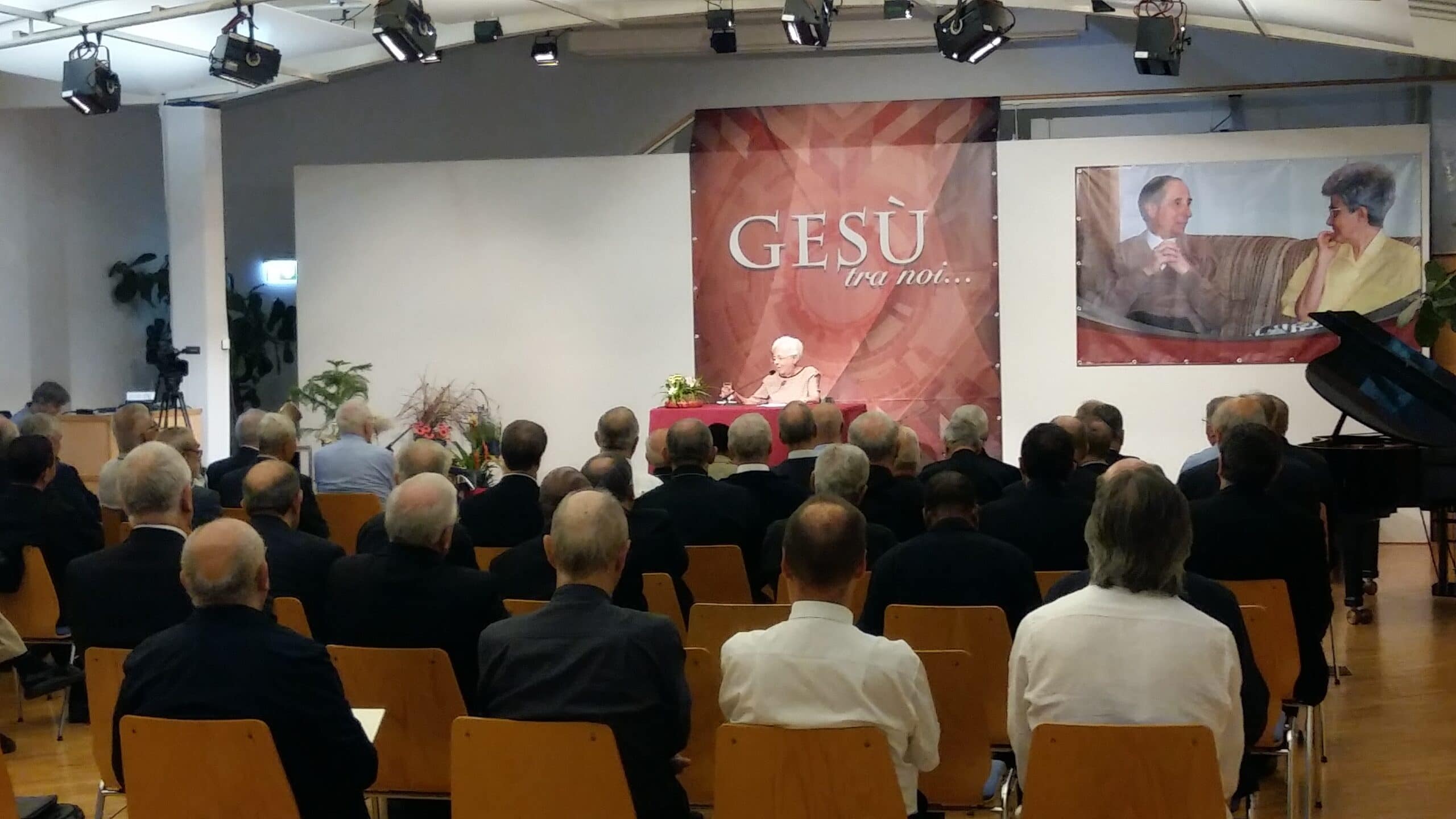
In Austria 61 Catholic Bishops who are friends of the Focolare Movement gathered together for an international meeting. The Church’s “wounds” and the challenges faced by Christian communities today were at the heart of their reflections in a meeting enriched by spiritual insights and sharing fraternal life. 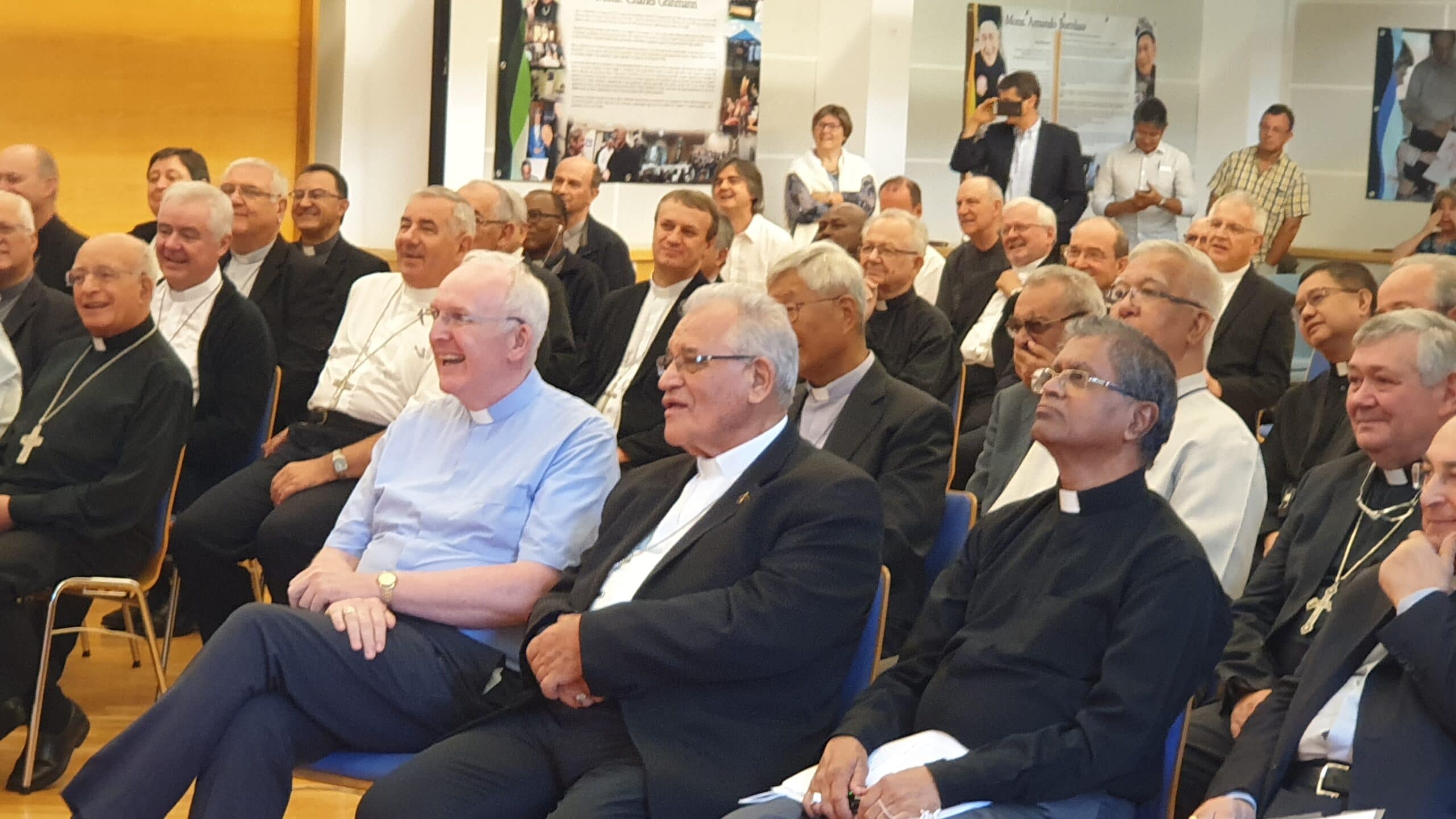 A kind of tsunami has struck the Church as a institution in recent years. The revelation of scandalous abuses has shaken the credibility of the Church to its very core, a Church that for some time has seemed to be in decline in many traditionally Christian countries. And this is not the only scourge afflicting Christian communities across the world. Urbanisation, poverty, war, corruption in society and the Church itself, political and cultural pressures, all kinds of intolerances and religious fundamentalism, a lack of opportunities for development and serious risks to the environment are leaving many people hopeless and overwhelmed. These are just some of the “wounds” that 61 Bishops from four continents who know and live the spirituality of the Focolare shared when they met from 2 to 10 August near Graz in Austria. Even though they came together primarily for a meeting to deepen their spirituality and live fraternity together for a few days, they listened together to the “cry” of their people. Otherwise, how else could they be witnesses of a crucified and risen God who took on every evil and responded to it?! We must not stop at theories – they said – or give in to pessimism but go to the roots. On the Church front, individualism and clericalism were highlighted, a lack of formation and coherent witness, the need for solid spirituality and accompaniment, the need to grow in the capacity to listen and dialogue.
  How can we respond to these challenges? Not from above, under the illusion of being able to impose solutions, but from below, following the way of Jesus who, by becoming small, becoming nothing to be a gift, took love to its very limit and in this way generated fraternity. Looking at the situation from this perspective allows us to recognize the potential for good even where, at first glance, there only seems to be evil. This is the path these Bishops want to tread in a decisive way, mindful that it is a matter – as the Apostolic Exhortation “Evangelii gaudium” recommends – of triggering processes that will only start to bear fruit over time. Nothing less is required today: being faithful to its origins, exploring new ways of being Church. With very precise paths, which include basing the proclamation and catechesis on the life of the Gospel and the communion of life; forming people in the spirituality of communion and the ecclesial and social “we”; creating “living environmental cells”; and listening to those who think differently to ourselves. “Show yourselves as a joyful group” was the wish of Pope Francis for this meeting of Bishops who are friends of the Focolare Movement. This is how it was because, by sharing sincerely with each other, they experienced God. Then everything changes at root level. Only by being can an enlightened doing be born.
Hubertus Blaumeiser
8 Sep 2019 | Non categorizzato
Members of religious communities and movements belonging to fifty different orders, congregations and institutes gathered together in the ecumenical Focolare village of Ottmaring in Germany, 1-5 July 2019. The 100 participants were consecrated and religious men and women. Sr Tiziana Longhitano SFP and Fr Salvo D’Orto OMI, who coordinate this area of the Focolare Movement internationally, explain the significance of this event.
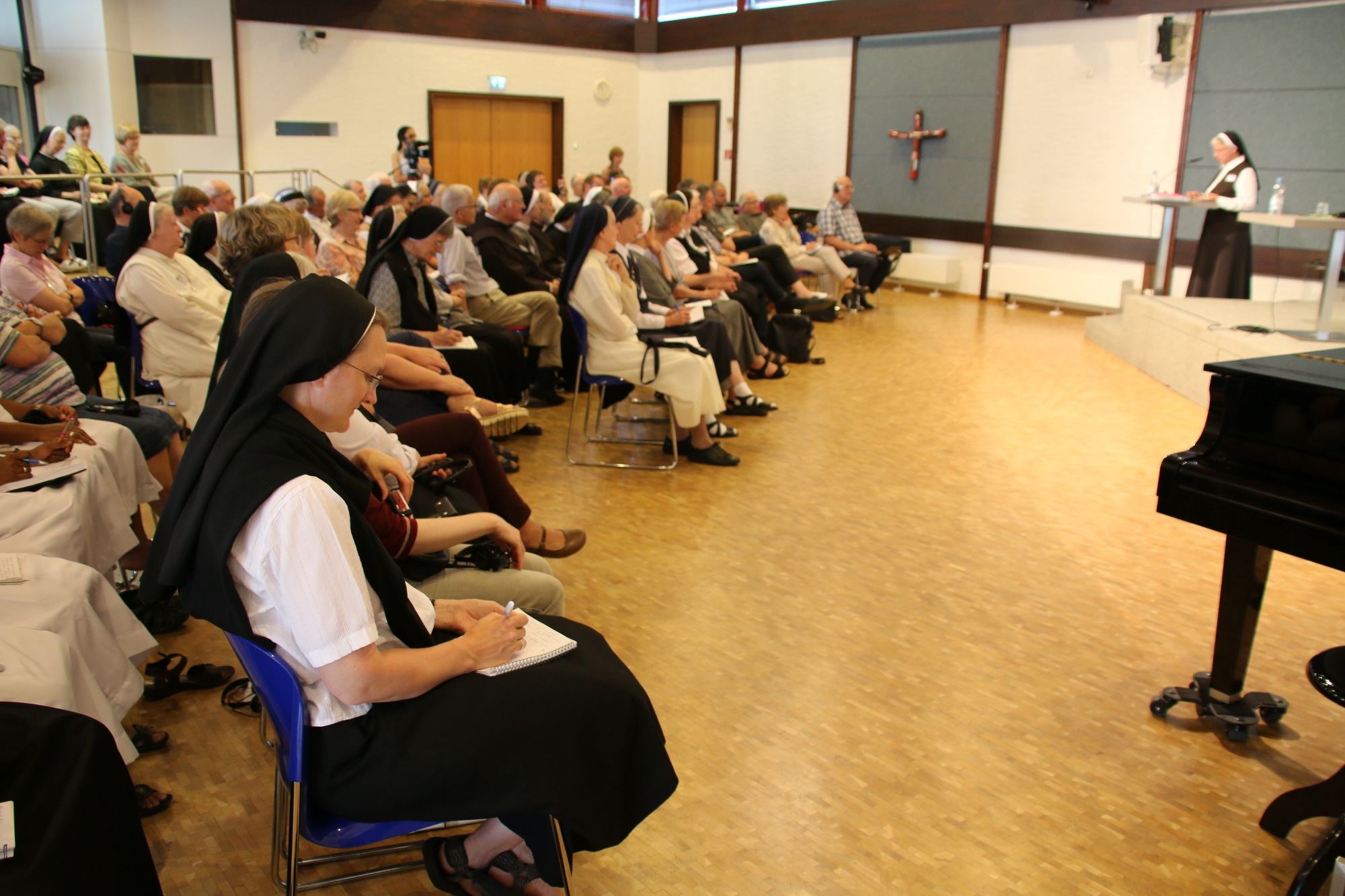
Photo: Ursula Haaf
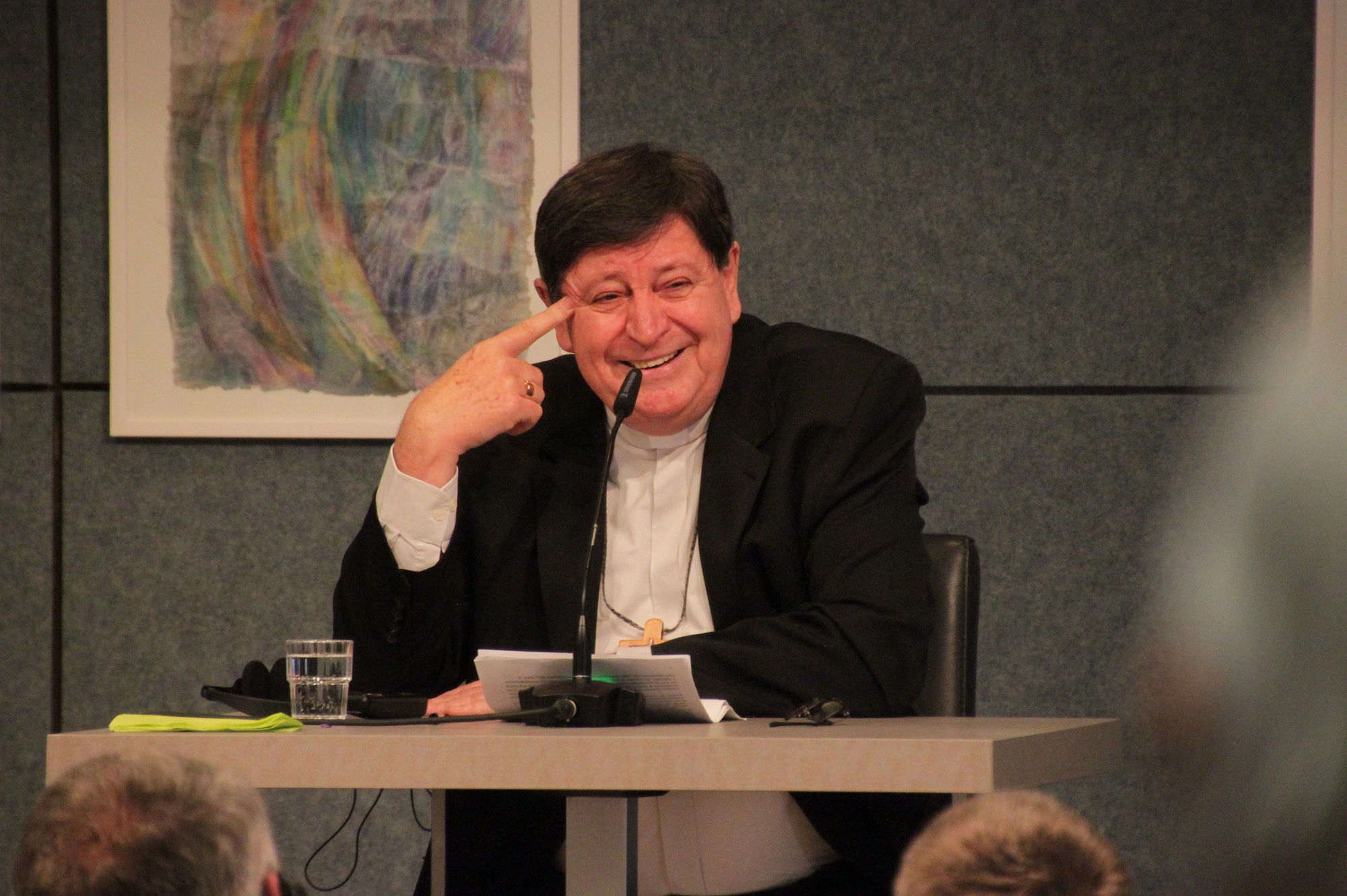
Photo: Maria Kny
Edited by Anna Lisa Innocenti
6 Sep 2019 | Non categorizzato
Two hundred young people from 67 countries representing all the various youth expressions of the Movement worldwide are gathering together for the first time in Rome: young people belonging to different Churches, some followers of different religions, from a wide variety of different cultures. All have been called together in order to draw up proposals and a shared vision for the next six years. “There’s a new thirst for something challenging and authentic among young people now. We’re very aware of the issues facing today’s world. And we realise that it’s too difficult to do anything about them on our own. We know how to link up with many other young people who want to be agents of change. And we can work together with the older generations too”. So speaks Nicholas, a 27-year-old Italian and Amanda, 29, from Brazil. Both are members of the commission preparing the Focolare Movement’s first international Youth Assembly, taking place at Castel Gandolfo, near Rome, Italy, 10th to 15th September 2019. The idea for this Assembly first emerged in 2017 and has developed since then through numerous pre-Assemblies of youth in various locations around the world. Why this Youth Assembly? “It’s because we feel that ‘we are’ the Focolare Movement. It’s part of us. Many young people had expressed the desire to meet together and talk about issues important to our generation. At the same time, Focolare members older than us were asking how we view the Movement and the specific contribution we as young people can make today to become ever more dedicated to the cause of a united world. We ourselves identified the main topics to be covered by the Assembly. We’ve researched dynamic engaging methods to enable the young people present to express themselves freely while sharing “an experience of God”. Who’s taking part? There will be 200 young people, representing all continents (67 countries): Youth for a United World, young members of the Parish and Diocesan Movements, Seminarians (known as ‘Gens’) belonging to the Focolare Movement and young religious and consecrated men and women in formation (known as ‘GenRe’). So this is an innovative development for the Focolare – to bring together in this Assembly representatives of all the different youth expressions within the Movement. To facilitate the spirit of collaboration, a preparatory commission was formed in November 2018, comprising 15 people from the different youth wings in various parts of the world, most being aged under 30, with just a few older people too. What will be discussed in the Assembly? We thought the best way to ascertain the thoughts and desires of our young people around the world was through a questionnaire. In the preparatory Commission we drew up 4 questions asking young people to describe two characteristics of someone identifying as a young Focolare member; to indicate 2 strong points and 2 things they would like to change in the Movement, giving reasons; to reflect on how to ensure the young people’s voice is heard within the Focolare Movement; to identify priorities for the forthcoming six years. No less than 7,300 responses came in! We felt the weight of responsibility as we collated all this input. From reading it all, we were able to produce a resource for the pre-assemblies around the world, which also nominated their own regional representatives. We then incorporated the feedback from these preliminary meetings into a working document for the main Assembly. It presents proposals, pointers and new perspectives on the international Assembly’s four central themes: formation and accompanying; going outwards; the identity of Focolare youth; the role of Focolare youth as protagonists. Now we’re all ready to be amazed and surprized by our Assembly! It will certainly provide a strong new impetus to go forward towards fulfilling Jesus’ dream: “That all may be one” (John 17:21), as we give our own contribution to the building up of a more united world.
Anna Lisa Innocenti
4 Sep 2019 | Non categorizzato
The Word of Life for this month, taken from St. Paul’s letter to the Thessalonians, says: “Comfort one another and be of help to one another” (1 Th 5:11). It is simple; we all can understand it and put it into practice, yet it can revolutionize our personal and social relationships. On the bus As I got on the bus to return to the city where I study, I realized that the lady sitting next to me was holding a child covered in skin sores. I felt like changing my place, but I tried to overcome my sense of repugnance. The journey was long; we started talking and I got to know that we were both going to the same place. The lady was going there to seek medical care for her child, but she had neither money nor a place where to stay. She had only the name of a contact person and a lot of hope. We arrived at our destination late at night. I felt I could not leave her alone, so I invited her to come with me and share some space in the room I shared with another student. When we arrived at my place I heard her greeting someone. It was the contact person she had to meet. (M.F. – Brazil) Reconciliation For several years, misunderstandings gradually increased and built a wall between us and some of our relatives. Explanations and attempts of reconciliation, even by others outside the family, proved futile. My husband and I knew that some of our relatives shared our same feelings, so one day we decided to start a chain of prayers to ask for God’s gift of reconciliation. We also involved some friends to pray with us. Yes! Through God’s grace we obtained what did not manage to obtain through so many other attempts during the years: in a few moving minutes both sides decided to bury the past and have a complete change heart. (Giovanna and Franco – Italy) Outside my four walls I was a young girl when together with some friends I rediscovered the meaning of the Gospel. Since then my days acquired a different flavour. Now that I am married and have children, I feel “settled”. I know that I have to renew my choice of God every moment to give him the first place in my life. The moments I share with my husband have become more precious and the daily chores for my children are more constructive. Shopping or listening to a neighbour are no longer a waste of time but opportunities of encounter. The desire for further constant commitment led me to get involved in scholastic organizations and community work in my neighbourhood. I try to be attentive to the needs of people around them, and being open to their needs does not allow me to be confined within my four walls. (Nuccia – Italy) Edited by Chiara Favotti
