27 Feb 2015 | Non categorizzato, Word of
While visiting the north of Galilee, in the villages around Caesarea Philippi, Jesus asked his disciples what they thought of him. Peter, speaking for them all, declared his belief that he was the Christ, the Messiah awaited for centuries. To avoid misunderstandings, Jesus explained how his mission should be understood. He would indeed free his people, but in an unexpected manner, paying in person. He would suffer greatly, be condemned, killed and, after three days, rise again. Peter did not accept this vision of the Messiah. As many others of his time, he imagined the Messiah to be someone who would act with power and strength, defeating the Romans and putting the nation of Israel in its proper place in the world. He reprimanded Jesus, who in turn said to Peter: ‘You are not thinking in God’s way, but as humans do’ (see Mk 8:31-33).
Jesus set off again, this time in the direction of Jerusalem, where he was to fulfil his destiny of death and resurrection. Now that his disciples knew he was going to his death, would they want to carry on following him? Jesus’ conditions are clear and demanding. He called the crowd and his disciples together and he said to them:
‘If any want to become my followers, let them deny themselves and take up their cross and follow me.’
They had been fascinated by him, the Master, when he walked by the lakeside, as they cast their nets to fish, or at the tax booth. Without hesitation they had left their boats, nets, booth, father, house, family to go running after him. They had seen him work miracles and had heard his words of wisdom. Until that moment they had followed him in a spirit of joy and enthusiasm.
Following Jesus, however, was something that required far more. Now what it meant to share fully in his life and destiny became clear: failure and hostility, even death, and what a death! It was the most painful, the most shameful of deaths; the one reserved for murders and the most vicious criminals. A death the Scriptures called ‘cursed’ (see Dt 21:23). Just mentioning the ‘cross’ caused terror. It was almost unspeakable. This is the first time the word appears in the Gospel. Who knows what impression it made on his listeners?
Now that Jesus had clearly affirmed his own identity, he could demonstrate with equal clarity the identity of someone who was his disciple. If the Master is one who loves his people to the point of dying for them, taking their cross upon himself, so too his disciple, to be such, must set aside his or her own way of thinking and share in the entire way of the Master, starting with the cross:
‘If any want to become my followers, let them deny themselves and take up their cross and follow me.’
Being Christian means being another Christ, to have ‘the same mind that was in Christ Jesus’ who ‘humbled himself and became obedient to the point of death—even death on a cross’ (Phil. 2:5,8), to be crucified with Christ, to the point of being able to say with Paul: ‘it is no longer I who live, but it is Christ who lives in me’ (Gal. 2:20), knowing nothing ‘except Jesus Christ, and him crucified’ (1 Cor. 2:2). It is Jesus who continues to live, die, rise again in us. This is the greatest desire and the ambition of the Christian, the thing that has created the great saints: being like the Master. But how can we follow Jesus and become like this?
The first step is to ‘deny yourself’, distance yourself from your own way of thinking. It was what Jesus asked of Peter when he reprimanded him for thinking in the manner of human beings and not God. We too, like Peter, wish at times to assert ourselves in an egotistical manner, or at least according to our own criteria. We look for easy and immediate success, with every difficulty smoothed away; we look with envy at those rising up the career ladder; we dream of having a united family and of building around us a caring society and a Christian community without our having to pay a high price.
Denying ourselves means entering into God’s way of thinking, which is how Jesus thought and is displayed in his way of doing things: the logic of the grain of wheat that must die to bear fruit, of finding more joy in giving than in receiving, of offering one’s life out of love, in a word, of taking up the cross:
‘If any want to become my followers, let them deny themselves and take up their cross and follow me.’
The cross, the ‘daily’ cross as Luke’s gospel calls it (Lk 9:23), can have a thousand faces: an illness, a job loss, the inability to sort out family or work problems, the sense of failure in being unable to create genuine relationships, the feeling of impotence before the world’s massive conflicts, indignation at the recurrent scandals of society… The cross does not need to be sought, it comes on its own, perhaps when we least expect it and in ways we would never have imagined.
Jesus invites us to ‘take it up’, not resigning ourselves to endure it as an evil we cannot avoid, not letting it come down on us and crush us, not even putting up with it by acting with stoicism and detachment. Instead welcome it as a sharing in his cross, as a possibility of being his disciples even in those situations and live in communion with him even in that suffering, because he first took our cross on his shoulders. In every suffering, whatever it may be, we can thus find Jesus who has already made it his own.
Igino Giordani saw in this an instance of role reversal with Simon of Cyrene who bore Jesus’ cross: the cross ‘weighs less if Jesus becomes our Cyrenian.’ And it weighs still less, he goes on to say, if we bear it together. ‘A cross borne by one person ends up as crushing; a cross borne together by several persons with Jesus in their midst, which is to say with Jesus taking it up as a Cyrenian, grows lighter: an easy yoke. A climb, with many climbers roped together, in agreement with one another, becomes a joy, even while the ascent is being made.’
So we are to take up the cross and bear it with him, knowing that we are not alone in carrying it because he bears it with us. This is relating, it is belonging to Jesus, even to the point of full communion with him, to the point of becoming another him. And this is the way that we follow Jesus and become true disciples. The cross will then become for us, as for Christ, ‘the power of God’ (1 Cor. 1:18), the way of resurrection. In every weakness we will find strength, in every darkness light, in every death life, because we will find Jesus.
Fabio Ciardi
27 Feb 2015 | Non categorizzato
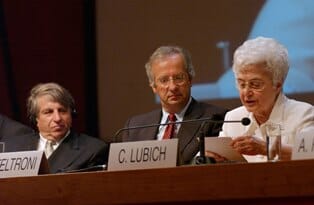
For Chiara Lubich politics was actually a vocation, “a personal calling that emerges from external circumstances and speaks through the conscience.” Answering to this vocation “is first and foremost an act of brotherhood: it acts in favour of something public, something concerning others, desiring the good of others as if it were one’s own.” Such an act, which creates the conditions for “an ongoing relationship with every sphere of life” – economy, health, communication, art, justice administration, and so on – sets the conditions so that society can fulfill its purpose.”
The global event will include a variety of local events across the globe, all of which will highlight the ideals of Chiara Lubich’s charism as it relates to politics, through stories of personal change and involvement in public affairs, raninge from addressing problems at the district, national and international levels. It will be an opportunity to welcome with renewed awareness the “dream” that inspired the life and thought of Chiara Lubich: “universal brotherhood.”
Italy. A meeting is scheduled on March 12, 2015 at the Parliament in Rome. In the morning, 300 young people of the Focolare from around the world will meet in the Auletta dei Gruppi of the Italian Parliament, for an open dialogue with politicians, scholars and representatives of international institutions. In the afternoon, the “Chiara Lubich: Unity and Politics” event will be held in the same Hall.
France. On March 13-15, 2015 at the Headquarters of the Council of Europe, in Strasbourg, a seminar titled: «Fraternité en politique: s’investir autrement dans la cité», an invitation to discover new paths that favour living together.
Canada. On March 13, 2015 a debate will be held at Glendon College of the York University of Toronto, titled: “Politics for Unity. Making a World of Difference.” Brazil. In Curitiba, the «Política pela unidade, fazendo toda a diferença no mundo» will explore how doing politics in function of unity, makes the difference. South Korea. On March 14, 2015, at the Parliament which in the past was a theatre of fierce fighting, “On the journey towards universal brotherhood.” Events will also be held in Nairobi, Kenya, Dar es Salaam, Tanzania, Madrid, Spain, Budapest Hungary, Prague, Czech Republic, and more. An online map of events and further information can be found at: www.politicsforunity.com. To join the online discussion the hashtag is: #politics4unity.
Reflection on the theme “Chiara Lubich: Unity and Politics” in the plurality of cultural and geographical areas will be an opportunity to further explore the heritage left to history by Chiara, whose Cause of Beatification was opened on January 27, 2015.
21 Feb 2015 | Non categorizzato
“Our daughter, after a painful delusion (her breaking off with her boyfriend), came to live with us with her baby girl. She is often bitter and aggressive. One morning, for a trifle matter she mistreated me and her brothers, and shouting, left for work, slamming the door. I was really hurt and I felt she had simply gone over the limit and that we really did not deserve all this. I asked myself how I could let her see that I loved her. I prepared a special feast-day lunch with a cake, and set the table with the nicest tablecloth… When she returned, I greeted her as if nothing had happened. She smiled and I felt that I had not only forgiven her, but also forgotten the event. Harmony was reestablished among us.”
(R. B. – Italy )
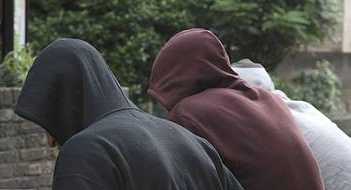
“Last Saturday, my parents and I were about to close our grocery shop when two hooded characters came inside and ordered us to open the safe. Dad thought it was the usual robbery at gunpoint with a toy gun, and asked them to leave. Instead, the gun fired a shot which wounded him, though not seriously. After the bandits escaped, in a split second I remembered the group of people who, in another part of Sicily help the youth in the high risk districts of their city. So with my friends, I decided to do something myself to stop some other kids from getting involved with gangsters. Though a bit hesitant, I started going to an area of the city having highly delinquent residents, and once I found out what the real problems were in that district, I talked to the local administrators and the families of some police officers who had been killed. We formed a group to testify to people, especially the youth, that a better and nonviolent world is possible. That Saturday has changed my life.”
(M. – Sicily, Italy )
“I was 12 when my parents separated. It was a painful thing, and particularly one detail did not leave me in peace: I could not forgive my dad for leaving us to form another family. Initially, when he would call, I didn’t even want to talk to him. Then one day, I asked Jesus for help, and found the courage to show him that I did not hold it against him. On father’s day I tried to show this concretely by preparing a gift. When he saw it, I saw that he was deeply moved. He then confided that apart from the rest, the most important things for him were his children. From that moment on, I felt I had opened my heart to him once more. Much later, knowing that he was lonely, I spontaneously started to talk to him about God who loves each one of us immensely. It assured him and he expressed the desire to know more about this topic. The experience with dad is helping me to see that we all make mistakes, but that each person must be given the chance to rise up again.”
(H. – Brazil)
12 Feb 2015 | Non categorizzato
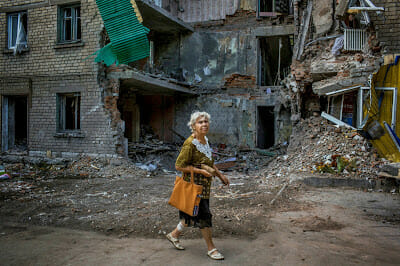
Father Mychayl is a Ukranian Greek Catholic priest from Kiev, who lives the Focolare spirituality. From the pages of Città Nuova magazine he helps us to follow the events that are taking place in his beloved and devastated country. A year after the outbreak of the conflict we asked him to give us his read on what has happened. “Nearly a year has gone by since the revolt on Maidan Square and up until now there have been 5000 deaths and over a million refugees. The war in Donbass has lasted for months. People are dying, the infrastructure is at the point of collapse, and hundreds of thousands of people are fleeing. Inside the patchwork of territories controlled by Ukrainians and by separatists, chaos of the gangs, the commanders who are at war with one another, the poorly-armed and even more poorly trained military may all have the side effect of becoming a war of everyone against everyone. According to Father Mychayl this is why now more than ever Ukraine needs an education on peace with everyone actively involved: young and old, teachers and children, parents and children: “A simple but engaging education on peace, based on the connection between theory and practice, values and experience. An education to affirm the culture of Peace, the only one able to respect and respond to everyone’s real and honest questions on the difficult road toward universal brotherhood in Ukraine.” When asked what steps would be necessary, he said: “Allow me to answer with something Chiara Lubich said in London in 2004: ‘(. . .) it would almost be necessary to propose to all those acting in politics to formulate a pact of brotherhood for their country, which places the good of the country well above any partial interest, be it individual, group, class or party. Because brotherhood offers surprising possibilities: it allows you to hold together and appreciate needs that might otherwise develop into irreconcilable conflict. For example, the experiences of local autonomies could be joined to a sense of common history; awareness of the importance of international bodies and of all the processes that tend to overcome barriers and allow important steps in the direction of unity in the human family.’” But the Ukraineian crisis has triggered the largest wave of refugees, since the Balkan wars: over 900,000 internally displaced persons. “It is no longer possible to live a normal life in the besieged city of Donetsk. The elderly – second-time witnesses of the horrors of war – are dying for lack of medical care, or have had to leave their homes. Many are not receiving the summer pension. In areas controlled by separatists there is everything in the shops and pharmacies, but no money. Banks and post offices have been shut down.” How can houses, roads and bridges be rebuilt, which are not only structural connections, but a means of healing invisible wounds? “It’s not an easy thing. Giving psychological help to the affected populations is less easy than building roads or sending humanitarian aid. For several years now Sophia University Institute in cooperation with Ukraine Iustitia et Pax, have been offering training courses that prepare young people to be contributing citizens for the common good of Ukraine.” “After the wave of protests and wars, the country is in need of these “Schools of involvement” that form students in civil and social involvement, rooted in the urban fabric; places where there is experience in political action founded on the values of sharing and nourished on the ideal of ‘universal brotherhood’. Thanks to the Maidan Square protests Ukraine has become a true nation, a people that wishes to build its life upon Christian values. Now it’s a matter of translating those values that were lived out during the protests at the square into the concrete facts in daily life; to take on the expectations and the deepest needs of the country so as not to fall into apathy definitively.” The schools of involvement do in fact provide interpretative models and operative proposals focused on spreading the culture of peace: “One of Ukraine’s principle challenges is the situation of internal immigrants, their integration in other regions of Ukraine, and the consequences of the hostility. The formation of flexible skills, therefore, to promote intercultural and interreligious dialogue, human rights, mediation, acceptance, mutual respect and reconciliation – these are the objectives we want to place at the centre of the pedagogy of the future.”
11 Feb 2015 | Non categorizzato
Source: Centro Chiara Lubich, Video (in Italian)
VIDEO TRANSCRIPTION IN ENGLISH
“If at the basis of laws or social projects we place a mentality lacking in respect for the suffering, the disabled and the elderly, then little by little we create a false society. We give importance only to a few values like physical well-being, strength, exaggerated productivity and power, while we distort the purpose for which a nation lives; that is, for the good of the human person and society.
Health, as we know, is a precious gift which should be protected. Thus we should do all we can so that our bodies and everyone else’s, too, receive nourishment and rest, and are not exposed to sicknesses, accidents or an exaggerated amount of sports.
The body is also important for a Christian. But if there is a loss of health, we must remember that there is a Life which is not conditioned by the state of our health, but by the supernatural love that burns in our hearts.
And it is this superior Life which gives value to our physical life even when we are sick. If we consider illnesses merely from a human point of view, we can only affirm that they are misfortunes. But, if we look at illnesses from a Christian point of view, we can see that they are trials in which we must train ourselves for the great trial which awaits all of us, when we will have to face the passage to the next Life.
Didn’t the Holy Father just recently say that illnesses are spiritual exercises, sermons that God Himself preaches to us? People who are sick have a richness that others do not have; a richness of another kind. In speaking of asceticism and mysticism, the Church refers to illnesses not only in reference to the field of medicine, but as purifications that God sends, therefore as small steps towards union with God.
In addition, our faith tells us that in sickness a person participates in the sufferings of Christ. In this light, the sick person is another Christ crucified who can offer his or her suffering for what is of most value, the eternal salvation of all people.
In the frenzy of work and daily life we are tempted at times to see people who suffer only as marginal cases to help so that they can quickly recover and return to their activities. It doesn’t occur to us that they are the ones who even now can do the most, who can contribute the most.
People who are ill can positively carry out their role on behalf of humanity only if they are understood and loved. Love can help them to give meaning to their condition and to be aware of what they represent. And what holds true for the sick, holds true also for the disabled. People with a disability need love. They need to be recognized for the value that their life has: it is sacred, as every other life is sacred, with all the consequent dignity. They need to be considered as persons and, as much as possible, live normal lives among other people.
What should we say about the elderly? Every life calls for love, and the elderly are no exception. Today even the elderly constitute a problem because of the increased number of people in this age category due to the higher average life expectancy.
Thus we are aware of a tendency in society to isolate the elderly, to consider them as a social burden because they are no longer productive. We speak of the elderly as a category apart, almost as if we were not speaking of human beings. Besides the inevitable physical decline they experience, the elderly can become discouraged considering themselves as useless.
We must give new hope to the elderly. Advanced age is nothing other than the third season of life. Life that is born, develops, and declines, these are nothing other than three aspects of the one mystery of all life which derives from God-Love.
In certain Asian and African countries, the elderly are highly respected because they possess wisdom. In fact, the elderly person emphasizes which is essential, what is most important.
We remember what was said about St. John the Evangelist. At the age of eighty, while visiting the Christian communities, he was asked about the message of Jesus. He always replied: “Love one another,” as if he had nothing more to add. With this phrase he had truly focused on the central thought of Christ.
To distance ourselves from the elderly is to deprive ourselves of a patrimony. We must value them by loving them. And we must value them even when they are sick and seriously ill, when there is no more hope humanly speaking, and their need for assistance is pressing.
Before God, there is no life, no part of life, that is not worthy of being lived.
Chiara Lubich
