1 Jul 2018 | Focolare Worldwide
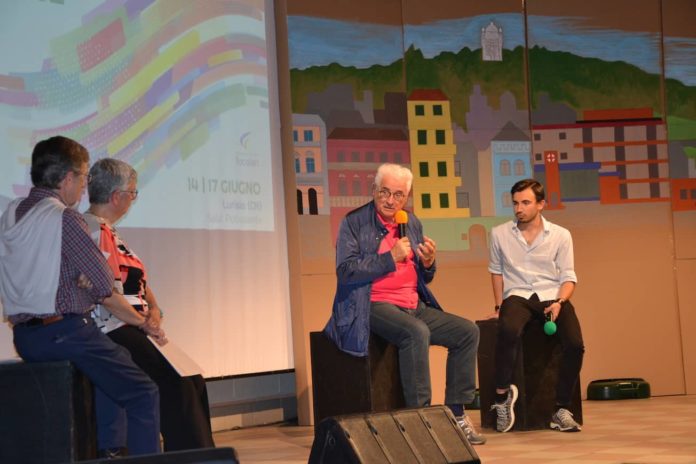
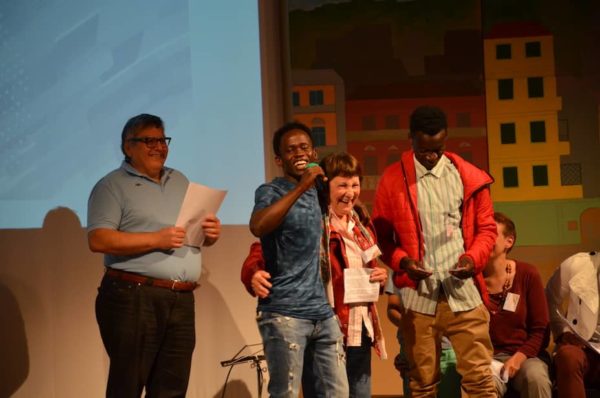 “Visions of light are always beneficial, especially in a world where lights are scarce.” These were the first comments I got from Anna, who declares to be a nonbeliever, at the door of the hall which hosted the first Mariapolis of Piedmont. “Visions of light” was the title of the three days lived by over 200 people of all ages and social classes, coming from different cities of this region. Light that breaks out from moments of spirituality and sharing, and which has enlightened the burning issues of today, such as Europe, immigration, Middle East, and end-of-life and palliative treatments, alternated with programs of relaxation and excursions to regenerate body and soul. And not only all that, against the dark background of public life and economic and political uncertainty, in a climate which makes brotherhood seem like a luxury only for a few, a vision of light also enlightened the life of Bra, a city with a very ancient history, but projected towards the future. Here fraternity elevated to a political category, has been for years written in the Charter of the city. And it did not remain a dead letter. Two adolescents, with the support of power point, demonstrated actively with a slogan, “Let’s colour” the city. There were many initiatives, like whitewashing the walls of the school or the ill-treated walls of the city, the gathering of cigarette butts from the ground, cleaning of weeds, and visits to the elderly in the nursing homes. The purpose was to leave a sign of love everywhere and spread to the others the happiness experienced when the revolution of the Gospel is put into action, following the example of one of the region’s honorary citizens, Chiara Lubich. “The initiatives of these kids,” underlined the Mayor, Bruna Sibille, “have contaminated those who are older, other communities like the Albanese one, workers of the construction sector, groups of the Orthodox faithful together with the head, a group of Romanians and other district realities. Next September– she announced – before school starts, we shall meet to continue working together.” One of the programmatic points at the base of her mandate, which is about to end, was to “boost social cohesion through the idea of the city to that of a city as an inclusive community.” She added: “The boys and girls have been a very important uniting factor towards this goal. This is how the basis is set to give an important sign of how to manage a city and educate the future generations of administrators, in a moment in which there are many negative examples. If one takes care of one’s own city and the common good – she concluded – we will have a safer city and can overcome many evils, which are not always real but virtual, and even more difficult to overcome.”
Carla Cotignoli
29 Jun 2018 | Non categorizzato
28 Jun 2018 | Focolare Worldwide
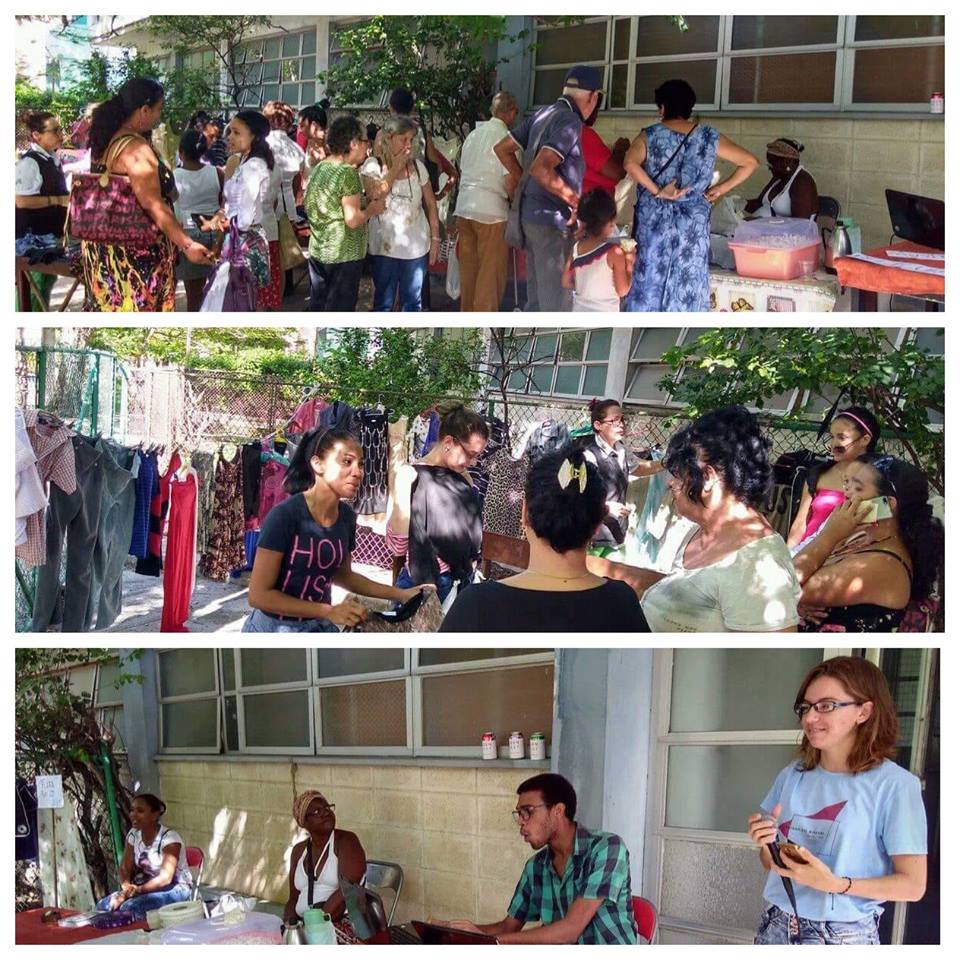 One week before the Genfest, from June 28th to July 5th, more than 400 young people will participate in the Pre-Genfest, a series of social activities in 20 different locations in Southeast Asia. The Pre-Genfest is a laboratory of social work for youth who want to have an experience of intercultural exchange and contribute to social change. Participants will have the opportunity to roll up their sleeves to work in marginalized neighborhoods, social centers, and to participate in ecological and environmental activities. The Pre-Genfest will also provide opportunities to go beyond social borders by visiting orphanages, prisons, and to interact with people from other cultures and religions. Young people will be immersed in the various social and cultural situations of the cities where the Pre-Genfest will take place. “The purpose of the Pre-Genfest is to offer to the youth, who are coming to the Genfest in Manila, the opportunity to have an experience —in miniature— of universal brotherhood. It also aims to open their hearts to the social realities that other people are living in different areas, perhaps kilometers away from their homes,” explains Romè Vital one of the coordinators of this endeavor. Each location will have a different flavor. “We want to give the possibility, for those who are interested, to know more about the cultural diversity of our people in Asia,” says Vital. Some people will be exposed to the peripheries of fast pace city-life of megalopolis such as Hong Kong and Seoul, and others will visit rural areas in Masbate, or Pangasinan in the Philippines. Some will experience first-hand interreligious dialogue in cities such as Chiang Mai, Thailand; Medan, Indonesia; and Yangon, Myanmar, and others will participate in ecological activities such as helping harvesting rice in Hanoi, Vietnam; or cleaning up some beaches of Palawan, Philippines, a well-known tourist destination. A socio-cultural walkthrough in history is also part of the program in many locations. In Seoul, Korea, for example, participants will learn the background of the events that brought to the division of North and South Korea, and experts will conduct workshops to learn how building peace in different locations has repercussions all over the world. Interreligious dialogue will be also part of the program. In Coimbatore, India, participants will be offered an intercultural and interfaith social experience guided by Gandhi’s motto “be the change you want to see,” In Taipei, Taiwan, the youth will interact with indigenous inhabitants of the island, and in Aklan, Philippines, participants will go beyond social borders of race and ethnicity through an immersion with the community of Atis (Aetas) – an ethnic tribe that is believed to be the original settlers of the island of Boracay. Other locations include Mumbai, India; Ho Chi Min, Vietnam; Bangkok, Thailand; and different cities in the Philippines such as Baguio, Cebu, Dumaguete, La Union, and Tacloban. The collaboration with organizations such as Bukas Palad, and Façenda da Esperanza in the Philippines, and the Shanti Ashram in India, among others, was fundamental in the preparation of the Pre-Genfest. According to Vital, the Pre-Genfest will have an indelible impact in the life of the youth who will participate as they realize that building a united world starts with concrete actions. In fact, Pope Francis —during his visit to Loppiano on May 10th, 2018— pointed out the importance of training “oneself to use the three languages together: of the mind, of the heart and of the hands,” which is a fundamental element in the formation of new generations. He also invited the Focolare Movement to be “in service to all, with the gaze that embraces all of humanity, beginning with those who in whatever way are relegated to the peripheries of existence.” By the time the Pre-Genfest participants will arrive in Manila for the Genfest, they would have experienced in a small scale what universal brotherhood means and how to build a united world with their own hands. This experience will surely contribute as a leaven to make the Genfest an expression of the united world we want to build together. Vital encourages to participate in the Pre-Genfest “with an open heart,” in that way this experience will be an “experience of God” as Chiara Lubich defined the Genfest. María Clara Ramírez
Watch video
27 Jun 2018 | Non categorizzato
 Defending borders, enforcing rejection, alliances between states to protect national identities and economies, restrictions to control migratory flows. What is behind these key-words? “Very often building some sort of fence or having an attitude of safe keeping stems from fear” – explains Maria Voce, president of the Focolari. “Yet, this does not seem to be the definite solution for young people. Instead they believe that borders are horizons, points of departure, an enriching diversity”. This is why the Focolari Youth have opted for the important theme of borders – hence the title “Beyond all borders” – for their next world event that will be held in Manila from 6 to 8 July. . They want to invite for a brave change of outlook on peoples, cultures and economies. They claim that a radical change is needed in such times of exasperation of particularisms and social closures. Born in 1973 from an idea of Chiara Lubich, founder of the Focolari, the Genfest arrives at its eleventh edition; for the first time it will be held outside Europe. It will take place in the capital city of the Philippines from 6 to 8 July and 6,000 young people, aged 18 to 30 years, are expected to attend. Thousands of others will participate in the other 23 local editions that are being prepared. “We chose Asia because six out every ten young people in the world live there” – says Kiara Lauren, a Filipina,who is one of the Youth for a United World, promoters of the event. “Despite its socio-economic problems and differnces, this continent speaks to the world about hope and desire for change. We do not recognize ourselves in this international geo-political context that quite often sacrifices whole peoples for the sake of some élite. We would like individuals and our nations to look beyond their personal, cultural, religious and political boundaries, to meet others and let themselves be contaminated by diversity.The Genfest will be a unique laboratory in the world: those who will take part in it will find the necessary instruments to change themselves and their environment. As Pope Francis augured during his recent visit to Loppiano, they will be able to change “I” into “we”.
  The programme: sharing and working A lot of space will be given to exp eriences: the joint effort of young Americans and Mexicans on the border between their two countries; gestures of help and reconciliation in situations of conflict in Africa and the Middle East; supporting and welcoming people that live in refugee camps; commitment to a new way of doing politics, dialogue between different religions, etc. On July 7, in the afternoon, the Genfest is proposing the activity: Hands forHumanity. Those present will be able to partcipate in any one of 12 activities of solidarity and urban redevelopment that will be organized in different parts of Manila. Through these activities one can find out that small gestures can bring change and also have the opportunity to collect imitable ideas that can be exported to one’s own country.
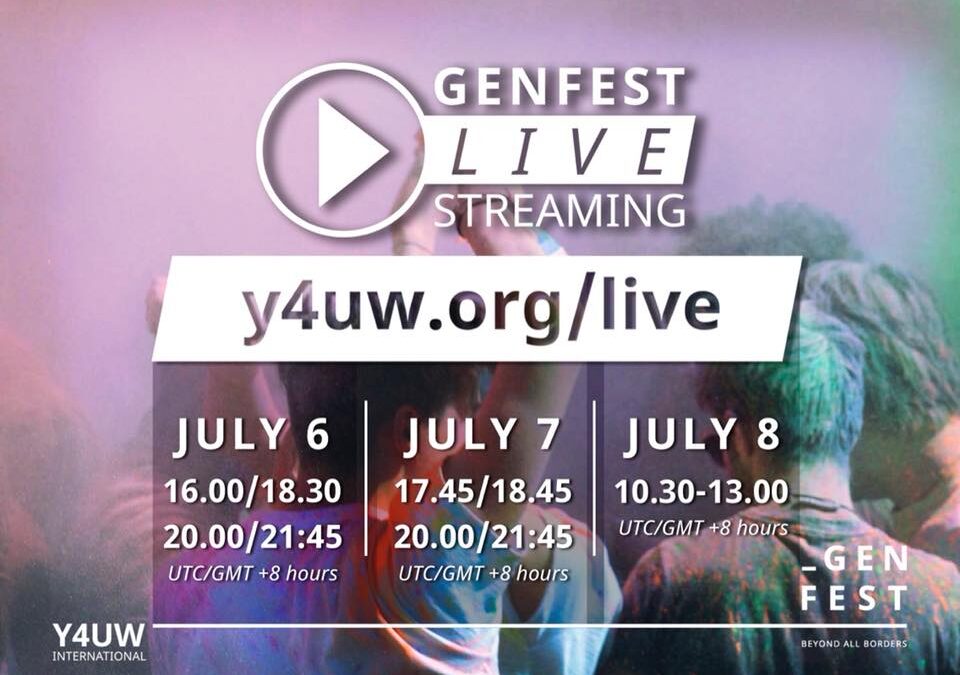
 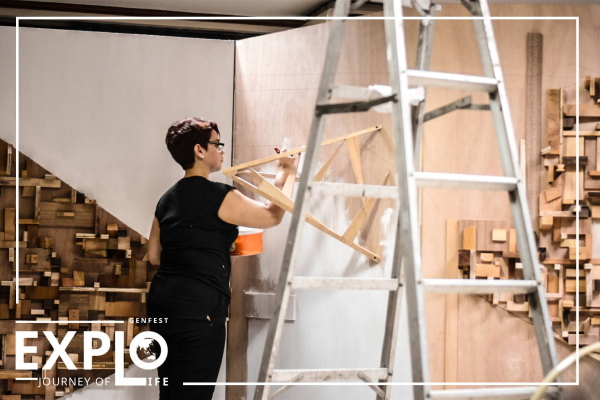 Explo and Forum: learn and experience peace Then, there is the Explo, an acronym composed by the words “Exposition” and Exploration”: this is an interactive exhibition that leads the visitor through an immersive sensorial experience of the history of humanity, from the perspective of universal fraternity: “So it is not the history we know” – says Erika Ivacson, a Hungarian artist, curator of the exhibition – “made of wars, conquests, armistices. Instead, we will relate what has made humanity progress from the point of view of peace, of friendship between individuals, peoples and cultures. The last stage will be entirely dedicated to the question: and what can I do? “. There will be 110 forums and workshops on key issues about the construction of open and supportive societies: from urban cleaning techniques and care of the territory, to social enterprise forms, to the management of personal and political conflicts, to the use of social media for peace, and much more. Follow the Genfest It will be possible to follow the live streaming, broadcast in English with translations in French, Italian, Portuguese and Spanish through the Youth for a United World website: http://www.y4uw.org/live Timetable live streaming (Manila time, UTC/GMT +8 ore): 6 July: 16-18:30 e 20-21:45 7 July: 17:45-18:45 e 20-21:45 8 July: 10:30-13 Social media regarding the event: Facebook: www.facebook.com/genfest/ o @genfest Twitter: https://twitter.com/genfest_en o @genfest_en Instagram: www.instagram.com/genfest.official/ Youtube: genfest-official or https://www.youtube.com/c/GenfestOfficial Genfest Programme Press Office Stefania Tanesini Cell. +63 9664661016 Whatsapp +39 338 5658244 stefania.tanesini@focolare.org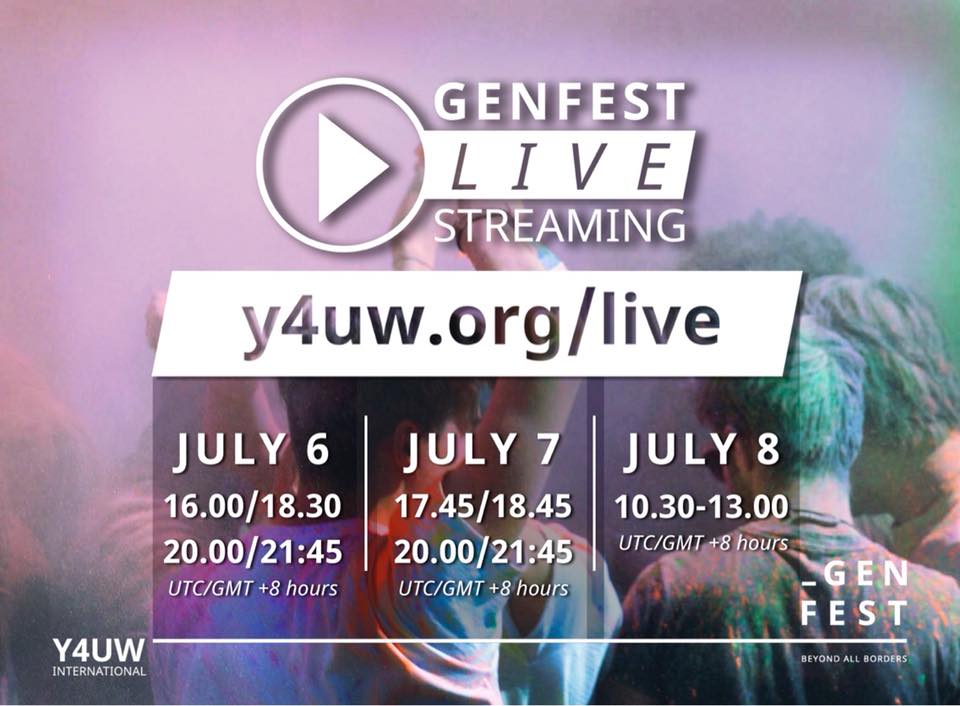
26 Jun 2018 | Non categorizzato
Meeting Jesus Since I becoming mayor of our town I cannot walk along the street without someone stopping me to discuss an issue or just to greet me. Even when I’m in church, I find it difficult to be alone with Jesus. So one Sunday I went to Mass in a nearby town, hoping not to be recognized. When I got there, I found the church was packed with people attending a special liturgy celebrated by the bishop. I saw a woman sitting outside the church and I gave her some money. A little further on, there was another person begging, a man with a badly disfigured face. I walked passed him. But then it was as if I heard a voice inside me saying: “You came here because you wanted to meet Me. Here I am, in this poor woman and in this man who is suffering”. I turned back. The man was still there, happy that I had come back to find him. G. – Italy Superstition I got into a taxi and noticed that the car was full of “charms”, indicating the superstitious beliefs of the driver. As we drove along, I took courage and said, “You know, I believe in God, and I place all my trust in Him alone”. He listened to my words in silence. A few weeks later, I called for a taxi again and to my surprise I discovered it was the same driver in the same car. With even greater surprise I noticed that all the charms had disappeared, and a set of rosary beads was hanging from the rear-view mirror! N. -Switzerland Teamwork Three of us – a nurse, a laboratory technician and a doctor – work in the same hospital, in different departments. We believe that living the Gospel can not only transform people individually but can also renew whole environments, work places and social structures. Motivated by this belief, we try to meet together before work every morning, even just for a moment to share our challenges, efforts and joys. We keep on discovering how our commitment to love everyone can be practically employed in our workplace in the exercise of our professional duties every day. E., L. and B. – Italy Money under the pillow I was walking out of church with my son when a woman came up and asked us for money. I opened my wallet and gave her what I found there, 20 Euro. My son was astounded and told me I had given her too much. But I reassured him that Jesus is present in each poor person and I felt it was right to give her all I had with me. When we got home I started to tidy up a room we had offered to guests who had just left, a couple from another city visiting a sick relative. My son came to help me. As he lifted up the pillow, we found 200 Euro lying there! We had freely offered these people the means to be able to stay close to a loved one who was suffering, and they had decided to respond in this way. M.G. – Italy The ice-hockey match I am a real fan of ice-hockey. One day I couldn’t wait for school to finish so I could rush home to watch a big match on television. As soon as the final bell rang, I sped away on my moped. But I had only gone a few meters when I realized I had a flat tyre. As fast as possible I tried to pump it up, but after another hundred meters it had gone down again. Then to cap it all, it started to rain. I could feel my temper getting worse with every step as I pushed my moped along the road. Then suddenly a thought came into my head: Jesus suffered so greatly on the cross, are you not able to accept this small inconvenience? And with that, I found peace within myself once more. G. – Holland
