24 Jun 2018 | Focolare Worldwide
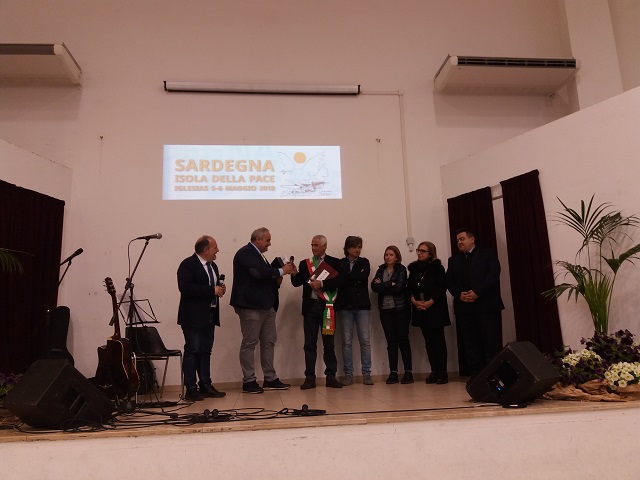
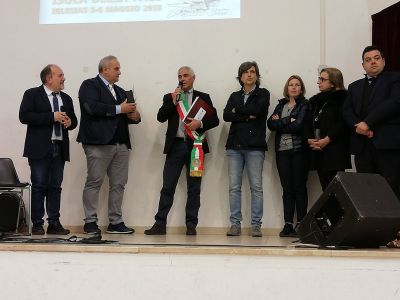
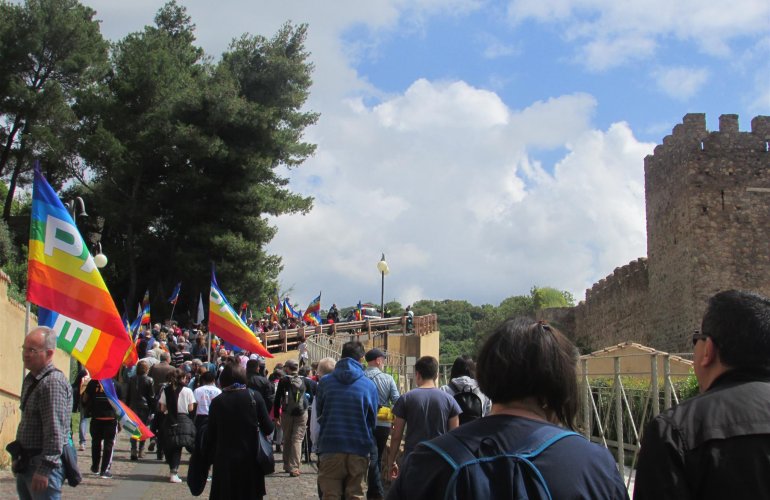 Sulcis-Iglesiente is an historical region of Sardinia, characterized not only by its impressive natural beauty, but also for the story of the mine workers: a human, spiritual, cultural and environmental patrimony. It is a unique jewel in the world, which has not yet expressed its full potential, also from the economical point of view. On March 3, 2017, a conference on disarmament was held in Calgriari organized by the Domenico Mangano Scuola di Partecipazione Politica. Several residents from Sulcis-Iglesiente were directly involved, since the headquarters of the RWM Italia is controlled by the Rheinmetall bomb factory, which sells bombs to Saudi Arabia and utilized for the war in Yemen. When this became known, a committee was formed one year ago, joining the forces for a common objective: reconverting the military factory into a civilian operation. This is the Comitato riconversione RWM for peace, a sustainable project, the reconversion of a war industry, disamament, public sharing in the reconversion process and the protection of the natural environmental and social patrimony of Sulcis-Iglesiente.”
  Cinzia Guaita from the Focolare Movement is one of the promoters of the project. She reports: “The work of the committee is not easy, because Sulcis-Iglesiante is a region where jobs are scarce and, the jobs that do exist are defended with pitchforks and shovels. It isn’t easy to insert a process that would bring about a change in thinking and doing things differently, which might turn out to be more risky.” “We’re a very close-knit and diverse network. Before, nobody talked about it. Now, the ethical, environmental and legal questions are widespread. There has been one cultural result, although it is a long-term process.” Where can the greatest change be seen? “Let’s take the topic of work: before, we coudn’t discuss it; whereas, now, along with work there are other topics like peace, justice – and that’s no small matter for such a poor region as ours.” You talk about confronting, but you all stress dialogue… “That’s true, we’re dialoging and we do that with everyone, because this is a problem that regards everyone and it can be resolved by looking at the problem from different points of view. Let me give you an example: We opened a table for a technical discussion with experts, to study a reconversion plan. There were technicians, university experts and others like Banca Etica, Protestant Church: The committee is a sort of laboratory, non-conclusive, the beginning of a concrete process.” How is the RWM factory seen in the territory? “The factory has been inserted with a lot of benevolence in the local social dynamic, although it violates a national law that forbids the sale of arms to countries at war, or that doesn’t respect human rights; but it also provides for the possiblity receiving funds for the reconversion of factories that produce arms. So, the possiblities are there. Reconversion doesn’t mean taking a leap in the dark; it’s a shared growing process and an improvement in the life of everyone. What role has the press played in all this? “A very decisive role I would say, and we ourselves are amazed that the international press has shown interest. German television is watching us and has reported in Germany what is happening here. There is much silence about the wars, such as the wars in Yemen. Turning the spotlight on those conflicts has brought the problems of such places to the attention of the world. If we want to build peace, we can’t close our eyes. Everyone is needed if we want small local efforts to be broadcasted more widely. This is what loving a local territory means. It may be risky, but it’s worth the risk when it comes to peace.” Source: United World Project
22 Jun 2018 | Non categorizzato
http://vimeo.com/69074558 «The secret of true love is this, the secret lies in this: that the love we speak of is what is truly understood by the Gospel. The Gospel is the good news that Christ brought on earth, so it’s a love as it is conceived in God, not on earth. It’s a love that we see being lived by the persons of the Most Holy Trinity. For example, the Father loves everyone and lets the rain fall and makes the sun rise on the good and on the bad, he loves everyone. So it’s a love that puts us in the disposition to love all our brothers and sisters, so not only our relatives, friends or the ones we like, but we have to love everyone. Therefore, during the day, in order to love them, we have to single out every person we meet. A second requirement of this love, which does not exist on earth precisely because it comes from Heaven, is that we must be the first to love and not wait to be loved. Generally, one waits to be loved in order to love. Instead it must be like this: we must be the first to love and this is shown by Jesus, the second divine Person who became man, who died for us when we were yet sinners, which means that we certainly were not loving then. It’s a tangible love, like that of Jesus, who gave his life. It’s not a sentimental, platonic love, but one that becomes real. It’s a love that “makes itself one” with the other, with those who suffer and those who rejoice, and participate in the suffering and helps those who suffer or participates in the joy. If this love is practiced in the world, and the Movement lives it, … it’s the secret of the Movement. The Movement has lived it in all the nations of the world. Generally it has been reciprocated because people feel loved and get along well with us. So they ask us, “But why?” And we explain why we love. So a dialogue between us and others begins, and they are not all Christians, not all Catholic, but many times belonging to other religions, even non-believers. But even non-believers, in their DNA, have the idea of loving and the strength to love because they are created by God who is Love. This is something about love». Chiara Lubich Translation of an interview given by Erik Hendriks, Sylvester Production, May 24, 2004, for Belgian TV. www.centrochiaralubich.org
21 Jun 2018 | Non categorizzato
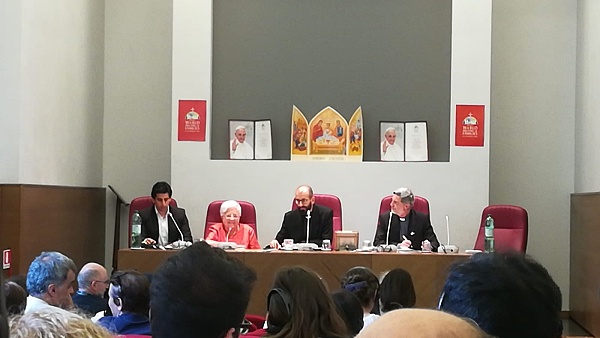 Organized by the Catholic Church’s Dicastery for Laity, Family and Life, the meeting coincided with the publication of the “Instrumentum laboris” of the next Synod of Catholic Bishops in October, which is dedicated to youth. This thought-provoking document includes the input of young people from around the world.. Kevin Farrell, the Dicastery’s Cardinal Prefect introduced the meeting. Msgr Carlos Simón Vázquez, delegate for the Family and Life section presented the latest developments concerning the IX World Meeting of Families which will be celebrated in Dublin from 21 to 26 August. Fr Alexandre Awi Mello, the Dicastery’s Secretary reported on the preparations for next October’s Synod of Bishops. Giovanna Guerrieri Nalin, of the Youth Office spoke about the next World Youth Day, scheduled to be held in Panama in January 2019. In the afternoon, the General Secretary of the Synod of Bishops, Cardinal Lorenzo Baldisseri, presented the aims, the expectations, and the prospects of the upcoming Synod.
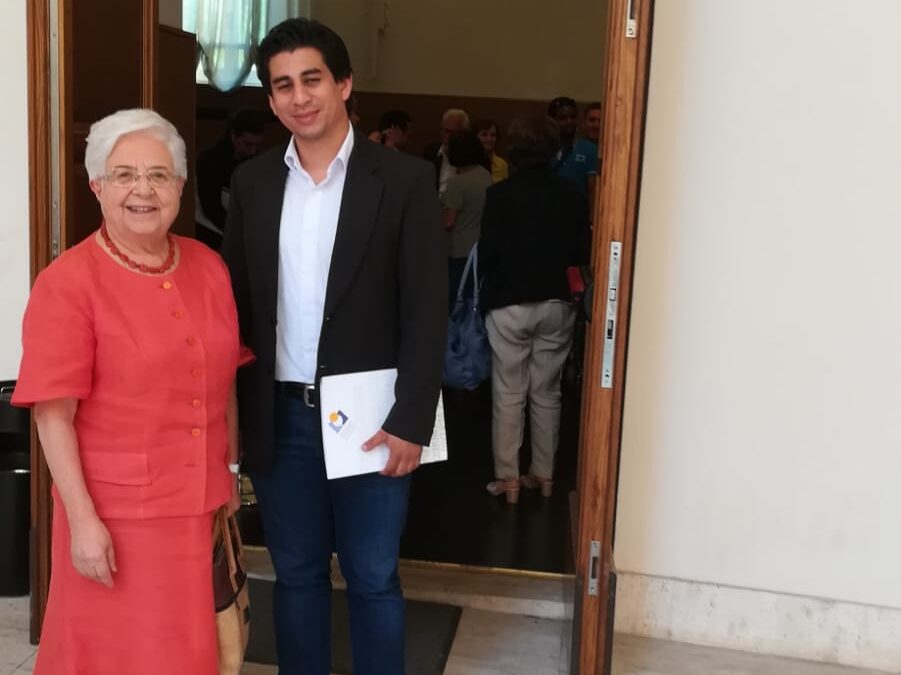
 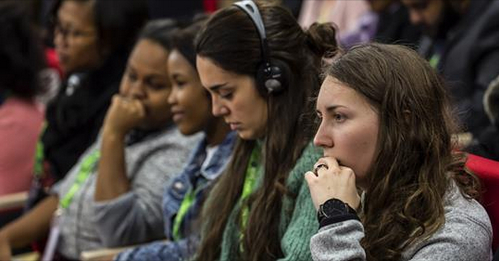 The contribution of the Focolare Movement The Focolare Movement was among the participants, represented by a young person from Salvador, Nelson Vanegas and Focolare President Maria Voce, who reflected on how “apostolic initiatives directed towards young people in the areas of announcing the faith and of vocation, can be rooted in the characteristic experience born from the charism of unity”. Back in the 1960s young people turned to Chiara as she called for a new type of revolution, inspired by Gospel love (“Youth of the world unite!”). This has led to the development of new ways and centres of formation and witness, shaped together with the young people themselves. These cover areas such as the gift that the young and older can be for one another, the link between life and thought, the living out of fraternity to respond to the challenges and problems of today’s world.
 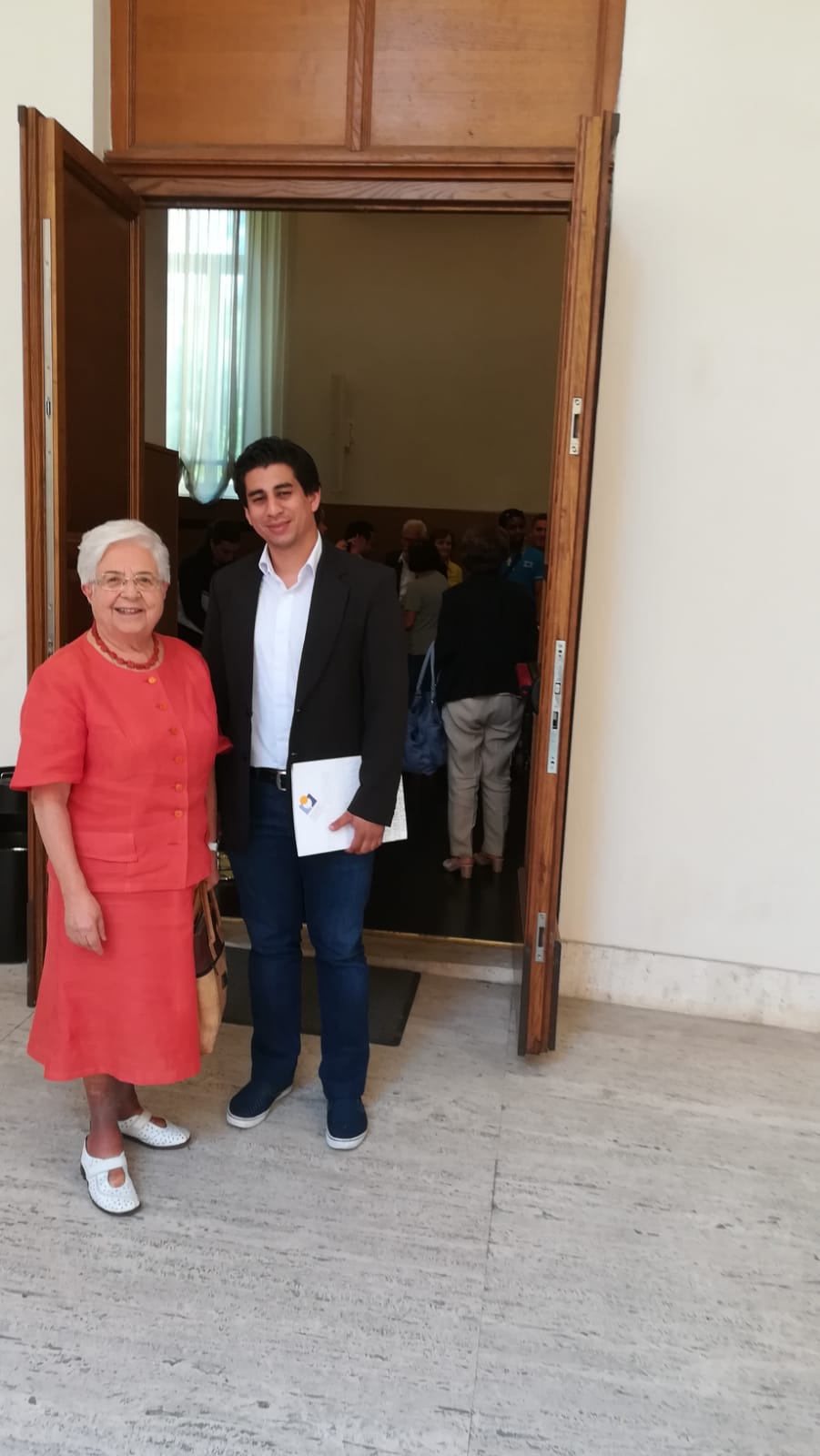 Nelson had participated in the presynodal meeting in March. He presented the Focolare’s youth-focused activity. “In annual summer schools of formation for young people, we cover theological and moral formation. This involves a style of accompanying the young which is in tune with Pope Francis’ suggestions. Schools of vocational discernment offer a real pathway for young people aged between 23 and 30 years, a crucial age, to face up to making definitive choices for their personal life plan”. There are also opportunities for young people to experience the link between life and study. He explained how “the University Institute of Sophia, based in Loppiano (near Florence, Italy), aims to enable the interaction of areas of knowledge through an academic project centred on the experience of a studying community. Research, ideas and life are shared not only between students from different countries and backgrounds, but also between students and academics”. Other opportunities for youth formation are offered in national and international congresses and “schools” for the Gen (the young generations of the Focolare Movement). Finally, Nelson announced the Genfest. “It is a formative experience, based on a widespread ongoing commitment to inclusion, welcoming and listening to others, which leads to true dialogue and to the construction of deep relationships. A Genfest is above all a profound spiritual experience, through which in past years, many young people have heard or reheard the call of God, to live for something great, to fulfill the last prayer and dream of Jesus”. The next Genfest is almost here: in Manila, the Philippines, 6-8 July, with the title “Beyond all borders”.
21 Jun 2018 | Focolare Worldwide
Pope Francis has embarked on an ecumenical pilgrimage which is taking place today at the Ecumenical Centre in Geneva (Switzerland), on the occasion of the 70th anniversary of the foundation of the World Council of Churches (WCC). The theme of the celebration: “Walking, praying and working together”. The WCC is the largest and most inclusive body among the various ecumenical organizations. Founded in Amsterdam, in the Netherlands, in 1948, it currently comprises about 350 churches in 110 countries around the world and represents about 500 million Christians. Based in Geneva, it includes most of the Orthodox churches, numerous historical Protestant churches (Anglican, Baptist, Lutheran, Methodist, the Reformed Church) and several independent churches. The Catholic Church is not a member of WCC, but Catholic theologians work in important commissions as fully fledged members. Among the scheduled appointments include the common prayer and the afternoon meeting in the presence of the Reverend Olav Fykse Tveit and Mr Agnes Abuom, respectively Secretary General and Moderator of WCC. In conclusion there will be a significant greeting to the eight members of North Korea and South Korea.
20 Jun 2018 | Focolare Worldwide
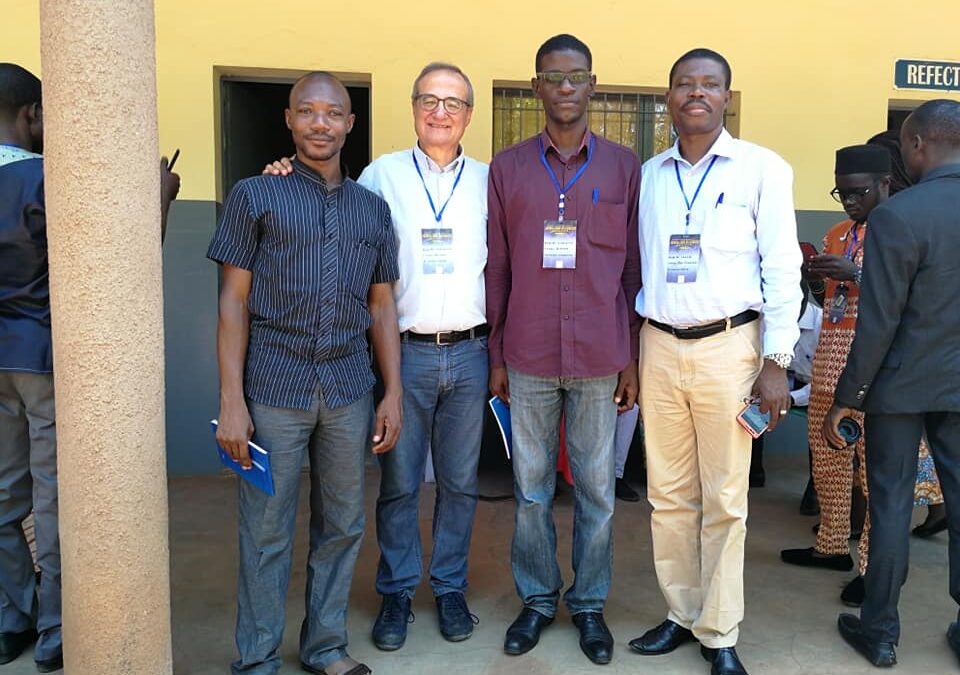
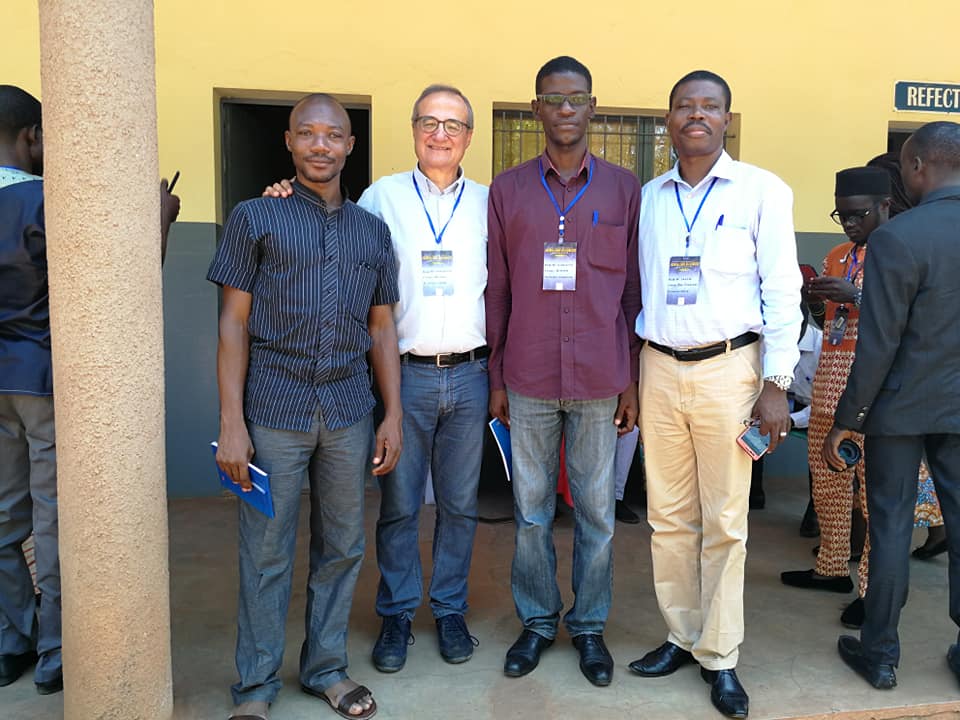 A seminar on the Journalism of Dialogue took place in Bodo-Dioulasso in Burkina Faso from 9 to 13 June. Michele Zanzucchi from Italy, Guy Roland from Benin, Armand Djoualeu from Cameroon plus many Christian and Muslim professionals and students from Niger, Mali, Ivory Coast, Benin and Burkina Faso participated. The aim of the seminar was to equip journalists with the skills of dialogue whereby respect and responsibility is shown towards each person. The seminar opened with a round table on the “journalism of migration” which was attended by representatives from the government and from the Catholic church. One of the proposals emerging from this was the desire to form a regional network of journalists who can correctly form and inform the public about migration, especially migration to Europe.
