21 Jun 2018 | Focolare Worldwide
Pope Francis has embarked on an ecumenical pilgrimage which is taking place today at the Ecumenical Centre in Geneva (Switzerland), on the occasion of the 70th anniversary of the foundation of the World Council of Churches (WCC). The theme of the celebration: “Walking, praying and working together”. The WCC is the largest and most inclusive body among the various ecumenical organizations. Founded in Amsterdam, in the Netherlands, in 1948, it currently comprises about 350 churches in 110 countries around the world and represents about 500 million Christians. Based in Geneva, it includes most of the Orthodox churches, numerous historical Protestant churches (Anglican, Baptist, Lutheran, Methodist, the Reformed Church) and several independent churches. The Catholic Church is not a member of WCC, but Catholic theologians work in important commissions as fully fledged members. Among the scheduled appointments include the common prayer and the afternoon meeting in the presence of the Reverend Olav Fykse Tveit and Mr Agnes Abuom, respectively Secretary General and Moderator of WCC. In conclusion there will be a significant greeting to the eight members of North Korea and South Korea.
20 Jun 2018 | Focolare Worldwide
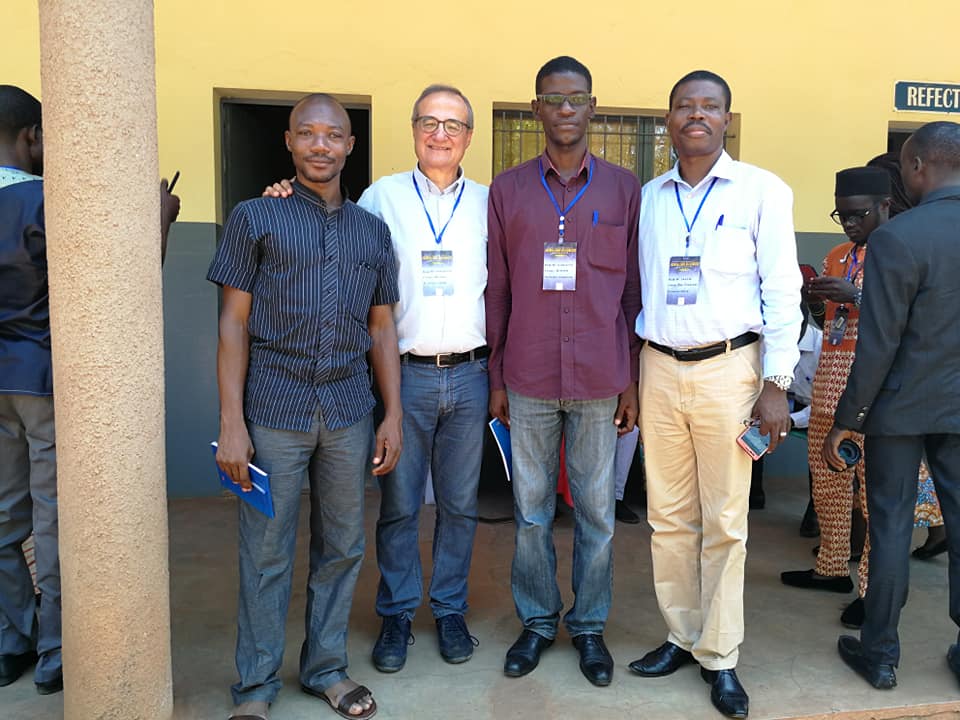 A seminar on the Journalism of Dialogue took place in Bodo-Dioulasso in Burkina Faso from 9 to 13 June. Michele Zanzucchi from Italy, Guy Roland from Benin, Armand Djoualeu from Cameroon plus many Christian and Muslim professionals and students from Niger, Mali, Ivory Coast, Benin and Burkina Faso participated. The aim of the seminar was to equip journalists with the skills of dialogue whereby respect and responsibility is shown towards each person. The seminar opened with a round table on the “journalism of migration” which was attended by representatives from the government and from the Catholic church. One of the proposals emerging from this was the desire to form a regional network of journalists who can correctly form and inform the public about migration, especially migration to Europe.
20 Jun 2018 | Focolare Worldwide
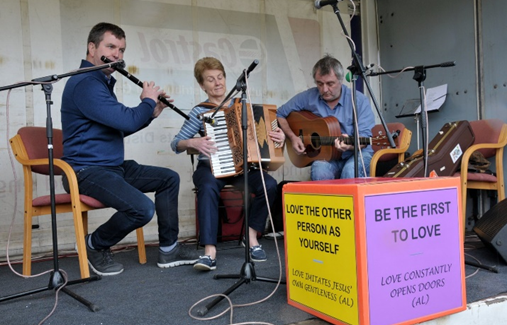
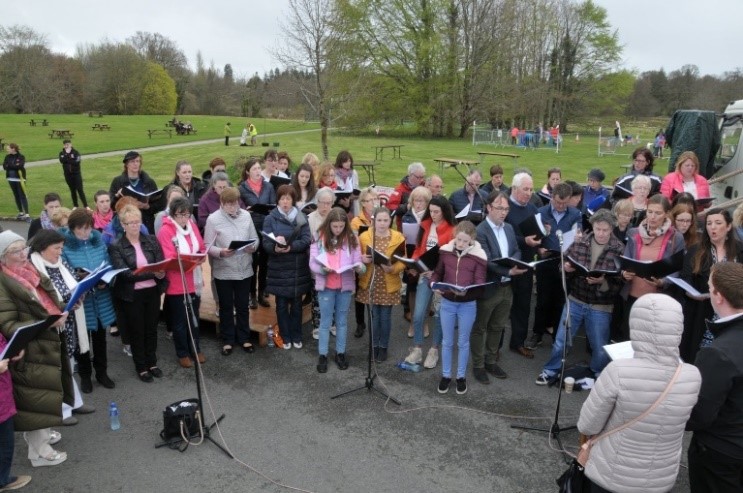 Lough Key Forest Park is close to 2,000 acres of silence, natural paths, majestic cedars and a lake on the south coast oif Lough Key, 25 miles southwest of Sligo Town and 2 miles east of Boyle. This was the setting for a day for families organized by the Diocese of Elphin at the end of April. In collaboration with Bishop Kevin Doran, one of the promoters for the event was the Focolare Movement. “All are invited to an atmosphere full of play, sharing and friendship,” the bishop had said, “including families of other religious denominations, neighbors and friends.” The goal was to prepare for the main event with Pope Francis in the Irish capital, which will bring together families from all over the world at the end of August. The theme will be “The Gospel of the Family: Joy for the World.” Every three years, this international event puts the focus once again on Christian families, as cornerstones of society. Following the opening on August 21, which will be held simultaneously in all the Irish dioceses, there will be an international conference in Dublin for three days (22–24), featuring experts from various parts of the world, experiences, workshops and activities for children and teens. With the Holy Father’s arrival on August 25, there will be an immense festival for families, a chance to hear music and experiences from the continents, as well as, naturally, long-awaited words from the pope. Pope Francis will celebrate a solemn Eucharistic service on the 26th at Phoenix Park in Dublin, which will close the event. “We aren’t many in this part of Ireland,” the Focolare community writes, “but we wanted to respond to the bishop’s invitation.” For a year now, Ireland has been more aware of the complex dynamics in each family, as well its role in society. Together with all the families of the diocese, preparations are underway for collective reflection in the light of the apostolic exhortation Amoris Laetiita. Supported by the entire Focolare community, Evelyn is part of the preparatory committee. “For me this is a great opportunity to build relationships of unity with everyone. Every idea, every contribution, every decision or action to take has been the result of moving forward together with the bishop. There’s been a climate of mutual love created among us all.” At the entrance to the immense public park, hanging from the tree branches, were the six sides of the Cube of Love, which included words from Amoris Laetitia and Chiara Lubich on the family. Moving in the wind, the cube greeted the public upon arrival. The same cube was rolled on stage at the beginning of the day, so that everyone could tune in to the message, “Be the first to love.” The day was a festive sequence of music and workshops on caring for the environment, family games, entertainment, face painting, dance and helping the needy. There was a particularly intense moment of prayer together, led by the Anglican and Catholic bishops. They later cut a cake together, which not by chance was cube shaped. The moment was captured permanently by the local paper, the Roscommon Herald, and other websites and newsletters. At the end of the day one of the participants, Andrew, sang a song he had written about the three words that Pope Francis had suggested for family life: “Please”, “Thanks” and “Sorry.” “As I was circulating among the people,” said Áine from the Focolare, “I thought of the words from ‘The great attraction of modern times,’ a meditation written by Chiara Lubich. I felt they described that moment, in the midst of a crowd made up of people from faraway villages and countries – not just Catholics, but other religious denominations. “Some were from even further away, like those who had just arrived as refugees and asylum seekers, mostly Muslims from Africa and the Middle East. They were surprised to find such a focus on the family in Ireland as well.”
19 Jun 2018 | Non categorizzato
The adolescents and youths can become the first generation to succeed in uprooting hunger in the world. This is stated in the 17 Sustainable Development Goals (SDG), approved on 25 September 2015 by the 193 Member States of the UN, with the commitment to achieve them in 15 years (2015-2030). The second objective, “Zero Hunger,” is the core of this programme. To be able to reach it, the UN’s Food and Agriculture Organisation (FAO) places its bet on the new generations. The boys and girls of the Focolare Movement have decided to make this the key theme of their annual training congress, from 20 to 24 June. While 630 girls will meet at the International Mariapolis Centre in Castel Gandolfo, 250 boys will hold their meetings in the international town of Loppiano (Florence). The participants shall come from various countries of Europe and South America. In Loppiano, the 250 boys will deepen the “Zero Hunger” theme and try to see how to actualise it in daily life, rediscovering values like courage, forgiveness, service, endeavour, spirituality, responsibility, loyalty, and acknowledgment of the capacities of others. The girls instead shall live a special day on 22 June, when they will visit the international headquarters of the FAO in the centre of Rome, to participate in the discussion on the “Zero Hunger” goal. At the end of the session, they will receive the “Zero Hunger Citizens” passport. Replay the streaming on 22 June 2018, at 11 am (Rome). Lorenzo Russo
19 Jun 2018 | Non categorizzato
World Refugee Day will be celebrated on June 20th at the behest of the UN General Assembly to highten awareness of the conditions of millions of refugees seeking asylum, as they flee war and violence in their own countries. The UN Agency for Refugees has launched the “#With Refugees” campaign, to give visibility to the gestures of solidarity towards refugees, giving voice to those who welcome and strengthen the encounter between local communitites and asylum seekers. But “#With Refugees” is also an appeal, by the UN’s High Commissioner for Refugees (UNHCR) that calls upon governments to ensure that every refugee child receives an education, that every refugee family has a safe place to live, and that every refugee can have access to a job or acquire new skills that will allow them to contribute to the community. The petition will be presented to the UN Assembly in 2018 at the adoption of the Global Compact for refugees. “Today,” says Carlotta Sami, spokesperson for the UNHCR for South Europe, “being on the side of the refugees is not only a humanitarian act; unfortunately, it is an act of bravery. It has become uncomfortable to be on the side of those who have chosen to leave their own countries and face a very heavy challenge – tha of starting again from zero in a new environment, often indifferent and, in the worst cases, hostile.” There have been numerous events at the end of this month. See: www.unhcr.org/withrefugees
