13 May 2018 | Focolare Worldwide
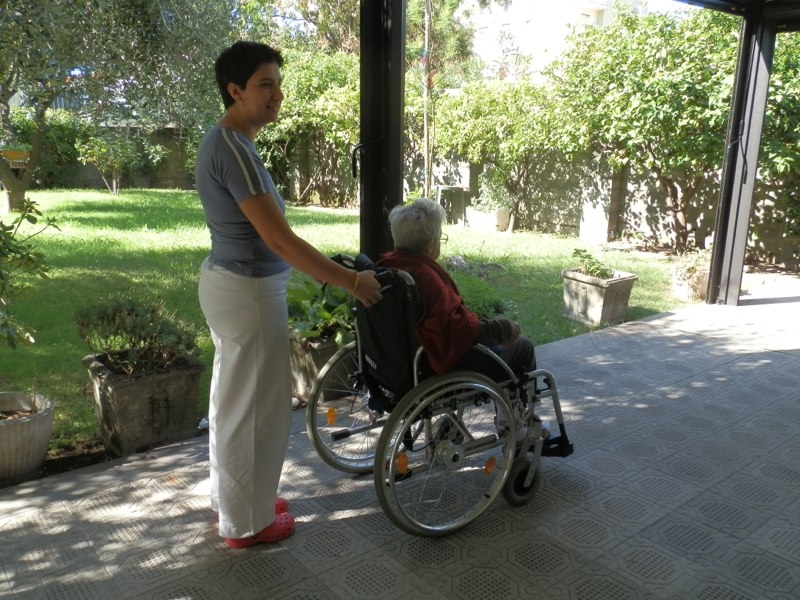
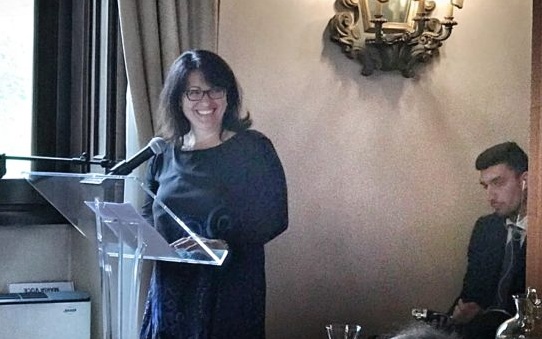 She lives and works in the province of Genoa, in a city of the North West, a very pleasant area between the sea and the mountains. Her role as president of one of the consortia of the social enterprise network with about seven hundred employees in the social service sector, welfare and job placement for disadvantaged people and regional representative of AIPEC (Italian Association of Entrepreneurs for an Economy of Communion) have in no way diminished her spontaneity and simplicity. Her testimony was closely listened to during a conference at the Italian Embassy in the Vatican, on May 3, 2018. The title of her talk was “Chiara Lubich and the Economy of Communion”: “I wanted to do a job that would be useful to others. As soon as I graduated, I won a public competition as an educator for the social integration of disabled children. I felt useful, but the job was paid by the hour and the contract was temporary. There were other girls in the same predicament as me, who had the same desire to develop themselves in the field of social service. One of them told the rest of us about some people who had been working in a cooperative for several years caring for disabled people. Meeting with them was definitive. They gave us a work space where we could work, dedicated time to us and offered their experience. That’s how our cooperative began, from a gift, from a gracious gesture that we embraced and then replicated. We later learned that that gesture was rooted in the Economy of Communion. This way of living that comes before the work, has marked and characterized the style of our own company.”
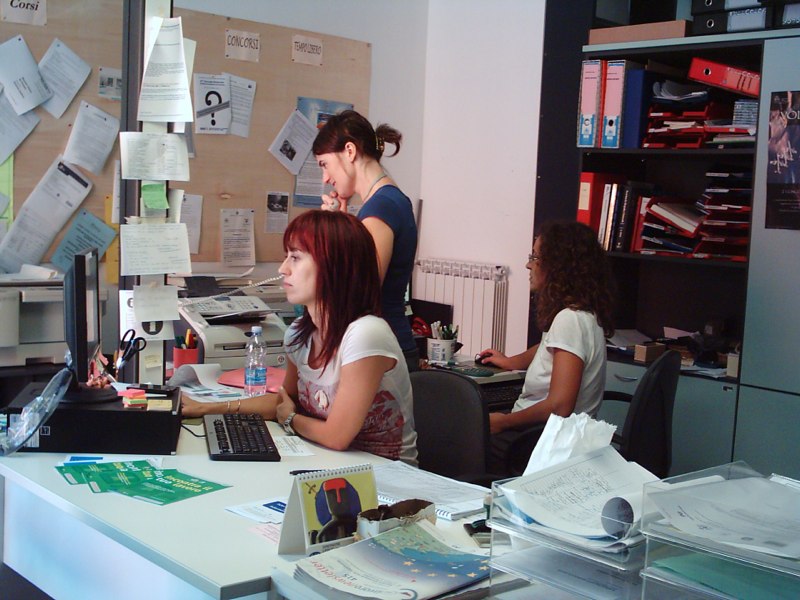
Photo © 2018 Il Sentiero di Arianna
© 2018 Il Sentiero di Arianna
12 May 2018 | Non categorizzato
is a divine word. If this word were ever uttered by the Lord God, and people were to apply it to all its possible applications, we would see the world suddenly come to a halt, like a film, and start again in reverse. Countless people would on the wide path to perdition would turn around in their tracks, convert to God and take the narrow path. Families torn apart by quarrels, chilled by misunderstandings and scorn and deadened by divorce would get back together again. Children would be born into an atmosphere of human and divine love, and new men and women would be forged for a more Christian tomorrow. Factories often upheld by slaves and steeped in an atmosphere of boredom if not of blasphemy, would become places of peace where everybody did their job for the good of everyone. Schools would break beyond the limits of science, making all forms of knowledge footstools for eternal contemplation learnt at school through a daily unfolding of mysteries that could be intuited from small formulae, natural laws and even numerals . . . And the parliaments would be transformed into meeting places for people who are motivated not so much by each one’s positions, but by the common good, without any deceiving of lands or countrymen. In, we’d see the world become more good. Heaven would be wondrously poured out over the earth, and the harmony of creation would be a framework for the harmony of hearts. We’d see… What a dream! It seems a dream! And yet You didn’t ask for less when you prayed: “You will be done on earth as in Heaven”. Chiara Lubich Source: Chiara Lubich, L’unità, compiled by Donato Falmi and Floernce Gillet (Rome: Città Nuova, 2015), originally published in Chiara Lubich, Frammenti, (Rome: Città Nuova, 1963 and 1992), p. 53-54.
![For a global civilisation of alliance]()
10 May 2018 | Non categorizzato
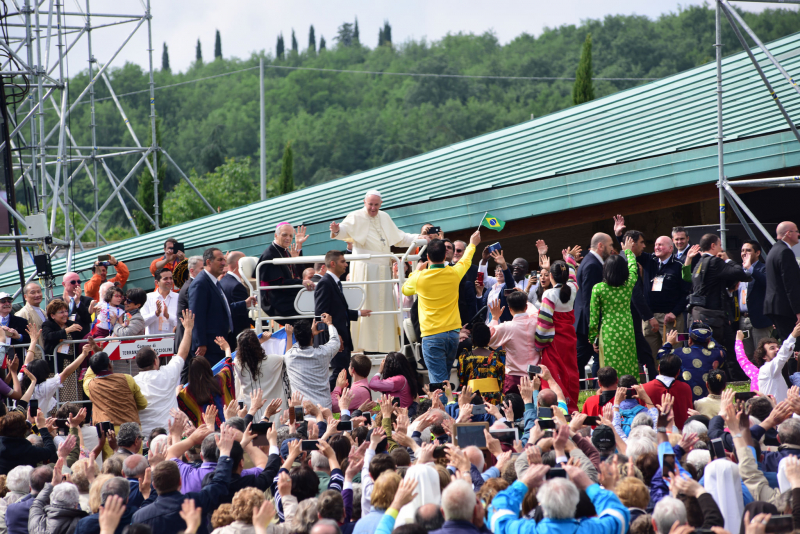
Foto © D. Salmaso – CSC Audiovisivi
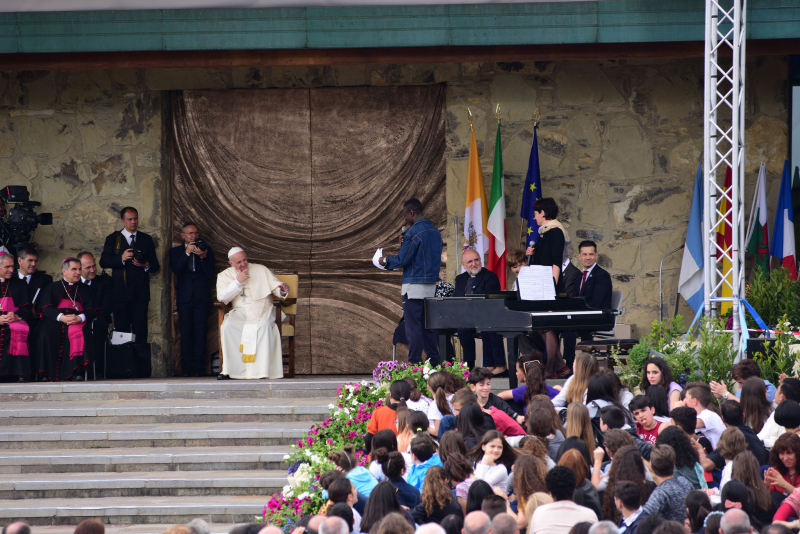
Foto © D. Salmaso – CSC Audiovisivi
Photos on Flickr 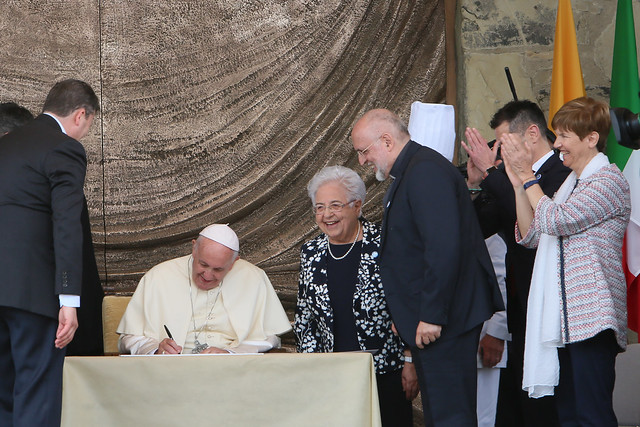
8 May 2018 | Focolare Worldwide
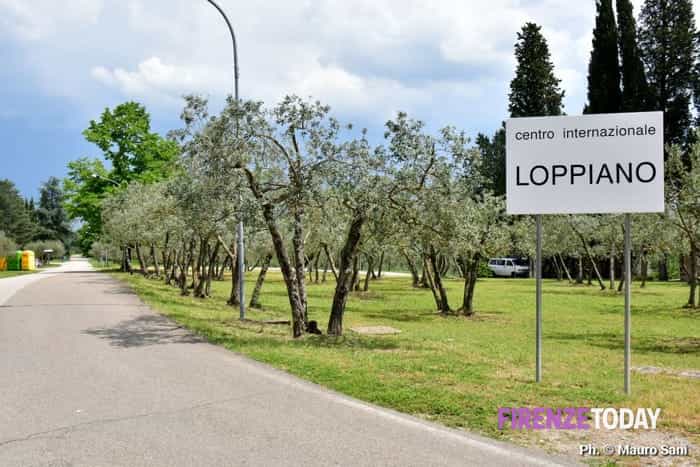 «What did you do when you were my age? What games did you like best?». 10-year-old Luis Francisco from Mexico, now in Loppiano, has these questions in mind as he awaits the arrival of Pope Francis. Together with all the residents of this international Focolare town, Luis has been counting the days to May 10th since early February when the Pope’s secretary first announced this surprise visit to the Christian communities of Nomadelfia and Loppiano, both located in the Tuscan hills. Pope Francis is coming in person to see how life is lived “in the school of the one and only Master”, as he once described Loppiano, the first of 24 Focolare towns around the world. Focolare President, Maria Voce expressed “surprise and profound joy” at the news of this totally unexpected visit. Loppiano is full of life, its streets illuminated by the happy smiling faces of young people who came in their hundreds to spend the last week of April together. With thousands more, they have just celebrated the all-Italy “Genfest” on May 1st when their joy could not be dampened even by the threat of rain. Now, as the big day approaches, the atmosphere of hopeful anticipation is becoming even more palpable.
  Video camera in hand, we walked through Loppiano, speaking to residents as they carry out their daily duties in this countdown period to the papal visit. Benedetta came to Loppiano for formation in the school of the Focolarine (the consecrated members of Focolare). She is welcoming the Pope’s visit as a personal gift from God as it comes on her own birthday. «No matter how short the visit, I hope he finds a family. That’s what we try to build among us every day». Since 1966 Loppiano has been home to Gen Rosso, a band inspired by Chiara Lubich’s desire to spread the message of a more just, peaceful and united world through music. The musicians strive to express this spirit in their own lives and not just in their songs, with a lifestyle of communion and fraternity. Michele Sole joined Gen Rosso a few years ago. He is preparing to sing “Sweetest of Mothers” on the steps of the town’s church dedicated to Theotokos, Mother of God. Michele is grateful to the Pope for having «the courage to take the name Francis. I don’t know how easy it was for him to choose a name which means preferential option for the poor and the least». The notes of “Turn on peace” float through the air, as Gen Rosso rehearse nearby with fellow Loppiano-based performers, the distinctively international band Gen Verde.
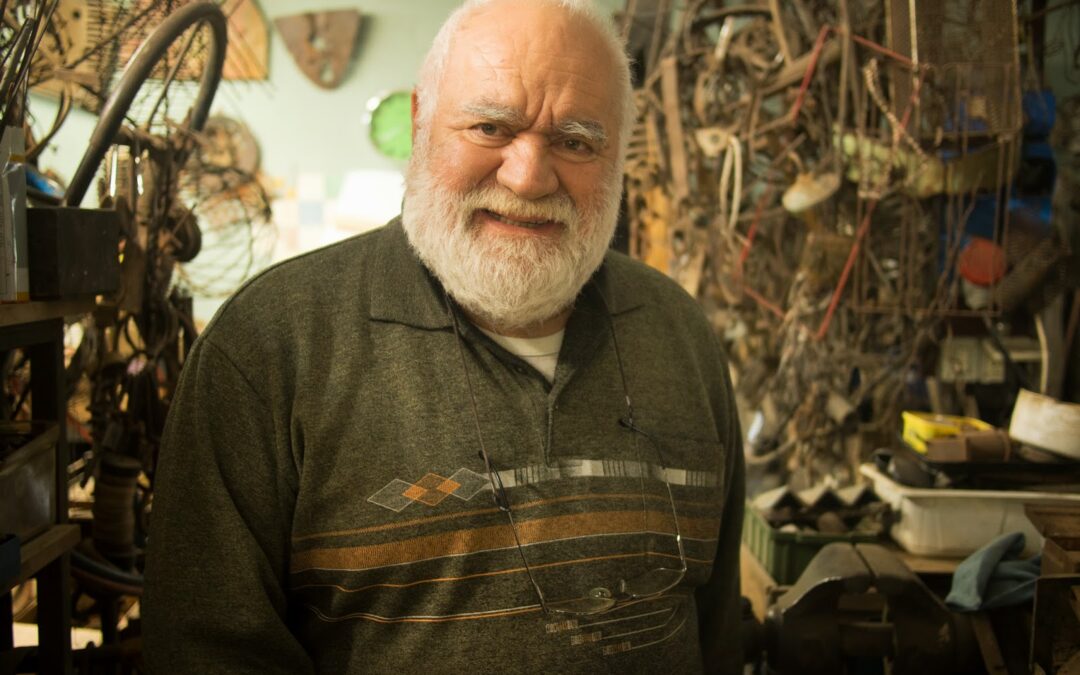
 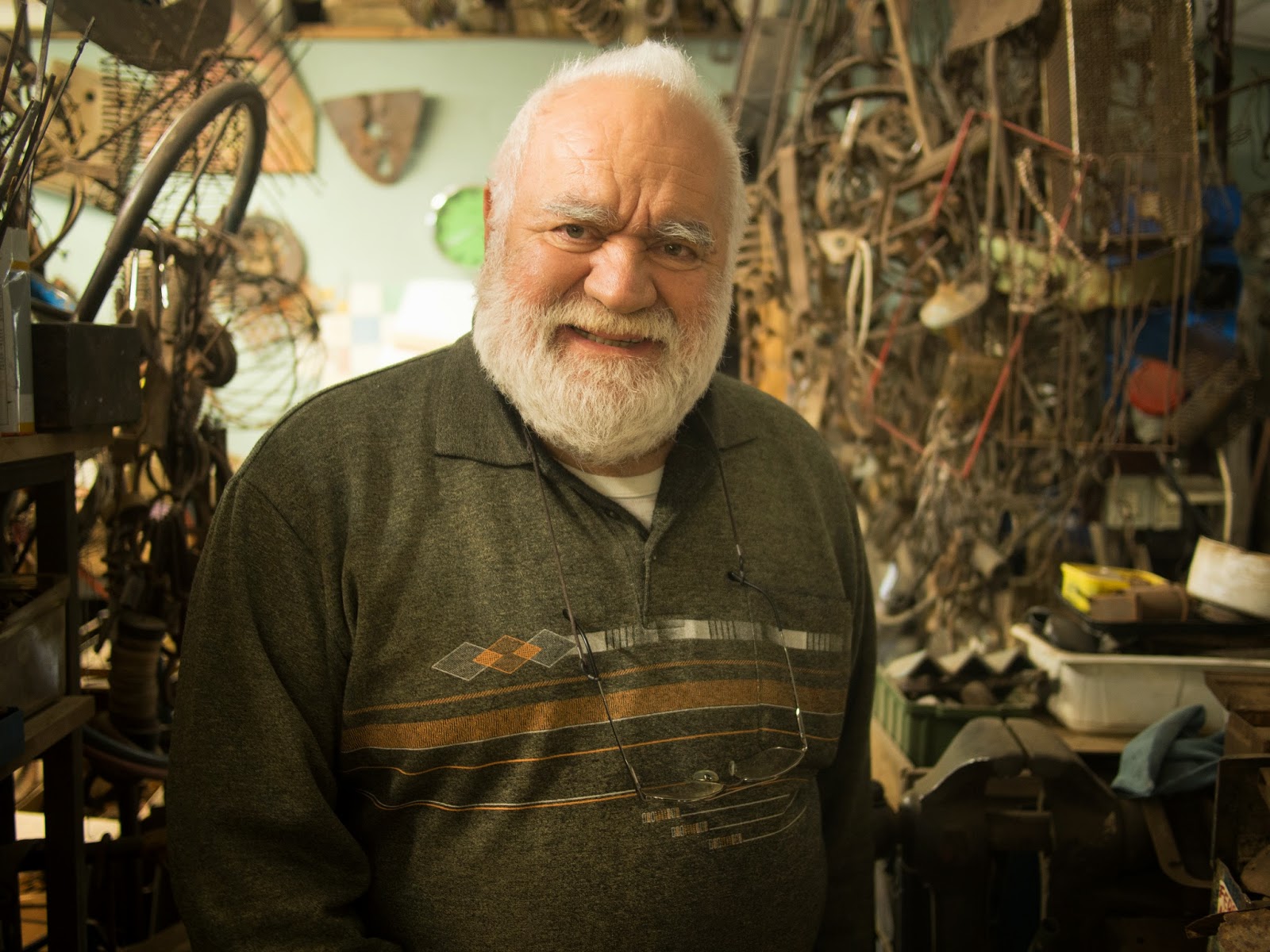 The artist Ciro, born Roberto Cipollone, has lived in Loppiano since 1977, where he exercises his gift of transforming discarded and waste objects into captivating works of art. This artist breathes new life into trash items. From his workshop emerge sculpture, craftworks and paintings, created in the fusion of an artistic imagination with love for the natural world. Ciro’s perspective on the forthcoming visit: «I hope the Pope may find some of his innermost desires fulfilled here». Aranza came to Loppiano with her family from Mexico to participate in the “Loreto School” for families of different countries and languages who together deepen their knowledge of the spirituality of unity. The annual courses which run from September to June provide a unique experience of cultural exchange and mutual enrichment. Aranza’s question to the Pope would be: «How can we young people best overcome the conditioning stereotypes the world tries to impose on us?». Natalia, is a Brazilian student attending Sophia University Institute in Loppiano. She would like to ask the Pope about the role of young married people in the Church. So many different questions, hopes and wishes, united in such joyful anticipation. Chiara Favotti
LIVE STREAMING from Loppiano on 10th May at 10.00 (CEST) http://live.focolare.org Vatican Media Live: from 8.00 am to 12.00 noon
http://vimeo.com/268796719

8 May 2018 | Non categorizzato
Europe is celebrating peace and unity on the 9th of May. This date recalls the historical “Schuman Declaration” with which, on 9 May 1950, the French minister of foreign affairs at that time proposed the creation of a first economic group, finalised in the gradual construction of a federation of European States, indispensable to the maintenance of peaceful relationships. As a first step, Robert Schuman indicated the common management, for France and West Germany, of carbon and steel, but in the framework of an organisation to which other countries could have joined. Its thus set the grounds for a wider and more intensive integration, so much so that the Declaration is considered, symbolically, the birth date of the long process of peace and stability that gave rise to the European Union. This feast is the occasion to bring the institutions closer to the citizens and the peoples among themselves, heightening awareness of the values of peace, integration and solidarity should be placed at the base of human coexistence. “Together for Europe sees itself as an “artisan of fraternal relationships”, the kind of relationships that it tries to build each day with the people of Europe.” “Together for Europa”
