9 Apr 2018 | Focolare Worldwide
 How did Loppiano take the news of the Pope’s visit? “Just a minute after the President, Maria Voce had spread the news on our social media pages and among the groups of inhabitants, there was a storm of messages expressing joy and wonder.” What does this event mean for you, as an inhabitant? “Even John Paul II was supposed to come here in the year 2000. The visit was cancelled four days before, due to a sudden change of programme. The desire for the Pope’s visit remained in our hearts then, and the same desire is present also today among the inhabitants. How would you describe the town to one who has no idea of what Loppiano is? “It is one of the places where one can more deeply experience the charism of unity that Chiara Lubich received from God, and from which the Focolare Movement was born and developed: that unity which is reached by building fraternal relationships, and living the testament of Jesus, “That all may be one.” About 1,000 people from 65 countries live in Loppiano, with various cultures, religions, and educational and social conditions. Here they learn first of all to become a community. What unites them is the desire to live the law on which the town is based: mutual love. This makes Loppiano a place of brotherhood.” What’s life like in the town? “There are various economic activities, 11 training schools, a university institute, a big church that will host the Pope, many houses and cultivated fields. The inhabitants study, work, socialize, and live the normal life of all the towns, only that they try to do so by living the law of mutual love.” The Pope will arrive in Loppiano after Nomadelfia. What relationship is there between the two towns? “They have a lot in common, though with completely different histories and charisms: both are places of brotherhood that look to the lowly people and have the Gospel as their law. There have been various occasions for encounters, even recently. So we are happy that the Pope will land here with his heart full of what he will receive in Nomadelfia. He will be welcomed with the same love and enthusiasm.” Wherever the Pope goes, the spotlight of the world media turns on: how will the choice to visit Loppiano be interpreted? “I think that behind this desire is firstly the love for the charism of unity, gift which God has given us through Chiara Lubich. Bergoglio had met the Movement in Argentina, but even more closely as Pope. Loppiano is the place where this charism is most visible.” How are you preparing for the visit? “What Maria Voce said has become an imperative for us. In these 100 days we have undertaken the commitment to intensify the life of love and unity rooted in the Gospel, so that the Pope may find that “Where two or more united in my name ” (Matthew 18,20),” the presence of Jesus in our midst, is a reality. The Pope will stop to pray in the Church of Maria Theotokos, where there is a chapel dedicated to Christians of other confessions: what does this place represent? “Precisely Chiara wanted the Church to be in the geographic centre of Loppiano, so it would become the entire town’s point of unity. It is the place where we inhabitants meet daily to pray, but it is a reference point for the entire territory. It is the city’s seal.” Is it also a way of underlining the centrality of the figure of Mary in the Movement? “Certainly. Not by chance the Church was dedicated to Maria Theotokos, Mary Mother of God, to underline the strongly Marian feature of the charism and of the Focolare movement. And precisely because Mary is the Mother of God and thus of humanity, the Church is open also to people of other Christian confessions, and other religions and beliefs. Inside there are various points where each one can pray, feel at home and contemplate.” The Pope’s visit will take place on the 10th anniversary of the passing of Chiara Lubich. A coincidence? “I think we can consider this visit as a gift of God, a caress, and a sign of His love for the Work of Mary. Then we shall see what the Pope will want to say to us.”
8 Apr 2018 | Focolare Worldwide
|
Christos anesti! Alithos anesti! Христос воскресе!Christ is Risen! Indeed He is risen! Khrishti unjal! Vertet unjal! Hristos voskrese! Vo istina voskrese! Khrystos uvaskros! Sapraudy uvaskros! Le Christ est ressuscité! En verité il est ressuscité! Kriste ahzdkhah! Chezdmaridet! Christus ist erstanden! Er ist wahrhaftig erstanden! Cristo è risorto! Veramente è risorto! Cristos a inviat! Adevarat a inviat! Khristos voskrese! Voistinu voskrese! Cristos vaskres! Vaistinu vaskres!
Christ is risen from the dead, trampling down death by death, and on those in the tombs bestowing life!Христос воскресе из мертвых, смертию смерть поправ, и сущим во гробех живот даровав!
|
7 Apr 2018 | Non categorizzato
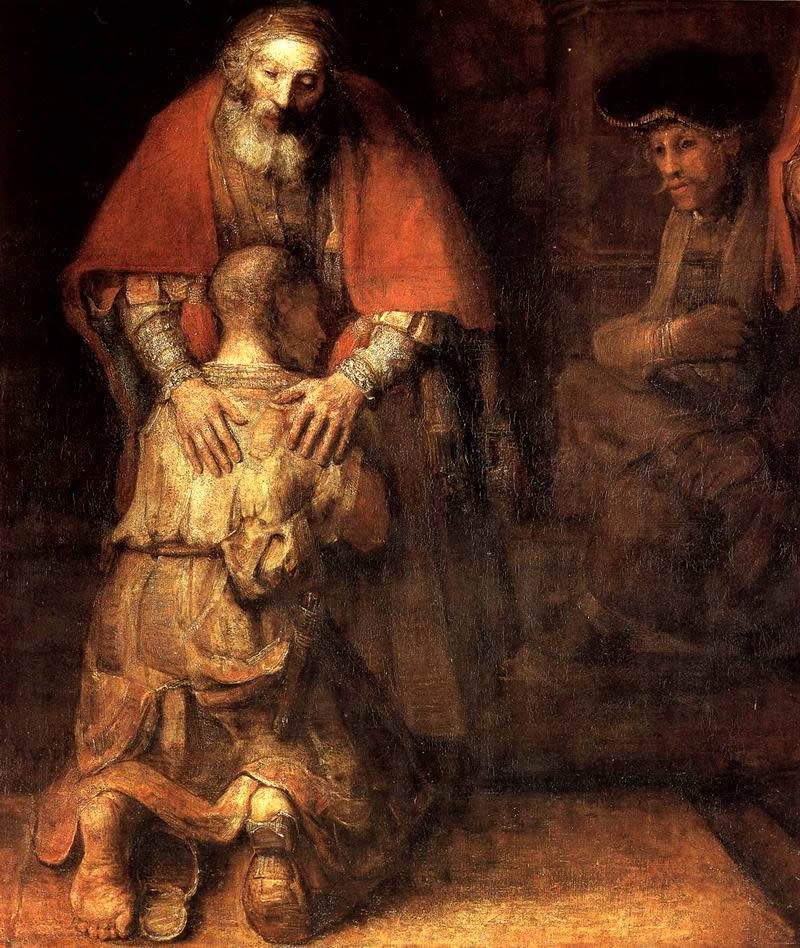
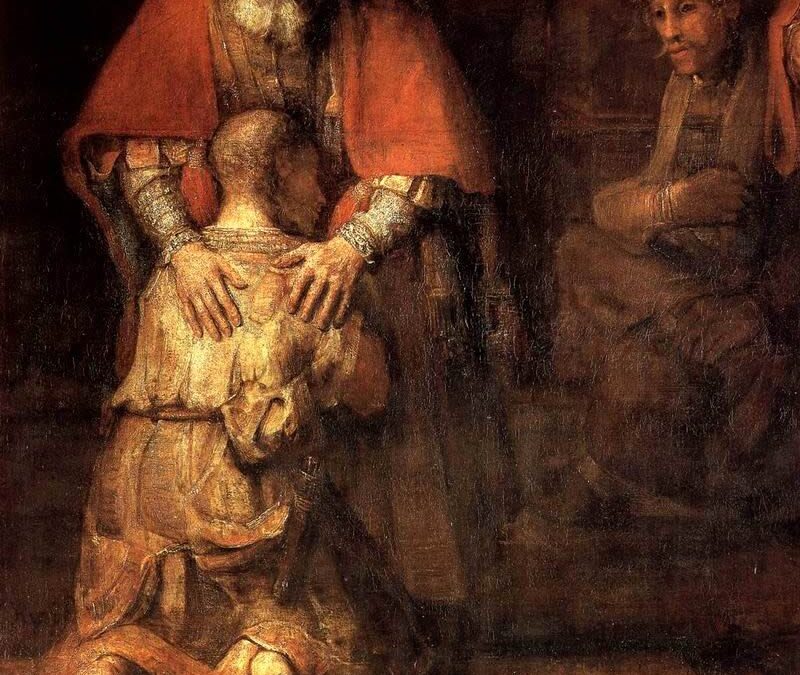
“The Return of the Prodigal Son” by Rembrandt
7 Apr 2018 | Focolare Worldwide
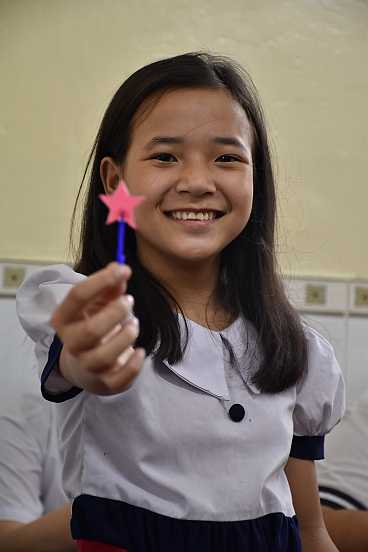
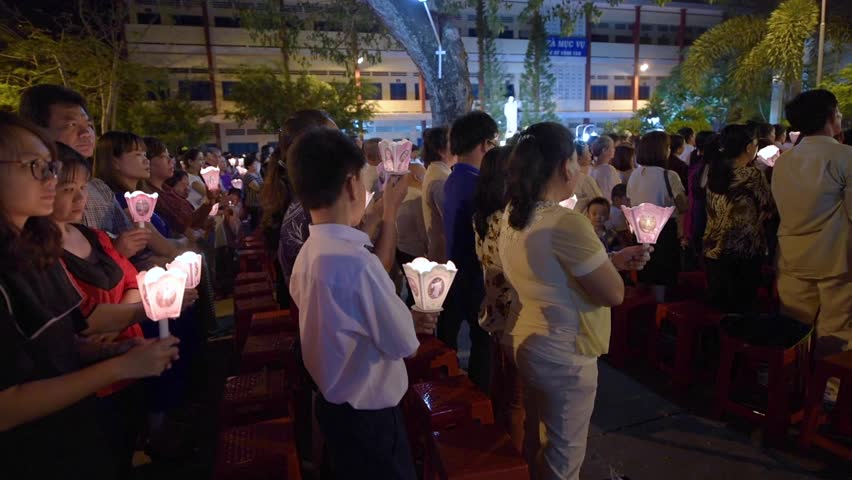 Easter is now over: today is Easter Monday and it’s a normal working day. It’s really hot and the rain is menacing the skies. It is only the Christians who are feasting. Here and there one can hear the cheering and the cries of Alleluia seeping out from the homes. And yet I’m in a Communist country. But as one goes out of the church, the streets are filled with the incredible sound of motorbikes blocking the traffic. The police in front of the cathedral have to direct the traffic. In order to take part in the Easter Triduum, one has to arrive 30 minutes before to find a place. In church I leave the bag on the bench and nobody touches it. I look at the people: many children, young people, couples and the elderly with their sober but smiling faces. I think of Europe, of the half-empty churches even on feast days. In these parts, even at 5 o’clock in the morning of any day, children, even small ones, together with the adults are in the first rows to sing. Here, everyone knows the prayers and the hymns by heart. In Saigon every corner is swarmed in a disorderly and nearly savage life. Yet, there is a lot of faith, perhaps as in no other Asian city. Because here faith comes at a cost. Everything costs in Vietnam. Some time ago I made a journey by bus, five and a half hours with a throng of people and in the heat. At a certain point quintals of Indian maize were loaded onto the bus among the travellers, dragged underfoot into the baggage compartment. The people started to scream whilst the driver and his assistant shouted at them to shut up. A lady near me who felt embarrassed at seeing me in that confusion, told me: “Life here is hard. Don’t forget it if you want to live here”. I don’t know that lady’s name and perhaps I’ll never see her again. But those words opened a new dimension within me. Life, theirs as well as mine, has to pass through pain, weariness, suffering, to then flow with joy. I understood her this way. From that day everything in me was simplified. Like everybody, I experience joy, but also pain and fatigue. I am one of them. I’m not even considered special because I’m a foreigner, but just one among many foreigners. The story of that Man who hung from a cross, similar to those of many people I meet each day, reminds me of the words of that lady. I can find it in the poor who have nothing, in the sick man with a tumour, with bones jutting out from his ribs, who has no money to cure himself. Or in that lady, Giau, 64, who though poor, adopted a Down Syndrome child who had been literally thrown out by the parents. And yet, it’s Easter. Even for the Rohingya refugees, living between Myanmar and Bangladesh. It’s Easter in North Korea which seeks peace after having fired missiles. It’s Easter amongst the allied troops who are preparing for the umpteenth drill. It’s Easter for the children of Xang Cut, in the delta zone of Mikong, where the water is still infested through Agent Orange, thrown by the allies 40 years ago. And it’s Easter for the children of Saigon, gathered from the streets and given education by the teachers of Pho. They will have something to eat thanks to their heroic love. Even here, in the midst of many challenges, dangers, widespread pollution and an overwhelming sense of hopelessness, someone continues to smile, because they are loved and helped by a friendly hand. This is Easter: taking care of others, relieving their pain, sharing their tears. The world, the other, belongs to me. And my happiness passes through that of others, of many others.
6 Apr 2018 | Non categorizzato
 Sports and peace have been a winning combination since ancient times, when an “Olympic truce” was put in force during the games that were celebrated in honor of Zeus. All public and private hostilities were put on hold in order to safeguard the athletes and spectators who had to cross enemy territories in order to reach Olympia. The International Day of Sport that will be celebrated April 6 will be held on the same day that, in 1896, saw the reopening of the Olympic Games for the modern era, once again in Greece. This emphasizes the value and relevance of this year’s Day of Sport. Paolo Cipolli is the director of Sportmeet, an international network of athletes and sports professionals. Since 2002 it has been dedicated to and contributed toward developing a sports culture that is focused on peace, development and universal fraternity. “Sport, which some sociologists have defined as an ‘imitation of war’ or ‘war without shooting,’ can still represent an element of reconciliation despite its combative content,” says Cipolli. “Through a process of catharsis, purification through conflict and the element of competition, controlled by the rules of the game, sports holds great potential for relationships.” The recent Winter Games are a great example. “What happened at PyeongChang was truly surprising,” says Cipolli. “At first, the choice of a venue near the border of the two Koreas, especially during a time when there were escalating tensions, seemed ill-fated. And yet, the miracle of sport occurred, and the Olympics showed themselves to be not only an extraordinary chance to change the expectations of a breakdown, but also a surprising opportunity to bring the two countries closer. It was a miracle that threw a curve ball at international politics,” he says. “This has happened before. Many times in recent history, sports became an opportunity to ease tensions. I remember that famous game of ping pong between China and the United States in 1971.” Sportmeet, which began within the Focolare Movement, promotes values of holistic personal growth and peace within the world of sports. What are its goals? “What moves us is the drive to bring our spiritual legacy, Chiara Lubich’s ideal of unity, into this area. We support the positive experiences that exist, recognizing everything good that the history of sport has brought about to date. We also hope to grow awareness that sports has great possibilities for developing fraternity. “Recently we had the opportunity to promote and participate in the first Via Pacis Half Marathon in Rome. We will continue to work in partnership with various religious communities and sports institutions for the next marathon, to be held on September 23.” The reality of limitations runs through all our lives, whether individually or collectively. It is a mold we all come through, with disadvantages, difficulties and social hurdles, both physical and psychological. How does sports address this? “The experience of sports contributes to an understanding of limitations that goes beyond its specific area of expertise. By its very nature, sports is a contest with limitations. Promoting participation prepares us for differences, opening pathways to integrate and overcome any political, religious, ethnic or social barriers.” What’s next? “We are organizing an international conference around these themes, to be held April 20–22 in Rome. It will be open to those working in the field of sports and others, in order to learn about and promote good practices. “On the main day, April 21, there will be an ‘Earth Village’ at Villa Borghese, where we will get together with participants from the Eco-One conference entitled ‘Nature breaks limits.’ We’ll take an interdisciplinary approach to limitations. “It will be a roaming conference between the Corviale neighborhood, which is on the geographic and social margins of the city, and central Rome. It will be a chance to see the difficulty, vulnerability and the ‘margins’ and realize that they are limits to recognize. “They make us more human.” Chiara Favotti
