23 Mar 2018 | Focolare Worldwide
Michelle Sopala
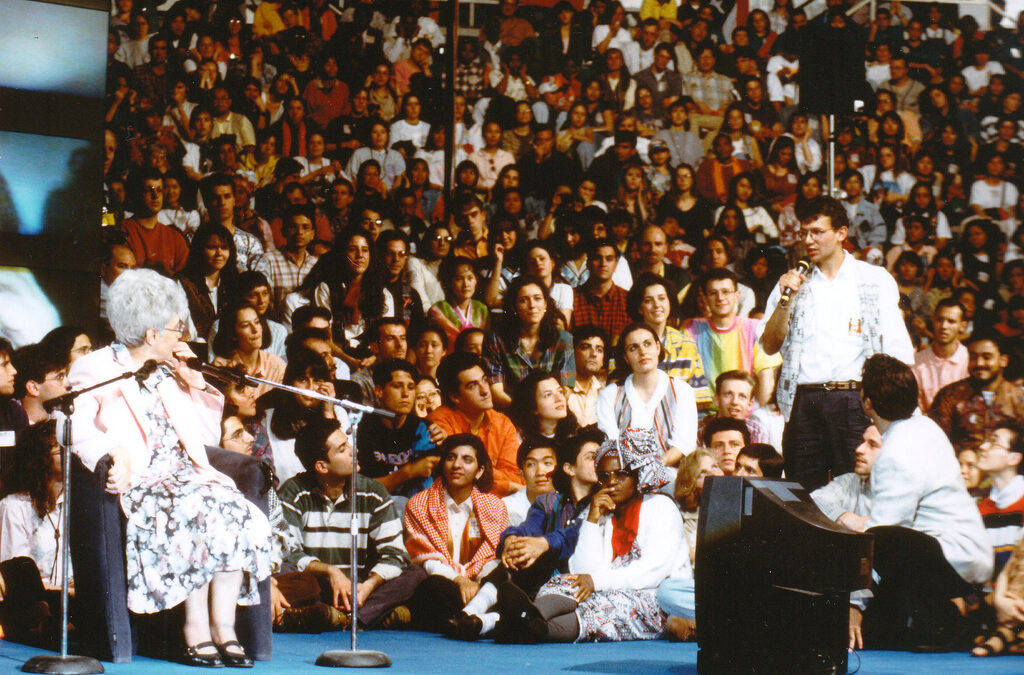
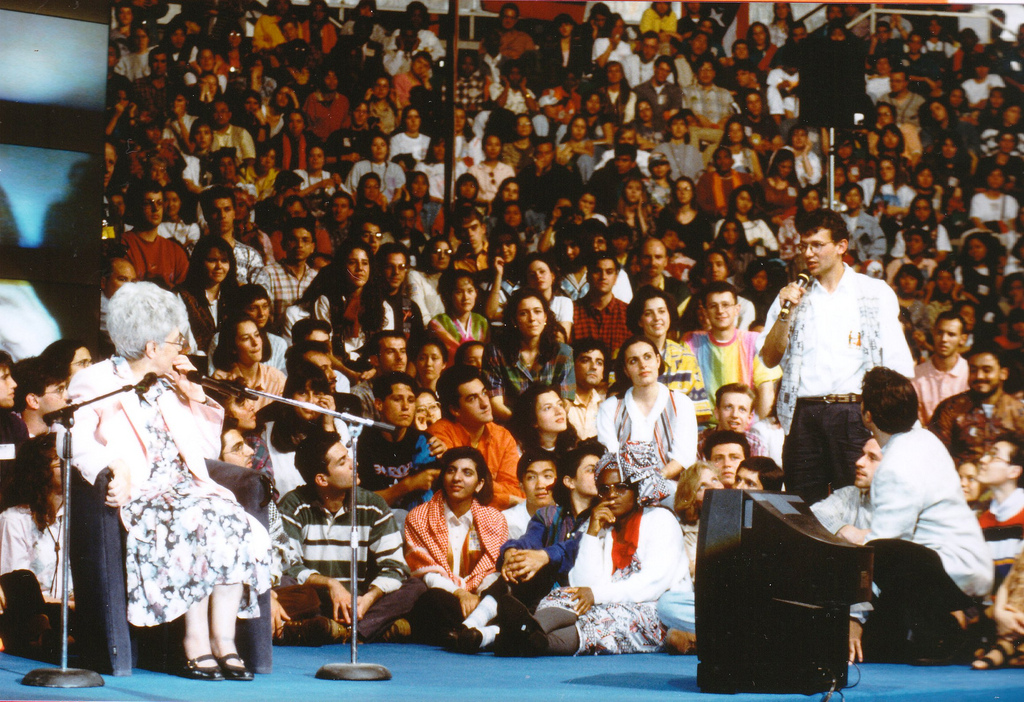 And now for the Genfest, itself! Even though it was a life-changing event in all its aspects, I can’t hide it: for me the highlight was the meeting with Chiara. I don’t know if the other 12 thousand young people in the arena felt the same, but I felt like Chiara was talking to me, and me alone. When Noel asked her the final question, «Chiara, from the bottom of your heart, what would you like to say to us young people?», her answer rang out like a war-call that still rings in my ears. With a super-astute intuition and understanding of what the young heart yearns for, she quoted St. Catherine who had told her disciples not to be satisfied with small things because “God wants them big!”. «You, young people – she said, with a conviction that went straight to the heart – don’t be satisfied with crumbs… with small joys… but aim high and seek the fullness of joy: that joy that comes from living out unity!» Hmm. For better or for worse, that’s been my experience ever since. “Unity”? A deep word that I’m still discovering after these 23 years. But that “fullness of joy”? Yep! I’ve found it! Oh! …and by the way, our performance was chosen. Take a look. Hope you like it! Michelle Sopala
https://youtu.be/LX6rNkyGjoE
22 Mar 2018 | Non categorizzato
Jonathan Michelon
https://twitter.com/twitter/statuses/976421224095076352
22 Mar 2018 | Focolare Worldwide
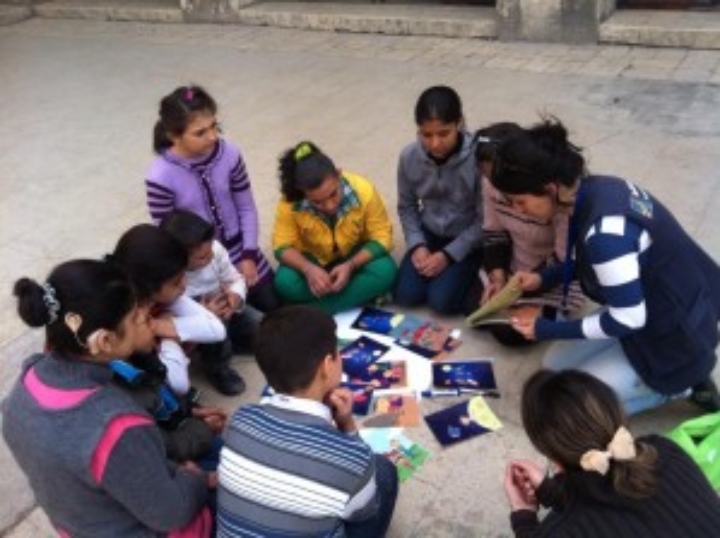
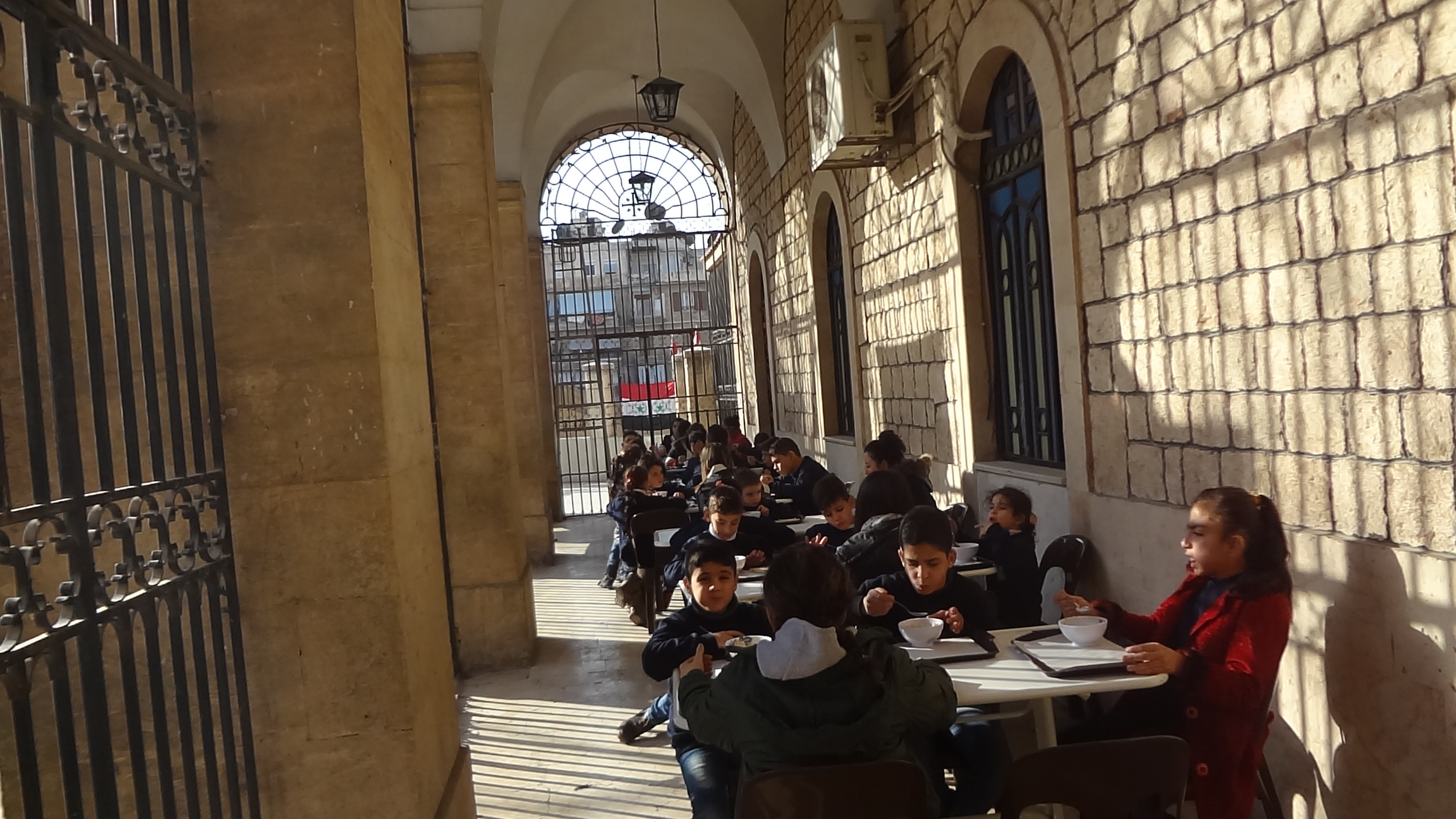 The story of Jean and Vivian is a story of love, hope and courage. They met in Aleppo, Syria, in 2000 while belonging to the Focolare Movement. Vivian is a widow with a one year-old son who is totally deaf. Jean is a carpenter and socially active. Their common commitment to living the Gospel and bringing the ideal of a united world to humanity brought them closer and, in 2003 they got married and have four children. Vivian’s first son, Marc, was the motivation behind their adventure. Because of his need for special care, Vivian went to Lebanon where Marc would later follow and stay at a centre run by the Focolare: “It’s really a foretaste of Heaven,” he says. “Living the Gospel in daily life accompanies the whole educational process. The children grow up in this oasis of peace and develop their talents while overcoming their handicap. The dream began to grow in me of setting up an institute myself, in my own city of Aleppo.” Jean supported him in his venture and, in 2005, their small centre was begun. Other larger ones would follow with larger capacity for up to ten children, all from poor families who couldn’t afford the cost. The centre was always in deficit: “Whenever we needed something,” Jean recalls, “we’d go in front of the crucifix and hand over our needs to Him. Providence arrived right on time every time.” The breakout of the war in 2011 brought much death and destruction. Jean lost his carpentry, the centre wasn’t having any financial input and many were living on help from the Church and humanitarian organizations. Many left the country and, even though Jean and Vivian were tormented at the thought, they bought tickets to go. But one thing became clearer and clearer in their hearts: they couldn’t leave “their” deaf children and destroy that dream that had come true with so much effort. “On the night before our departure, I stepped into church,” Jeans says, “I had a deep conversation with Jesus, face to face, man to man. He seemed to speak in my heart and asked me not to go: what would the children now? I felt him posing this tragic question to me. I put my children in His hands. I went home and Vivian and I decided to rip up the tickets and stay in the city forever to be a help to the people who needed us.” “We were hopeful that God would accompany and support us in all our future projects and especially in our family,” echoed Vivian, “and that’s what happened.” Now the centre is their second home, their children also take part in the life of the group and Jean works full time “This community has widened our hearts. There is no longer boy or girl, student or teacher, healthy or handicapped, Muslim or Christian. We live in the one love and beneath the same gaze of a God-Love, incarnate, living in our midst.”
21 Mar 2018 | Non categorizzato
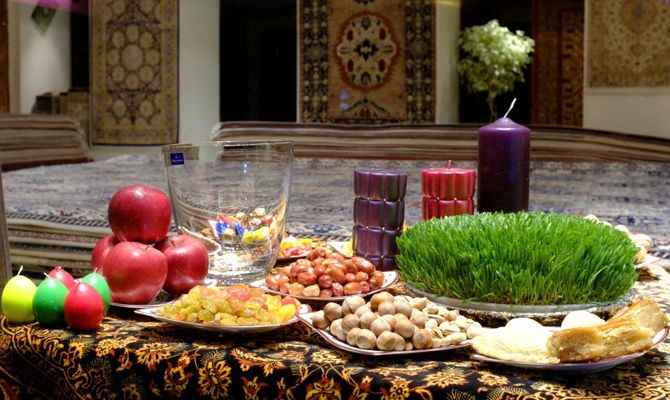
The celebration of the Persian New Year coincides with the vernal equinox which marks the beginning of spring, on 21 March, day in which many countries of Asia and Eastern Europe celebrate the feast of Nawroz (literally “new day”) proclaimed the international day of the United Nations which in 2009 was officially registered as an Intangible Cultural Heritage of humanity. Nawroz is an ancient, happy and joyous feast, estimated to be celebrated by 300 million people. Connected to the idea of the rebirth of nature, it is pervaded by a rich symbolism and promotes values of peace, reconciliation, solidarity between generations, friendship among families, peoples and communities.
21 Mar 2018 | Non categorizzato
Could it be that there are still prejudices based on the colour of the skin despite the great achievements of the last century? Many steps have been taken, but work needs to be done to completely eliminate all forms of inequality. On 21 March, the International Day for the Elimination of Racial Discrimination, established in 1966 by the United Nations, reminds us of the massacre in Sharpeville, South Africa, which occurred on 21 March 1960. On that day, perhaps the bloodiest in apartheid history, the police opened fire on a crowd of black citizens protesting against a measure of racial segregation which was imposed on them. About 70 of them remained lifeless on the ground. In these days, campaigns in support of integration and against all forms of discrimination, hatred and violence perpetrated for racial reasons are organized in various parts of the world. The protagonists of these initiatives, as always, are the young people.
