22 Jan 2018 | Senza categoria
“The attraction of modern times” conference material: (3 March 2018, Castelgandolfo – Rome) can be found at: http://chiaralubich.10anni.focolare.org
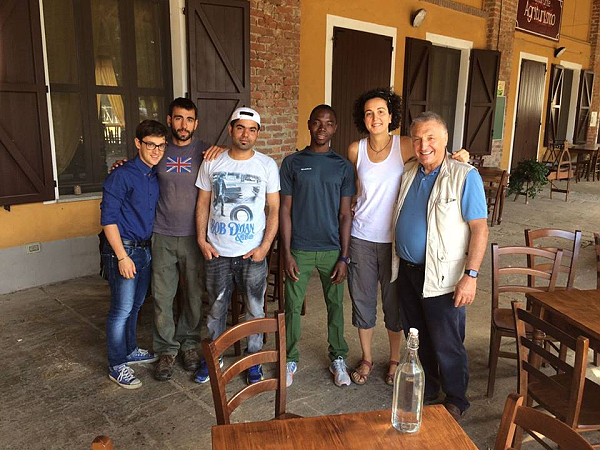
The migrants’ project in Sicily
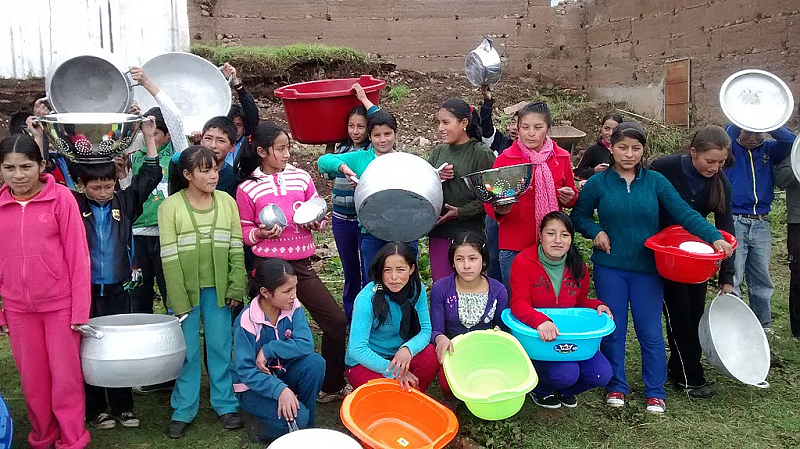
In Bolivar, in the Peruvian Andes
20 Jan 2018 | Non categorizzato
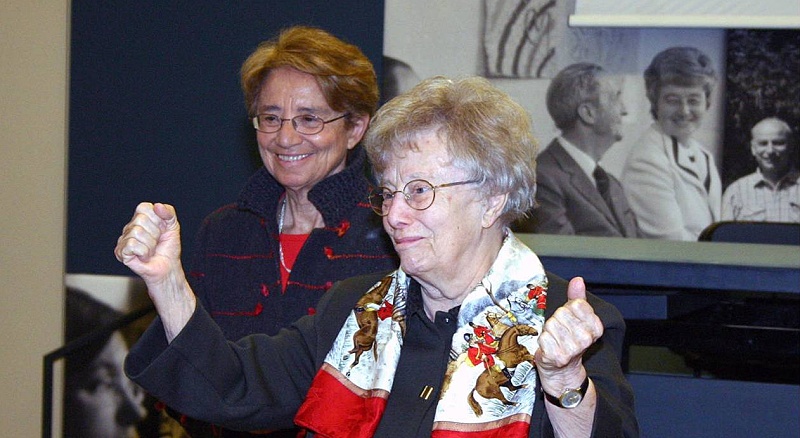
With gratitude for “her example of heroic faithfulness to God’s plan for her,” Focolare president Maria Voce, informed Focolare members around the world of her death following a long life spent in its entirety for unity. “Even in the pain of this huge loss,” said Maria Voce, “we are forever one heart and one soul with her.” Gisella Calliari had been born in Lavis, Trent, Italy on April 18, 1920. She was simply known as Gis, one of the first young women, along with her sister, to follow Chiara Lubich in the “adventure of unity,” which led to the starting of the Focolare Movement and its expansion around the world. She was the youngest of three sisters and met Chiara in 1944 in that tiny apartment that lodged the first hearth in Piazza Cappuccini,Trent. The next day, she decided to follow Chiara along the same path. The first hostile reaction from her family was softened when her mother met Igino Giordani who hired Gisella to be his secretary in Rome. During her long life, Gis spent more than 40 years living with Chiara. After living in several focolares in Italy – in Trent, Rome, Milan and Florence, she took charge of the women’s section of the focolarinas. Then, she worked alongside the foundress and Oreste Basso in following the development of the Work of Mary worldwide. This provided her with the opportunity to visit Focoare communities around the world. Her whole life was very profoundly linkded to the charism of unity, to which she was faithful until the last. Focolare.org will soon publish a more extensive biography.

20 Jan 2018 | Non categorizzato
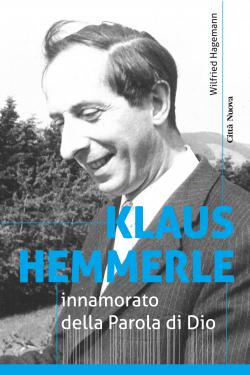 “There’s only one way to be able to have the most unity and communion possible among us right here and now, and I for one can see no other. This way coincides with […] us, you and me, all of you and me and all of us together, day by day, in all the situations of our life and in every situation that comes between us, staying anchored in His Word.” (266) “The Word of God goes beyond the barriers between us and creates communion. […] Nobody can take this away from us. Nobody can prohibit us from doing it. We can never turn back now. This is the essential point where the road opens for us to move on. […] If we live the Word to the extreme and in a spirit of reciprocity so that what you live and what I live are the same Word, both of them His Word, then the unity between us grows […] We can ask ourselves: But how are we to live in the one Spirit which is the deepest and most intimate reality of God, and the deepest and most intimate reality of me? It’s because of the Spirit whom I seek in you with patient endurance, the gifts of the Spirit that lie in you, a believer and a Christian like me. I question you at great length until I find the Spirit in you. I’m never content myself with compromises saying: ‘Deep down you’re not bad, nor am I. I’m able to find a halfway point where we can meet!’ I don’t even say: ‘I take something of yours and something of mine to come up with a formula that we can both agree on without having to change any fundamentals.’ Rather, I ask myself: ‘Where is the Spirit in you?’ The insistence in my questioning never constrains you, limits you, but it frees you, so that you can offer me the gifts of the Spirit in you. I’m prepared to let myself be interrogated by you to extreme, so that, trusting in the Spirit, I can also offer and give to you my gifts as gifts from God. Giving our gifts to one another, discovering in reciprocity the gifts of the Spirit in one another – this is the only path for the one Spirit.” (265, 266) (June 15, 1979, From a dialogue with Evangelical Lutheran pastor Lukas Vischer) Anyone who has been living the spirituality of unity for a long time can never stop and say: Is what the other saying to me appropriate? What isn’t appropriate? In what way is what they are saying compatible with my thinking? And with regard to what isn’t compatible? I try to make myself one with the other person, I try to have the other person as my starting point, not as a way to deny what I affirm with certainty based on Christ, but in the sense that in front of the person, I ask: What light are they trying to convey to me? So, I look at myself from the perspective of that other person. I make myself one with the other, trying to re-read my truth through the light of the other.” (268) (Extracts from dialogue session during the Ecumenical School in Ottmaring, Germany) Winfried Hagemann: KLAUS HEMMERLE, innamorato della Parola di Dio (Città Nuova 2013).
19 Jan 2018 | Non categorizzato
18 Jan 2018 | Focolare Worldwide
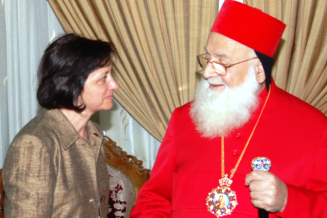
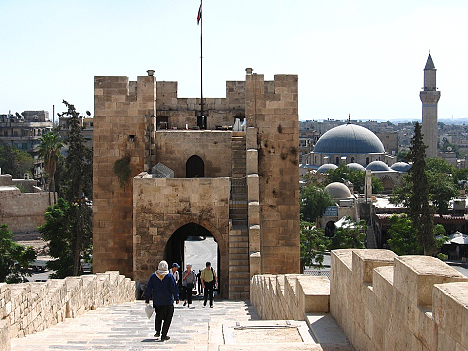 Mirvet Kelly’s grandfather was a deacon: “I remember going with him every Sunday to the Syro-Orthodox Divine Liturgy. I was proud to watch him all dressed in white as he recited his portion of the prayers at the altar.” There are several Christian Churches in Homs, Syria, where Mirvet grew up: Armenian Apostolic, Greek Orthodox and various Catholic Rites, Maronite, Melkite and Syro-Catholic. Before the war, even though we were linked to our own Churches, the faithful attended other Churches without any problem. “As I grew older,” she went on to say, “a lot of things changed: Grandfather died and the Divine Liturgy seemed long and outdated. I was the only Christian at school in the midst a lot of Muslims. At Christmas and Easter I’d be the only one absent and, when I returned, I was bombarded with questions: ‘Why are there so many Churches? Why was your Jesus crucified and rising from the dead on different dates in different Churches? Some friends and I decided to no longer belong to one Church or another, but to be Christians and that’s all. Like many of them, I stopped going to my own Church.” A
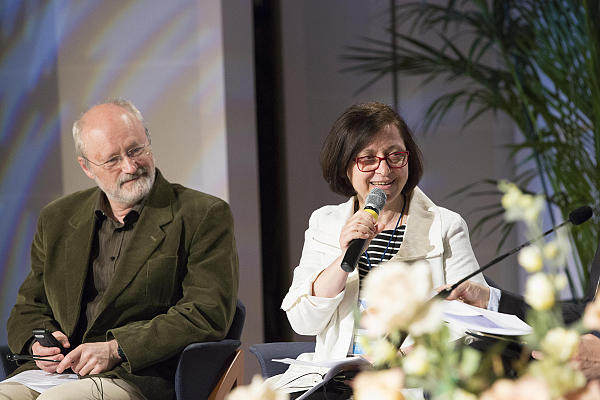 fter a while, Mirvet met a group that was trying to live the Gospel according to the Focolare spirituality. “Through them, I discovered that God is the Father of everyone and that we’re all loved by Him as sons and daughters. My life began to change. Every time I tried to love, going to visit an elderly person or a poor person, for example, my heart would be overcome with peace and joy. One day, I came across a sentence in one of Chiara Lubich’s writings: ‘We should love the other person’s Church as our own.’ Not only did I not love the other person’s Church – I didn’t even love my own Church, which I had criticized and abandoned. At that point, Mirvet’s life, which was already very fruitful both personally and ecumenically, took a new leap. She felt God calling her to give herself entirely to Him. “In the Focolare communities I’ve lived in,” she explained, “I found myself to be the only Orthodox among Catholics of all ages, countries, languages, cultures, Churches and ways of thinking. Trying to live in unity with all the different ideas about things is always a challenge, because each of us has her own tastes and ideas down to the smallest details. But when we try to appropriate the other person’s reality as our own, we experience that the differences become an enrichment. We often pray for each other’s Churches, in an ongoing growth in the faith and in the relationship with God. And almost without realizing it, we bring the fruit of our communion into our respective Churches, to our jobs and into our daily lives. It seems like a drop in the ocean, but even the tiniest steps united to those of many others in the world, can make a difference. In the countries of the Middle East where I lived, for example, I saw priests helping people, without ever asking what Church they belonged to. They did projects to help out different Churches, to help them meet their needs whether they were Christian – or even Muslim. Last year, Catholics and Orthodox celebrated Easter on the same day. Two Syrian friends who now live in Vienna, Austria, recently reported to me how they and many other Syrians have been helped by a parish priest and some Catholic women focolarini to look for a house, medicine and work. They formed a group in which they live and help each other to share their common Christian experience. In the United States there are more than fifty Syro-Orthodox Christians who meet regularly, once in the Orthodox churches and once in the Catholic churches. They experience that God is always with us and that we have to pray, to live and to love so that Jesus’s testament ‘that all may be one’ is fulfilled as soon as possible.”
