15 Dec 2017 | Focolare Worldwide
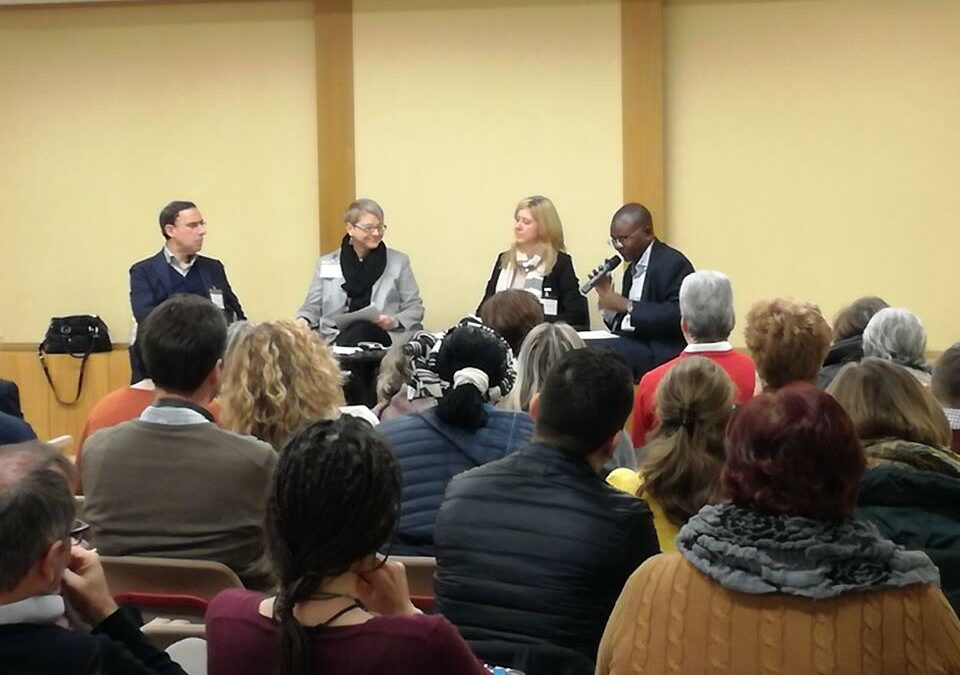
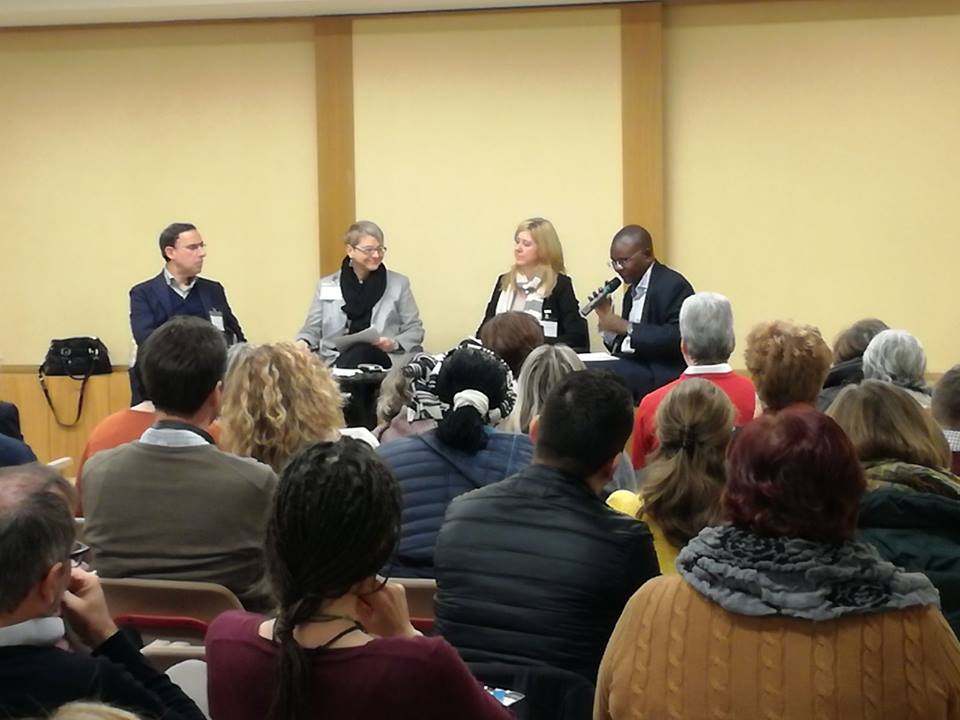
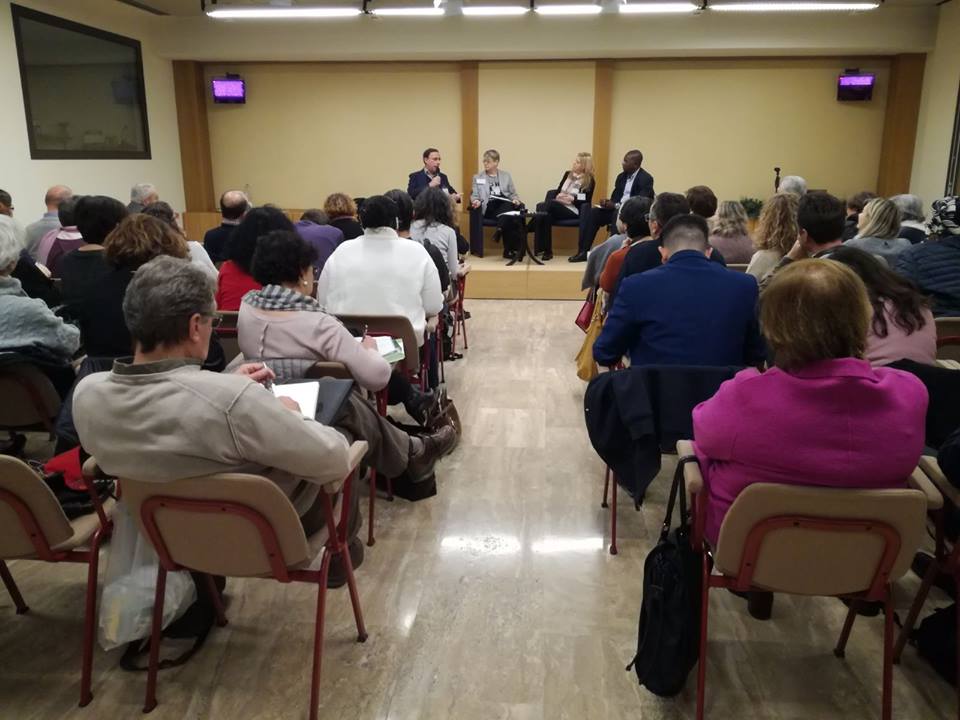 “For as much as Africa is rich, the others seem to benefit more from its riches. In granting contracts to multinationals for the extraction of minerals, for example, there is a play of interests, in which ’compensations’ and ‘compromises,’ ‘agreements’ and ‘thanks’ have as a consequence the exploitation of the producing country, without a real improvement in raising the population’s living conditions.” Raphael Takougang, a Cameroon lawyer of Communion and Law, harshly portrays a picture of the reality of life in Africa today: “Corruption in Africa is not only the work of single citizens, but is above all a consolidated method with which the economic powers “create” and support tyrants as long as these protect their interests, with the silent complicity of the international community.” And it is always the poor who pay for this. Takougang does not limit himself to mere denunciations, but rather, despite everything, shows his optimism ‘because there is a new generation of political leaders in Africa rising up, and has realised that mainly the citizens will have to control the actions of those governing them… to ensure the defense of the African people’s fundamental rights to life, education, health, and spiritual and material wellbeing.” Patience Lobé, an engineer – world head who together with the volunteers are the driving force of New Humanity – during her entire mandates as an officer of the Ministry of Public Works in Cameroon had been seriously threatened: «For the African concept of solidarity anyone who is in need has to be satisfied. For this reason people continually came to my office, to ask for work, or to request a subsidy. During my permanence as head of the office, not one day passed in which I was not subject to temptations or threats. Corruption is a widespread, contaminative virus, difficult to eliminate. Like all viruses, a vaccine is needed in order to eradicate it. The vaccine may be represented by a real change in mentality: education in a culture other than consumerism which considers the owning of goods and possession as the only road to happiness.”
  In the same way, it isn’t easy to launch good procedures and practices in the field of the battle against illegal management of public funds. Françoise, French officer in the Ministry of Finance, recounts: “Due to the variety of situations, public services and issues which I have to deal with, it is not always easy to maintain one’s discernment, define the law, sustain good management practices or simply coherence with the principles of honesty (also intellectual), rectitude, cooperation and solidarity with colleagues. But the work experience over the years has confirmed that every time I was faithful to these values, I discovered new horizons, new ways of acting, the situations got solved and unity between institutions and people was possible.” Paolo, director at the Municipality of a big Italian city added: “We mustn’t forget that as public administration employees our primary task is to dedicate ourselves to the good of the community under all aspects, taking on the weight of the related responsibility. Every action must conform to the principles and values without which we couldn’t live together, enhancing human wellbeing and progress of all the citizens.” It is the battle against corruption, therefore, but not only that. The diffusion of good practices, respect for the rights of citizens and their needs, and also reception, and the capacity to create a link with other institutions: these are the great challenges for those working in the Public Administration. The participants of the congress are all convinced of this, and have made it their commitment to continue cultivating these principles daily. The seeds of a culture of lawfulness will silently bring about results in their countries.

14 Dec 2017 | Focolare Worldwide
 I was born in Bergamo,(Italy), the first of four children in a beautiful family with solid Christian roots. At seventeen I was in high school and involved in the parish. I loved school, helping others and going on trips to the mountains. I had a lot of friends and a rich faith experience. As they used to say back then, I was “good kid,” but … I always felt something was missing. I wanted something beautiful, great and true. Italy was going through hard times with assassination attempts by the Red Brigades and a job crisis. My father who was in metalworking, was laid off and later lost his job. The injustice of it all bothered me, as did the social conflict, but I also could feel being made to renew society. I spent hours talking with friends, debating, but it only left me empty inside.
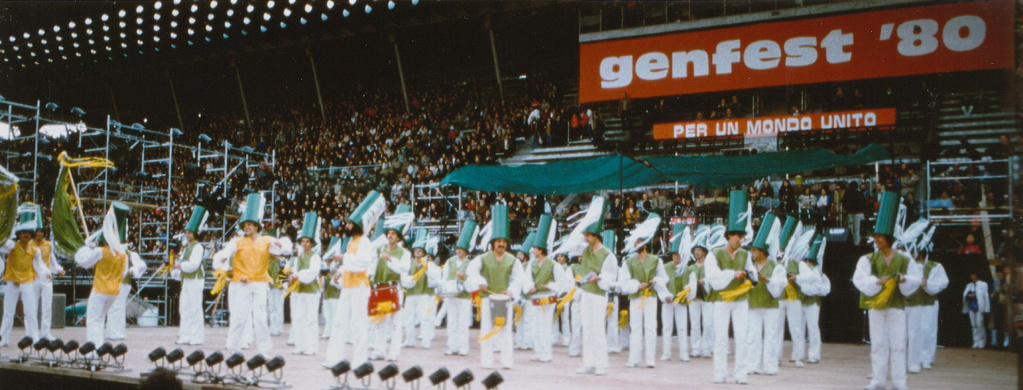
 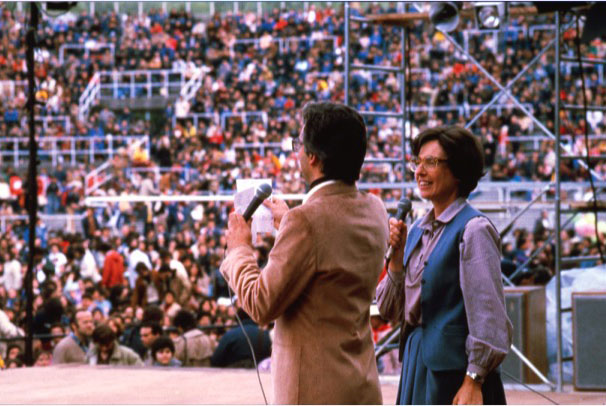 One day, Anita, a girl from the parish, invited me and my sister to the Genfest that was going to be held in Rome. She told me we’d meet thousands of young people from other countries and also the Pope. There was something special about Anita, a special joy and sincerity that shone in her eyes and, like others at the parish – the priest, two catechists and a seminarian – she seemed to have a secret: they were always open to everyone, willing and really able to listen. With a good dose of unawareness my sister and I took off on a bus with a hundred young people from the parish and headed for the Genfest in Rome. We arrived late at the Flaminio Stadium because of an accident and wound up sitting in the last rows on the highest seats where there was no roof – and we were very far from the stage that had a sign that read: For A United World. It was pouring rain, and I was drenched. I began to ask myself why I had ever agreed to such an excursion. But just then some young people from Switzerland who were sitting just below us, offered us some plastic sheeting to cover ourselves with; they offered us some food and binoculars, so we could follow the show more easily. We spoke in different languages, but understood one another right away. I experienced the liberty of love freely given, and a great sense of welcome and acceptance. Despite all the rain, colorful dances took turns on stage. It seemed like I had stepped into another dimension. Forty-thousand young people filled with enthusiasm were flowing in from every corner of the world – all of them giving witness to the Gospel they were really living.
 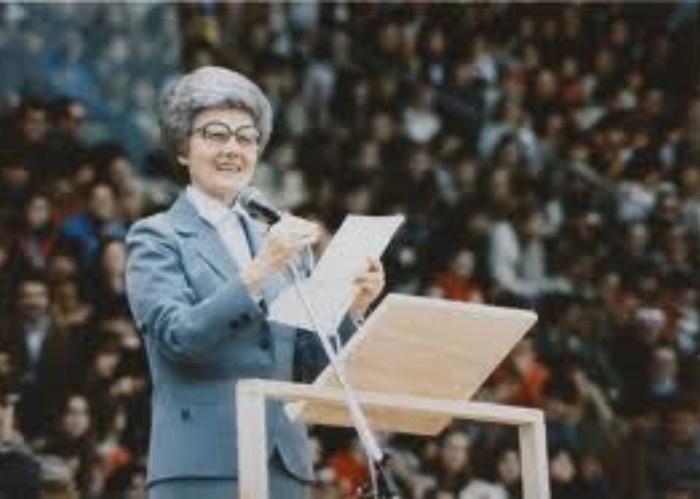 Then a small woman with white hair got on stage. It was Chiara Lubich. I looked at her through binoculars. As soon as she began to speak a deep silence fell over the crowd. I was enraptured more by the sound of her voice than by what she said, by the conviction that emanated from her words, by their power that stood in contrast to her fragile appearance. She spoke of a “moment of God,” and, even though she presented several lists of divisions, breakups and the overall disunity of the human race – she was proclaiming a great ideal: a united world, Jesus’s own ideal. She invited us to bring the divine into the life of society, into the world – through love. Her talk only lasted a few minutes while I found myself being crushed by a feeling I had never had before, which – afterwards – no sorrowful nor difficult event could ever dent in: a united world is possible and I have the amazing possibility of building it with my own life! I had found it! I wanted to live like Chiara, like those young people I was among that afternoon, to have their faith, their push, their joy.
 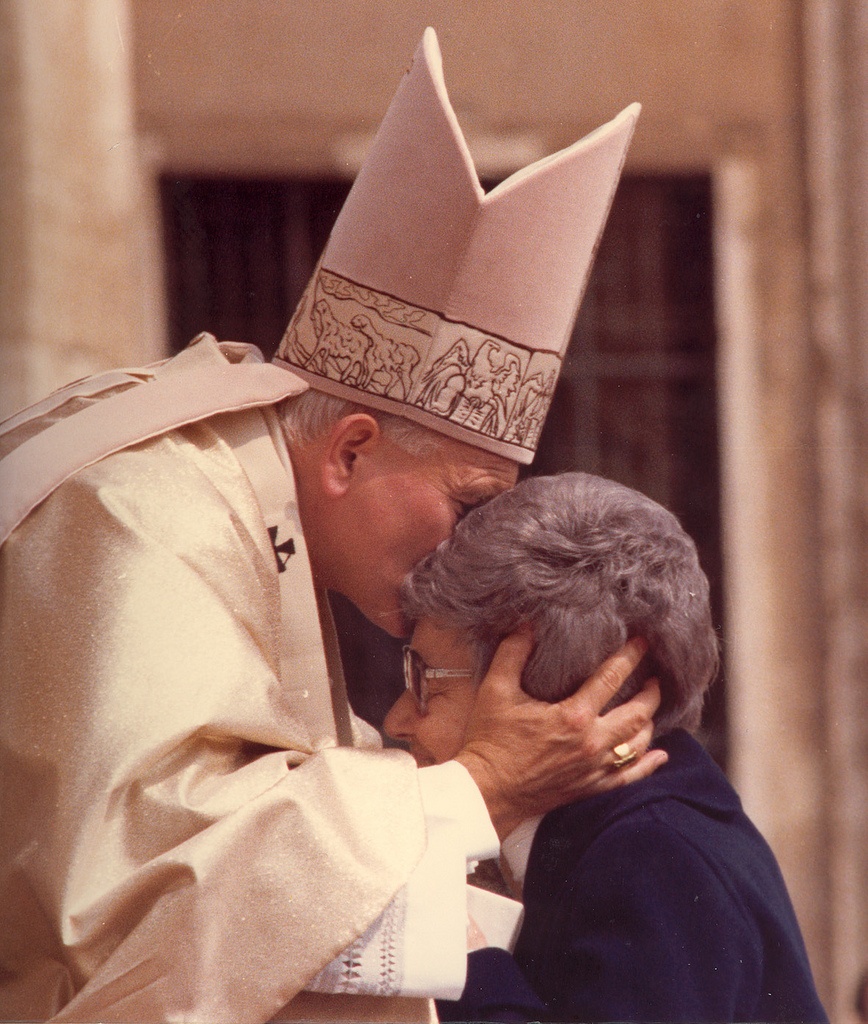 The next day there was a rousing encounter with John Paul II at Saint Peter’s Square. During the return trip home, me – timid as I am – I bombarded the Gen with questions: I wanted to know everything about them! I began to visit them in my city, and the Gen talked to me about their secret: love for Jesus Forsaken in all the large and small sufferings in us and around us. I somehow realized that this was a radical experience of God I was dealing with here, one without half-measures. Jesus Forsaken was calling me to give Him everything, to follow Him. I was filled with an enormous fear: for me it me it was ALL or NOTHING. Strong suffering and pain were never lacking in the months following the Genfest. But the life I had begun with the Gen, the possibility of giving a meaning to pain, the unity among us that was made of concrete love and sharing, helped me to carry on, in spite of every obstacle – in an amazing adventure that widened my heart. I was experiencing that with God among us, all is possible and that the possibility of the unity of the human family was really doable.
Patrizia Bertoncello
13 Dec 2017 | Non categorizzato
This is a preparation to marriage course to be held at the International Centre of Castel Gandolfo which will host youths of different countries who wish to dialogue on the values that are basic to the life of a couple. The following themes will be proposed in an interactive and dynamic way:
- choosing the person
- passing from “I” to “We”
- communication as a couple
- conflicts and forgiveness
- bodily language
- fertility and responsible procreation
- many other themes
In the development of the programme by the New Families experts, 4 couples from the Philippines, Portugal, Brazil and Italy also gave their precious contribution. Depliant For info and enrolments: famiglienuove@focolare.org Tel +39.06.97608300 – +39.06.9411614
13 Dec 2017 | Non categorizzato
The Jewish feast of the Hanukkah, known also as the “Festival of lights,” starts every year on the 25th day of the Jewish month of Kislev and extends to the month of Tevet. This year it will start on the evening of 13 December and will last up to 20 December. The feast recalls the revolt of the Maccabei in the 2nd century BC, who rose in defense of monotheism, and their own land and customs, against the Greeks who wanted to strip the Jews of their identity. After the Greek occupation, upon returning to the Temple of Jerusalem for its rededication, they found only an ampule of oil that was sufficient for just one day. Miraculously, that small amount of oil gave light for eight days. Every year during this period, every night in their homes, all Jewish families light up a candle of the menorah (the nine-arm candelabra) for eight nights, as the number of days in which the oil ampule remained alight in the Temple. The candelabra is placed close to the window, so that it can be seen also from outside, as a warning to always respect life and its ideals.

13 Dec 2017 | Focolare Worldwide
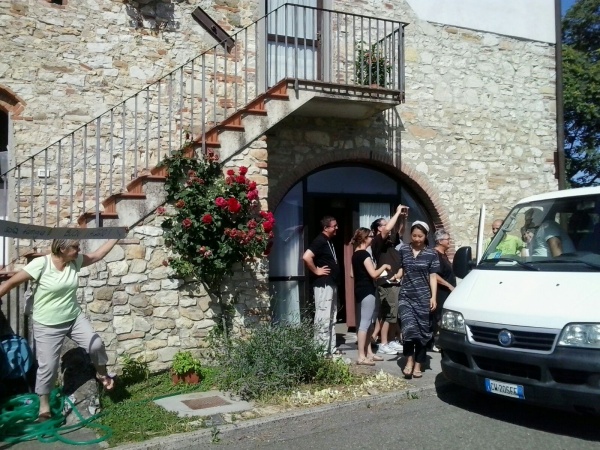 Every beginning of the year, nothing is the same as it was at Loreto School. It’s been that way ever since 1982 when the school was found, because of the different places the families come from each year. Their reasons for going to Loppiano are also different. They rhythm of the course and the work are also adapted to their languages and cultures. Celebrations are enriched by their sounds and colours. The course focuses on topics related to the family within the context of the spirituality of unity and coincide with the children’s scholastic year in the local public schools. Eight families that are currently attending the school come from Japan, Korea, Mexico, Brazil, Colombia, Italy, Argentina and Vietnam. They have one thing in common: the desire to grow in Gospel mutual love. This is the only law that reigns in the Focolare town where the families have come to have a full immersion in the spirituality of unity. “Why did we come here?”, Indian Henke and Emilio di Pelotas try to explain. “To seek the essential in life. We didn’t want to get stuck in the vicious circle of profit, so we inserted our business in the Economy of Communion project (EoC). We sold the car, gave away half of our clothing to the poor along with a few electrical gadgets for the house. It was a drastic move and, as a consequence, we felt the irresistible urge to be formed as a family together with our children in the spirituality of unity.”
  “In order to come here,” says Bao Chau, Vitenamese and father of two boys, “we had to wait four years because of family reasons. We were about to withdraw our enrolment when the obstacles were overcome and we strongly felt that God was waiting for us in Loppiano. We’ve been here since 2016, but because of the language we weren’t able to understand everything that was discussed in the course, so we decided to stay on for another year. I asked me employer; I asked my brothers to help me with the home loan and I asked the school director. Two months later, all the answers came back affirmative.” “We’re glad to stay on,” his wife Bao Vy adds, “to enter more deeply into the life of the Gospel and, when we return home, to share it with other families in Vietnam, so that we can continue to grow together in love.” “We come from Korea, and this is our daughter, 13 year old Maria Grazia. Irema and Michele are the owners of an institute that Michele founded fifteen years ago, to answer to the widespread need for better university preparation. “From the first ten students,” they recount, “in three years there a thousand units. We were overtaken by the work and our plan of building a harmonious and united family began to feel the effects.” After a deep communion among them, in the first days of June the decision was made to look for another kind of work. Then Michele had an idea: “If we sell the Institute we can go to Loppiano for a year!” It was an idea that Irema had right after their wedding, but back then it wasn’t possible. “We had to get sold before vacations. We prayed a lot and, on the last Saturday of June, the Institute was sold. God really wanted us to be here!”
 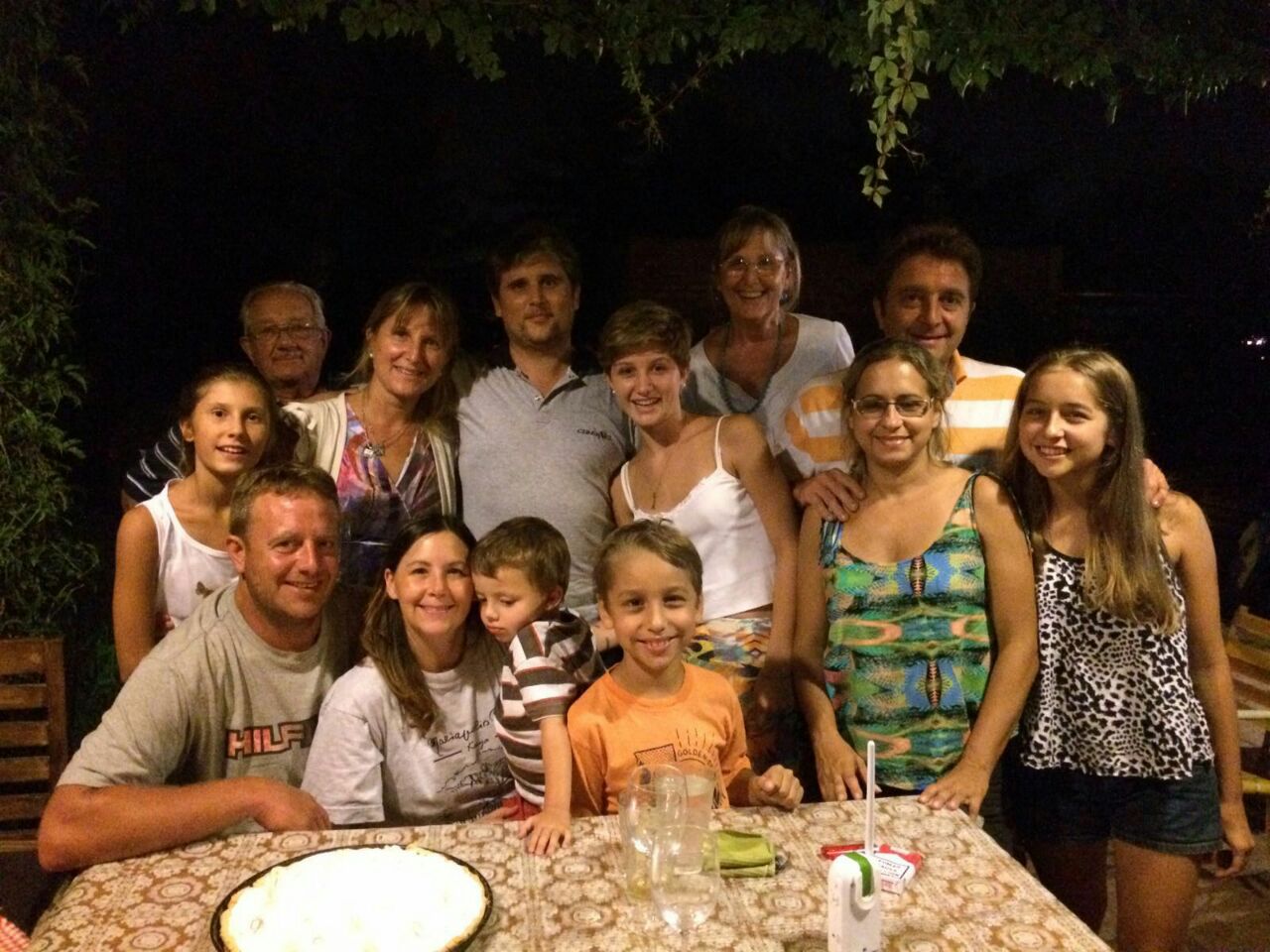 Francesca, 34 years old from Italy, and Roberto, 37 years old from Argentina are also a part of the mosaic. After several experiences in other countries,” they recount, “we are now residents of Italy, in Loreto. In our journey as a family, which has been brief but intense, we were never spared from problems: the different family contexts, several external affairs that were foreign to us and our way of doing things that blocked us a bit, but love and the will to build a healthy open family are strong. So we nurtured the decision to come to Loreto School with three year old Isabel, to learn how to prioritize and grow as parents and people. By living and sharing and being confronted by others, who knows? Maybe one day we will be able to testify to the Gospel out in the world.” Watch Video
