
24 Jul 2017 | Non categorizzato
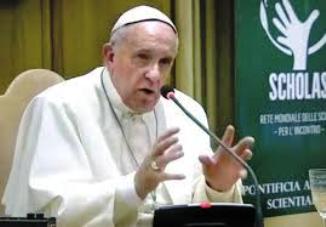 Giving all children and teenagers the education they need, to restore their dignity and allow them to build their own futures. This is the commitment of the many activities carried out by Scholas Occurentes (schools of dialogue) and the Focolare non-profit New Families Association (AFN) with programmes that focus on children and teenagers from around the world, with a teaching method based on values. The roots of Scholas, an international organisation that last June began operations in Italy with an official inauguration ceremony at their new base in Palazzo San Calisto in Rome, go back twenty years. George Mario Bergoglio was archbishop of Buenos Aires, and he perceived the importance of the so-called escuelas de vecinos. In 2013 Pope Francis transformed those schools of the quarter into a Pontifical Foundation so that they could promote their educational model on a global level. Currently the network has more than 400 million schools that are connected with each other from the five continents, from every religious and secular background and also public and private institutions in 900 countries. The pope attended the ceremony which was conducted by Lorena Bianchetti from Rai1. Our reporters were on hand as the Pope spoke off the cuff in Spanish with the young people from around the world who were linked up via internet. “In this society, ‘teaching’ often becomes ‘selecting,’” he stressed. “Instead, we need to ‘join hands, embrace, never attack or say that any human being is a ‘no’. Everyone is a ‘yes’ and has significant role.” Sometimes in education “we select badly, we create closed groups.” “We’re incapable of thinking with the other, incapable of working with the other,” the pope said. Instead, education is the capacity to speak “the language of the mind, heart and hands.” Therefore, “unity is needed within each one of us” said Francis: “If I believe what I feel, what I think, what I love – then I’m beginning.” “We’re living in a world where globalisation dominates, and globalization is good,” the pope explained, “but the danger is that of understanding, perceiving globalisation as a billiard ball – all of them are the same – a sphere in which everything is equidistant from the centre, but a sphere in which the personal characteristics of a boy or girl are obliterated.” Instead, “authentic globalization is more like a polyhedron where we seek unity, but each of us maintains his and her own peculiarity their own richness.” The president of Scholas, José María Del Corral, explained how fundamental that step was for the international growth of the foundation.” Moreover the closeness of the Holy Father is a stimulus to “intensify efforts on the educational front where young people are involved.” Also in Italy, he added, “Scholas appeals to all the sane forces of society to unite their efforts and to offer constructive collaboration.” This is the challenge for Scholas and for the Focolare AFNonlus who are project partners of some hundred activities in fifty countries around the world, as well as educational programmes for disadvantaged youth. “It’s a demanding project,” said president of the AFNonlus, Andrea Turatti. “The global classroom being created by the web will help to develop educational strategies, human and social development projects in a spirit of solidarity and in view of universal brotherhood.” Giovanna Pieroni Source: AFNonlus online

22 Jul 2017 | Focolare Worldwide, Senza categoria
Augustine provides us with one of the most valuable intuitions on prayer: “God’s ear hears the heart’s voice” (Comment on Psalm 148). Letting God’s ear rest on our heart, opening our heart to God’s ear: this is what it takes, this is the art of praying, an art, by the way, that’s for everyone. Actually, it’s not ours, but of the Spirit that God gives to us, the Spirit who prays in us, for we don’t know how or for what we should pray (cf Rm 8:26). […] Prayer is elevating the heart to God. But are we capable of that? Isn’t the range of our understanding too limited for our heart to be able to elevate itself to God? Isn’t the impulse of our heart too weak? Don’t burdens attach themselves to our heart and weigh on it, paralyze it and bring it down? What gives us the courage to claim: Our heart is turned to the Lord? His ear. He has lowered it to us. The Father listens to the Son. And the Son came down among us, into our flesh, into our heart. Within the heart of the Son, the Father listens to every beat of our heart, in the heart of the Son he finds our heart. In Him in whom we were made, loved, supported, gathered – the Father hears us. To elevate our heart means to leave it where it is and discover that where it is, with us, is the heart of God in the heart of his Son. Abandon yourself in Him and he will hold you. In Him, God’s ear is upon your heart; in Him your heart is at God’s ear. […] The opposite is just as true: God keeps his heart against your ear. He revealed, conveyed, gave, not something of Himself, but His Self. If you believe in him, if you adhere to Him, if you stick to Him, then you don’t hear a novelty, a directive, a command: you hear his heart. Stay near to Him until you discover this heart of yours. He’s in need of your patient listening in order to open your heart; actually, only patience comprehends love and learns love. He will reveal Himself to anyone who loves Him, and He makes His dwelling with that person (cf Jn 14:21-23). […] God has your heart at his ear, so that through your ear his heart penetrating your heart, might become your heart. The ear of God on your heart – the heart of God at your ear – like the alternating found in prayer. Only the pray-er knows God. Only the pray-er knows the human person. From Klaus Hemmerle, Con l’anima in ascolto, Guida alla preghiera,(Rome: Città Nuova Ed.,1989), 9-11.
21 Jul 2017 | Focolare Worldwide
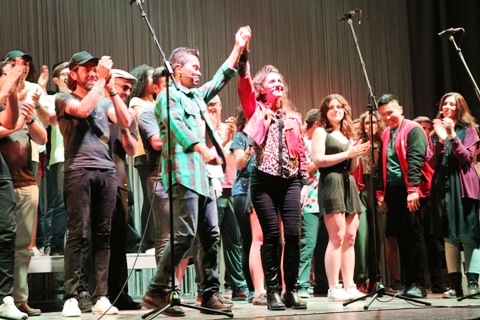 “Every life has hope.” This is the recurring theme of Fazenda da Esperança in all of its locations around the world. “We’ve seen and lived through hell, but during these days we’ve been changed into artists.” This was one of the statements gathered during an exchange of experiences at the conclusion of the five days of work that included two presentations of “Campus – The Musical”. A hundred and ten young people from Fazenda da Esperança and from Puglia, southern Italy, were prepared in workshops on dance, voice, theatre and percussion to then go out on stage with Gen Rosso at the Fasano city Kennedy Theatre for several scenes of Campus, last 7th and 8th of July. “We had to learn it fast and well in spite of the heat and our own limitations.” The motto helped: Welcome the different. There were people from 15 countries, from different cultures, age groups and backgrounds…”
 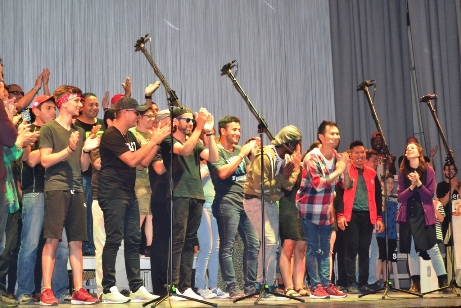 Our adrenaline was really pumping just as we got on stage to give the best of ourselves, while fear and worry seemed to disappear as we encouraged each another. Several said: “We felt a strength from above that was supporting us and instilling faith in ourselves.” “The thing I learned was never to stop during the show because of a mistake: this made me think a lot. I’ll carry this into my daily life, always continuing on in spite of the failures.” The inauguration of a new Fazenda da Esperança was held on Sunday, July 9, in Monopoli. It was attended by civil and religious leaders, Gen Rosso and a group of 60 youth “missionaries” from the Fazende, who came from around the world, together with their founders. The experience of several young people who had been in prison and were now helping other young people like themselves, was quite meaningful. “For us from Gen Rosso,” Franco explains, “collaborating with the Fazenda, as we have been for many years, is always a great enrichment and gives a decisive push to welcome the strong signs of hope that can be found anywhere in the world.” The festival concluded with the singing of Io ero lì (I’ve been there), a song written by Gen Rosso in tribute to Fazenda da Esperança. Gustavo Clariá
20 Jul 2017 | Focolare Worldwide, Senza categoria
1944: Chiara Lubich left her beloved books in the attic to join the school of the one teacher, Jesus, leaving behind her dream to study philosophy at Catholic University, where she had thought she would be able to know God. Fifty-three years later, Catholic University of Mexico City conferred on her an honorary doctorate in philosophy.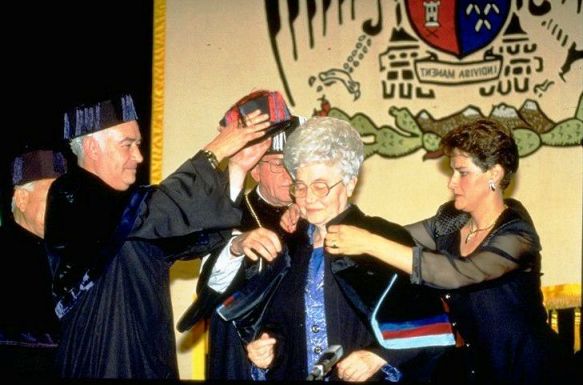 It’s been 20 years since the honorary doctorate, and the Focolare community in Mexico organized three events in memory of her message and to fulfill it: the philosophy of being, the Church as communion, and inculturation. June 29, 2017: “The face of God as communion” was the title of the symposium held at the Pontifical University of Mexico. Msgr Piero Coda, Dean of the Sophia University Institute, conducted two conferences: “Pope Francis: four points for an emerging Church” and “Chiara Lubich: a mysticism of ‘us’ to live through the change.” T
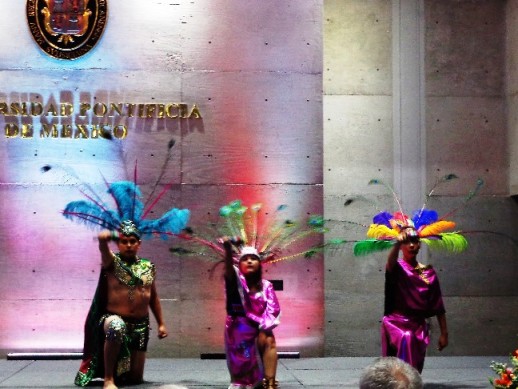
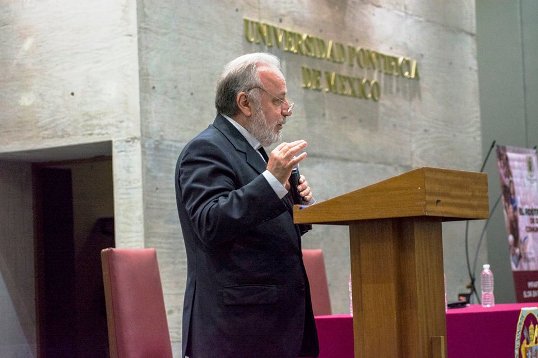 hese two reflections urged those present, mostly priests and men and women religious, towards pastoral work that shows a Church that is merciful, synodal, humble and open. “What surfaced,” affirmed Msgr Coda, “is the need to maintain an open dialogue with the vibrant strength that is in the Mexican church, to enthusiastically take up the challenge of pastoral change as advocated by Pope Francis. This encourages efforts by the laity at a cultural and societal level, working closely with young people, and the work of synods in the Church, where charisms can give their contribution.” June 30, 2017: Welcoming everyone to the hall at La Salle University in Mexico City, Dr Enrique Alejandro González Alvarez, dean of the university, explained the importance of the honoris causa doctorate conferred on Chiara Lubich in 1997. “Through her acceptance, it was she who honored the university,” he said, pointing to the profound harmony between the charism of unity and that of La Salle. “The University identifies with the Focolare Movement, because we work as allies to bring the kingdom of God here on earth, which without a doubt was Chiara’s primary mission,” Alvarez said. “May we continue to tighten the bonds that unite us. This is not only Chiara Lubich’s home, but of all who carry on in her spirit, so that today she can continue to live through her followers.” For the occasion Msgr Coda conducted a conference on “Chiara Lubich’s contribution to a new philosophy of being.” “Chiara’s speech 20 years ago,” Coda said, “showed itself to be prophetic for Mexico, as a new search for meaning and light, and the need for a new cultural paradigm at the social and cultural level. So her talk gave direction and can be connected to the commitment of Sophia University Institute.” New contacts and plans to collaborate were established between Sophia University Institute, the Pontifical University of Mexico and La Salle University. The Focolare community threw a celebration in honor of June 7, 1997, together with the apostolic nuncio, Msgr Franco Coppola, and the Dean of the Pontifical University of Mexico, Dr Mario Ángel Flores Ramos. There was music, dance, video and testimonies from those present on that memorable day, which served as the perfect context to rediscover the depth of Chiara Lubich’s message. “In the basilica of the Madonna of Guadalupe,” said Maria Voce in her message to the Mexican community, “in front of the ‘Morenita,’ Chiara highlighted the wonderful symbols that Mary clothed herself in, presenting her as an extraordinary example of inculturation.” Chiara’s legacy, which obviously echoed the original message of Guadalupe, still strongly resonates, Focolare’s president said. “Let’s entrust ourselves to her, icon of the ‘culture of meeting,’ so that we might fully ‘make ourselves one’ and bring the spirituality of communion everywhere.”
19 Jul 2017 | Non categorizzato
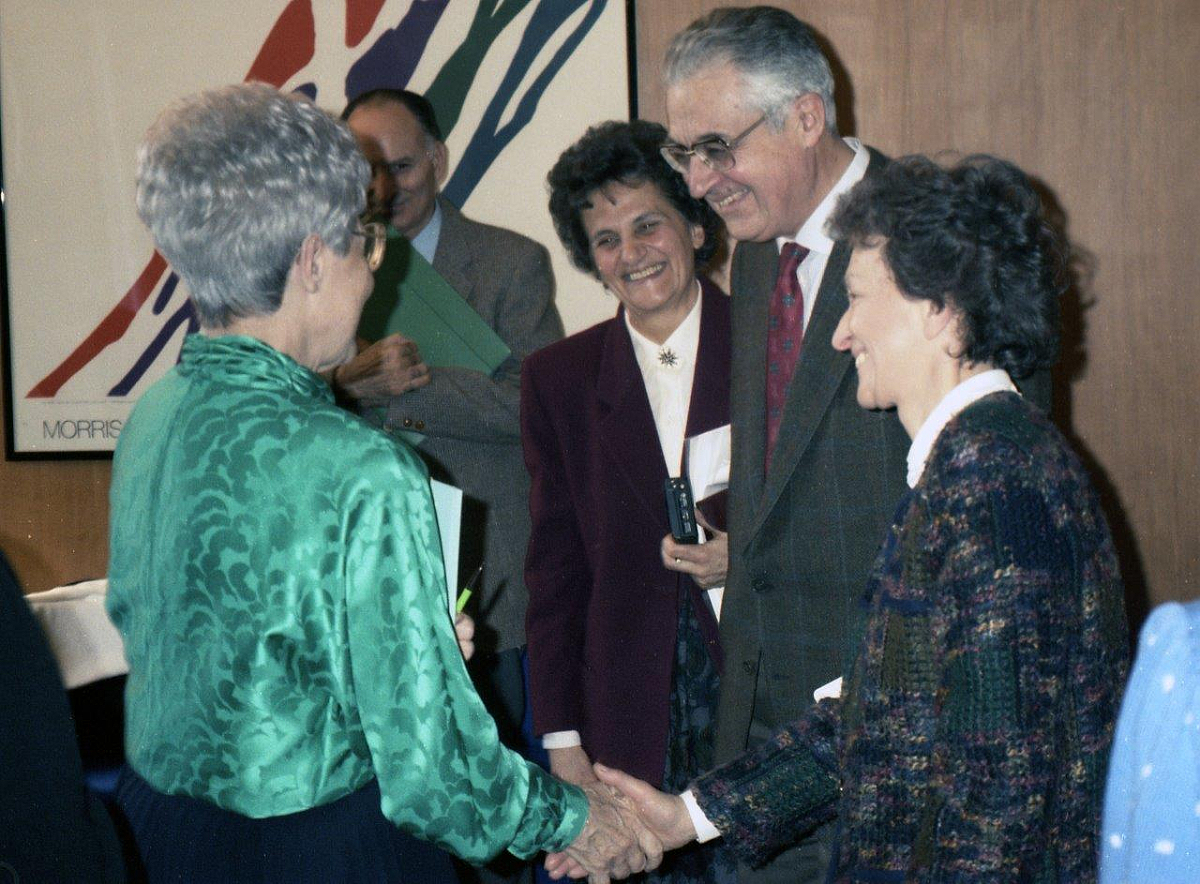 During the first school for married focolarini, Chiara Lubich paraphrased what Pope Paul VI had said a day earlier at the General Audience. Chiara announced on that July 19, 1967, that “an explosive, apostolic and diffusive Movement” for families would be born at the very heart of the Focolare. Fifty years later it is easy to see that those words were proven to be true. Married and engaged couples and many others who have a part in the world of the family have seen their love for one another grow through their contact with the charism of unity, transforming it into a living witness of love for God and for the human family. That love has also resulted in the Movement spreading in a large part of the world’s countries. New Families is committed to giving an answer to the needs of today’s family that is in line with “Amoris Laetitia” (“The Joy of Love”). They don’t do it with words, but with the concrete fruit of the real life experiences by a multitude of families with their testimonies of unity, and with their hundreds of projects of international cooperation and at-a-distance support. They work for the renewal of society and for the realization of Jesus’s testament: “that all may be one.”
