28 May 2017 | Non categorizzato
“As they looked at him, He was lifted upward, and a cloud hid Him from their eyes” (Acts of the Apostles). The event known as The Ascension, that is, the Transfiguration and passage of Jesus into the kingdom of glory, concludes the visible permanence of God among men. It is a prelude to Pentecost and marks the beginning of Church history. The episode, described by the Gospels of Mark and Luke, and in the Acts of the Apostles, is a very ancient celebration documented since the 4th century. For the Catholic Church and the Protestant Churches, The Ascension is celebrated 40 days after Easter (in the Gregorian calendar, the feast fell on Thursday 25 May). In the Orthodox Church, it is one of the 12 main feasts, and this year it coincides with the Catholic feast.

28 May 2017 | Non categorizzato
Tax payments “We were expecting our third son. The little money we had saved up suddenly disappeared because of the unfavorable bank exchange rates, and the banks were beginning to stop lending. One day, out of the blue, we were informed that we had to pay a huge amount of taxes. Where would we find the money when we were barely surviving on what little money we had? We entrusted ourselves to God, to the Father who never abandons his children. Then we went to ask for help from the city hall and … surprise! We were the only ones who were given the opportunity of receiving financial assistance.” X. A.- Croatia Sales representative “I work as a book representative. At my first exhibition I didn’t sell anything. The second time was the same. The third time was even worse: there was no room in the meeting hall and I had to content myself with a bad location downstairs, far from where the people gathered during breaks. There was no lift, so I had to transport the boxes in arms, sweating because of the incredible heat. Meanwhile I caught myself saying: ‘Who’s making you do this?’ Passing a chapel, I stopped in to vent with Jesus, who seemed to say to me from the tabernacle: ‘What are you doing?’ ‘God’s will,’ was my answer. ‘Well, relax then and I’ll take care of it now.’ I had to use chairs at the exhibit because there were no tables. A priest walked by and noticed a volume of a volume from a set of encyclopedias on the Saints. He exclaimed: ‘It’s not possible! I’ve been looking for that for years!’ He bought it and, after that, I didn’t stop selling.” Marta – Italy Be like a father “My father left my mother before I was born. I suffered because of his absence and never forgave him for going away. When I was around 17 years old I went looking for him, hoping to renew a relationship that never really existed. Unfortunately I was met by indifference, and his relationship with his wife wasn’t going well either. During that period I got to know young people who were living the Gospel and, through them, I got to know God better. Later, during my university studies, I began to work on a social project that put me in contact with abandoned children. The pain I had gone through had made me more sensible to the pain of others in whom I tried to love Jesus. Little by little, I became a reference point for many of those little ones, to the point that they started calling me Papa. As for the relationship with my father, it’s still a challenge: I try to see him with new eyes every time, always taking the first step.” J. L. – Brazil
27 May 2017 | Non categorizzato
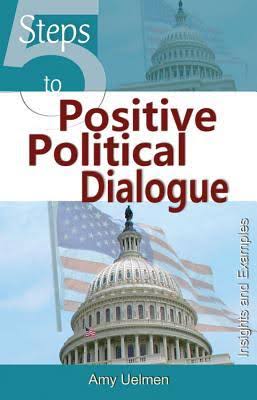
Over the course of the past year, ideological tension that had been simmering for decades broke out into the open. In the months leading up to the November election, people from every position on the political spectrum expressed deep concerns about the direction the country was heading. Throughout the States, strong and contrasting emotions generated a general sense of unease and division. Such feelings affected relationships in local Focolare communities as well. Many felt that the presidential election campaign forced them to make impossibly difficult choices. Conversations became heated and difficult. Anticipating this possibility, throughout 2015 the Focolare Movement had sponsored workshops based on the New City Press book, Five Steps to Positive Political Dialogue. During these workshops, participants learned and practiced the necessary skills for positive dialogue across political differences. The “five steps” include:
- Believe that a Positive Vision is Possible
- Practice Communication Skills Based on Love
- Understand Where There Is Room for Compromise—and Not
- Recognize Suffering as a Springboard for Love
- Build Relationships with Positive Action.
John Chesser (Iowa): “People paired off and they chose to discuss a topic on which they strongly disagreed. The twist was first one person shared their view and then the other person had to repeat their view back before sharing his or her own view. The results were really interesting. The exercise allowed people to gain an appreciation not just for the other person’s point of view but to reflect and reconsider their own view. Of course we didn’t solve the world’s problems in the workshops but we did find new hope and new tools that helped us to see that maybe it’s possible for us to solve these problems with dialogue.” As the November 2016 election drew near, the tension between those who held opposing opinions seemed to increase by the day, and conflict became more and more pronounced in personal life, in workplaces, and in social media communications. Marilyn Boesch (Maryland): “I was very agitated. And I remember examining my conscience, affirming my desire to work for unity, to be a person that builds bridges, not a person resigned to these divisions.” Marijo Dulay (New York): “After a few mistakes I learned to be more sensitive in the comments that I posted on Facebook so as not to hurt the people who differed from my perspective.” Simona Lucchi (Georgia): “I realized that all my preaching and all my yelling wasn’t doing any good because either way it wasn’t changing what people believed in. So I took the stance of sitting back in order to listen. When I stopped talking to actually listen, I found that I had more in common than I thought with the people I disagreed with.” 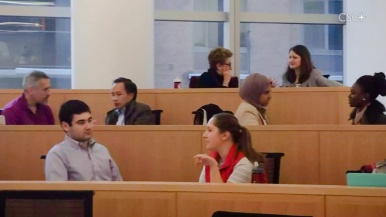 Amid the confusion, the positive proposals for dialogue presented in academic environments were well received. For example, at Fordham Law School, in the heart of Manhattan, New York, Ana Renata Dias, the Director of the Institute on Religion, Law & Lawyer’s Work, offered a workshop that aimed to promote open and constructive cultural dialogue by honing the participants’ listening skills. “Several of the participants said they had come to the workshop because they wanted to understand if dialogue is really possible among such polarization.” After a listening to a presentation with practical suggestions for approaching these difficult conversations, participants rolled up their sleeves and got to work, discovering together that even those who were most impassioned could find ways to exchange contrasting views without the conversation degenerating into a fight. Even those who said they were less than convinced by the workshop felt more hopeful. Two months later, following the inauguration of the new president, cultural tensions became more and more pronounced. Students at Georgetown Law School in Washington, DC were searching for ways to navigate these tumultuous waters. Amy Uelmen, author of the book, Five Steps to Positive Political Dialogue: Insights and Examples, proposed to her class a way forward.
 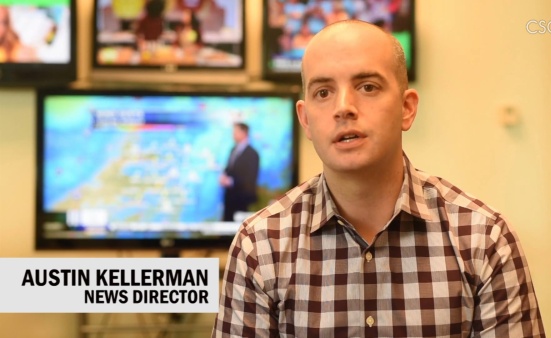 “We realized that often in any conversation there will be caricatures, mischaracterizations, misunderstandings, and information that is simply wrong. We agreed all together to be open to correction and to working out our difficulties when different perspectives collide.” In Arkansas, a traditionally conservative state, some were enthusiastic about the election of the new president while others were angry. Austin Kellerman leads a newsroom in Little Rock, the state’s capital. Together, he and his colleagues decided to launch an appeal for unity. “Our team of journalists felt like we had the chance to be a voice for our city, so in one of the more heated moments one of our more experienced reporters put together a commentary calling for unity and an open mind: he said, ‘There is no them, no us. There is We. We the people.’” “Obviously, this alone will not fix things or change anybody’s view,” Kellerman continues, “but hopefully it gives people permission to think beyond their singular view. We are going to try to keep the dialogue going and staying faithful to representing all sides and voices.” Source: New City Press (New York)
26 May 2017 | Non categorizzato
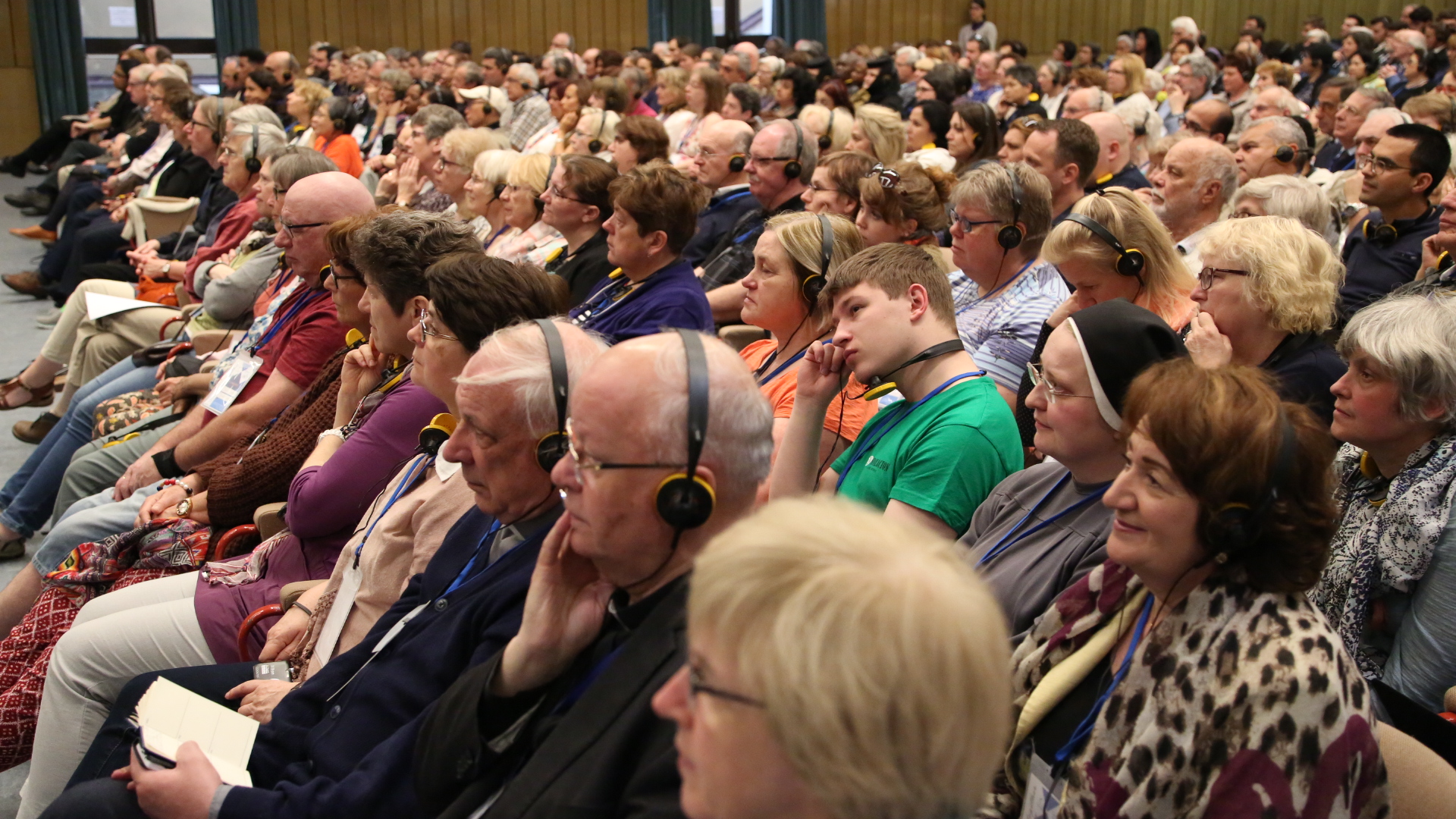
© CSC Audiovisivi – Caris Mendes
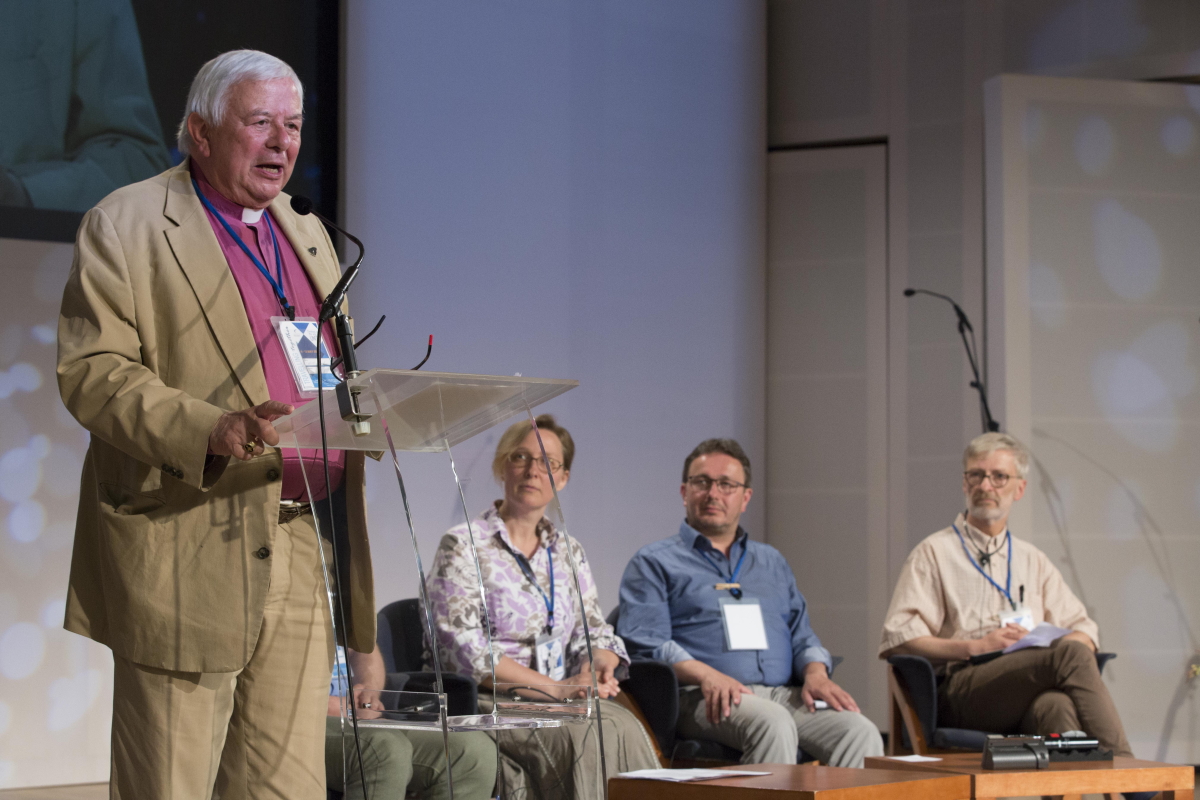
Emeritus Bishop Christian Krause,
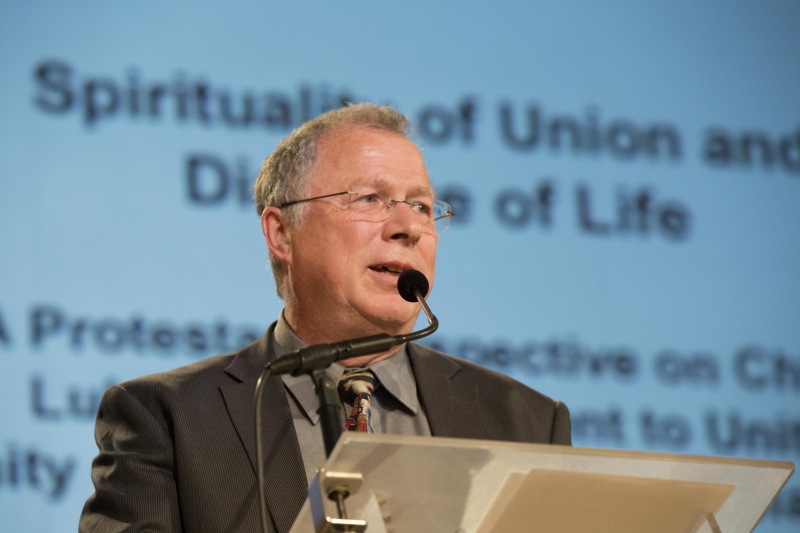
Rev Dr Martin Robra (WCC)
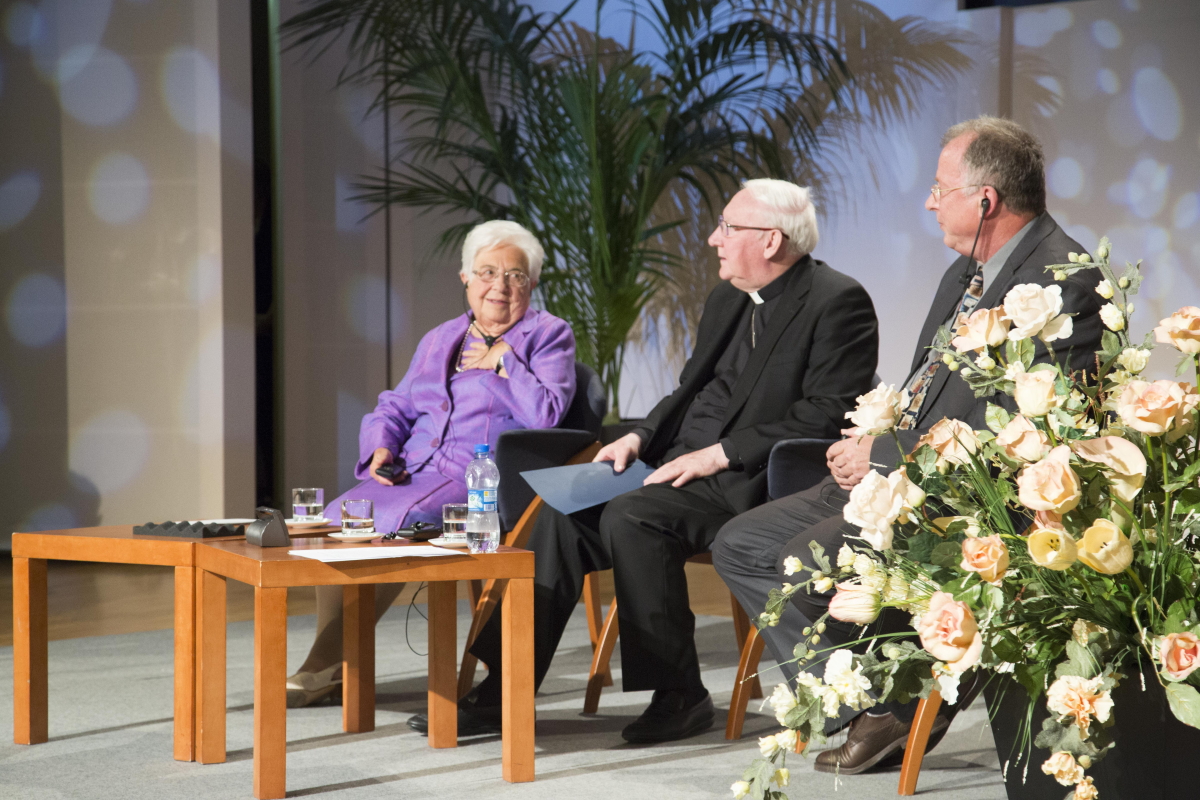
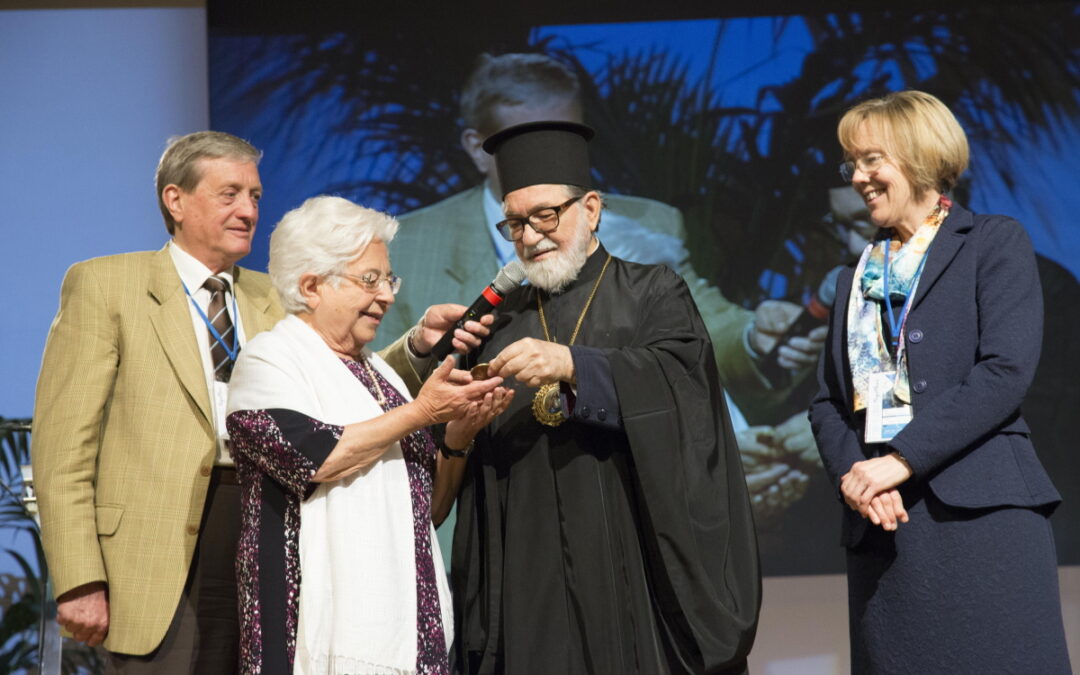
Maria Voce with Bishop Brian Farrel
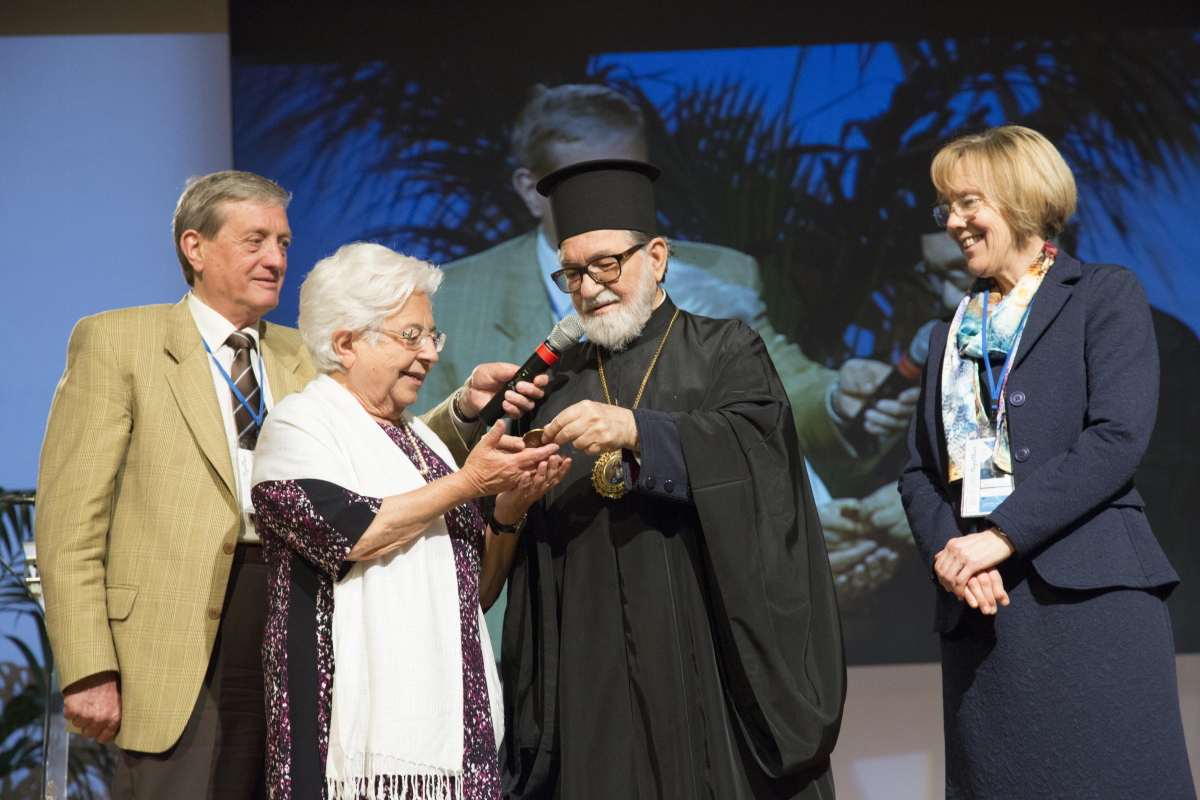
The Metropolitan Gennadios Zervos presented an “Historic Medal” to the president of the Focolare
26 May 2017 | Non categorizzato
For Muslims, May 26 signals the start of the Sacred Month of Ramadan. It is the ninth month of the Islamic year and the most important. It is a sacred time during which the revelation of the Koran to the Prophet Muhammad is commemorated and through fasting (the fourth pillar of the Muslim faith), a special purification is sought. Ramadan is a month of total fasting from dawn to dusk.
