![Celebrating a Europe of Hope in Malta]()
11 May 2017 | Focolare Worldwide
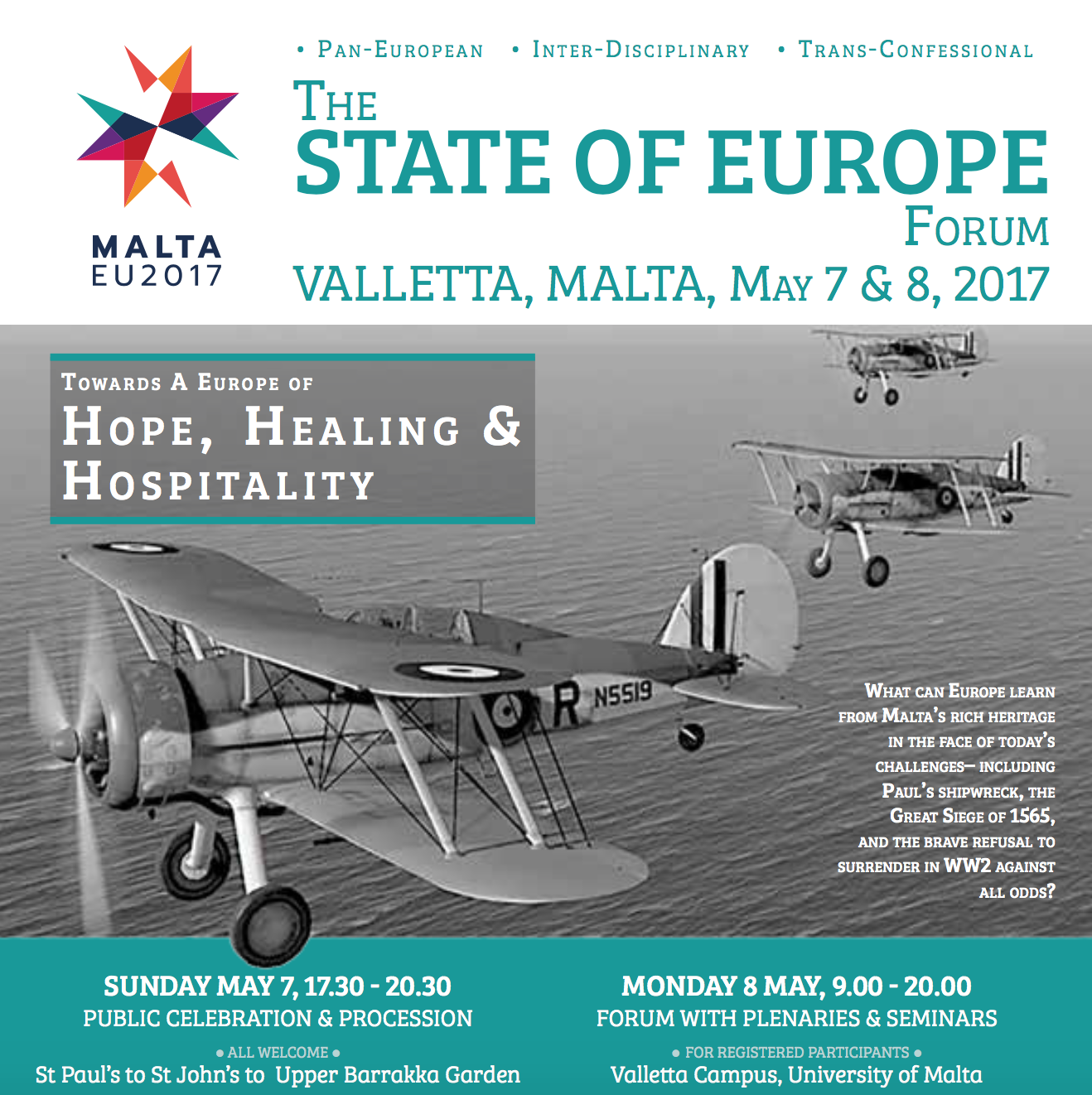 Malta is the largest island in the archipelago that shares its name. It is located in the central Mediterranean Sea between Sicily, Tunisia and Libya. It was the head of the Council of the European Union for the first time in its history in 2017. The island, whose symbol is the eight-cusped cross, signifying the eight Beatitudes, pertaining to the Knights of Malta, is closely situated to the tragedies that occur daily in the blue tomb that the Mediterranean Sea has become for those crossing between Africa, the Middle East and Europe in a desperate search for a new chance at life. On one of its other shores another shipwreck had found safe port after fourteen days adrift. One of the passengers was Saint Paul on his way back to Rome in around AD 60. According to tradition the ship carrying him and another 264 passengers was sunk by a storm, and everyone on board swam to shore. After some time he was invited to stay at the house of Publius, the Roman governor of the islands, whose father Paul cured of a serious flu. The governor converted to Christianity and became the first bishop of Malta. Europe’s Christian roots were the focus of discussion in Malta’s capital of Valletta on the 7th and 8th of May during a forum titled Towards a Europe of Hope, Healing and Hospitality. The goal of the forum, which is held each year by the European Union in the country of the presidency, is the promotion of dialogue according to the foundational inspiration of Robert Schuman. On the first day, after the opening events at the Anglican Cathedral, there was an artistic performance and a prayer titled “Hope”. Then a procession led through the streets of Valletta to the Roman Catholic Co-Cathedral of Saint John where some words were offered by Archbishop Scicluna and Maria Voce. The Focolare president offered a reflection on “Healing and Reconciliation”.
 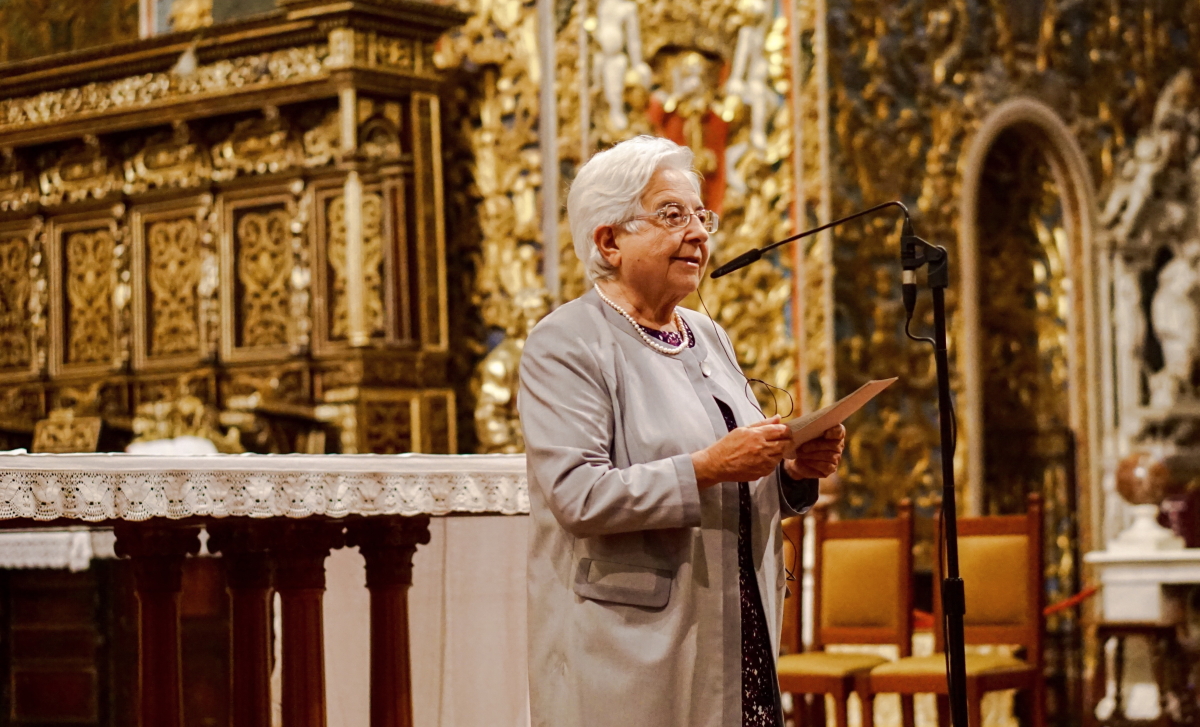 On the anniversary of that “community of peoples” that Schuman envisioned in 1950, proposing the historic coal and steel community to avoid all forms of war between France, Germany and any country who would later join the community, Maria Voce asked what the inspirational spark might have been behind such an extraordinary gesture that was intended to bring reconciliation to populations overwhelmed by the most horrible conflicts ever seen up until then. Who had inspired Schuman, Adenauer, De Gasperi – all Christian statesmen who are considered the founding fathers of Europe? The answer is obvious: “We want to think that the ideas and the strength to build Europe came from God who had shown his love for all people by suffering an infamous and atrocious death, God had identified with all the pains of humanity, including the ones deriving from violence and wars.”
 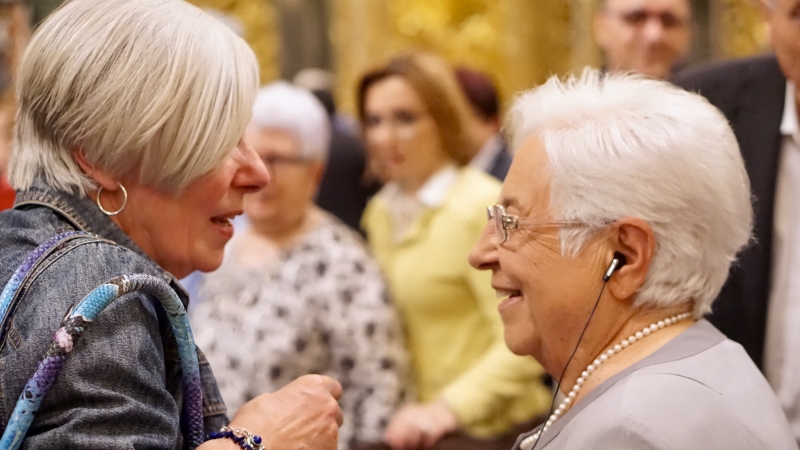 With regard to the culture that could emerge when there is profound reconciliation, Maria Voce quoted Chiara Lubich: “Every person can have a contribution to give – in any field: science, art, politics, communications, and so on. And they will be more efficacious if they work together with others who are united in the name of Christ: it is the continuation of the Incarnation and, it is in this way, that what could be called a culture of the Resurrection spreads through the world.” But for this to happen, “a path towards full and visible communion is asked of us, Christians, knowing that this will be decisive for the unity of Europe and for serving humanity better.” Recently, this path began to unfold further stages, in Lund, Sweden, Lesbos, Greece, and Cuba. “In a multi-cultural and multi-religious Europe there is need for a new capacity to dialogue, dialogue that can be based on the Golden Rule that is found in every religion on earth.” How significant to be saying these things precisely in the safe port of Malta in the midst of the Mediterranean, in the hope that this blue tomb will again become “Mare Nostrum” where Europe, Africa and the Middle East can find a peaceful route.
![Celebrating a Europe of Hope in Malta]()
10 May 2017 | Non categorizzato
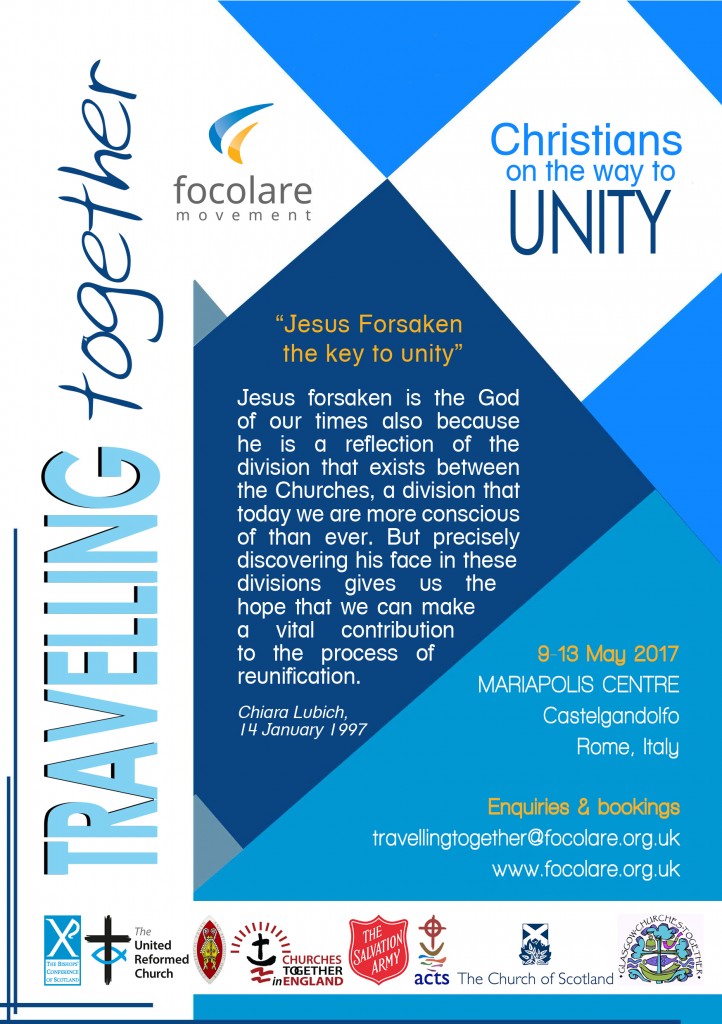 “Unity among Churches requires heroes, heroes in faith, heroes who face history, heroes who are humble in spirit”. Pope Tawadros II said these words in Alexandria, Egypt in 2015, when celebrating the first Day of Friendship between the Orthodox Coptic Church and the Catholic Church. During his recent visit to Cairo, Pope Francis repeated the same thought when he said, “In the light of God who wishes us to be ‘perfectly one’ it is no longer possible to take refuge behind the pretext of differing interpretations, much less of those centuries of history and traditions that estranged us one from the other”. The Pope also spoke about “an already effective communion that grows daily”, the mysterious and ever present fruits of “a genuine ecumenism of blood”, and the importance of progress in our ecumenical journey because “static ecumenism does not exist”. Christians inspired by the Focolare spirituality of unity are convinced of this because of the experience lived in these last years. The 59th Ecumenical Week, to be held at Castelgandolfo, Rome from the 9 to 13 May 2017, blends into the current ecumenical trend, which brings to the foreground gestures, words and statements of Church leaders and also initiatives of Christians in different parts of the world. 700 Christians hailing from 40 countries and belonging to 70 Churches and ecclesial Communities are expected to attend. During this “Ecumenical Mariapoli”, as many prefer to call this event, living together, sharing, spirituality and reflection will take place,and it will be a new step towards “the dialogue of life” and “the ecumenism of the people”. In fact, Chiara envisaged the “dialogue of life” as the typical contribution of the spirituality of unity towards full, visible communion among Churches . It is of utmost importance that people are well prepared ecumenically. Fully aware of the many steps still to be taken and with respect towards all Churches, we try to delve deeper into the common heritage that already unites us. The title of this ecumenical meeting is: “Walking together. Christians on the road to unity”. Its focal point will be a central theme in the spirituality of unity: Jesus crucified and forsaken: the God of our time, foundation for a spirituality of communion. It will be enriched by moments of reflection, dialogue and testimonies of people from different parts of the world, While the 500 years since the Lutheran Reformation are being celebrated in the ecumenical field, among the main speakers, one will find: Bishop Christian Krause, former President of Lutheran World Federation; Rev. Dr. Martin Robra of the World Council of Churches in Geneva; Bishop Brian Farrell, Secretary of the Pontifical Council for Promoting Christian Unity and Maria Voce, President of the Focolare Movement.
  A special moment has been entrusted to His Most Rev. Eminence Zervos Gennadios, Orthodox Archbishop of Italy and Malta. He will be speaking about: “50 years after the first meeting of two protagonists of dialogue: Ecumenical Patriarch Athenagoras I and Chiara Lubich “. The programme also includes participation in the General audience with Pope Francis at St. Peter’s Square, a visit to St. Peter’s Basilica and to St. Paul Outside the Walls Baslica and common prayers at the St. Domitilla and St. Sebastian Catacombs. This 59th Ecumenical Week is also meant to manifest the Focolare’s renewed ecumenical commitment, expressed recently in the Ottmaring Declaration, which promises to do all that is possible “so that all our activities, initiatives and meetings, both internationally and locally, will be sustained by this open, brotherly behaviour among Christians, while we entrust to God the hastening of our Churches’ journey towards celebrating in the one chalice”. Press Release
10 May 2017 | Non categorizzato
On May 10, 2013, Pope Tawadros II of the Coptic Orthodox Church visited Pope Francis at the Vatican for the first time. In memory of that historic meeting, when he returned to Egypt he declared a day of Coptic-Catholic friendship that has been held ever since on May 10. The pope recently repaid the visit when he went to Cairo.
9 May 2017 | Non categorizzato
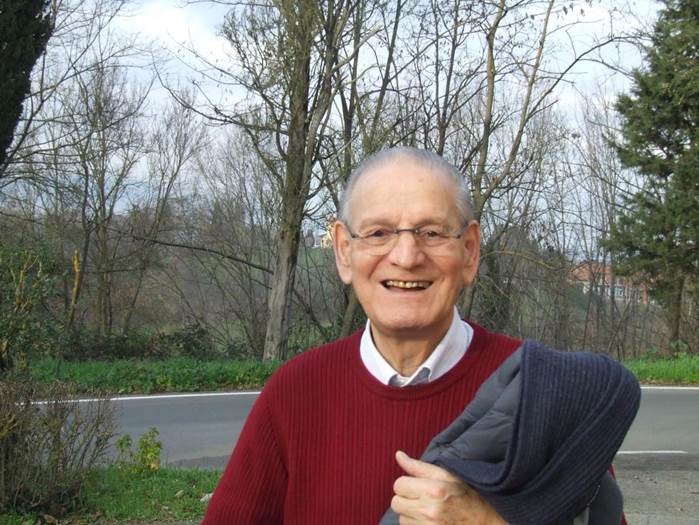
“This evening, Marco Tecilla, the first focolarino, is latest pearl to be added to the crown of Mary. With infinite gratitude, we gather around him in an embrace which unites heaven and earth,” writes Maria Voce, President of the Focolare Movement, when she announced the passing of Marco, the first young man to follow Chiara Lubich in the way of the Focolare. The funeral will be held tomorrow, Wednesday 10th May, at 11.00 am at the Mariapolis Centre in Castel Gandolfo (Rome).
![Celebrating a Europe of Hope in Malta]()
9 May 2017 | Focolare Worldwide
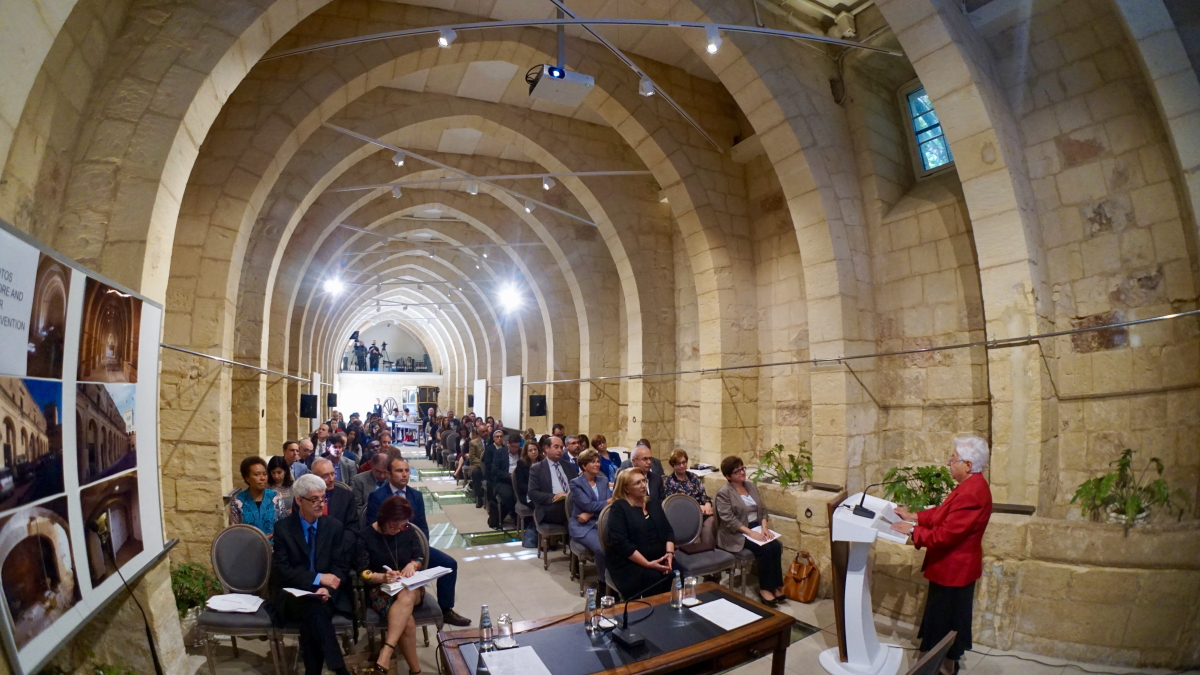 The visit (2-7 May) began with the participation on Monday, 2nd May, in the seminar promoted by “Communion and Law,” entitled, “Law as a means for integration in a multicultural society,” held in a meeting hall at the Presidential Palace, together with around 70 experts in the fields of immigration, education and employment. Among them were representatives of the Maltese Commission for refugees, representatives of the IOM and EASO Malta, Arnold Cassola, President of the Alternative Democratic Party (Alternattiva Demokratika), as well as law teachers and students. In her speech Maria Voce affirmed that the law can became an instrument for integration in society “if we overcome an exclusively formal vision, and focus on the concept of Law as an indispensable means for contributing to the creation of a reality of communion in society.” Citing the Together for Europe experience, born from an inspiration of Chiara Lubich, she talked about the actions that “appear like a prophetic sign of what Europe can become if its citizens will share more, the common experience that goes beyond the different cultures and ecclesiastical faiths,” and thus be a voice of “a Europe which, based on its own roots, opens out without fear to those who ask to be accepted and knows that the blend of peoples that have composed it for centuries can in turn blend with other peoples that will contribute to its development.” Each speech was backed by concrete initiatives, like the TANDEM project – presented by Apollos Pedro from Biafra, but a resident in Italy – which promotes peace and dialogue, giving people of different nationalities and religions the chance to live together.
 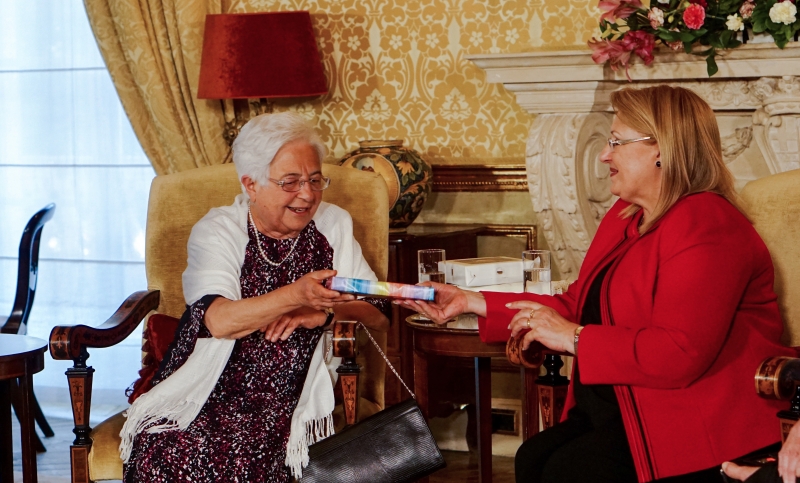 On 4th May, Maria Voce met with the President of the Republic of Malta, Marie-Louise Coleiro Preca, to whom she recounted the various branches of the Focolare Movement in Malta, and in particular the activities of New Humanity and the initiatives of the teenagers and young people. The President showed great interest and in the end, greeted the youth with a warm embrace. “The Focolare is like a vitamin boost. The art of loving is a precursor to positive peace in a world that is increasingly narcissistic and egocentric.” The children then presented her with the “Dice of love”. The Focolare President had been invited by the Malta Diocese, through its Ecumenical Commission, on the occasion of the 40th anniversary of its foundation. In this context, on 5th May, Maria Voce was received by the Archbishop C.J. Scicluna. Immediately afterwards, in the presence of 300 participants, she gave a conference on the topic “Dialogue or Dialogues – A Way of Life”.
 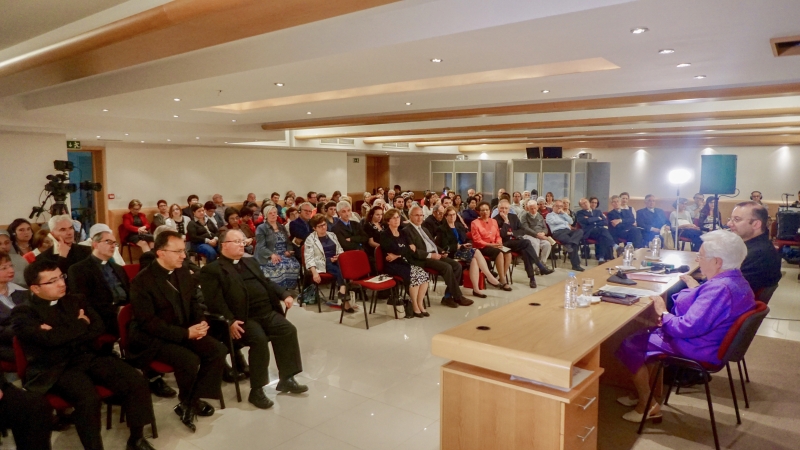 Also present were the Archbishop, the President of the Ecumenical Commission, the Vicar General, the Secretary of the Nunciature of Malta, the Nuncio of the Ivory Coast (of Maltese origin), a representative of the Romanian Orthodox Church, two members of the “Robert Schuman Centre for European Studies” and several members of ecclesial organisations. In tracing the rich history of the Movement’s ecumenical commitment, Maria Voce explained that the method of dialogue which Chiara Lubich promoted is love, “a dialogue between people, not between ideologies of systems of thought. She said that this must necessarily be supported and substantiated by mercy, compassion, and charity, summarised in the Golden Rule present in every culture and religion: Do to others whatever you wish others to do to you (Mt 7:12).” “The only way to ease the way to unity in truth is that of bowing before the others in the attitude of washing their feet (cf Jn 13) instead of telling them off. We need a lot of patience and humbleness.” Lastly, she presented the Ottmaring Declaration, published in Germany last 21 February, in which the Focolare Movement undertakes a greater ecumenical commitment. In the end, the Archbishop thanked Maria Voce for the work of the Focolare Movement in “arousing in people the thirst for unity.” He also recalled a phrase of Paul VI: “the world listens more to witnesses than to teachers.” Read about the Focolare in Malta
